Your Zip Code Decides Whether Medicaid Pays for Your GLP-1
A reader in Mississippi asked me whether her state Medicaid covers Zepbound. The answer is no. The same answer applies in Tennessee…
Your Zip Code Decides Whether Medicaid Pays for Your GLP-1
A reader in Mississippi asked me whether her state Medicaid covers Zepbound. The answer is no. The same answer applies in Tennessee, Alabama, and Georgia. In Louisiana, three hours away, the answer is yes. The variance across state lines is starker than for almost any other category of FDA-approved medication, and almost nobody is writing about it.
A reader in Jackson, Mississippi sent me a question I had been dreading. Her doctor had recommended Zepbound. Her BMI was 38. She had Mississippi Medicaid. Would it be covered?
I had to tell her no. Mississippi Medicaid does not cover GLP-1 medications for weight loss. If she lived three hours east in Alabama, the answer would also be no. Three hours north in Tennessee, still no. Drive five hours west to Louisiana, and the answer flips to yes, with prior authorization.
Your zip code decides this. Not your BMI, not your comorbidities, not your prescriber’s clinical judgment. The single most consequential factor in whether an American with obesity can access a GLP-1 medication is what state issued their Medicaid card. I think this is the most underreported access story in the GLP-1 era, and the variance is genuinely shocking once you map it out.
The Federal Layer Is the Reason This Is a Mess
The relevant history is short. Federal Medicaid law specifically excludes drugs used for “anorexia, weight loss, or weight gain” from required coverage, under a statute that dates back to 1990. The law was written in an era when weight-loss drugs were amphetamines and nobody wanted Medicaid paying for amphetamines.
That carve-out is still in the federal statute. It means that even though Medicaid is otherwise required to cover any drug approved by the FDA, weight-loss indications are optional, and each state decides for itself whether to cover them.
The same drug, prescribed for type 2 diabetes, is required Medicaid coverage in every state. Ozempic for diabetes is covered everywhere. Wegovy and Zepbound for weight loss are covered in fewer than half the states.
This means a Medicaid patient in Mississippi with obesity but not diabetes cannot get Zepbound at any price within their benefit. The same patient, if she developed type 2 diabetes, could get Mounjaro that same day. The medication is similar. The decision logic is regulatory.
The Four Buckets of State Policy
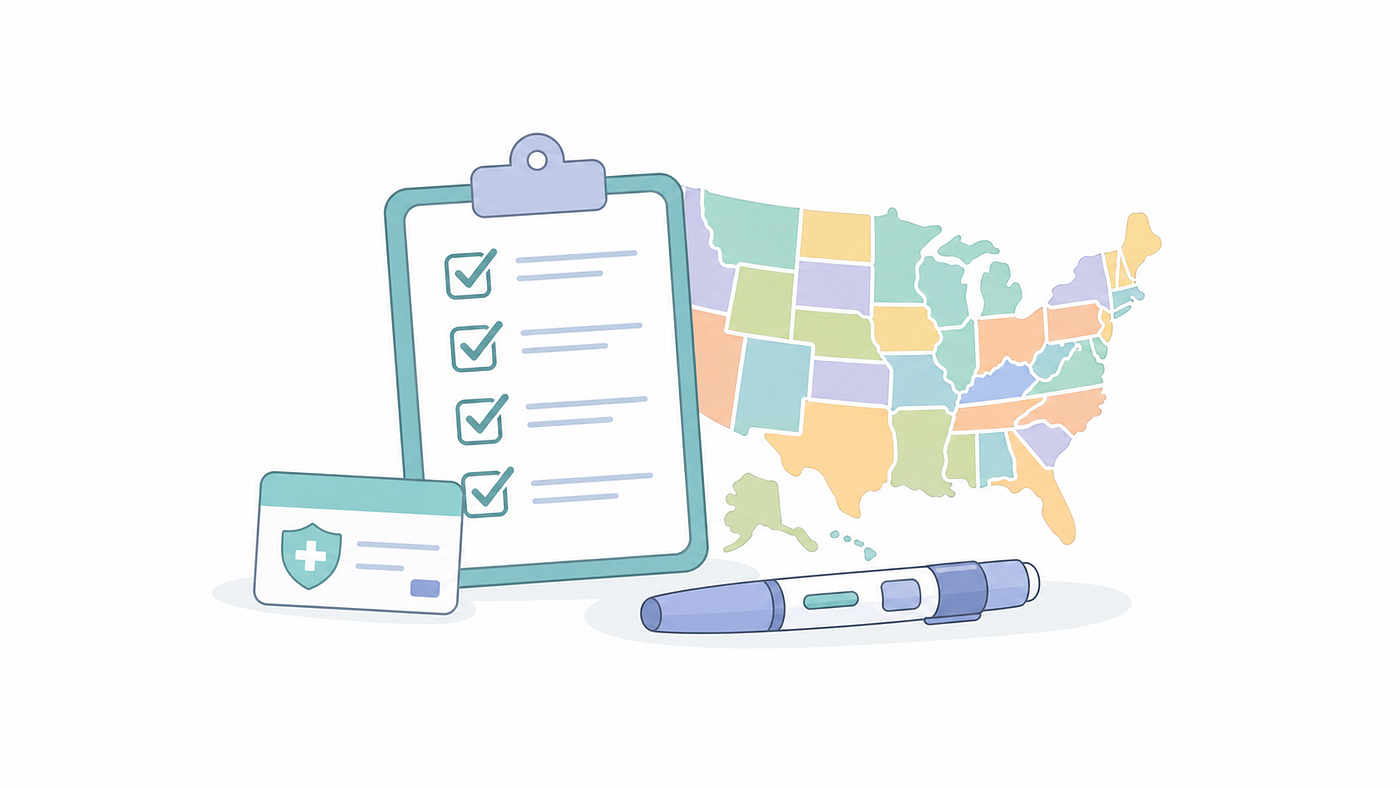
Once you actually map state-by-state coverage, four patterns emerge.
The first bucket is states that cover GLP-1s for weight loss with prior authorization. Roughly 17 states are here, including California, Pennsylvania, Michigan, Maryland, Illinois, Massachusetts, New Jersey, and Virginia. The prior auth requirements vary but typically include BMI thresholds, documentation of prior diet and exercise attempts, and sometimes documentation of weight-related comorbidities. These states have decided that anti-obesity medication is worth funding within their Medicaid programs.
The second bucket is states that do not cover GLP-1s for weight loss at all, ever, regardless of BMI or comorbidities. Mississippi, Alabama, Tennessee, Georgia, Florida, Texas, South Carolina, Arkansas, Oklahoma, Indiana, and West Virginia are in this group. The state Medicaid program will not pay for Wegovy or Zepbound under the obesity indication for any patient at any BMI. Some of these states will cover Ozempic or Mounjaro if the patient has type 2 diabetes, which is the federal floor of coverage. Beyond that, the patient is on their own.
The third bucket is states that cover GLP-1s for diabetes but require additional prior auth for the obesity indication. Twenty states fall here. The patient with diabetes gets the drug fairly easily. The patient with obesity but not diabetes has to clear extra hurdles, often including BMI above 35 with comorbidity, completion of a state-recognized weight management program, or step therapy through cheaper alternatives.
The fourth bucket, smallest at three states, requires prior auth for obesity but with relatively permissive criteria that most patients can meet. These programs sit between the easy-access first bucket and the diabetes-only middle states.
The KFF tracker updates these classifications quarterly. The map has been redrawn at least four times in the past three years as states have either added or removed coverage in response to budget pressure and the broader political fight over what Medicaid should be paying for.
The North Carolina Story Is the Cautionary Tale
The case study everyone in policy circles points to is North Carolina, though the headline event there was not Medicaid. It was the state employee health plan.
In April 2024, North Carolina announced that its state employee health plan would no longer cover GLP-1 medications for weight loss starting in mid-2024. The state plan covers about 750,000 people, including teachers, state workers, retirees, and their dependents. The state had been spending more on Wegovy and Zepbound than it was spending on cancer treatment for plan members, and the trajectory was getting worse. The plan dropped coverage.
The decision sparked a national fight. Coverage advocates pointed out that the state plan had effectively decided obesity was not a real medical condition. Cost defenders pointed out that the plan could not afford to keep its rates flat if GLP-1 spending continued to climb. Both sides were correct.
What North Carolina did to its state employees foreshadowed what is now happening in state Medicaid programs facing similar pressure. KFF Health News reporting has tracked at least four states that publicly considered dropping GLP-1 obesity coverage in 2025. Two ultimately reduced coverage by tightening prior auth. The others kept the program but added budget caps.
The fight is not over. State legislatures continue to consider coverage cuts every budget cycle. The trajectory in which the share of Americans with full Medicaid GLP-1 coverage drops over time is at least as likely as the trajectory in which it expands.
The Patient Math Is Brutal
What does this mean for the person it actually matters to?
If you live in California or Maryland or Michigan, your Medicaid almost certainly covers Wegovy or Zepbound after prior authorization, and the practical out-of-pocket cost is in the range of $0 to $4 per month. The medication is functionally free if you can clear the paperwork.
If you live in Mississippi or Alabama or Texas, your Medicaid does not cover the medication for weight loss. The cash price through LillyDirect for Zepbound is $299 for the 2.5 mg starter and $499 for higher doses. Wegovy through Novo’s self-pay program sits around $499. Compounded semaglutide through telehealth platforms runs $150 to $300 a month.
For a Medicaid recipient, who by definition has very limited income, $300 a month is not affordable. The result is that the medication exists, your doctor wants you on it, and you cannot have it. You can in Louisiana. You cannot in Mississippi. That is the entire deciding factor.
The work-arounds are limited. The branded manufacturer savings programs explicitly exclude Medicaid patients, because federal anti-kickback statutes prohibit pharma companies from subsidizing copays for federal health program enrollees. The patient assistance programs that bypass insurance entirely are technically available, but they require the patient to be uninsured for the drug, and the application process is complex enough that uptake is low.
What is left, for the patient with state Medicaid that does not cover the drug, is the cash-pay telehealth market. Compounded semaglutide and tirzepatide remain available through some platforms. The pricing is more accessible than branded but still typically $150 to $300 a month, which for many Medicaid recipients remains out of reach.
Why the Variance Exists
The honest answer is that state Medicaid budgets are limited and weight-loss coverage is expensive.
The Congressional Budget Office and several state-level analyses have estimated that universal Medicaid coverage of GLP-1s for obesity would cost between $25 billion and $50 billion per year at current pricing, depending on uptake assumptions. That is a meaningful share of total Medicaid prescription drug spending, which runs around $80 billion annually. States that cover GLP-1s for obesity have decided the long-term savings on diabetes prevention, cardiovascular events, and obesity-related complications justify the upfront cost. States that do not have decided the upfront cost is unaffordable, or that the long-term savings are speculative.
Neither side is unambiguously correct. The SELECT trial showed semaglutide reduced cardiovascular events by 20 percent in patients with established disease, which translates to real cost savings on the back end. The savings just do not show up in the same fiscal year as the prescription costs. State budgets do not have the time horizon to absorb upfront spending today for savings 10 years out.
The federal government could solve this by removing the weight-loss carve-out from Medicaid statute. The Inflation Reduction Act of 2022 did not do this. The proposed CMS rule expanding Medicare Part D coverage for obesity, which would have created political pressure on Medicaid programs to follow, has been stuck in regulatory review for over a year. Until federal policy changes, the variance is going to remain.
What Patients in Non-Covered States Actually Do
I have heard the same handful of strategies from readers in non-covered states over and over.
The most common is to find a compounded semaglutide or tirzepatide provider whose monthly cost they can absorb. The cheapest legitimate platforms charge under $150 per month, which is still a stretch for a Medicaid recipient but is sometimes manageable. The risk is that compounded medications exist in a legal gray zone, the FDA shortage status that allows compounding has shifted multiple times, and the patient is taking a medication whose supply could disappear with a single regulatory decision.
The second strategy is to qualify for a diabetes diagnosis. This is more common than the medical community acknowledges. A patient with prediabetes whose A1C is hovering at 6.4 will sometimes be diagnosed with type 2 diabetes by a sympathetic prescriber, which unlocks the federal Medicaid floor of coverage for Ozempic or Mounjaro. The clinical line between prediabetes and diabetes is thin enough that this is a judgment call. I do not endorse the strategy and I do not condemn it. It exists.
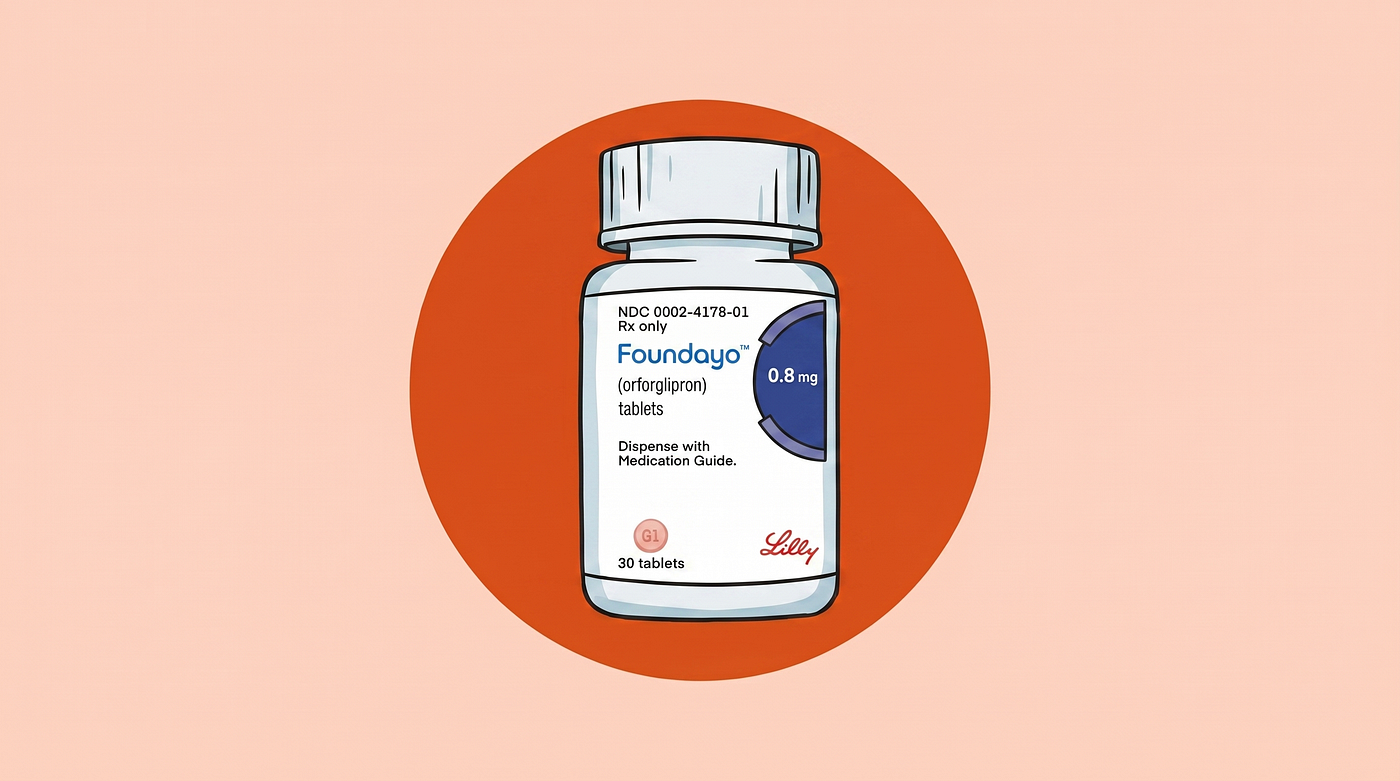
The third strategy is to wait for the oral generation. The new oral GLP-1s coming to market, including orforglipron at a $149 self-pay starting dose, are bringing branded GLP-1 access to a price point that some Medicaid recipients can afford out of pocket. The pill is meaningfully less effective than the injection, but it is real medication at a price closer to what an uninsured patient can actually pay.
The fourth strategy, which is what I would point my Mississippi reader toward first, is to verify her specific Medicaid plan rather than relying on the broad state policy. Most Medicaid programs are administered through managed care organizations, and individual MCO formularies sometimes cover medications the broader state policy does not. The variance is small but real, and the only way to know is to call the member services line on the back of the card.
What This Means for the Bigger Conversation
The American healthcare system has decided that whether a patient with obesity gets one of the most effective medications of the past 50 years depends on which state they happen to live in. There is no medical justification for this. There is no clinical reason a Medicaid recipient in Texas is a worse candidate for GLP-1 treatment than a Medicaid recipient in California. The variance is purely fiscal and political.
The patients who lose are the ones who have the fewest options to begin with. Medicaid recipients are by definition lower income. Lower income Americans have higher obesity rates. The states with the highest obesity rates, concentrated in the South, are disproportionately the states that do not cover the medication. The policy actively widens the disparity that the medication exists to close.
I have built out state-level breakdowns of provider access, pricing, and what each state’s coverage rules look like for readers who want to dig into their own specific situation. The California state page and the North Carolina state page are the two I get the most questions about, because they sit at opposite ends of the coverage spectrum. The full state pricing breakdown covers all 51 jurisdictions.
The Take
If you have Medicaid and your state covers GLP-1s, take advantage of it. Get the prior auth done, get the prescription, and treat the medication as the chronic-condition therapy it is.
If you have Medicaid and your state does not cover GLP-1s, call your specific MCO before assuming the answer. Check whether you qualify for the diabetes indication. Consider whether the cash-pay branded program is within reach, and if not, evaluate the compounded options against the regulatory risk that they carry.
The bigger structural problem is one nobody is going to fix this year. The federal Medicaid weight-loss carve-out is a 35-year-old statute written for a different category of drug, and it is producing access outcomes that no one would design intentionally. Until that statute changes, the answer to the question “does Medicaid cover my GLP-1” is going to depend on a map, and the map is going to keep changing in ways that have nothing to do with medicine.
RC Nelson is a health writer covering GLP-1 medications, weight loss science, and the real cost of getting treatment in America. More at glp1clinics.org.
메타데이터
- post_id
- 2c3bb68429ca
- slug
- your-zip-code-decides-whether-medicaid-pays-for-your-glp-1-2c3bb68429ca
- url
- https://medium.com/@robertchristos/your-zip-code-decides-whether-medicaid-pays-for-your-glp-1-2c3bb68429ca
- canonical_url
- https://medium.com/@robertchristos/your-zip-code-decides-whether-medicaid-pays-for-your-glp-1-2c3bb68429ca
- author_url
- https://medium.com/@robertchristos
- status
- ok
- fetched_at
- 2026-06-09 15:37:30