The Context Architecture: Designing Info Flows for Agentic Systems
Understanding WHAT differentiates Robust AI systems from Agents JUST Intelligent Enough!
The Context Architecture: Designing Info Flows for Agentic Systems
Understanding WHAT Context differentiates Robust AI systems from Agents JUST Intelligent Enough!
(Not a Medium paid member…no worries, read for free here)

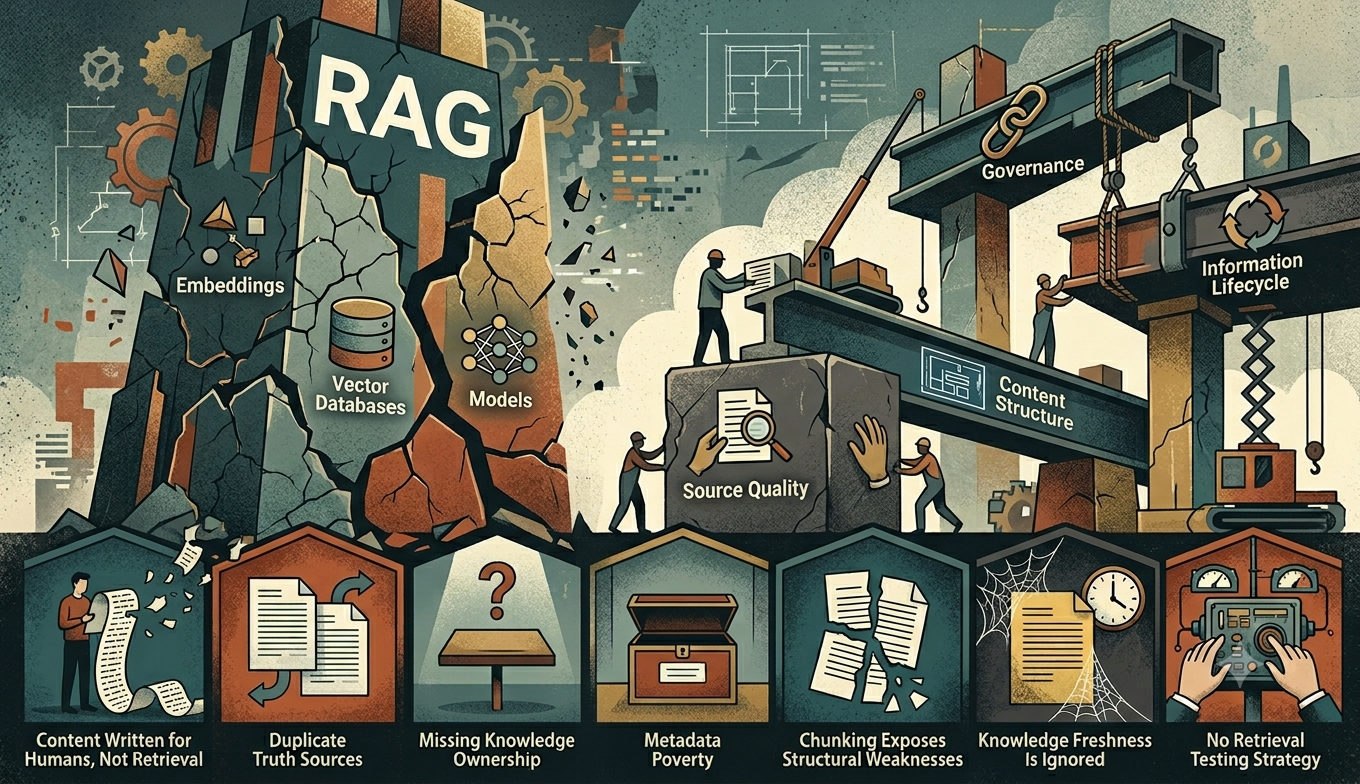
Image owned by Author (Created using AI)
Most conversations about agentic systems start in the wrong place.
They start with capabilities** (what the agent can do). Or with models (how smart the core reasoning loop is). Or with tools** (APIs, plugins, function calls, integrations).
But in practice, none of those are the limiting factor.
What actually determines whether an agent behaves intelligently, predictably, and usefully is something far more mundane and far more fragile:
How context moves through the system.
Not prompts. Not embeddings in isolation. Not “memory” as a marketing term.
Rather, Context as an Architectural Concern.
Agents Don’t Think in Prompts. They Think in State.
If you’ve worked on distributed systems, this will feel familiar.
No serious system relies on a single request payload to behave correctly. State is constantly accumulated, scoped, invalidated, and reconstructed.
Agentic systems are no different.
An agent’s “intelligence” at any moment is shaped by:
- What it remembers
- What it forgets
- What it just observed
- What it assumes is still true
- What feedback loops it trusts
Yet we still talk about agent design as if a better prompt or a longer context window will solve this.
That’s like trying to fix a data pipeline by increasing buffer size.
It works, until it doesn’t.
Short-Term Context vs Long-Term Memory
One of the earliest mistakes teams make is collapsing all context into “memory.”
But memory is not a single thing.
In practice, agentic systems operate with at least two fundamentally different layers:
Short-term context (the reasoning state)
This is volatile.
- Current goal
- Recent observations
- Intermediate reasoning
- Tool responses still being interpreted
It behaves like a scratchpad, not a database.
You don’t want this to persist indefinitely. You want it to decay, to be pruned, to be replaced.
Long-term memory (the reference state)
This is durable.
- User preferences
- System constraints
- Learned patterns
- Historical decisions
- Stable facts
This behaves more like infrastructure than cognition.
Treating these as the same thing leads to agents that:
- Hallucinate based on stale reasoning
- Anchor too hard on past conclusions
- Or carry irrelevant context forward “just in case”
Good context architecture is less about remembering more and more about remembering appropriately.
Memory Stores Are Not Reasoning States
Another subtle but critical distinction.
A memory store answers questions like:
“What do we know?”
A reasoning state answers:
“What are we currently thinking through?”
When teams blur this line, they end up with agents that sound confident but lack coherence.
You’ll see symptoms like:
- Tool outputs injected verbatim without interpretation
- Retrieval results treated as truth instead of candidates
- Agents unable to explain why they took an action
That’s because data retrieval is being mistaken for understanding.
Tool outputs are not conclusions. They are inputs to reasoning.
Which brings us to one of the most underdesigned parts of agent systems.
Tool Outputs Are Context, Not Just Data
Most tool integrations today are transactional:
- Call tool
- Get response
- Stuff response back into context
- Move on
But from the agent’s perspective, tool outputs are:
- Observations
- Constraints
- Partial views of reality
- Sometimes contradictory signals
They need to be interpreted, summarized, weighted, and sometimes ignored.
In other words, tool outputs are contextual affordances, not facts.
A well-architected agent doesn’t just ingest tool responses — it:
- Annotates confidence
- Tracks freshness
- Notes assumptions
- Records why a tool was consulted in the first place
This is less about prompt engineering and more about information plumbing.
Which is where context architecture really lives.
Context Flows, Not Context Dumps
The biggest conceptual shift is this:
Agents don’t need more context. They need better context flows.
Context should move through the system with intention:
- Entering at defined boundaries
- Transforming as it flows
- Exiting when it no longer serves the task
Think in terms of:
- Ingress (what context is allowed in?)
- Routing (where does it go?)
- Filtration (what gets dropped?)
- Accumulation (what compounds?)
- Eviction (what must leave?)
This is architecture, not prompting.
And like any architecture, bad defaults compound quickly.
The Cost of Unstructured Context
When context is treated as an unbounded blob, a few things happen:
- Reasoning quality degrades The agent anchors on irrelevant details and loses the narrative thread.
- Behavior becomes unpredictable Small changes upstream have outsized downstream effects.
- Debugging becomes impossible You can’t tell whether a failure came from:
- Missing context
- Wrong context
- Or context that should have expired
This mirrors problems we’ve seen before:
- Global state in applications
- Undocumented APIs
- Tribal knowledge in teams
Agentic systems are simply surfacing these issues in a new medium.
Organizational Readiness Is a Context Problem Too
Here’s the uncomfortable part.
Most organizations are not ready for agentic systems — not because of technology, but because of how they handle context today.
If your teams already struggle with:
- Fragmented documentation
- Unclear ownership
- Decision-making without a recorded rationale
- Tools that optimize for output, not understanding
Then agents won’t fix that.
They’ll amplify it.
Agents don’t create clarity. They consume whatever clarity already exists.
Which is why context architecture isn’t just a technical concern — it’s an organizational one.
Where Infra, Product, and Docs Quietly Converge
This is where my own background keeps pulling me back.
Infrastructure teaches you about boundaries and failure modes. The product teaches you about intent and user context. Documentation teaches you what actually survives over time.
Agentic systems sit at the intersection of all three.
You’re designing:
- Information lifecycles
- Trust boundaries
- Narrative continuity
- Feedback loops between humans and machines
Ignoring any one of these leads to brittle systems that look impressive in demos and collapse in reality.
Designing for Context Is Designing for Time
Ultimately, context architecture is about time.
- What did the system know then?
- What does it know now?
- What should it carry forward?
- What must it let go?
Agents that don’t respect time feel erratic. Agents that do feel grounded.
This isn’t about making agents smarter. It’s about making them situated.
To conclude, I would say:
We don’t need agents that remember everything.
We need agents that understand what matters, when it matters, and why it matters.
That understanding doesn’t emerge from larger models or longer prompts.
It emerges from deliberate context architecture:
Quietly designed, carefully scoped, and deeply aligned with how real systems (and real teams) actually work.
Thanks for reading this article; don’t forget to clap and follow ❤️
You can send me an invite @ LinkedIn or Substack 😎
Looking forward to connecting with you 🤝
You may also like to read the previous article from this series:
메타데이터
- post_id
- 2c44391887d2
- slug
- the-context-architecture-designing-info-flows-for-agentic-systems-2c44391887d2
- url
- https://medium.com/illumination/the-context-architecture-designing-info-flows-for-agentic-systems-2c44391887d2
- canonical_url
- https://medium.com/illumination/the-context-architecture-designing-info-flows-for-agentic-systems-2c44391887d2
- author_url
- https://medium.com/@bhurji.pk
- status
- ok
- fetched_at
- 2026-09-05 06:26:37