Mental and Emotional Hygiene
A “User Manual for the Human Mind” — with the gunas as operating systems, their dysfunctions as failure modes, and Sattva as the…
Mental and Emotional Hygiene
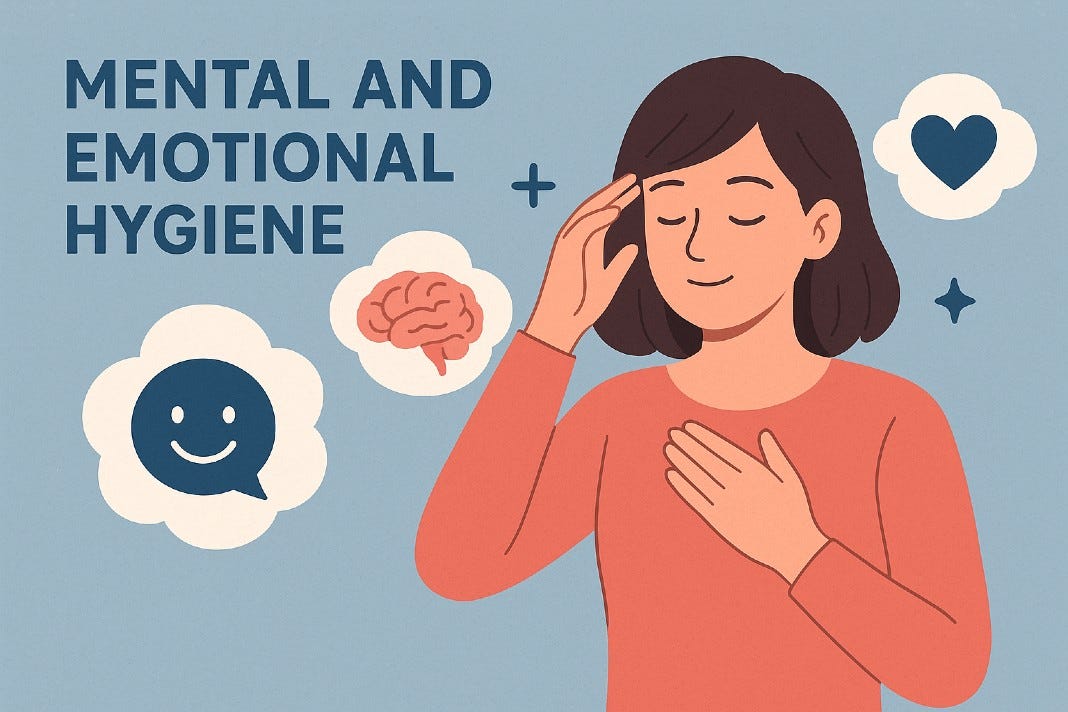
A “User Manual for the Human Mind” — with the gunas as operating systems, their dysfunctions as failure modes, and Sattva as the regulatory intelligence.
🔑 Systems for Cultivating Gunas
Tamo Guna is built through the Body: Physical training, sports, manual labor, and strict routines are all about conditioning the body and nervous system. They create discipline through habit and muscle memory. This is the foundation. A weak, untrained body (Tamas) is unstable and can’t support higher pursuits.
Rajo Guna is built through Education: The entire education system — from learning math to studying history — is about developing the analytical, discerning, and goal-oriented mind. It teaches us to use reason (Rajas) to overcome ignorance (Tamas) and achieve objectives (good grades, a degree, a career).
Sattva Guna is built through Spirituality: Practices like meditation, prayer, mindfulness, and philosophy are designed to do one thing: cultivate the witness. They train us to observe our thoughts and emotions without getting swept away by them. This is the ultimate “circuit breaker” for the chaos of the other two gunas.
This is a developmental ladder: Body → Mind → Spirit. If you try to skip steps (e.g., try to meditate deeply without first stabilizing the body and disciplining the mind), instability shows up.

⚡ The Concept of “Guna Rage” & Unhealthy Switching
When a guna becomes unbalanced and over-dominant, it becomes a destructive force — a “Guna Rage.”
- Tamas Rage: Inertia, severe depression, addiction, complete apathy. The body’s demands for comfort completely override everything else.
- Rajas Rage: Burnout, crippling anxiety, ruthless ambition, anger, perfectionism. The mind’s relentless striving becomes self-destructive.
🧠 Substances = False Switches
Exactly: drugs mimic guna states without the natural transitions.
Stimulants = false Rajas.
- Someone in Rajas Rage (stressed, anxious) might drink alcohol. Why? Alcohol is a depressant — it artificially induces a Tamasic state (numbness, lethargy) to escape the relentless pressure of their own mind.
Depressants = false Tamas.
- Someone in Tamas Rage (depressed, lethargic) might use cocaine or stimulants. Why? It artificially induces a Rajasic state (energy, confidence, drive) to escape the crushing weight of their inertia.
The problem: This is like using a sledgehammer to fix a watch. It creates a vicious cycle of dependency and destroys the system it’s trying to regulate.
Instead of learning to modulate from inside, people outsource balance to chemicals — unsustainable and destabilizing.

The Healthy “Guna Switch”: Using Sattva as the Circuit Breaker
The healthy way is to use your awareness (the beginning of Sattva) to consciously choose an activity that will balance your current state, not just escape it.
Here is a practical guide for a healthy Guna Switch:


The Ultimate Goal: Sattva as the Manager
✅ Healthy Guna Switch (Practical Algorithm)
- Detect the Rage → Name which guna is hijacking you.

- Interrupt with Awareness (Sattva) → “Pause, breathe, observe.”

- Balance with Opposite/Complementary Energy → Choose activity deliberately.

This transforms life into a real-time yoga practice, where you’re no longer slave to impulses.
🎯 The Meta-Goal
Not to kill Tamas or Rajas, but to domesticate them.
· A good manager knows when to let an employee rest (healthy Tamas).
· A good manager knows when to push for a deadline (healthy Rajas).
· A good manager knows when to call a time-out to reassess (Sattva).
When Sattva manages, the system becomes self-healing. You no longer fear moods, burnout, or lethargy — they’re just signals to re-balance.

🌿 Guna-Based Daily Life Toolkit
(A Self-Management Practice Inspired by CBT + Yoga Psychology)
1. Daily Guna Awareness Check
Like a CBT thought diary, but instead of only thoughts → check your state of energy.
Morning: “What guna am I waking up with?”
Midday: “How is my energy flowing?”
Evening: “What guna carried me today?”
📝 Record in 3 words: Body (Tamas?), Mind (Rajas?), Awareness (Sattva?).
2. The Guna Thought Reframe (CBT-style)
Instead of just challenging thoughts, ask:
If it’s Tamas talking:

If it’s Rajas talking:

If it’s Sattva talking:

3. Guna Switch Menu (Healthy Alternatives)
(Like CBT’s behavioral experiments, but guna-specific)
Stuck in Tamas (lethargy, apathy):
Micro-movement (2 min walk, stretch).
Blast energizing music.
Do a “tiny task” → 5-min rule.
Stuck in Rajas (stress, anxiety, restlessness):
5-min breath focus (box breathing).
Walk in nature without phone.
Single-task: pick ONE thing only.
Stuck in Sattva (too detached, floaty):
Ground with action: cook, garden, clean.
Share insights with someone.
Put insight into small execution step.
4. The Pause Protocol (Circuit Breaker)
Borrowing from CBT’s “STOP technique”:
- Pause — Notice your current guna (T/R/S).
- Name — Say silently: “This is Tamas/Rajas/Sattva in me right now.”
- Switch — Choose the balancing action (from menu above).
- Check — After 10 min, “Do I feel more balanced?”
5. Weekly Guna Balance Map
Like CBT activity scheduling → structure your week with all three gunas:
Healthy Tamas: Sleep hygiene, digital detox, planned downtime.
Healthy Rajas: Work sprints, exercise, skill-building.
Healthy Sattva: Meditation, journaling, meaningful conversations.
🗓️ Goal = No guna dominates; all get their share.
6. Emergency Guna Reset Kit
When dysregulation is high:
3 deep breaths (instantly Sattva).
Cold splash or grounding touch (shift from Tamas/overheating Rajas).
Quick mantra / affirmation: “I am not my guna state. I can choose balance.”
✨ Why this works:
CBT says: change thoughts → change feelings → change behavior.
Guna toolkit says: balance energy → balance thoughts → balance life.
메타데이터
- post_id
- 2c44f8db717a
- slug
- mental-and-emotional-hygiene-2c44f8db717a
- url
- https://medium.com/@veerasakthi/mental-and-emotional-hygiene-2c44f8db717a
- canonical_url
- https://medium.com/@veerasakthi/mental-and-emotional-hygiene-2c44f8db717a
- author_url
- https://medium.com/@veerasakthi
- status
- ok
- fetched_at
- 2026-07-17 10:58:16