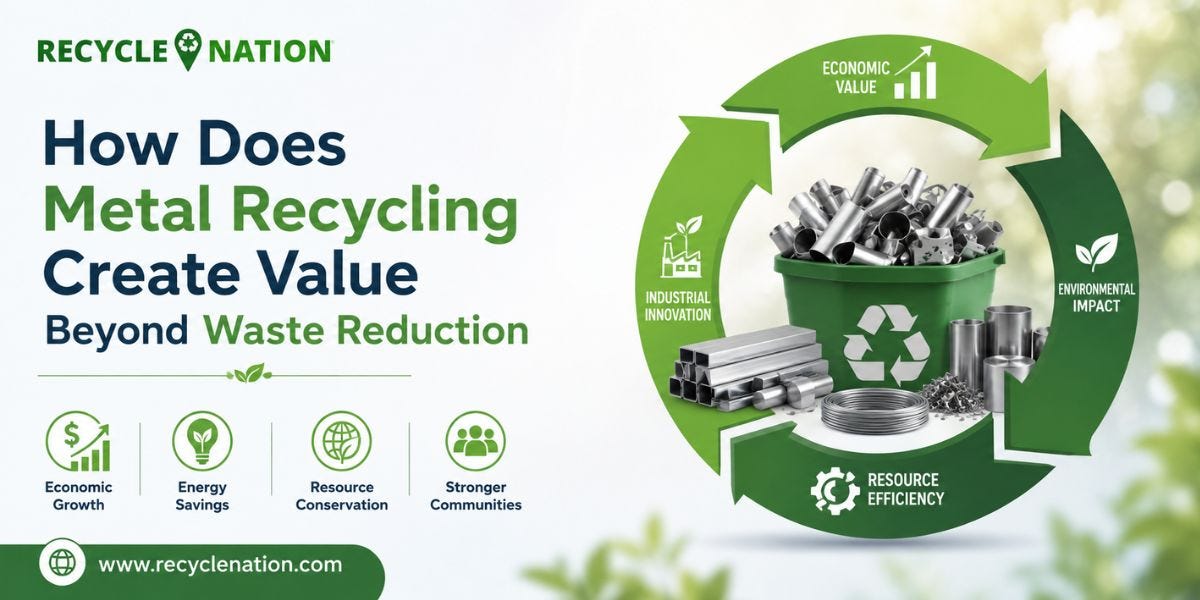
How Does Metal Recycling Create Value Beyond Waste Reduction?
Most people think the point of recycling is to keep garbage out of landfills. But that’s only part of the story. Every time metal recycling…
How Does Metal Recycling Create Value Beyond Waste Reduction?
Most people think the point of recycling is to keep garbage out of landfills. But that’s only part of the story. Every time **metal recycling** offers steel, aluminium, copper or other metals new life. It provides value far beyond waste management. Recycled metals re-enter industry, cutting the demand for newly mined resources. Also help companies make greater use of commodities already in existence. This method supports economic progress and encourages a more responsible use of natural resources.
A lot of people throw away stuff that still has value. An old appliance, broken machinery or obsolete piece of equipment may no longer perform its intended purpose. But the metal inside it can often become part of an entirely different product.
Why Metal Continues to Have Value After Its First Use
Unlike many materials, metal doesn’t become useless when one product reaches the end of its life. Such a capability makes it a key asset in modern manufacturing.
Most Metals Can Be Recycled Again and Again
Eventually, the paper fibres grow too short to be recycled. Many plastics lose quality when they are processed repeatedly.
Metals behave differently.
Steel, aluminium, copper and stainless steel may often be recycled many times over without affecting their basic qualities. These materials can be used to create new goods in various sectors.
Keeping metal in circulation lowers unneeded demand for fresh raw materials from Earth.
Manufacturers Depend on Recovered Materials
Factories require raw resources for ongoing production.
The availability of freshly produced metals may be affected by mining, transportation and market fluctuations. Recycled material is another solid source that allows firms to keep their operations going when supply chains become more complex.
Recovered metals are frequently used in sectors such as:
- Construction
- Automotive manufacturing
- Industrial equipment
- Consumer goods
- Infrastructure development
- Machinery production
For manufacturers recycled materials offer more flexibility and a more efficient use of resources.
Every Recycled Product Supports a Circular Economy
Metal products seldom have a finite life when they cease to be used by people.
Steel from obsolete washing machines can be turned into a new car. During renovation, copper wiring removed from a building can be utilised in electrical equipment at a later date. Many recycled aluminium beverage cans are new containers on the supermarket shelf.
This constant reuse preserves precious materials in productive circulation instead of turning them into permanent trash.
Recycling Creates Value Beyond Environmental Protection
Recycling has always had the virtue of protecting natural resources but there are also some substantial operational and economic benefits that enterprises recognise as well.
Lower Energy Demand Supports Manufacturing
To get metal out of raw ore you need to do a lot of mining, shipping and processing.
Reusing metal that is already in use takes a lot less energy to get the material ready to be used in making things again. The degree of reduction depends on the type of metal and the recycling procedure utilised.
Reduced energy demands can lower costs of production and enable more efficient industrial processes.
Better Resource Management Improves Long-Term Stability
Businesses are increasingly seeing recycled metal not as waste but as a valuable commercial resource.
Recovering usable metals creates new sources of supply and reduces the need to rely on newly mined resources. That method becomes more helpful as demand for industrial materials picks up.
For example, when organisations integrate **waste reduction** with larger resource management strategies, they generally find that responsible recycling promotes long-term operational planning.
Responsible Recycling Creates Business Value
The recovery of metals is no longer seen as solely an environmental undertaking. Many companies now view it as part of an overall approach to more effective resource management.
Retired Equipment Still Contains Valuable Materials
When companies expand or technology evolves, they often replace machinery, shelves, production equipment, and electrical gadgets.
The gadget may not be useful anymore but the metal within is. The recovery of these materials enables organisations to reduce wasteful disposal and put reusable resources back into the production supply chain.
This method enables the resource to be used responsibly without the wastage of precious material.
Electronics Recycling Supports Metal Recovery
There is more in modern electronics than just plastic and circuit boards.
Computers, servers, networking equipment and mobile gadgets often include aluminium, copper, gold, silver and other recoverable metals. Electronics recycling is the process of separating apart these materials so they can be processed and used for future manufacturing.
As electronic trash continues to increase, these resources are becoming an increasingly vital part of sustainable material management.
Business Recycling Programs Create Long-Term Benefits
Many organisations now include business electronics recycling in their sustainability plans.
Oftentimes, replacing outmoded technology creates chances to recover valuable materials, while decreasing unnecessary garbage disposal. Businesses also enjoy improved inventory management and more appropriate equipment retirement practices.
But organisations generally experience better environmental performance and resource efficiency when recycling is embedded in existing business processes as opposed to a one-off effort.
FAQs
Why is metal recycling important beyond reducing landfill waste?
Recycling of metal saves precious raw materials, reduces energy consumption in the manufacturing process, improves supply chains and allows for reuse of materials in productive usage for years to come.
Can metal really be recycled multiple times?
Yes. Metals such as steel, aluminium and copper can be recycled many times without substantial degradation of their basic qualities. They are therefore valuable resources for manufacturing in the long term.
Why should businesses recycle electronic equipment separately?
Electronic devices contain metals that are recoverable but require special processing. Proper recycling allows these resources to be recovered while supporting responsible environmental management and resource conservation.
Conclusion
The benefits of metal recycling go much beyond simply removing waste from landfills. The recovery of important metals helps production, and conserves natural resources. It also enhances supply chains and produces long-term economic benefit. Many companies that incorporate waste reduction into their sustainability goals realise. That a significant amount of the products that are destroyed still contain ingredients. Which can be useful in future production. Treating metal as a reusable resource, not a waste, helps industry construct a more efficient, robust future.
메타데이터
- post_id
- 2c64bb0144e1
- slug
- how-does-metal-recycling-create-value-beyond-waste-reduction-2c64bb0144e1
- url
- https://medium.com/@recyclenation07/how-does-metal-recycling-create-value-beyond-waste-reduction-2c64bb0144e1
- canonical_url
- https://medium.com/@recyclenation07/how-does-metal-recycling-create-value-beyond-waste-reduction-2c64bb0144e1
- author_url
- https://medium.com/@recyclenation07
- status
- ok
- fetched_at
- 2026-08-10 14:12:41