The Difference Between SEO and SEM & Their Business Function
Understand the differences between SEO and SEM in depth and discover the crucial functions of SEO to boost your business performance in the…
The Difference Between SEO and SEM & Their Business Function
Differences & Functions SEO and SEM for Business
Understand the differences between SEO and SEM in depth and discover the crucial functions of SEO to boost your business performance in the digital era. In today’s fast-paced digital landscape, simply having a business website is no longer enough. Instead, the ultimate challenge lies in ensuring your product or service appears on the first page of Google when potential customers search for relevant keywords. To achieve this visibility, marketers primarily rely on two core strategies: SEO and SEM.
However, many business owners and beginner marketers frequently confuse these two terms. What exactly is the dynamic between SEO and SEM? Furthermore, why does SEO play such a critical role in the long-term sustainability of your business?
Let’s break it down step by step in this article.
Understanding SEO and SEM Definitions
Before diving into the core differences, we must first establish a clear definition for each strategy.
What Is SEO?
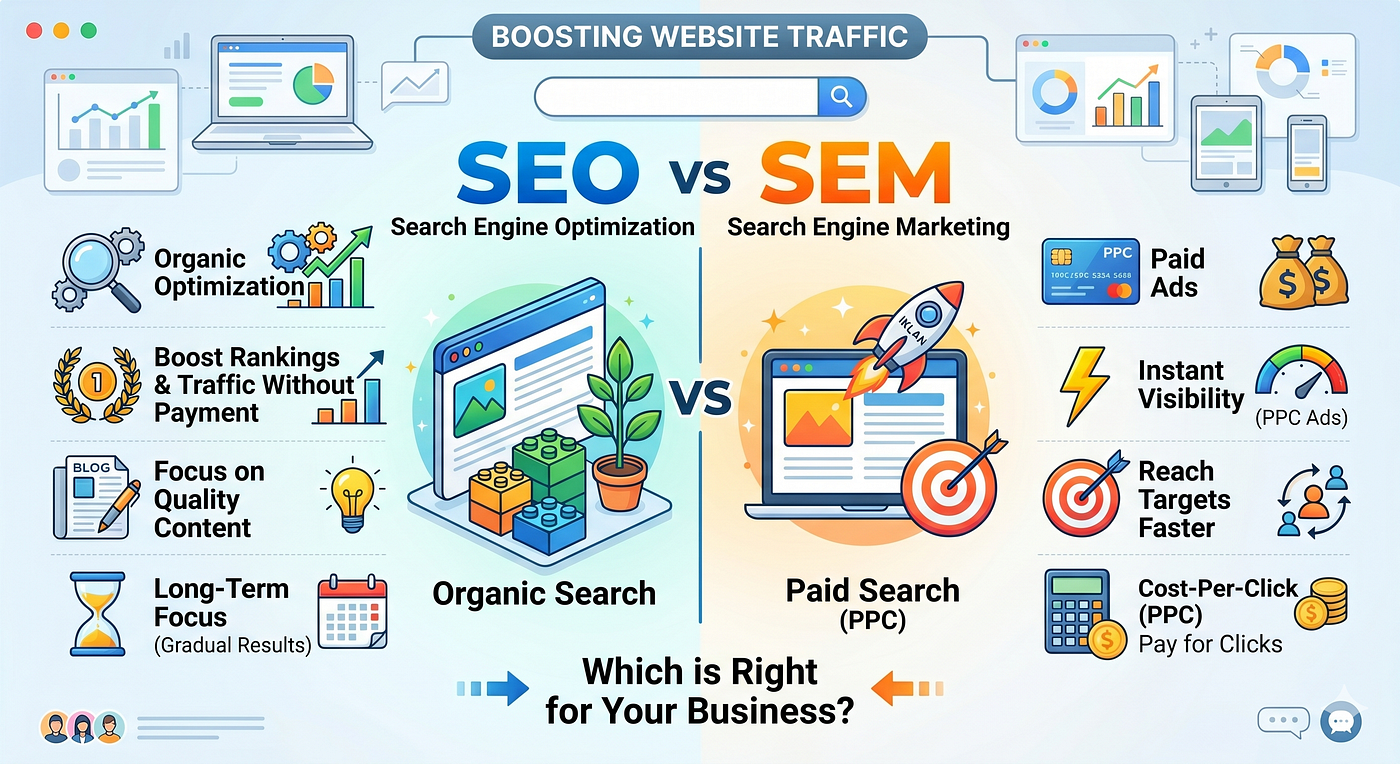
SEO (Search Engine Optimization) is the practice of optimizing your website to earn organic, free positions on the Search Engine Result Pages (SERPs). Rather than paying for visibility, the focus of SEO is to provide relevant, high-quality content alongside a solid technical structure so that your site naturally aligns with Google’s algorithms.
What Is SEM?
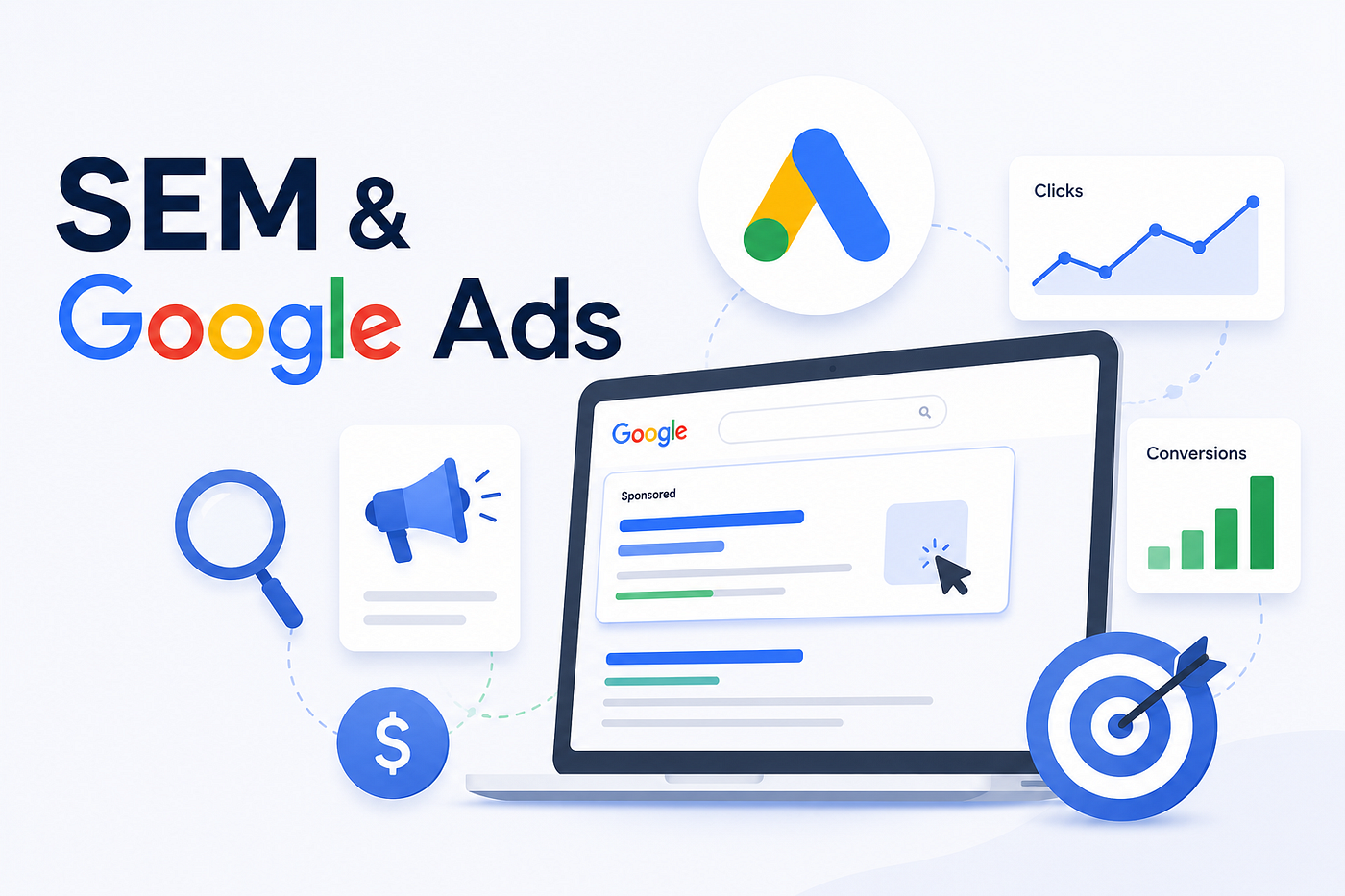
SEM (Search Engine Marketing), on the other hand, is a digital marketing strategy that utilizes paid advertising to get websites to appear at the very top of the SERPs instantly. The most popular platform for executing this strategy is Google Ads. Through SEM, you pay every time a user clicks on your ad, a model widely known as Pay-Per-Click (PPC).
4 Main Differences in SEO and SEM You Need to Know
Although both approaches aim to drive traffic to your website, the underlying mechanisms of how you utilize SEO and SEM are vastly different. Here are the four primary distinctions:
1. Cost Involved: Comparing SEO and SEM from a Budget Perspective
- SEO: This strategy is purely organic. Therefore, you do not have to pay Google to make your website appear at the top. The budget involved is usually allocated toward creating high-quality content or hiring SEO experts.
- SEM: This strategy is strictly paid. Consequently, you must consistently maintain an advertising budget. The moment your ad budget runs out, your website will immediately disappear from the first page of search results.
Click here to learn more about the SEO Basics Guide
2. Speed of Results: How SEO and SEM Generate Traffic
- SEO: It takes a relatively long time to yield results. In fact, the fruits of your SEO optimization usually become visible only after 3 to 6 months, depending heavily on the keyword competition level.
- SEM: It delivers instant results. As soon as your ad campaign is approved and activated, your website can sit at the top position on that very same day.
3. Sustainability: Evaluating SEO and SEM in the Long Run
- SEO: It delivers a powerful compounding, long-term effect. Well-optimized content will continue to drive consistent traffic for years, even after active optimization efforts have slowed down.
- SEM: It only provides a short-term impact. As a result, the traffic stops completely the moment you halt funding or turn off the ad campaign.
4. Appearance on SERPs: Identifying SEO and SEM on Google’s Page
SEM results are always clearly marked with a “Sponsored” or “Ads” label at the top or bottom of the page. Meanwhile, SEO results appear right below those paid ads as natural search results that Google deems genuinely most relevant to the user’s query.

The Crucial Functions of SEO for Business Success
To understand why global brands allocate massive budgets toward organic optimization, we must look at how SEO transforms your broader business performance:
- Establishing Brand Authority and Trust: There is a strong psychological bias among internet users. Searchers inherently trust organic results more than paid advertisements. Ranking consistently at the top for major industry terms builds massive brand equity, positioning your company as the ultimate leader and trusted authority in your niche.
- Capturing Highly Targeted Traffic (Inbound Pull): Traditional advertising pushes messages onto people who might not want them. In contrast, SEO captures users at the exact moment they are looking for a solution. By aligning your pages with specific user intent, you attract highly qualified leads who are already far along in the customer buying journey and ready to convert.
- Maximizing Marketing ROI and Cost Efficiency: While SEM requires ongoing cash injections to survive, SEO provides an incredibly high return on investment over time. Once your content claims a top spot, the cost per acquisition drops dramatically. You continue to reap the rewards of traffic, leads, and sales without paying for individual customer actions.
- Creating a 24/7 Digital Sales Representative: Your physical store or office has closing hours, but your SEO-optimized website never sleeps. It continuously greets potential customers, answers their pressing questions, showcases your products, and captures leads at 2:00 AM just as effectively as it does at 2:00 PM.
Conclusion: Which Strategy Wins the SEO and SEM Debate?
After analyzing the core traits of SEO and SEM, the next logical question is: which one is best for my business?
Ultimately, the answer depends on your current business goals and financial budget. If you have just launched a new product and need immediate sales, SEM serves as the perfect instant solution. However, if you want to build a sustainable digital asset that continuously generates sales without relying on non-stop ad spend, then SEO is the strategy you must prioritize.
For the best results, you should use both synergistically. While building a strong SEO foundation for the long term, you can simultaneously leverage SEM to gain quick exposure at the beginning.
Note: To learn more about effective digital marketing strategies, you can read our basic guide on content marketing optimization tactics here on this blog.
메타데이터
- post_id
- 2c66045d51e3
- slug
- seo-and-sem-differences-functions-for-business-2c66045d51e3
- url
- https://medium.com/@azamzain545/seo-and-sem-differences-functions-for-business-2c66045d51e3
- canonical_url
- https://medium.com/@azamzain545/seo-and-sem-differences-functions-for-business-2c66045d51e3
- author_url
- https://medium.com/@azamzain545
- status
- ok
- fetched_at
- 2026-06-09 15:37:30