The Engineering of Time: The Structural Difference in Modern Emergency Services
When an acute health crisis occurs, the human body operates on a strict metabolic clock. Whether dealing with a sudden cardiac anomaly, an…
The Engineering of Time: The Structural Difference in Modern Emergency Services
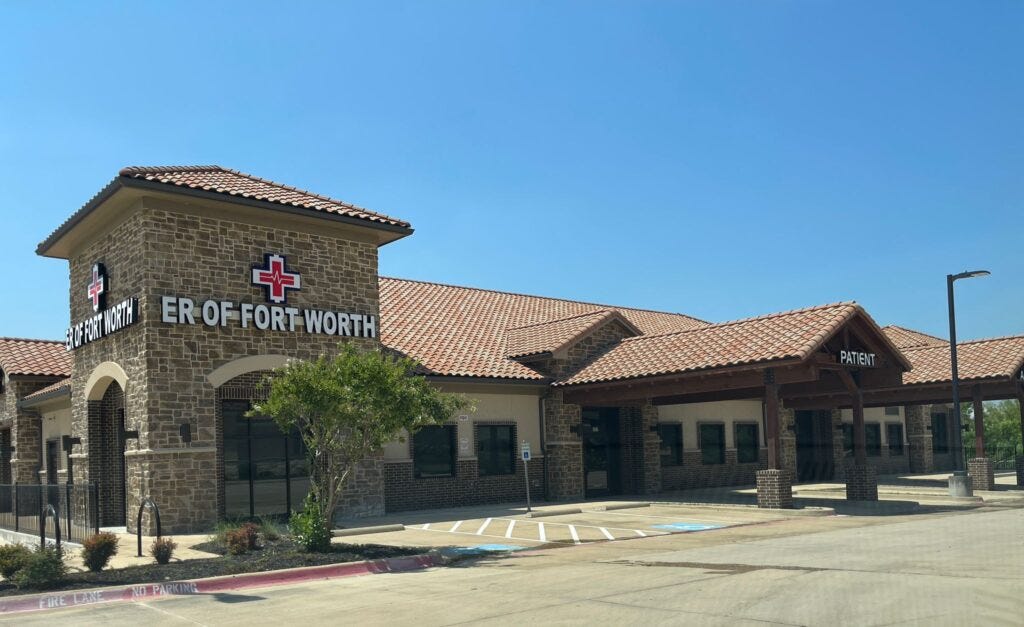
ER OF FORT WORTH
When an acute health crisis occurs, the human body operates on a strict metabolic clock. Whether dealing with a sudden cardiac anomaly, an anaphylactic allergic reaction, or a severe physical trauma, tissue survival is directly tied to the speed of clinical intervention. Historically, accessing comprehensive medical care meant entering a massive institutional hospital network. Today, the evolution of freestanding **emergency services** has completely decoupled trauma-grade diagnostics from the traditional hospital bottleneck, creating a faster, safer, and more mathematically efficient path to stabilization.
To understand why this model works, one must look at the structural physics of medical delivery. Traditional hospital emergency departments are designed to handle dual inputs: acute walk-in trauma and regular inpatient routing. This creates an immediate operational conflict. If the hospital beds upstairs are full, the emergency room downstairs stalls, creating a massive waiting room delay that leaves vulnerable patients sitting in chairs for hours.
Decentralizing Acute Care: The Power of Proximity
By removing the inpatient housing layers, independent er services eliminate this administrative traffic jam entirely. A standalone facility focuses exclusively on one goal: immediate, ultra-fast stabilization. When you search for specialized er services near me, you are selecting an engineered clinical layout where the distance from the front door to a fully equipped trauma bed is measured in steps rather than long hospital hallways.
This lean structural design allows for a direct-to-bed triage protocol. Instead of waiting for a clerk to process insurance forms while an illness escalates, the patient is brought directly into a private exam room. Assessment, laboratory draws, and medical histories happen simultaneously at the bedside, shaving critical minutes off the time-to-treatment metric.
The Diagnostic Engine Inside Standalone Rooms
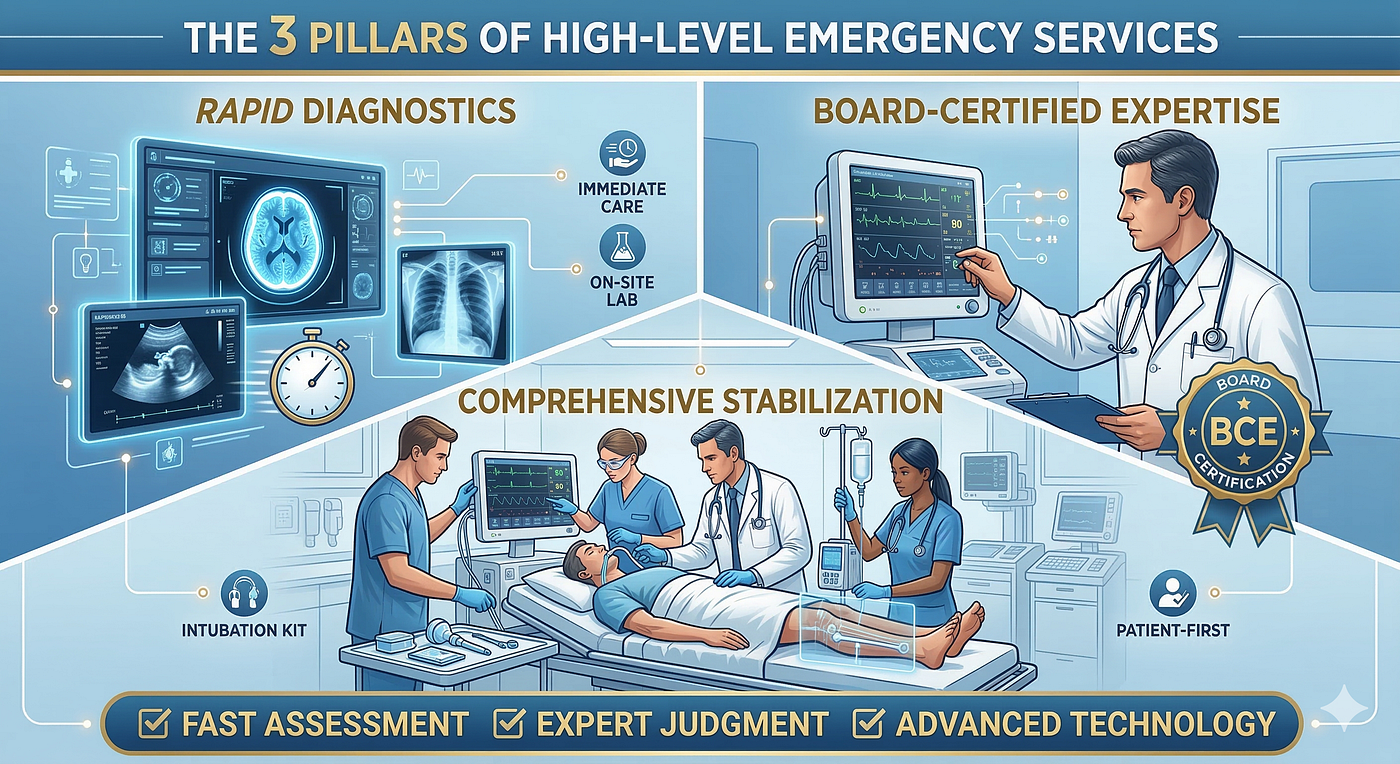
A common misconception is that a neighborhood facility cannot match the diagnostic power of a downtown medical complex. However, modern freestanding emergency room services are required by law to house identical, hospital-grade technology. The critical clinical difference is the accessibility of that technology.
Inside a standard hospital, a patient in the ER must share the imaging department with the entire facility — including scheduled outpatients and surgical units. In a dedicated neighborhood ER, the diagnostic suite is used solely for the immediate emergency patients inside the building.
- On-Site 32-Slice CT Technology: This allows for instant, volumetric 3D mapping of internal structures. If a patient presents with sudden, thunderclap head pain or severe abdominal trauma, doctors can scan and analyze the images in real time. To better understand how this advanced technology maps internal crises without delay, exploring the **10 essential things you must know about ER SERVICES **provides a clear view of how modern facilities combine high-speed diagnostics with strict low-dose safety protocols.
- Point-of-Care Testing Laboratories: Rather than sending blood work down a mechanical chute to a central hospital lab, blood chemistry and cardiac enzymes are analyzed on-site. Results are delivered to the physician within fifteen minutes, allowing for immediate pharmaceutical adjustments.
- High-Definition Digital Radiography: Instantly rules out or confirms complex fractures and pulmonary congestion without requiring the patient to travel across multiple floors.
Selecting the Right Destination Under Stress
In the middle of a medical event, panic often clouds clear thinking. Many families default to driving long distances to a major trauma center simply because it is a familiar landmark. However, when seeking the fastest emergency room services near me, distance and wait times are the most critical variables to calculate.
Choosing an agile, neighborhood-centric emergency infrastructure ensures that you receive board-certified medical expertise without the structural friction of a traditional hospital system. You aren’t just choosing a clinic; you are choosing an environment engineered to fight against the clock on your behalf.
Conclusion: Hospital-Grade Precision, Neighborhood Velocity
Your health should never be forced to wait in a crowded lobby. At **ER of Fort Worth**, we have built our entire medical model around the principles of speed, clinical precision, and patient dignity. By keeping premium diagnostic technology and board-certified emergency physicians completely accessible 24 hours a day, 7 days a week, we ensure that when you face an unexpected medical crisis, you have a direct, zero-wait pathway to recovery right in your community.
📍 Find us at: 4561 Heritage Trace Parkway, Suite 117, Fort Worth, TX 76244
🔗 Learn more about our rapid stabilization capabilities: Emergency Services
메타데이터
- post_id
- 2c7e95ce06b7
- slug
- the-engineering-of-time-the-structural-difference-in-modern-emergency-services-2c7e95ce06b7
- url
- https://medium.com/@hajirahmanbj/the-engineering-of-time-the-structural-difference-in-modern-emergency-services-2c7e95ce06b7
- canonical_url
- https://medium.com/@hajirahmanbj/the-engineering-of-time-the-structural-difference-in-modern-emergency-services-2c7e95ce06b7
- author_url
- https://medium.com/@hajirahmanbj
- status
- ok
- fetched_at
- 2026-08-15 09:50:40