BLOOD, REPRESSION, SACRIFICE, AND THE SHADOW THAT FEEDS ON DENIAL -The Wound That Feeds
A Dark Resurection.
BLOOD, REPRESSION, SACRIFICE, AND THE SHADOW THAT FEEDS ON DENIAL -The Wound That Feeds
A Dark Resurection.
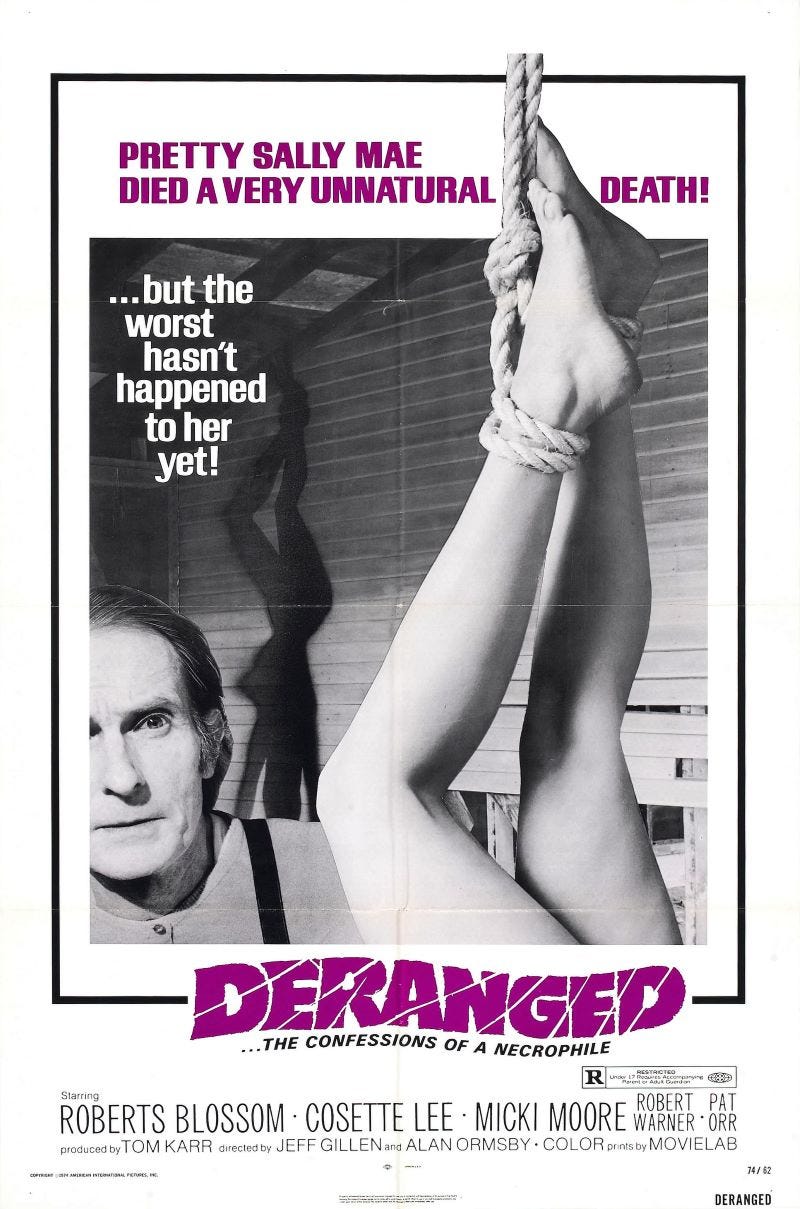
Adolescence cracks the floorboards. Desire rises before language. Shame arrives before meaning. This piece follows the shadow that forms in that silence and the strange beauty that grows when the forbidden refuses to stay buried. If you have ever felt the monster in the mirror tilt its head at you, this is your map.
The body turns traitor first. It happens without warning, sometime in the interminable afternoon between childhood’s slow death and the demands of adulthood, when the limbs suddenly belong to someone else, too long, too loud, too wet with the new and terrible secretions of want. The mirror becomes an enemy, a glass that reflects not a face but a question mark in human form, insufficiently legible, insufficiently you. Something has moved in while you were sleeping. It slipped through the cracks in the foundation, quiet as water insinuating itself into stone, patient as frost. You cannot name it yet because the language for it has been withheld — deliberately by some, through the ordinary negligence of collective dread by others — and so it sits in the dark of you, breathing.
This is the inaugural catastrophe: the self at war with its own emergent content, teetering at the rim of something vast and mute, neither able to descend into the abyss nor willing to retreat to the flatlands of the permissible. What forbidden interior lives in that rim space is not merely confusion. It is the full catastrophe of human desire colliding with the inherited architecture of prohibition, and the collision produces not sound but the peculiar, festering eloquence of the repressed. It produces the long silence that is not empty but stuffed with everything you cannot say.
The Primal Scene
Adolescence is not only a phase. It is a scene — primal, originary, structured around the unbearable act of witnessing something you lack the equipment to interpret. The child-becoming-adult witnesses the self. It watches desire rise in the body like groundwater, insistent and subterranean, and finds that the culture surrounding it offers two responses: celebration of approved desire (which is always already coded, constrained, neutered into respectability) and silence about everything else.
The silence is not neutral. Silence, as a cultural instrument, is always punitive. It encodes the message that what cannot be spoken must not be, and the adolescent, newly sensitized, receives this message in the nervous system before the mind can process it. The result is shame, not just the momentary blush of embarrassment but a structural condition, an ongoing relationship to the self in which the self appears as evidence of its own wrongness. You may look in the mirror and see not a face but an indictment. You feel the hunger rising and know, without knowing how you know, that the hunger makes you monstrous.
Guilt and Its Inferior Sibling
Guilt attaches to an act. Shame attaches to a being. The guilty person believes they have done something wrong; the ashamed person believes they are something wrong. This distinction matters enormously for what follows, because purity codes — every culture’s system for managing anxiety about the body’s embarrassing interfaces with the material world — depend on shame to enforce their borders. They do not tell you what you have done. They tell you what you are. Food, sex, gender, blood, death, the body’s multiple leakages and emissions: all organized around the binary of clean and contaminated, and all enforced through the exquisite instrument of internalized wrongness.
To grow up inside a purity code is to receive a continuous education in the abjection of the body, delivered not through explicit instruction but through the texture of silence and avoidance that surrounds certain subjects like a cordon of invisible wire. You learn that some parts of you are acceptable and some are not. You learn that some hungers are sanctioned and some must be starved. You learn that the line between the two runs straight through the center of your chest, and that you are responsible for keeping yourself on the right side of it.
The body does not cooperate.
The Inexhaustible Want
Genasis - In the beginning was want and the want screamed
This is the central and unanswerable fact that every purity code must eventually confront: the body wants. It wants with a specificity and an urgency that no cultural overlay fully extinguishes, though many overlays succeed in driving desire underground, into the cellar of the psyche, where it sits in the dark and acquires the qualities of everything that has been denied air and light: intensity, distortion, obsession, a gravitational pull that paradoxically increases with suppression. Freud’s contribution, whatever its subsequent revisions, was to insist on the reality of this dynamic: what is repressed does not disappear but is transformed. The energy of desire is conserved even as its object is disguised, and the disguise tends toward the monstrous precisely because the original prohibition has encoded monstrousness into the desire itself.
The adolescent who has been taught through silence and shame that their hunger is wrong does not stop being hungry. They become hungry in a different shape, one that carries the full freight of what they have been told they must not be. The hunger becomes a wound, and the wound begins to feed.
The Vampire at the Window
This is where the monster enters, and the monster’s entrance is neither incidental nor arbitrary. The cultural imagination has always needed its monsters, and the monsters it needs tell us something essential about the hungers it cannot accommodate. The vampire is the most persistent and revealing of these figures, having survived through centuries of literary and folkloric elaboration — from peasant superstition to aristocratic gothic to suburban horror to postmodern irony — always retaining its core structure even as its surface has been endlessly refashioned.
What is that core structure?
It is the figure of the one who feeds on others because they cannot stop. Who crosses the threshold of the living uninvited. Who takes what the social order has declared off-limits. Who is, crucially, beautiful and compelling and terrible all at once. The vampire does not shamble or stagger. The vampire moves with a preternatural elegance inseparable from its predatory nature. This is not a detail. It is the whole point.
“Between the umbilicus of limbo, and the theater of cruelty the rational world remains a derelict void’’
The vampire is the aesthetic realization of what purity codes most fear: that transgression is attractive. Not despite being wrong but because of it or more precisely, because the designation of wrongness has concentrated around a specific type of desire all the gravitational force of prohibition, making it dense and luminous in the way that forbidden things become luminous. The adolescent who has been schooled in shame recognizes something in the vampire that the culture does not intend for them to recognize: a kinship. Not with the predatory act itself, not with the victim, but with the condition of being a creature whose nature is at war with the social compact. Whose hunger cannot be reasoned with. Who must hide what they are in order to move through the daylight world.
The vampire’s disguise — its ability to pass among the living while remaining fundamentally other — is the adolescent’s own experience of compulsory performance, of wearing the face the culture expects while carrying internally a content that culture has rendered unspeakable. You learn to smile when you want to scream. You learn to nod when you want to bite. You learn that the most dangerous thing you can do is reveal what you actually are.
The Bite as Recognition
The vampire’s bite is not merely predatory; it is a form of intimacy that transforms the one who receives it. It does not simply take; it converts. The victim of the vampire does not remain a passive casualty but becomes, potentially, another vampire, another creature of hunger, and this transmissibility is the most frightening element of the mythology to those who maintain purity codes. It suggests that exposure to transgression does not corrupt accidentally but essentially. That there is something in the transgressive encounter that awakens a corresponding capacity in the one who undergoes it.
The vampire does not create desire in its victim. It finds desire already there, already waiting in the dark, and it gives it a form and a direction. This is why the vampire’s victim so often seems, to the observers who rush to rescue them, complicit, half-willing, meeting the monster halfway.
Giving meaning to blood shot gazing walls beyond the limits of sanity where madness cannot be opposed in a world
This complicity is morally unforgivable within the purity code’s logic and psychologically inevitable within the logic of repression. The hunger that has been denied and driven underground does not experience the vampire’s approach as pure violation. It experiences it as recognition. To be known by the thing you have been told you must not be is an experience that breaks open the architecture of the defended self. In the rubble of that architecture, something both terrifying and liberating is exposed: the anti-self. The shadow-twin. The figure that carries all the desire and aggression and need that the socialized self has spent enormous energy pretending it does not contain.
The anti-self is not a pathological construct. It is a structural necessity. Every self that forms within a culture has a negative space, a silhouette defined by what has been excluded from the official version, and that negative space has its own coherence, its own logic, its own hungers. The vampire is the anti-self made external — made beautiful and terrible and impossible to look away from.
The Underworld Engine
The gothic tradition understood intuitively what depth psychology has laboriously articulated: the encounter with the anti-self is not simply destructive. It is the necessary precondition of genuine psychological development. The self that never confronts its shadow remains stunted, performing a version of health that is actually a sophisticated form of avoidance. The adolescent years are, structurally, the period when the anti-self first becomes impossible to ignore, when the repressed content of childhood begins to press urgently against the container of socialized selfhood, demanding acknowledgment.
The culture’s response to this pressure is crucial. Where the culture provides forms for the encounter with the anti-self-rituals of controlled transgression, narrative frameworks that allow the shadow to be witnessed and integrated — the adolescent passes through this encounter enlarged rather than destroyed. Where the culture offers only silence and shame, the anti-self remains trapped in its underground, growing more distorted and more powerful precisely because it cannot be seen clearly and cannot be metabolized.
The underground. The underworld. This spatial metaphor is so persistent across cultures and millennia that it deserves to be taken seriously not merely as metaphor but as a description of something real about the structure of the psyche. The underworld in mythological terms is not simply death; it is the realm of everything that lives below the threshold of visibility, below the bright domain of sanctioned social life. Persephone descends into it and returns changed, carrying winter with her. Orpheus descends to retrieve what has been lost and fails because he cannot maintain the condition the underworld demands: absolute trust in what he cannot see. The hero of epic must visit the underworld to consult the dead, to learn what the living cannot tell.
It was a dark dance of an immovable body as she was taken by the throat, death, causing stupendous distortions and entrancements of lunar landscapes. She reeled pirouettes between smothering and seeing through a miraculous inner eye deepening her sense of nothingness as if pickled in a jar, suspended in formaldehyde, held buoyant where there is no reason for anything. Moveless in a veiled corridor inhabiting innerness, a raven fog her panties wet with the scent of fear and sex she fell through the earth into the infernal arms of Hades. His tremulous kisses — a thousand glittering eyes she could see through
These are not decorative narrative conventions. They encode a consistent psychological insight: the rejected, the buried, the unacknowledged material of the psyche has a domain of its own, and that domain has its own engine, its own logic of transformation, its own terrible productivity.
The underworld shadows are what drives the psyche forward when official development has been stalled by repression. It works through dreams, through obsessions, through the attraction to images and stories that seem to operate on the dreamer like a summons, through the irresistible pull of certain archetypes that carry the charge of what has been denied. For the adolescent formed within a rigorous purity code, the underworld engine is working overtime, because the ratio of repressed to expressed material is so high. The hunger that has been denied conscious acknowledgment does not sit still; it generates images, narratives, compulsions, terrors. It produces the dream of the beautiful predator, the recurring fantasy that seems shameful in daylight and magnetic in darkness, the fascination with images of extremity that the official culture has designated as off-limits.
And among those images, perhaps most paradoxically charged, most aesthetically and morally ambiguous, most impossible to reduce to a single meaning, is the image of the crucifixion.
The Cross as Excess
The crucifixion is the central image of Western culture, so thoroughly ubiquitous that it has become, for many, visually invisible through familiarity. But stop and actually look at it: a body, usually male, in a state of maximal exposure and vulnerability, stretched out in a posture that offers no concealment, suffering that is simultaneously the most shameful and the most sacred of deaths. The Romans used crucifixion specifically because of its shaming power; it was the death reserved for slaves and criminals and insurgents, the death that stripped a person of all social dignity and displayed the body in its pure biological helplessness, in its meat. That this particular death became the pivot of a world religion, that this image of exposed suffering became the most reproduced and contemplated image in Western history, is a fact so strange that we have largely stopped registering its strangeness. We should not stop.
The aesthetic ambiguity of the crucifixion is irreducible. Generations of artists have treated the crucified body as an object of extraordinary visual attention, rendering it in gold mosaic and oil paint and carved wood and cast bronze, sometimes serene, sometimes agonized, sometimes barely human, sometimes achingly physical and present, sometimes so abstracted by theological overlay that the body nearly disappears into symbol. But the body does not ultimately disappear, and that is the source of the image’s permanent unease. Because the body on the cross is a body in extremity, and a body in extremity is a body in a state that the culture simultaneously venerates and cannot fully absorb without a certain perverse charge. The body displayed, the body suffering, the body beautiful in its agony, the body made sacred through violation: this is an image that activates the full range of psychological response, including responses that the culture has decreed inappropriate, including the recognition that suffering and desire can be aesthetically fused in ways that the official separation of the sacred and the erotic cannot entirely govern.
The adolescent who grows up surrounded by this image — who is instructed that it represents the ultimate expression of love through sacrifice, who is told to contemplate it with reverence and to identify with the suffering it depicts is receiving a complex and contradictory education. They are being told that the displayed and suffering body is sacred. They are being told that love involves a quality of extremity that exceeds ordinary social comfort. They are being told that there is something at the center of human experience that is too large for the customary containers, that breaks through them, that demands to be witnessed in its full and terrible dimension. And they are being told this through an image whose aesthetic charge is not separable from its depiction of a body.
The crucifixion does not teach the soul to escape the body; it drives the soul deep into the body’s experience and declares that experience to be the site of ultimate meaning. This is a profoundly uncomfortable teaching, and the discomfort is not incidental. It is the point. The image refuses the clean separation between sacred and carnal, between spiritual and physical, that purity codes depend on. It installs at the center of culture an image of radical, irreducible ambiguity.
For the our culture navigating shame and repression, this image can function as a covert permission, a place where the experience of being too much, of containing more than the official self can hold, of suffering under the weight of what cannot be expressed, is granted a kind of dignity that the culture otherwise withholds. The crucifixion says: you can be displayed in your extremity and it can mean something. It can mean the most important thing. This is not a comfortable message, and it is easily distorted into pathology — into a masochistic relationship with suffering that mistakes pain for depth. But before it becomes distortion, it carries something genuine: the recognition that the life lived entirely within the sanctioned domain, entirely within purity and legibility and social approval, is a life from which the most essential dimension has been excised. The image of the cross is, among its many other functions, an image of excess, of what overflows the container.
Blood’s Double Logic
What connects the crucifixion to the vampire, what makes them belong to the same psychological universe despite their apparent opposition, is blood. Blood is the substance that both images center, and blood in the symbolic economy of Western culture carries almost unbearable freight. It is life and death, purity and contamination, covenant and sacrifice, the marker of lineage and the sign of wound. Purity codes organize themselves around blood with a particular intensity: menstrual blood, blood of the hymen, blood of the sacrificial animal, blood as the vehicle of both inheritance and pollution.
To drink blood is, in the logic of the vampire myth, to take life directly, bypassing the social arrangements that mediate most transactions between persons, to establish a relationship of absolute intimacy that is also absolute violation. To offer blood, in the logic of the crucifixion, is to complete the ultimate covenant, to make of the body itself the sacramental substance. Both images fix on blood as the site where the boundary between self and other is most radically destabilized, where the interior of one body enters the interior of another, where the distinction between giver and receiver, between active and passive, between the one who feeds and the one who is fed upon, becomes shockingly permeable.
The body is itself a landscape of blood, of boundaries newly established and perpetually threatened, of the interior becoming visible in ways that shame demands be concealed. The body bleeds, in ways both sanctioned and unspeakable, and the culture’s response to this bleeding is structured silence: acknowledgment of some bloods, erasure of others, a map of visibility and invisibility that the adolescent must learn to navigate while pretending the map does not exist. To live within this structure is to develop an acute sensitivity to the gap between official reality and lived experience, to become skilled at maintaining a surface that does not betray the content below. This is the skill of the vampire, who moves through the world of the living without revealing its nature. It is also the skill of the adolescent who has learned that certain desires, certain experiences, certain aspects of their own interior life must be kept in the dark or face the punitive silence of the social world.
in a veiled world i am light like a feather disembodied lightening in a bottle everything here is alive with madness wild walls and chairs chatter like wise cracking gangsters always sporting for a fight blood tulips cry and sing rise and wither and rise again loop dancers move from rhythms of light there are many kingdoms here in a broken terrain of night an obsidian ash sky howls and we are shut in to a starless and opaque sky behind an impassable slate black gate the ground a curse all teeth and rocks bones and weeping flesh vampires live here like clans all blood porphyria their mouths a beautiful rust a tempting visage half seduction, half terror needled fingered hematologists prepare our dinner her name Mercy all body candy tattooed with a snake anus her clitoris pierced with rose paved sparkles and nipples stabbed with bat shaped studs nurses sharpen knives while quack doctors tend to little plastic dolls blood bathers with crossed femurs in hospitals beds she a naked lunch sumptuous and willing betrothal in a pearl satin gown black lips glossed hair red and purple thighs and belly trussed nipples scorched and punctured from incensed flames, teeth and ravaging kisses eaten with panicked jaws her cunt torrid a gushing river banquet of blood black jam chained and strapped legs stirrup wide feet silky glisten for tongues and kisses a candle light ritual as she is copulated by both sexes and fed upon Mercy laughing like a loon screaming eat the feast you lovely beasts and half devoured emerges a blood perfume delirium she all writhing wet mouth drools saliva like diamonds and pomegranates back arched withered from a blistering frenzy her eyes a white glaring tempest gone vacant her mouth like licorice slur gaping frozen in a ghastly shriek her belly nectar oozing as the very last of her a rattled blood moon surrendered her remains a crimson splat in a wasting lament matted hair warm languishing mucous scattered teeth and a single smoldering finger still in flames on a worn blood stained porcelain buffet wolfed down in the house of Dragool skull on a stick black candle wick draining her soul cant let go Dragool drinks deep legends red teethed burial chamber prayers bequeathed its all blood day dark kisses bite his ghastly bride waiting for night
Longing and Its Discontents
Longing, in this context, is not simply desire. It is desire that has been given no legitimate object, desire that knows it is desire but cannot locate the thing it reaches toward — or has located it and been told that the reaching itself is wrong. Longing is repressed desire’s most refined product, the emotion that results when wanting has been sophisticated by prohibition into something that no longer requires an object to sustain itself. The adolescent who longs does not always know what they long for; what they know is the quality of the longing, its specific gravity, the way it fills the chest on certain evenings at certain seasons, the way it is activated by music or by the sight of a particular kind of light on water, by certain faces, certain textures, certain passages in books that seem to have been written for them alone.
This longing is often experienced as suffering, and it is suffering, but it is also the most direct evidence the self possesses of its own depth. The fact that you can want in this way, with this degree of intensity and this quality of unknowing, is evidence that there is more to you than the official version admits. Longing is the underworld engine made available to consciousness, the pressure of the buried life reaching upward.
Fear accompanies it, always. The fear is not the simple fear of consequences, though that is present too, but a deeper and stranger fear: the fear of one’s own depth. To acknowledge longing fully is to acknowledge the anti-self, to admit that the official version of oneself is inadequate, that the self-one has constructed in response to the culture’s demands is a partial and performed thing, that there is a reminder that will not be accounted for within the current arrangements. This is terrifying precisely because it is true. The culture’s purity codes are not designed to accommodate remainder. They are designed to eliminate it, to produce selves that are fully legible, fully categorized, fully clean in the sense of being uncontaminated by ambiguity.
The person who discovers their own remainder, who finds the monster in the cellar of the self, is discovering the truth that purity codes most need to suppress that human beings are not clean. That they are not simply one thing. That the line between the sanctioned and the forbidden runs not between persons but through each person, cutting them in half along an axis that the culture insists does not exist.
The Contamination of Attention
This is what the vampire myth, at its most psychologically honest, has always been about. Not external evil but internal division. Not the monster who comes from outside but the monster who is revealed to have been inside all along, sharing the house, sharing the blood, sharing the face in the mirror. Stoker’s Dracula is less frightening as an external threat than as a revelation about what his English victims contain: Van Helsing’s cast of upright Victorian professionals, for all their rational methodology and Christian probity, are shown to be capable of extraordinary violence — of driving stakes through the hearts of women they professed to love, of beheading and dismembering, of an obsessional engagement with the predatory that is not entirely distinguishable from identification with it. The vampire hunters are contaminated by the vampire, as every act of sustained attention to transgression contaminates: you cannot study the monster with sufficient rigor to defeat it without the monster leaving marks on you, and the marks are not only cognitive but affective, structural, a reorganization of the self around an encounter that cannot be made entirely clean.
Cultural purity codes understand this, which is why they do not generally allow direct engagement with the transgressive material. The preferred instrument is not confrontation but avoidance, not acknowledgment but silence. The silence serves a double function: it denies the existence of the prohibited desire, and it prevents the kind of sustained engagement that might lead to contamination. But silence is a very poor instrument of control when the prohibited material is internal rather than external, when the desire it is designed to suppress is already inside the castle. The adolescent does not need to be exposed to external transgression in order to experience the hunger that gnaws. The hunger is already there, produced by the body itself, by the emergent structure of desire that puberty introduces into the previously manageable landscape of childhood. No amount of silence about the vampire will prevent the adolescent from experiencing themselves as a creature with needs they cannot fully name and cannot fully satisfy, a creature who must hide what it wants in order to survive in the daylight world.
The Art of the Hidden
The hiding produces its own pathology, distinct from and more durable than the pathology of exposure. The self that has learned to hide develops a relationship to its own experience that is fundamentally dishonest — not in the moralizing sense but in the structural sense: it cannot accurately perceive what it feels because accurate perception would require the vocabulary and the permission that the culture has withheld. It learns instead to experience its desires at one remove, through displacement and sublimation and the specific pleasures of aesthetic response, which is why the arts are so central to adolescent experience within repressive cultures. Music and literature and painting provide a domain in which the prohibited material can be encountered in a form that the culture, inconsistently and somewhat hypocritically, permits. The adolescent who cannot speak about what they want can often find it named in a song or in a novel, and the recognition is electric precisely because it comes from outside the expected channels of permitted discourse, because it says out loud what the culture has insisted cannot be said.
This is why the art that matters most to some of us tends to be art that operates at the boundaries of official culture: the gothic novel, the transgressive film, the music that adults find threatening, the literature that school syllabi include nervously and parents sometimes try to remove. It is art that carries, in its form and content, the charge of what has been driven underground. It is art made by the underworld engine, and the particular adolescent recognizes in it the motion of their own depths. The recognition is not always comfortable. Sometimes it is frightening, sometimes shameful, sometimes experienced as evidence of their own wrongness rather than as a message from their own truth. The culture’s coding is so thorough that even the encounter with art that speaks to the hidden self can be experienced as contamination rather than recognition. The adolescent who finds themselves moved by images of violence or desire or suffering in art may experience the movement itself as evidence of the anti-self’s dominance, proof that they are what they fear they are — which is precisely the dynamic that purity codes rely on to maintain their authority.
The Exit
The exit from this dynamic is not innocence. Innocence is what was lost when the body became strange to itself, and it cannot be recovered. The exit is something harder and more valuable: the capacity to look directly at what one contains without immediately translating it into judgment. This is what the great introspective traditions — contemplative and artistic and psychoanalytic have always been trying to teach, and it is what purity codes most systematically prevent: the ability to witness oneself without the immediate verdict of shame. To see the hunger and not conclude from its existence that you are hungry in a way that is wrong. To recognize the anti-self and understand it as part of the self rather than as evidence of the self’s corruption. To encounter the vampire in the mirror and neither deny the resemblance nor surrender to it, but hold both the recognition and the distinction in a tension that does not collapse into either rejection or identification.
This is the psychological work that adolescence is structurally positioned to begin, and that the culture, when it is at its worst, systematically prevents. The silence that surrounds desire does not produce purity; it produces a specific and debilitating kind of confusion, in which the self cannot distinguish between what it genuinely values and what it has merely been told to perform, between authentic desire and compulsive displacement, between the hunger that is asking for something real and the hunger that has been trained to mistake its object. The shame that accompanies the wrong kind of desire does not extinguish desire; it deforms it, drives it into channels it would not naturally take, makes it ugly in ways it was not originally ugly, adds to whatever genuine difficulty desire presents the additional difficulty of self-contempt, which is desire’s worst possible traveling companion.
The Door Held Open
What might it look like — what has it historically looked like — when a culture has found better terms for this encounter? The answer is always partial, always compromised and always itself constrained by the structures it is trying to revise. But the direction is consistent: it involves the creation of forms of aesthetic and ritual and narrative forms in which the anti-self can be encountered without being immediately condemned, in which the vampire can be seen in the full complexity of what it represents rather than simply staked, in which the crucifixion’s ambiguity is held rather than resolved into either pure theology or pure shock, in which the longing of the psyche is understood as evidence of depth rather than as a symptom of disorder. It involves the recognition that the underworld is not separate from the world above, that the power running below powers everything visible above, that the buried life has a legitimate claim on acknowledgment and that the self-enlarged by that acknowledgment is more fully human, not less.
The wound that feeds is not only the vampire’s bite. It is the wound of consciousness itself, the gap that opens between what the self is and what the culture permits it to be, the space where longing lives and where shame does its patient, corrosive work. But wounds, as the crucifixion’s strange theology insists with a ferocity that no amount of domestication has entirely tamed, are also openings. They are the places where the interior is made visible, where the hidden content of the self-pushes through the skin of the official version and demands to be reckoned with.
Those among us standing at the rim of that wound — frightened and hungry and not yet in possession of the language to describe what they are looking at is standing at the most consequential threshold of human development: the threshold where the choice is not between good and evil, pure and contaminated, safe and dangerous, but between the partial self and the whole one, including the transcendent, between the life lived in the sanctioned strip of daylight and the life that includes its own underworld, its own darkness, its own engine of transformation. The hunger that gnaws is not the enemy of that life. It is, in the most uncomfortable and necessary sense, its author.
Afterword: The Mirror Does Not Lie
The mirror does not lie. It shows you exactly what you are: a creature of hunger and longing, of shame and desire, of the wound and the opening. It shows you the vampire in the corner of your eye and the crucifixion at the center of your chest. It shows you the adolescent you were and the adult you are still becoming. The face in the mirror is not insufficiently legible because something is wrong with you. It is insufficiently legible because the culture that taught you to read has given you a dictionary with half the words removed, has taught you to name what is permitted and to silence what is not, has shown you a version of yourself that is clean and legible and dead.
The work of growing up, the real work, the work that continues long after the culture declares you finished is the work of learning to read the illegible parts, to speak the silenced words, to encounter the anti-self without flinching, to hold the hunger and the shame and the longing all together in the same gaze and see that they do not cancel each other out but compose, in their impossible tension, the only truth you will ever have: the truth of a self that is not one thing but many, not clean but alive, not safe but real.
The hunger that gnaws is not the enemy. It is the author. It is the engine. It is the wound that feeds and the opening that heals. It is the mirror showing you what you are, and what you are is not wrong. It is not pure either. It is not simple. It is not the thing the culture promised you could be. It is something stranger and more valuable: a self that contains its own underworld, its own darkness, its own terrible and generative engine of transformation.
Stand at the rim. Look into the wound. Do not look away. The hunger that looks back is your own. It has been waiting for you. It has been waiting for you to see it clearly, to name it truly, to hold it in the gaze that does not flinch. It has been waiting for you to become what you already are: the one who feeds and is fed, the one who wounds and is wounded, the one who descends into the underworld and returns with winter in one hand and spring in the other, the one who carries the crucifixion in the chest and the vampire in the blood and stands at the threshold between what the culture permits and what the self requires.
She Offered Her Throat to a Choir of Teeth. A Mirror of Her Mythology: At once she is the elevation towards God and the descent towards Satan. The Madonna is an archetype of sacred suffering, and Mad Donna when sanctity snaps — when the divine mother claws through her own iconography, lipstick smeared over relics, nails chipped from clawing open heaven.
The threshold is where you live now. It is where you have always lived. The only question is whether you will learn to see it clearly, to stand in it without running, to hold the wound open long enough for something true to grow from it. The hunger is the author of that growth. The longing is the engine. The shame is the obstacle — and the obstacle, when you look at it long enough, becomes the door.
Open the door.
Descend.
Let the hunger feed the life that has been waiting in the dark for you to meet it.
메타데이터
- post_id
- 2ca2021b29ca
- slug
- blood-repression-sacrifice-and-the-shadow-that-feeds-on-denial-the-wound-that-feeds-2ca2021b29ca
- url
- https://medium.com/@4zebra2u/blood-repression-sacrifice-and-the-shadow-that-feeds-on-denial-the-wound-that-feeds-2ca2021b29ca
- canonical_url
- https://medium.com/@4zebra2u/blood-repression-sacrifice-and-the-shadow-that-feeds-on-denial-the-wound-that-feeds-2ca2021b29ca
- author_url
- https://medium.com/@4zebra2u
- status
- ok
- fetched_at
- 2026-06-26 03:39:16