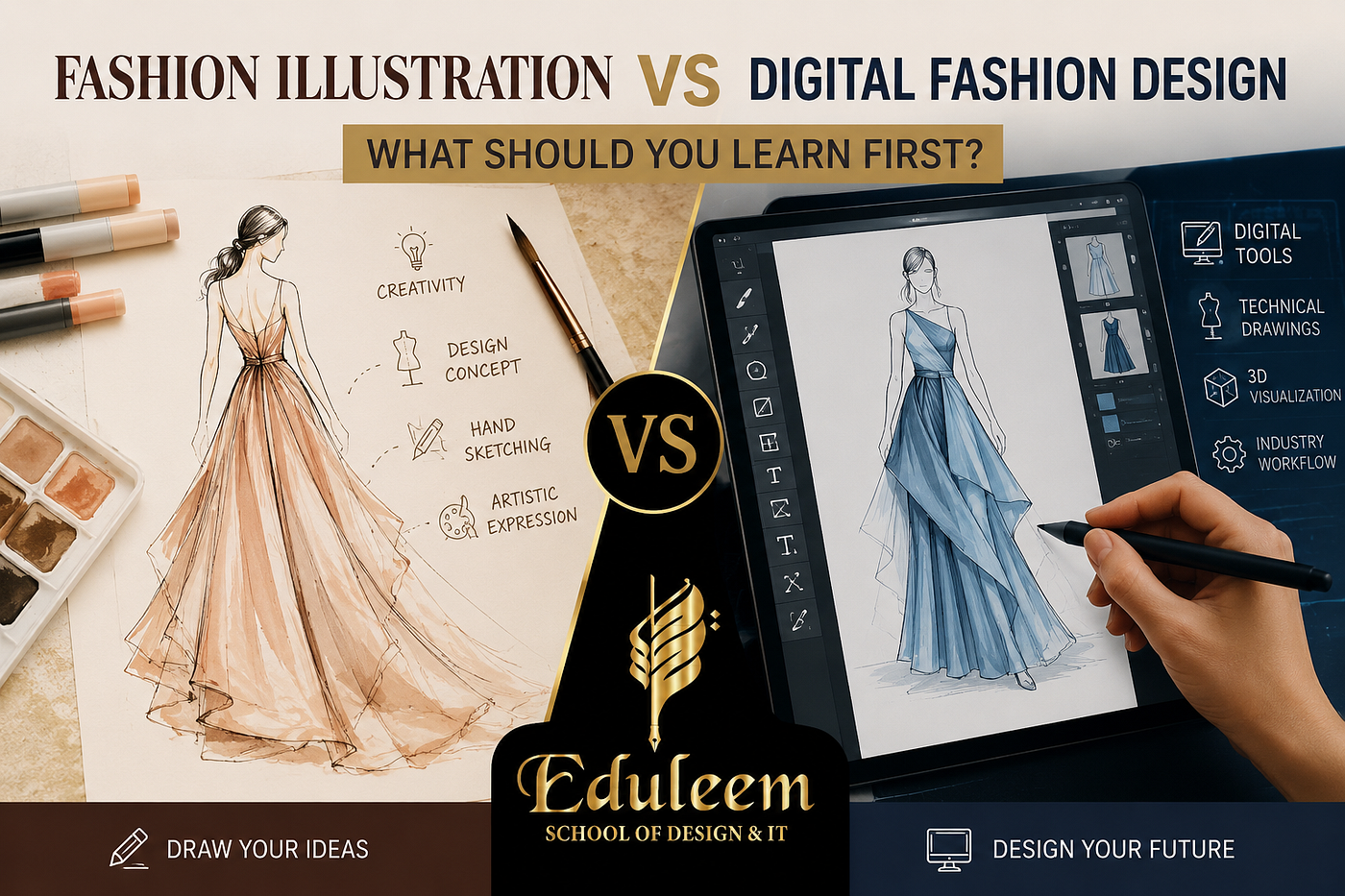
What Do Students Actually Learn in Fashion Design Training?
Introduction
What Do Students Actually Learn in Fashion Design Training?
Introduction
Many students dream of building a successful career in the fashion industry, but often wonder what happens inside a **fashion design** classroom. Is it only about sketching clothes? Do students learn sewing? How much practical exposure do they get? These are common questions among aspiring designers, working professionals looking for a career change, and students searching for skill-based education.
The reality is that modern fashion education goes far beyond drawing fashionable outfits. Today’s industry demands professionals who understand creativity, garment construction, textile science, digital design tools, market trends, and brand development. This is why choosing the right **Fashion Designing Course in Bangalore** has become an important decision for students who want to enter the industry with confidence.
A well-structured fashion design training program helps students develop both creative and technical skills that employers actively seek. From learning how to create design concepts to understanding how garments are manufactured and marketed, students gain practical knowledge that prepares them for real-world opportunities.
In this blog, we’ll explore what students actually learn during fashion design training, why these skills matter, and how the right training can help build a successful career in the fashion industry.
Understanding the Topic
Fashion design training is a structured learning process that teaches students how to transform creative ideas into wearable products. It combines artistic skills with technical knowledge and industry practices.
Many people assume fashion designing is only about creating attractive clothing. However, professional designers need a much broader skill set. They must understand fabrics, garment construction, consumer preferences, fashion forecasting, production processes, and business concepts.
A quality **Fashion Designing Course in Bangalore** introduces students to every stage of the fashion design journey, including:
- Research and inspiration
- Fashion illustration
- Pattern making
- Textile understanding
- Garment construction
- Fashion styling
- Merchandising
- Portfolio creation
- Industry practices
The goal is to prepare students for careers in an industry that values creativity, innovation, and practical expertise.
Why This Matters for Students
The fashion industry is highly competitive. Employers are looking for professionals who can contribute immediately rather than requiring extensive on-the-job training.
Students who receive comprehensive fashion design training gain an advantage because they understand both the creative and technical aspects of the profession.
Learning industry-relevant skills helps students:
- Build confidence
- Create professional portfolios
- Improve employability
- Understand industry expectations
- Explore multiple career paths.
- Develop practical experience
For students seeking a faster route into the industry, practical training often provides greater value than focusing solely on theoretical concepts.
The right **Fashion Design Training** can bridge the gap between education and employment, helping students become job-ready from day one.
Key Benefits of Fashion Design Training
Students gain several advantages through structured fashion design education.
Practical Skill Development
Training focuses on real-world applications rather than only classroom theory.
Industry Exposure
Students gain insights into current fashion trends, technologies, and professional practices.
Portfolio Building
A strong portfolio helps students showcase their creativity and technical skills to employers and clients.
Creative Growth
Fashion design training encourages innovation, experimentation, and creative problem-solving.
Technical Knowledge
Students learn garment construction, textile selection, pattern making, and production techniques.
Career Readiness
The curriculum is designed to prepare students for professional opportunities across various sectors of the fashion industry.
Entrepreneurial Opportunities
Students interested in starting their own fashion brands gain valuable business and design knowledge.
Course/Career Opportunities
Fashion design training opens doors to diverse opportunities within the fashion and lifestyle industry.
Students can work in areas such as:
- Apparel design
- Fashion styling
- Fashion illustration
- Fashion merchandising
- Retail fashion management
- Costume design
- Fashion marketing
- Textile design
- Luxury fashion brands
- E-commerce fashion businesses
The skills learned during training provide a foundation that supports both employment and entrepreneurship.
As the industry continues to evolve, professionals with practical experience and strong portfolios are increasingly valued.
Industry Demand in India
India’s fashion industry has witnessed remarkable growth over the past decade. The expansion of retail brands, online shopping platforms, fashion startups, and designer labels has created significant demand for skilled professionals.
Consumers today are more fashion-conscious than ever before, creating opportunities for designers who understand market trends and customer preferences.
Several factors are driving industry growth:
- Rising disposable incomes
- Growth of e-commerce platforms
- Expansion of fashion retail brands
- Demand for sustainable fashion
- Influence of social media and fashion influencers
- Increasing interest in personalized fashion
This demand creates excellent opportunities for students pursuing a **Fashion Designing Course in Bangalore**, where the city’s growing creative ecosystem offers valuable industry exposure.
Why Choose Eduleem School of Design & IT
Choosing the right training institute can significantly influence a student’s career growth. Eduleem School of Design & IT focuses on helping students develop practical skills that align with current industry requirements.
Practical Training
Students learn through hands-on activities, projects, and assignments that mirror real-world fashion industry practices.
Industry-Oriented Curriculum
The curriculum is regularly updated to reflect changing market trends, technologies, and employer expectations.
Expert Trainers
Students learn from experienced professionals who bring valuable industry knowledge into the classroom.
Portfolio and Project-Based Learning
Practical projects help students create professional portfolios that showcase their abilities and creativity.
Career Guidance
Students receive support in understanding career options, preparing for interviews, and building professional confidence.
Placement Support
Career assistance helps students connect with opportunities across the fashion and retail sectors.
Bangalore Location Advantage
As a growing center for fashion, retail, and design innovation, Bangalore provides students with access to networking opportunities, industry events, and potential employers.
Eduleem School of Design & IT aims to provide comprehensive Fashion Design Training that prepares students for real-world success.
Skills Students Will Learn
Fashion design training covers a wide range of creative, technical, and professional skills.
Design Skills
- Fashion illustration
- Sketch development
- Design conceptualization
- Mood board creation
- Collection development
- Trend forecasting
Technical Skills
- Pattern making
- Garment construction
- Draping techniques
- Textile identification
- Fabric selection
- Quality assessment
Digital Skills
- Computer-aided design (CAD)
- Fashion presentation software
- Digital portfolio creation
- Fashion visualization techniques
Styling Skills
- Fashion styling
- Accessory coordination
- Personal styling concepts
- Fashion photography basics
Business Skills
- Fashion merchandising
- Brand development
- Retail management concepts
- Fashion marketing fundamentals
Professional Skills
- Communication
- Time management
- Creative thinking
- Problem-solving
- Presentation skills
- Client interaction
These skills help students become versatile professionals capable of working across multiple areas of the fashion industry.
Who Should Join
Fashion design training is suitable for individuals from various educational and professional backgrounds.
Students After School
Students who want to pursue a creative and career-oriented profession can benefit from structured training.
College Graduates
Graduates looking to enter the fashion industry can develop specialized skills that improve employability.
Working Professionals
Professionals seeking a career transition can gain industry-relevant knowledge through focused training programs.
Entrepreneurs
Individuals planning to launch boutiques, fashion labels, or clothing businesses can acquire practical industry expertise.
Creative Individuals
People passionate about fashion, styling, textiles, and design can transform their interests into rewarding careers.
Non-Eligible Background Students
Students who may not meet the requirements for traditional degree programs can still access quality training and career opportunities through skill-based education.
Career Opportunities After Completion
After completing fashion design training, students can explore numerous career pathways.
Fashion Designer
Design clothing collections and work with fashion houses, apparel brands, or independent labels.
Fashion Illustrator
Create visual representations of fashion concepts and garment designs.
Fashion Stylist
Work with clients, celebrities, brands, photographers, and media productions.
Fashion Merchandiser
Manage product planning, inventory strategies, and retail operations.
Textile Designer
Develop patterns, prints, and textile concepts for fashion products.
Costume Designer
Create costumes for films, television, theatre productions, and entertainment projects.
Fashion Consultant
Advise individuals and businesses on fashion trends, styling, and branding.
Retail Fashion Executive
Support retail operations, customer engagement, and merchandising activities.
Fashion Entrepreneur
Launch an independent clothing label, boutique, or online fashion business.
Freelancing Opportunities
Fashion professionals can also build successful freelance careers in:
- Fashion illustration
- Personal styling
- Boutique consulting
- Fashion content creation
- Custom garment design
- Fashion photography assistance
- Wardrobe consulting
Freelancing provides flexibility and opportunities to establish a personal brand within the industry.
Frequently Asked Questions
1. What is taught in a Fashion Designing Course in Bangalore?
Students learn fashion illustration, garment construction, pattern making, textile knowledge, styling, merchandising, digital design tools, and portfolio development.
2. Is fashion design training suitable for beginners?
Yes. Most fashion design programs are designed to help beginners develop skills from the foundation level.
3. How important is practical training in fashion design?
Practical training is essential because it helps students apply theoretical concepts to real-world projects and industry scenarios.
4. Can I join a fashion design course after completing any stream?
Yes. Students from various educational backgrounds can pursue fashion design training depending on the institute’s admission criteria.
5. What career opportunities are available after completing fashion design training?
Graduates can work as Fashion Designers, Stylists, Merchandisers, Illustrators, Consultants, Entrepreneurs, and Freelancers.
6. Why should I choose a Fashion Design Institute in Bangalore?
Bangalore offers strong industry exposure, growing fashion and retail sectors, networking opportunities, and access to quality education providers.
7. Do fashion design students learn digital design tools?
Yes. Many modern training programs include computer-aided design tools and digital portfolio development.
8. Is a portfolio important for getting a fashion design job?
Absolutely. A professional portfolio demonstrates creativity, technical skills, and project experience, making it one of the most important assets for fashion professionals.
Conclusion
Fashion design training is much more than learning how to sketch clothing designs. Students gain a complete understanding of the fashion industry through practical learning, technical knowledge, creative development, portfolio building, and professional skill enhancement.
A well-designed **Fashion Designing Course in Bangalore** can help students build the confidence, expertise, and industry readiness needed to succeed in today’s competitive fashion market. Whether you are a student, working professional, entrepreneur, or someone passionate about fashion, structured training can open the door to exciting career opportunities.
At Eduleem School of Design & IT, students receive industry-oriented education, practical project experience, expert guidance, and career support that help transform creativity into professional success.
Start your career journey with Eduleem School of Design & IT and gain practical skills that prepare you for real industry opportunities.
Contact: +91 96064 57497 | +91 96064 57499
Email: eduleemacademy@gmail.com
HSR Layout Campus: 1st Floor, Left Wing, Sharanya Sagar Building, Outer Ring Rd, HSR Layout, Bengaluru, Karnataka — 560102
Hebbal Campus: 1st Floor, R.K. Lake Tower, Service Road, Subramani Nagar, Guddadahalli, Hebbal, Bangalore, Karnataka — 560024
Website: https://eduleem.com
메타데이터
- post_id
- 2cb0de938578
- slug
- what-do-students-actually-learn-in-fashion-design-training-2cb0de938578
- url
- https://medium.com/@eduleem123/what-do-students-actually-learn-in-fashion-design-training-2cb0de938578
- canonical_url
- https://medium.com/@eduleem123/what-do-students-actually-learn-in-fashion-design-training-2cb0de938578
- author_url
- https://medium.com/@eduleem123
- status
- ok
- fetched_at
- 2026-06-09 15:37:30