America’s National Game: 1888
Fourth in a season-long series
America’s National Game: 1888
Fourth in a season-long series
Happy Birthday, US (or us!)
Today, baseball is played in more than 100 nations. In addition to MLB’s annual World Series, 20 nations compete for the World Baseball Classic (WBC) title, every third or fourth year. In 2026,when Venezuela won, the WBC brought together such distant regions as Europe, Asia, Australia, the Caribbean, South America, and the Middle East. Albert Spalding’s vision of baseball — that such a great game must be shared globally — has been borne out.
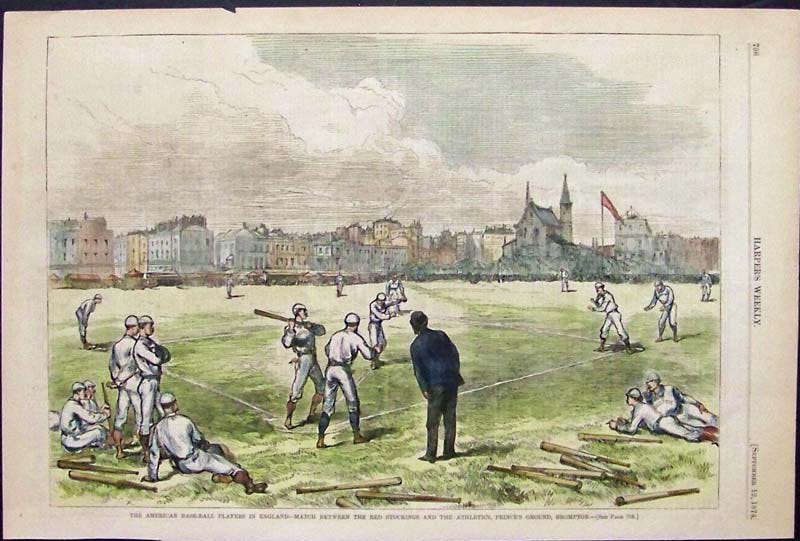
Boston vs Philadelphia, England Tour; Harper’s Weekly 1874
It was not always so. In July 1874, Spalding and Harry Wright first brought their baby back home to its Mother Country, all grown up. Brits were mystified by this challenge to cricket, their national game. Unlike its leisurely pace, baseball seemed a lightning game, completed in a little over two hours … not days. The Boston and Philadelphia clubs boarded steamers and broke away from their National Association schedule to play 14 games in England and Ireland, plus cricket exhibitions sandwiched in between. All in all, the clubs missed nearly two months of pennant pursuit back in America.
The cricketers from Great Britain had been a sensation when they crossed the Atlantic in 1859, and a return tour was planned for 1862, but our Civil War got in the way. To that point there had been frequent mention in the press of our “national games,” reflecting the equal stature of cricket and baseball. By War’s end, baseball alone had become the national pastime.
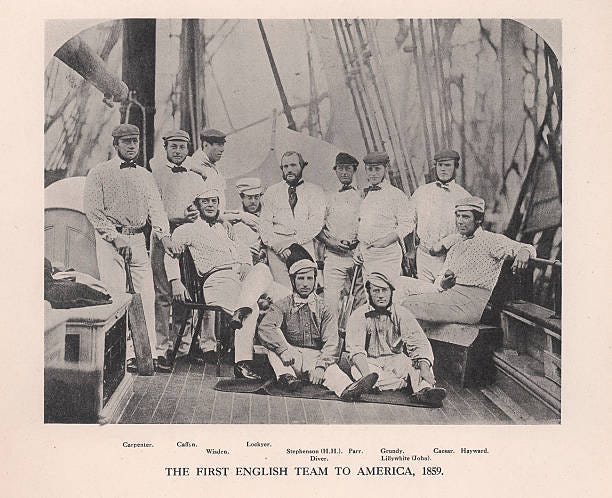
The cricketers of 1859 comprised six of the All-England XI and six of the United All-England XI
Regional junkets had been undertaken by the Brooklyn Excelsiors (1860), Washington Nationals (1867), and others but the first transcontinental tour was that of the Cincinnati Red Stockings (1869). Next, in the first international expedition since England, Frank Bancroft took an array of professionals to Cuba in 1879. This tour — like another to that island nation seven seasons later — was a financial and promotional flop, as might have been said of the 1874 trip, too.
These attempts to share the wonders of our national pastime gave Spalding, now retired as a player, the implausible idea of making baseball an international pastime, thus boosting his sporting-goods empire. His World Tour, with the Chicago White Stockings and a bunch selected from other teams in both leagues. termed the All-Americas, began as merely an Australian Tour. The players departed from Chicago by rail on October 20, 1888, with a stated intention to return from Sydney on February 23, 1889.
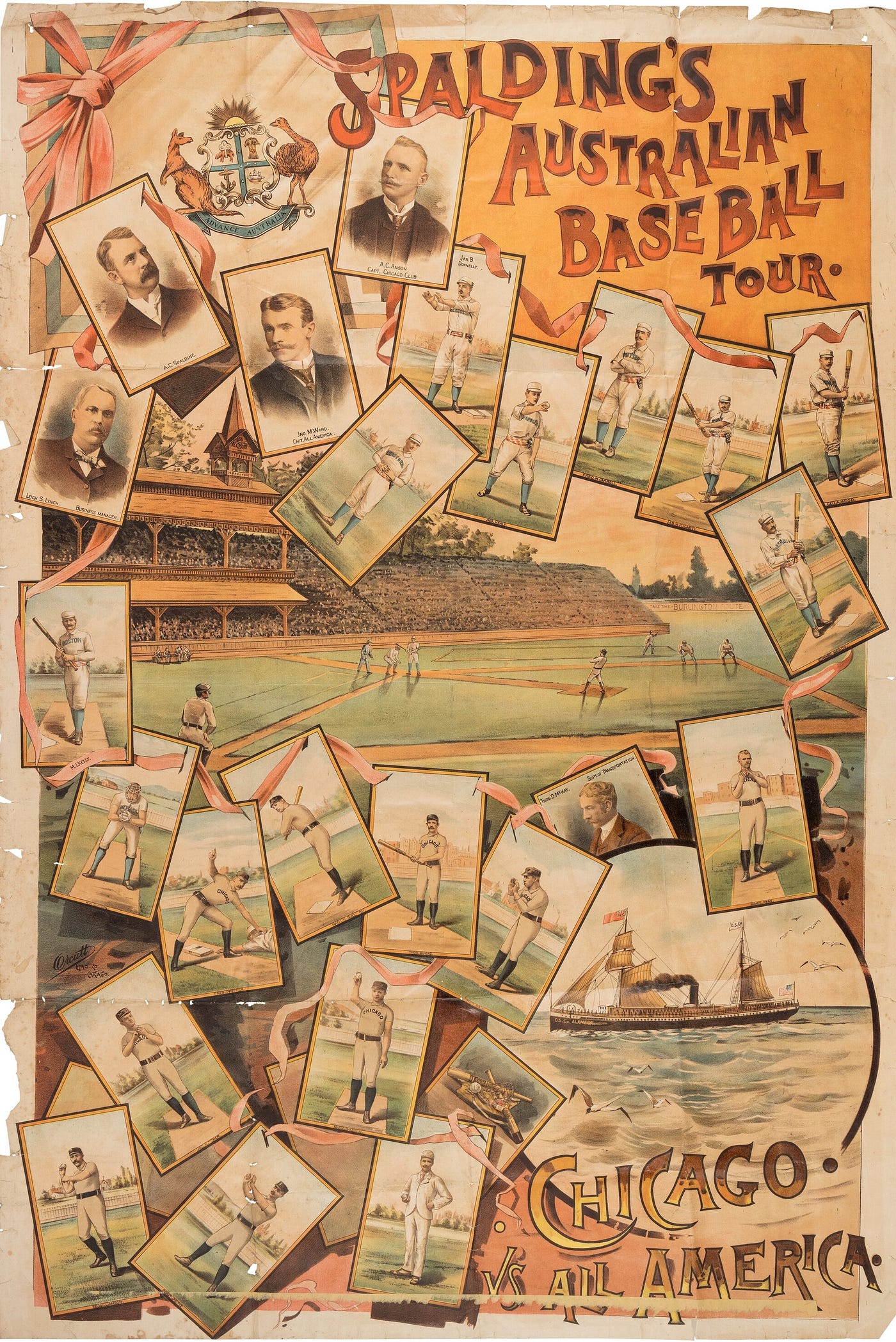
Spalding’s Australian Base Ball Tour, as it was called at first
On their way west, the barnstormers played games in St. Paul and Minneapolis, then meandered through Cedar Rapids, Des Moines, Omaha, Hastings, Denver, Colorado Springs, and Salt Lake City. They reached California in early November, buttressed by such stragglers as John Ward and Cannonball Crane, who had been detained in St. Louis to complete the New York Giants’ victory over the Browns in the World Series.
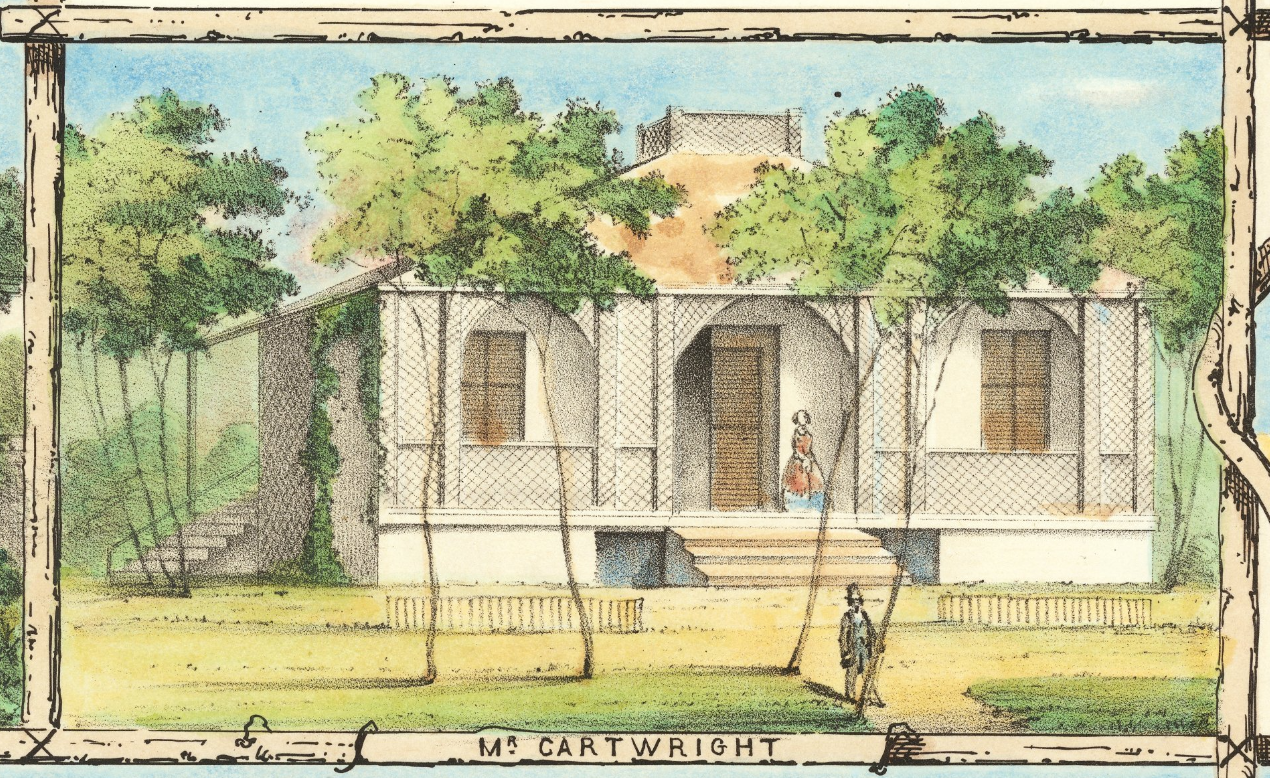
The Honolulu residence of Alexander Cartwright; from Paul Emmert, Views of Honolulu (№5), 1854
The tourists’ first overseas stop was in Hawaii, where they arrived a day late and, because of blue laws, were unable to stage a Sunday game (or meet with Alexander Cartwright, who had been a pioneer with the Knickerbocker Club before heading west in the Gold Rush, never to return east). While aboard the steamship Alameda, Spalding expanded the tour to include Melbourne, Adelaide, and Brisbane before sailing to Colombo, Aden, and Egypt, playing a formal game before the Sphinx. A reporter traveling with the tour noted:
The surface of the Desert was hard and firm, not unlike the snow crust of the North, and formed a by‑no-means-poor ground for ball playing. Ward’s forces were again “out for blood,” and though Anson made a good start by the capture of two runs in the opening inning, All-America by good stiff batting piled up seven runs in the second and secured a lead which Chicago could not afterwards approach.
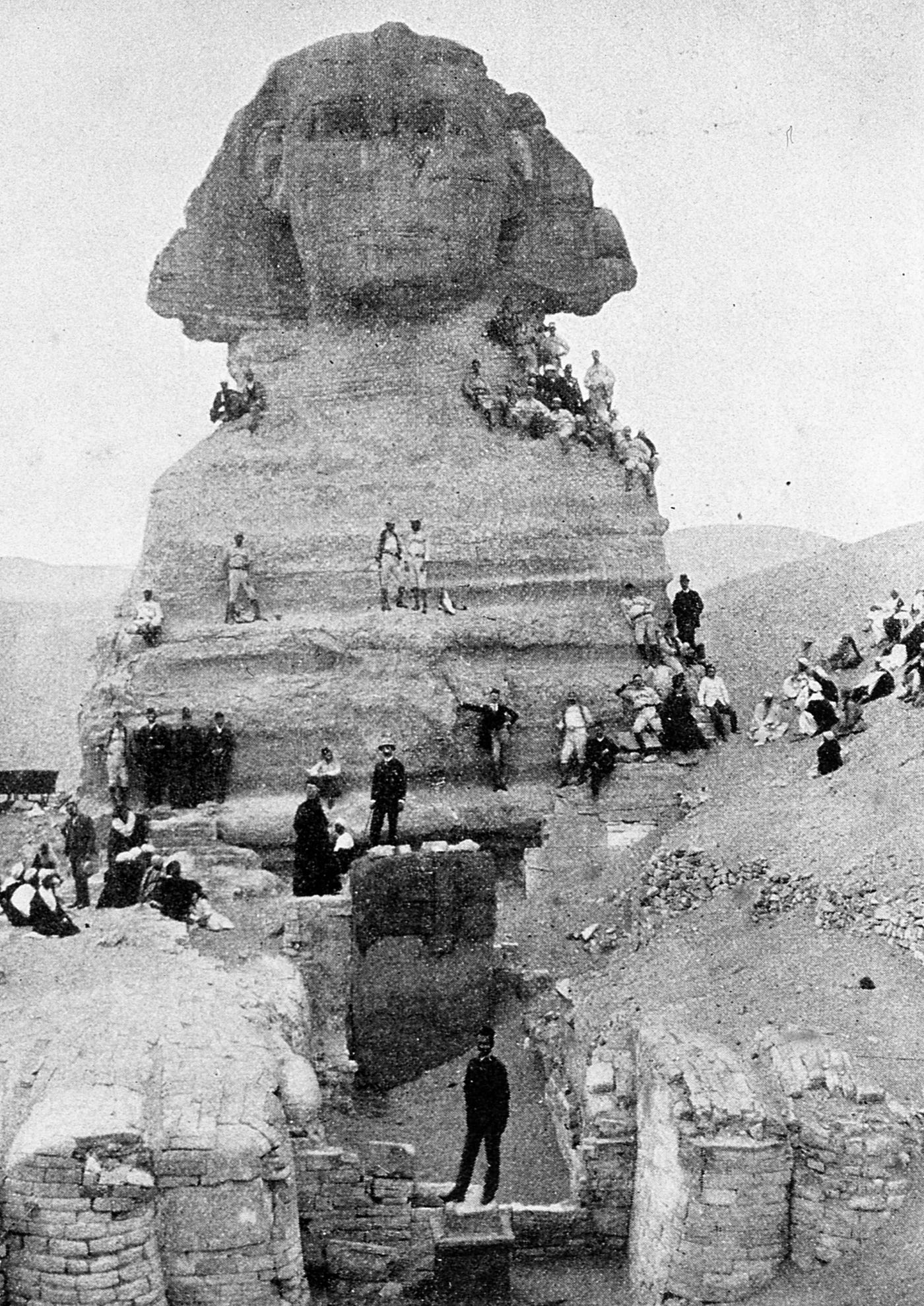
Baseballists at the Sphinx
After stops at Naples, Florence, and Rome, the world tourists spent ten days in Paris and another ten in London. Ward, shortstop of the All-Americas and leader of the Base Ball Brotherhood, ditched the English leg of the journey to return home, having been advised while overseas not only of the Brush Classification Plan to regulate player salaries, but also his own sale (for $12,000) from New York to Washington.
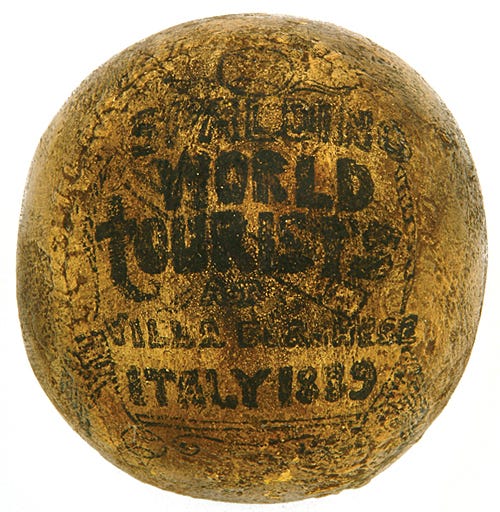
The tourists played at the Villa Borghese in Rome
John B. Day, owner of the Giants, declared that he was opposed to the “Spalding classification plan,” a remark that made it seem the tour’s major domo had something to do with it after all. National League president Nick Young was given the duty of classifying the players according to skill and general dependability, from Class E at $1,500 up to Class A at $2,500, the top figure. The unhappiness of many players on the Spalding tour led directly to the formation of a Players’ League for 1890.
The returning heroes were honored at a banquet at Delmonico’s restaurant in New York on April 8, 1889, where former National League president Abraham G. Mills opined that the game was purely an American invention, and Mark Twain declared baseball to be “the very symbol, the outward and visible expression of the drive and push and rush and struggle of the raging, tearing, booming nineteenth century.”
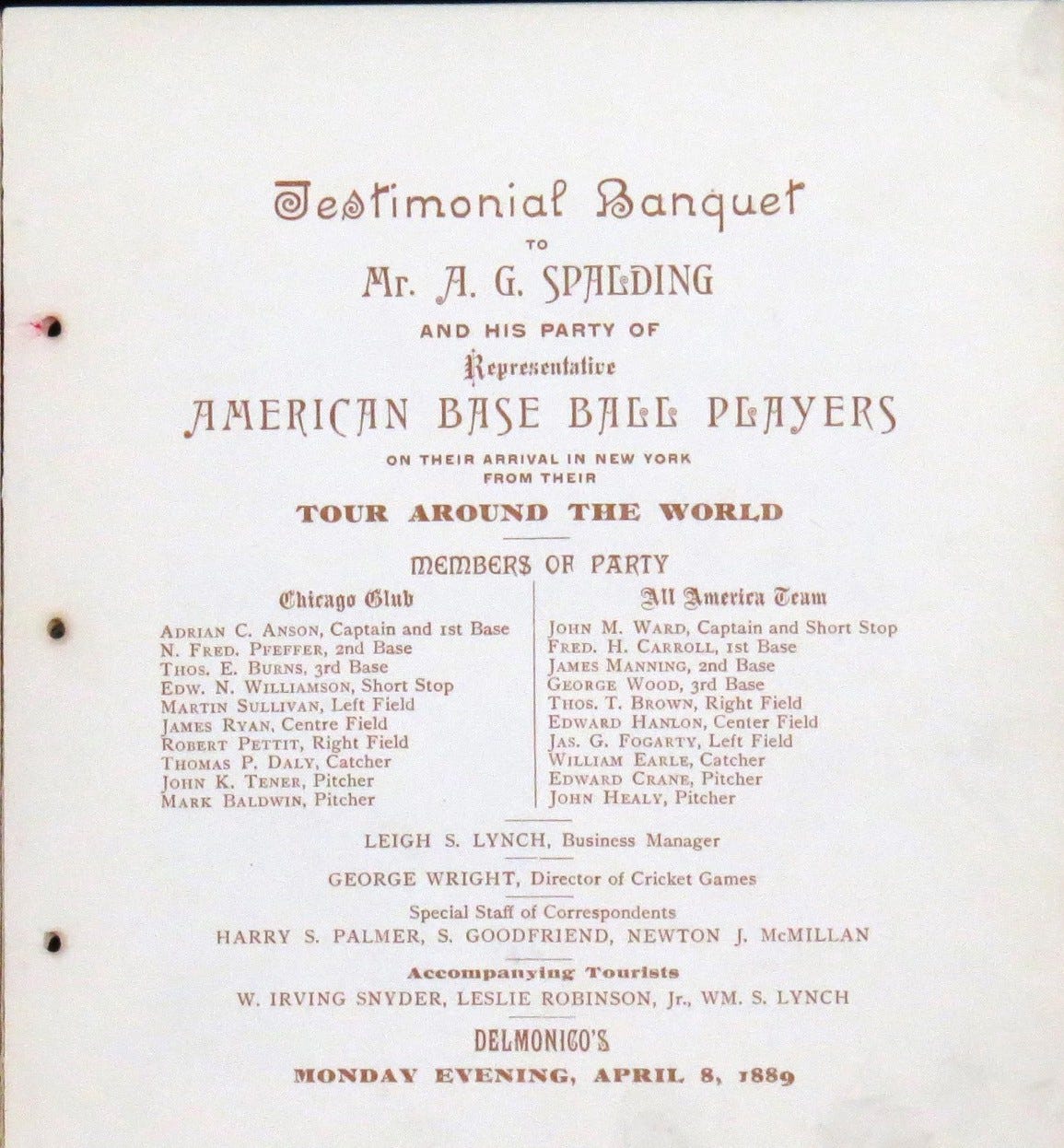
The banquet was held at Delmonico’s at Beaver and South William Streets, on April 8, 1889
In the years to come, Spalding ballyhooed the importance of his two tours, but in truth both were artistic, financial, and ideological flops. The game took off in places visited not by ambassadors of baseball but by our military and our missionaries — Japan, Cuba, Mexico. Spalding didn’t much care, as he candidly explained to sportswriter Harry Palmer, who had documented the tour. “In undertaking such a trip I do so more for the purpose of extending my sporting goods business to that quarter of the globe and creating a market for goods there, rather than with any idea of realizing any profit from the work of the teams I take with me.”
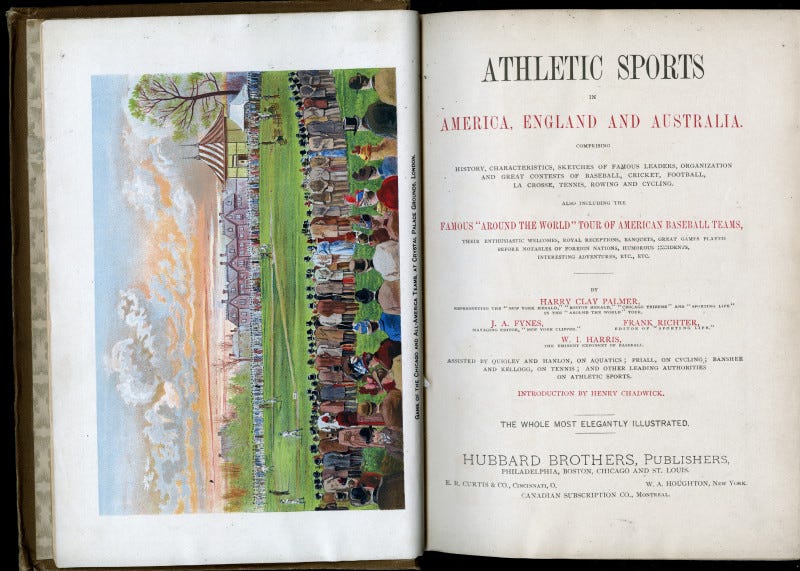
Harry Clay Palmer, Athletic Sports in America, England and Australia, 1889
The first regular-season MLB game played outside the United States was not until 80 years later, on April 14, 1969, when the Expos opened their season in Montreal. The first outside North America was when the Mets and Padres played a three-game series in Monterrey, Mexico, in 1996. (A Mexico City series occurred last weekend, at Estadio Alfredo Harp Helú Béisbol.)
After several offseason tours, the first MLB games in Japan took place in 2000, when the Mets and Cubs opened the season in Tokyo. There was even a London Series in 2019; for some of us, it revived thoughts of 1874, 1889, and Spalding.
메타데이터
- post_id
- 2cb6ce5a884b
- slug
- americas-national-game-1888-2cb6ce5a884b
- url
- https://ourgame.mlblogs.com/americas-national-game-1888-2cb6ce5a884b
- canonical_url
- https://ourgame.mlblogs.com/americas-national-game-1888-2cb6ce5a884b
- author_url
- https://medium.com/@thorn_john_87223
- status
- ok
- fetched_at
- 2026-06-10 09:45:17