How AI Can Help Curriculum Coordinators Review Standards Coverage Faster
Reviewing standards coverage is one of the most important responsibilities of a curriculum coordinator. It is also one of the most…
How AI Can Help Curriculum Coordinators Review Standards Coverage Faster

Reviewing standards coverage is one of the most important responsibilities of a curriculum coordinator. It is also one of the most time-consuming. Across grade levels, subjects, units, lessons, assessments and teacher-created resources, coordinators must answer a difficult question: are students actually being taught the standards they are expected to master?
Traditionally, this work has involved spreadsheets, shared folders, manual audits and long meetings with department teams. While these methods can work, they often make curriculum review slower than it needs to be. Important gaps may remain hidden. Repeated standards may be over-taught. Skills may not progress smoothly from one grade to the next.
This is where AI curriculum review can make a meaningful difference. When used inside a structured curriculum mapping platform like Edusfere, AI can help curriculum coordinators review standards coverage faster, more consistently and with better visibility.
Why Standards Coverage Reviews Take So Much Time
Standards coverage is not just about checking whether a standard appears somewhere in the curriculum. Coordinators need to understand how that standard is taught, where it appears, how often it appears, whether it is assessed and whether learning builds logically across grade levels.
A manual review often requires curriculum leaders to compare unit plans, lesson plans, assessment tasks and scope sequences across multiple documents. If teachers use different formats or store resources in different places, the work becomes even harder.
The result is that curriculum coordinators spend more time finding information than analysing it.
1. AI Helps Detect Curriculum Gaps Faster
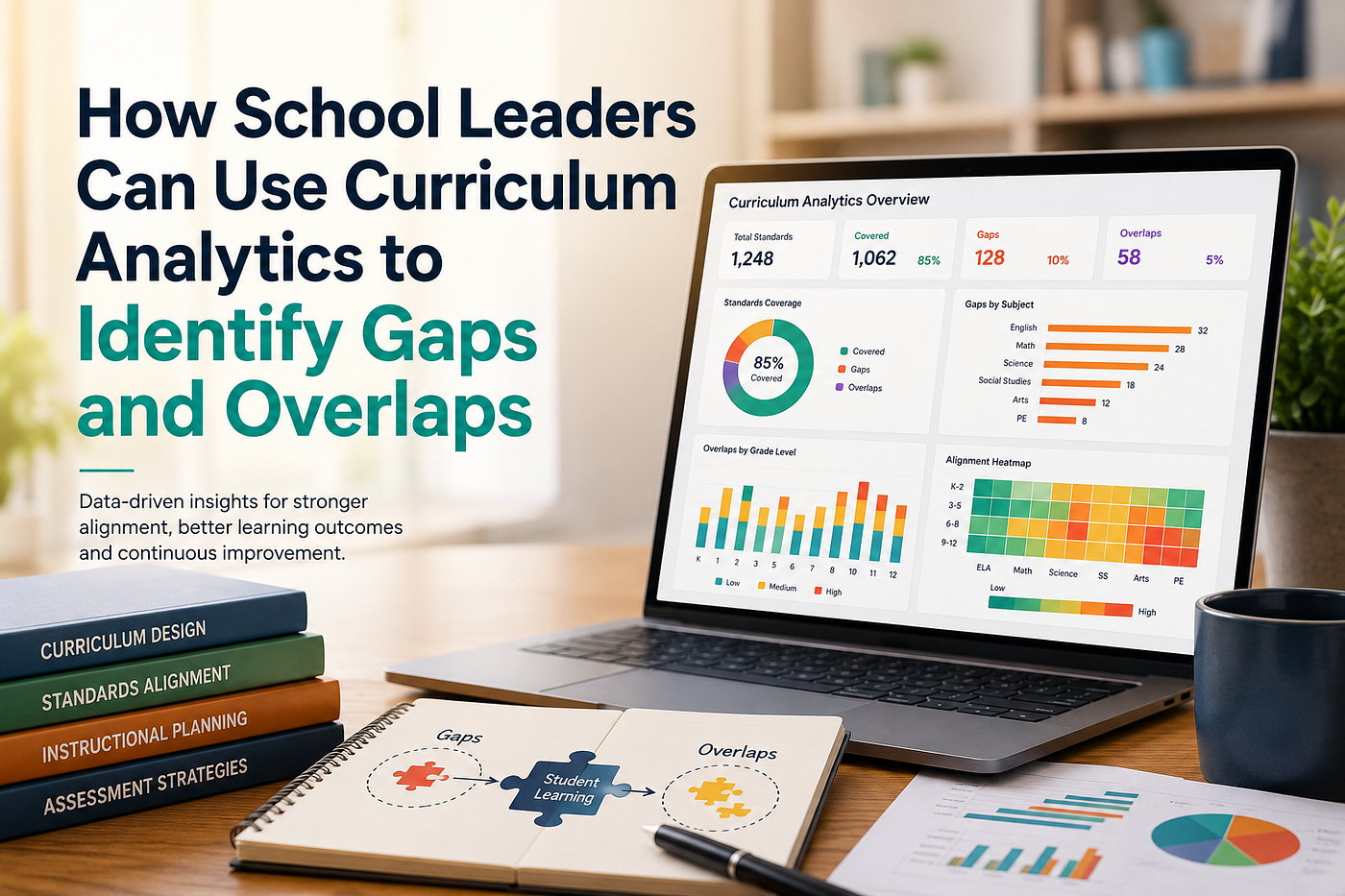
One of the strongest use cases for AI curriculum review is gap detection. AI can help scan curriculum maps, units and lesson documentation to identify standards that are missing, underrepresented or not clearly connected to instruction.
For example, a coordinator may discover that a reading comprehension standard is listed in a yearly plan but does not appear in any specific lesson or assessment. Another standard may be taught once early in the year but never revisited.
AI can help flag these issues quickly so curriculum teams can focus on decision-making rather than manual searching. Instead of asking, “Where is this standard covered?” coordinators can ask, “Is this level of coverage strong enough for student mastery?”
2. AI Supports Redundancy Analysis
Gaps are not the only problem. Many schools also face the opposite issue: unnecessary repetition. A standard may be taught several times across different units without meaningful progression. In some cases, multiple teachers may be creating similar lessons without knowing that the same content already exists elsewhere.
AI can help identify repeated standards, overlapping learning objectives and duplicated instructional activities. This does not mean repetition is always bad. Some standards need to be revisited. However, curriculum coordinators need to know whether repetition is intentional, progressive and instructionally useful.
With AI-assisted redundancy analysis, schools can reduce duplicated planning, improve collaboration and protect instructional time.
3. AI Makes Progression Review Easier
Strong curriculum design depends on progression. Students should not simply encounter standards in isolated lessons. Skills should develop across units, grade levels and subjects.
AI can help curriculum coordinators review whether learning expectations are building logically. For example, it can support analysis of whether students move from basic understanding to application, analysis and independent performance over time.
This is especially useful for vertical alignment. A curriculum coordinator can review how a writing standard progresses from Grade 3 to Grade 5, or how scientific inquiry skills develop across middle school. AI helps surface patterns that may be difficult to see when curriculum documents are scattered across folders.
4. AI Gives Coordinators More Time for Instructional Leadership
AI should not replace curriculum coordinators or teacher judgment. Its value is in reducing administrative friction. When AI handles the first layer of scanning, sorting and flagging, coordinators can spend more time working with teachers on curriculum quality.
This shifts the role of curriculum review from compliance checking to instructional improvement. Teams can discuss whether assessments truly measure the intended standards, whether learning activities are developmentally appropriate and whether students have enough opportunities to practise key skills.
5. Why Structure Still Matters
AI is only useful when curriculum data is organised. If standards, lessons, assessments and units are not connected in one system, AI has limited context. That is why curriculum mapping software matters.
A platform like Edusfere helps schools centralise curriculum planning, align standards, support teacher collaboration and maintain visibility across grades and subjects. When AI is applied within this structured environment, curriculum review becomes faster and more reliable.
Key Takeaways
- AI curriculum review helps coordinators identify missing or weak standards coverage faster.
- It can highlight unnecessary repetition across units, subjects and grade levels.
- AI supports progression review by showing how skills develop over time.
- The best use of AI is not to replace curriculum leaders, but to give them more time for instructional analysis.
- AI works best when curriculum mapping, lesson planning and standards alignment are centralised in one platform.
FAQs
1. What is AI curriculum review? AI curriculum review uses artificial intelligence to help analyse curriculum maps, lesson plans and assessments for standards coverage, gaps, duplication and progression.
2. Can AI identify gaps in standards coverage? Yes. AI can help flag standards that are missing, under-taught or not clearly connected to lessons and assessments.
3. How does AI help reduce curriculum duplication? AI can identify repeated standards, similar learning objectives and overlapping activities across units or grade levels, helping teams decide where repetition is useful and where it is unnecessary.
4. Is AI enough for curriculum review? No. AI supports the review process, but curriculum coordinators and teachers still make the final instructional decisions.
5. How does Edusfere support AI curriculum review? Edusfere helps schools organise curriculum maps, standards, lessons and planning documents in one place, giving curriculum teams better visibility for faster and more structured review.
메타데이터
- post_id
- 2cb73e4e905e
- slug
- how-ai-can-help-curriculum-coordinators-review-standards-coverage-faster-2cb73e4e905e
- url
- https://medium.com/@edusfere/how-ai-can-help-curriculum-coordinators-review-standards-coverage-faster-2cb73e4e905e
- canonical_url
- https://medium.com/@edusfere/how-ai-can-help-curriculum-coordinators-review-standards-coverage-faster-2cb73e4e905e
- author_url
- https://medium.com/@edusfere
- status
- ok
- fetched_at
- 2026-07-15 18:05:59