Tony Soprano and the Appetite for Everything: Gluttony as Philosophy and Sin
Tony Soprano is a man of appetites. He consumes not only food but power, women, attention, and affirmation. On The Sopranos, gluttony is a…
Tony Soprano and the Appetite for Everything: Gluttony as Philosophy and Sin
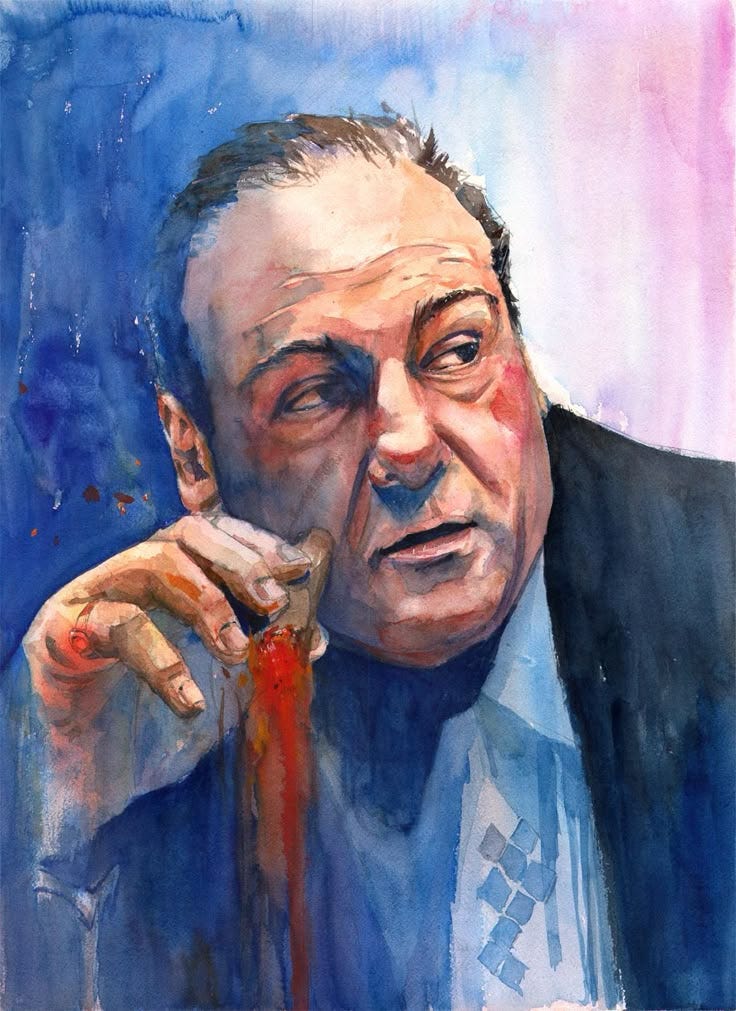
Tony Soprano is a man of appetites. He consumes not only food but power, women, attention, and affirmation. On The Sopranos, gluttony is a lens through which the series examines desire, morality, and the human struggle with excess. Tony’s gluttony is simultaneously literal and symbolic, a chronic hunger that extends far beyond the dinner plate, reflecting both a psychological compulsion and a spiritual crisis.
Gluttony Beyond the Plate
In religious traditions, gluttony is often reduced to overeating, a sin punished by the corporeal or spiritual consequences of excess. In Christianity, gluttony is one of the Seven Deadly Sins, not because eating is inherently wrong, but because overindulgence displaces virtue. It distracts from justice, temperance, and charity, replacing self-discipline with self-centeredness.

Tony’s relationship with food, however, is emblematic of something broader. The manic, almost ritualistic way he consumes meals, hoagies at Satriale’s, endless slices of pork at the family dinner, or spaghetti with double servings of meatballs, reflects an internal void. Food is a placeholder for power, control, and emotional fulfillment. It is a tangible, immediate way to assert satisfaction in a world where emotional needs are complex, deferred, or unattainable.

Appetite as Power and Philosophical Allegory
Philosophically, Tony’s gluttony aligns with several enduring humanist and existential ideas. In Aristotelian ethics, the virtue of moderation is cultivated by balancing desires. Tony’s failure to moderate, whether in meals, crime, or sex, is emblematic of a life lived entirely within appetite rather than reflection. He never pauses to ask, “What do I truly need?” he only asks, “How much can I take?”

From an existential perspective, particularly in a Camusian sense, Tony is rebelling against the absurdity of existence. Life is uncertain, mortality looms, and ethical order is fragile. His gluttony becomes a form of hedonistic defiance, a claim of presence in a chaotic world. Every bite, every indulgence, is an assertion: “I exist. I am here. I will not be denied.”
Even Nietzschean philosophy finds resonance here. Nietzsche valorises life-affirming indulgence, though ideally tempered by self-awareness and creativity. Tony indulges, yes, but without reflective consciousness. His gluttony becomes a symptom of unexamined desire rather than a Dionysian embrace of life’s fullness. It is excess without transcendence, consumption without insight.

Gluttony and the Moral Economy of The Sopranos
Tony’s sin extends into the moral and social sphere. Gluttony is rarely isolated from other excesses, violence, lust, greed. forming a constellation of indulgences that define his character. His literal consumption parallels his figurative consumption of human lives, rivals, subordinates, and even family members are instruments or obstacles to be ingested psychologically.
Religion often treats gluttony as a precursor to other sins, once the appetite is ungoverned, boundaries erode. In Tony’s case, this is vividly dramatized. Overeating reflects overreaching. Gluttony as metaphor for the unquenchable desire for control, dominance, and recognition. Every meal becomes a ritual reaffirmation of hierarchy, power, and entitlement.
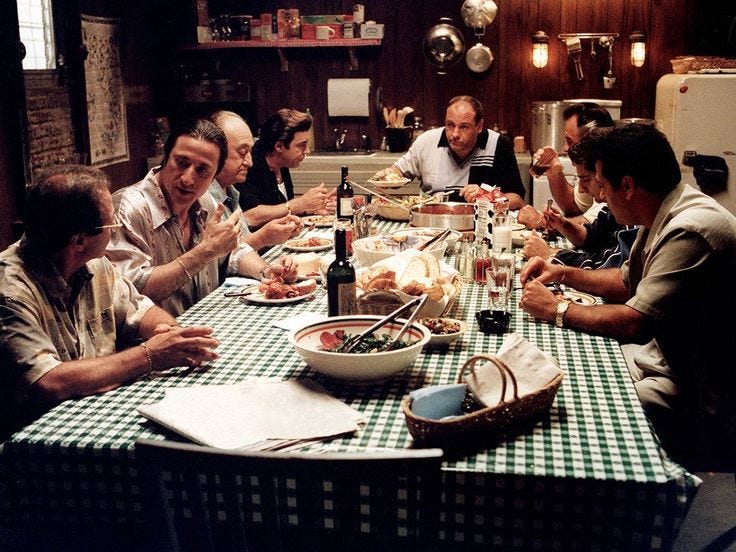
The series amplifies this through visual language, table scenes are laden with excess, with Tony at the center. Food becomes a stage for ritualized masculinity, ritualized authority, and ritualized sin. He eats as if to fill every existential hole, but the hunger persists because it is not merely physical, it is moral, psychological, and spiritual.
The Human Face of Gluttony
What makes Tony’s gluttony compelling is its humanity. It is never portrayed as cartoonish moralizing but as a reflection of a real, messy, and deeply conflicted inner life. Tony is aware of his shortcomings, he seeks therapy, wrestles with depression, and occasionally contemplates mortality, but awareness never fully restrains desire. Gluttony, in this sense, becomes a mirror of the human condition, a tension between the appetite for life and the inability to reconcile that appetite with ethical responsibility.

In Christian terms, Tony is simultaneously sinner and saint. His indulgence isolates and harms him, yet it also expresses the full spectrum of human longing, for love, for control, for satisfaction in a world that offers no guarantees. His sin is comprehensible because it is utterly human, gluttony as existential expression rather than mere moral failure.

Conclusion: Tony, Appetite, and the Eternal Hunger
Tony Soprano teaches us that gluttony is not only about food, it is a philosophy, a mode of existence, and a lens on morality. It embodies the tension between desire and discipline, self and society, body and soul. He is a mirror, a man attempting to navigate life’s absurdness through consumption, only to discover that some hungers are unfillable.
메타데이터
- post_id
- 2cbe4cbff26f
- slug
- tony-soprano-and-the-appetite-for-everything-gluttony-as-philosophy-and-sin-2cbe4cbff26f
- url
- https://medium.com/@midnightmoth303/tony-soprano-and-the-appetite-for-everything-gluttony-as-philosophy-and-sin-2cbe4cbff26f
- canonical_url
- https://medium.com/@midnightmoth303/tony-soprano-and-the-appetite-for-everything-gluttony-as-philosophy-and-sin-2cbe4cbff26f
- author_url
- https://medium.com/@midnightmoth303
- status
- ok
- fetched_at
- 2026-07-15 16:37:50