An Ode To A Mosquito Net
A Bengali household, in general, cannot do with two things: ‘shorsher tel’ or mustard oil and ‘moshari’ or the osquito net. While the…
An Ode To A Mosquito Net
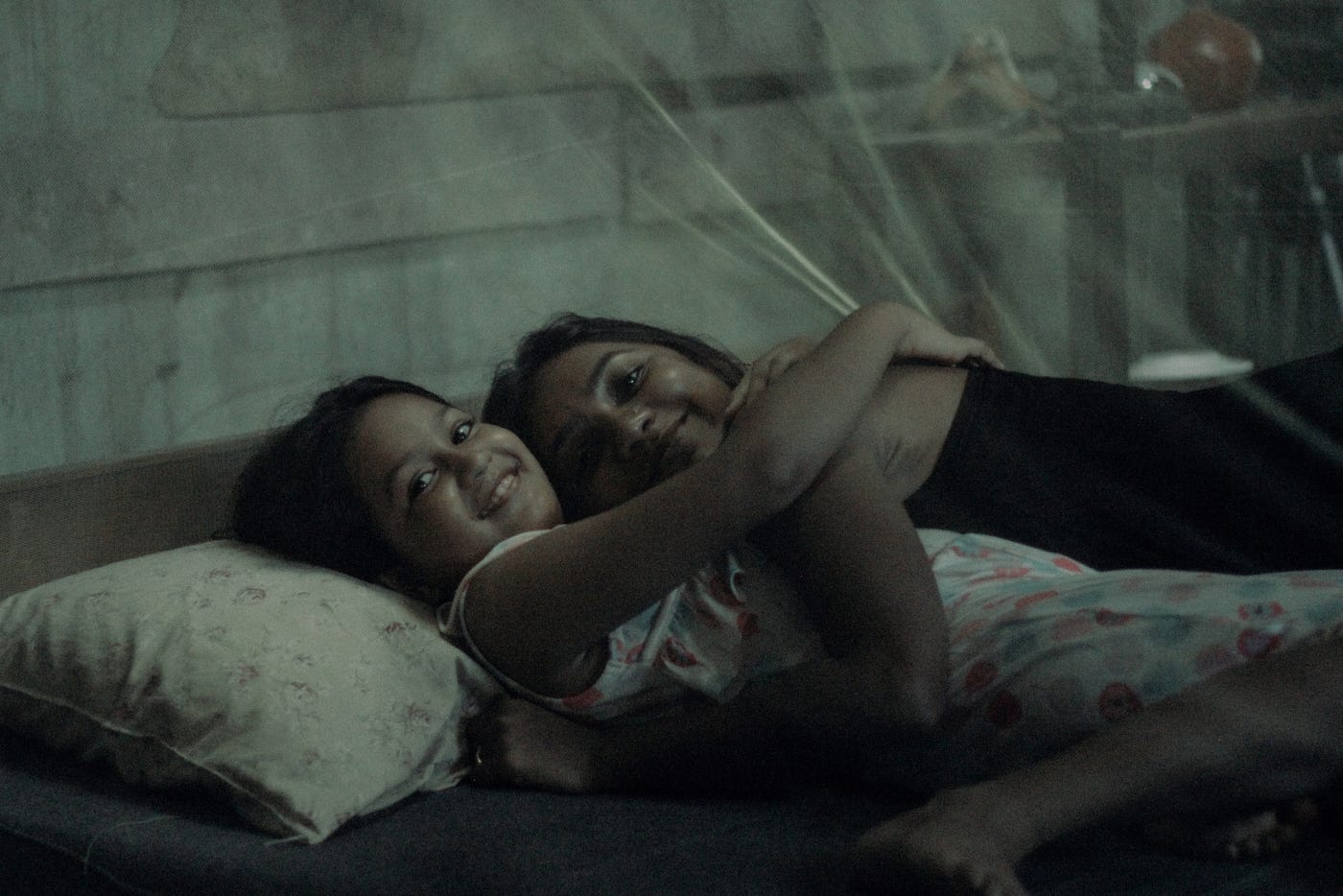
Source: A Still Picture from film ‘Moshari’
A Bengali household, in general, cannot do with two things: ‘shorsher tel’ or mustard oil and ‘moshari’ or the osquito net. While the former is a much celebrated ingredient in the household, making cameos in films and daily soaps and having designated screen times and billboard spaces in the form of advertisements, the latter is the most underrated item.
The ‘moshari’ or the mosquito net is that middle child who is required, but seldom acknowledged, or that black sheep who’s tended but hidden from the view of prospective buyers. Or, may be, it is that damaged and deranged bayonet that has killed and protected many, but gets a lousy space in the armoury.
‘Moshari’ is neither the pride nor the shame; but only a necessity. It doesn’t need advertisements nor unnecessary bragging on social media for people to feel its need. Safe to say that the mosquito net is that supportive friend whom we’ve taken for granted, for a bit too long.
The necessity of the ‘moshari’ reaches its peak during the rainy season. Tied scrupulously to four different pegs of varrying heights ( in a post four-poster bed situation), the mosquito net appears like a protective blanket. It is home within a home, a ploy within a ploy — a cleverly devised plan to protect us from the tiny vicious fangs of the buzzing mosquitoes. As we gently fall into slumber with the continuous pitter-patter of the rain drops in the background, the mosquito net stand its ground, letting air flow through its multiple perforations and keeping the intruders at bay.
However, this docile item of protection had once been a symbol of protest during the early twentieth century freedom movement — decolonizing the top-down British anti-malaria endeavours.
The year was some time in the late 1800s and early 1900s and malaria was raging a war against the human civilisation — more terrifying than the British Raj. Sir Ronald Ross, meanwhile, started carrying out questionable experiments on afflicted native sepoys and healthy natives (poor), as a method to understand how malaria gets transmitted into human bodies. His breakthrough won him the Noble Prize in 1902, at the cost of native Indian souls.

Source: The Man of the Hour
(The exploitation and the medical mal-experiments can be a topic of some future blogs, not today.)
Soon different political sections and even the newspapers criticised the coloniser’s way of handling the mosquito situation. Instead of targeting the breeding grounds and looking after the underprivileged class, the British Raj, quite naturally, limited the access of mosquito aids to the upper-classes of the society. Furthermore, they had prohibited the lower strata of the society from using the mosquito net at night. Not at all surprised.
In 1905, major ‘moshari’ swadeshi campaigns unfurled in the villages, like Panihati and Shukchor, surrounding Kolkata. Associations like Central Cooperative Anti-Malaria Society (founded in 1918) began encouraging people to use local ingredients and items as a protective charm against the mosquitoes. And the ‘moshari’ or the mosquito net became a front-runner.
Soon enough leaders like Rabindranath Tagore, Nilratan Sarkar, Prafulla Chandra Ray, and even Jagadish Chandra Basu urged Bengal to unite in the new mission against the mosquitoes. It may sound amusing, but a realistic and grass-root level endeavour moved people more than the abstract ideals of swaraj.
As I write this blog, my mind drift back to the ‘moshari’ left on my bed, waiting to be folded into a neat square. Every day and night I grumble while wasting a complete 45 minutes in hoisting that mosquito net around the bed; needless to say, I do this everyday — both the hoisting and grumbling. Maybe, from today, the grumbling might dissipate.
메타데이터
- post_id
- 2cd91281fde7
- slug
- an-ode-to-a-mosquito-net-2cd91281fde7
- url
- https://medium.com/@moshi-thepen/an-ode-to-a-mosquito-net-2cd91281fde7
- canonical_url
- https://medium.com/@moshi-thepen/an-ode-to-a-mosquito-net-2cd91281fde7
- author_url
- https://medium.com/@moshi-thepen
- status
- ok
- fetched_at
- 2026-07-10 06:45:42