A Geochemist Once Told Me Climate Change Didn’t Make Sense and I Haven’t Stopped Thinking About It…
It was sometime in March during a geology conference in Akwa Ibom state, coastal Nigeria, right around that period when the heat across the…
A Geochemist Once Told Me Climate Change Didn’t Make Sense and I Haven’t Stopped Thinking About It Since
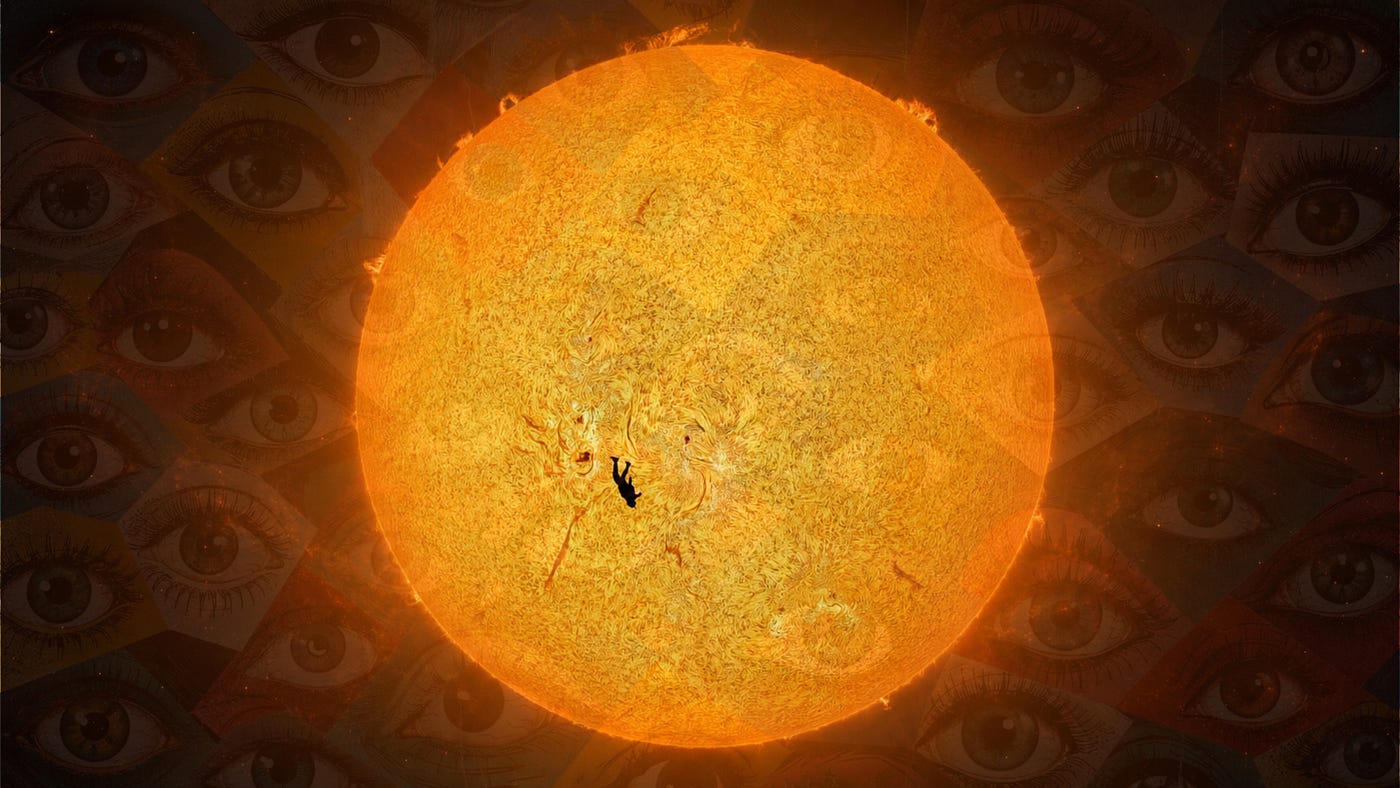
Photo by Samuel Regan-Asante on Unsplash
It was sometime in March during a geology conference in Akwa Ibom state, coastal Nigeria, right around that period when the heat across the country starts becoming unbearable.
The weather there was quite strange in an almost deceptive way because we just couldn’t figure it out. Some evenings it would rain heavily and the air would turn cool for a few hours, making everyone think the heat had finally broken. But by the next afternoon, the humidity would return even worse than before, and was usually a thick, exhausting heat that clung to your skin and made sitting indoors feel suffocating.
That particular day, the conference hall was especially uncomfortable. The air conditioners were running, the fans were on, but somehow they barely made a difference. You could feel the heat trapped inside the room and people kept adjusting themselves in their seats, fanning papers against their faces, or stepping outside for air between sessions.
At some point, someone nearby complained loudly about how the weather keeps getting hotter every year, and almost immediately, the conversation drifted toward climate change.
I remember casually agreeing to what he said because to me, it felt obvious. Rising temperatures, unpredictable weather patterns, the extreme heat, what else could it be?
But then, the woman standing next to me disagreed in a way I did not expect.
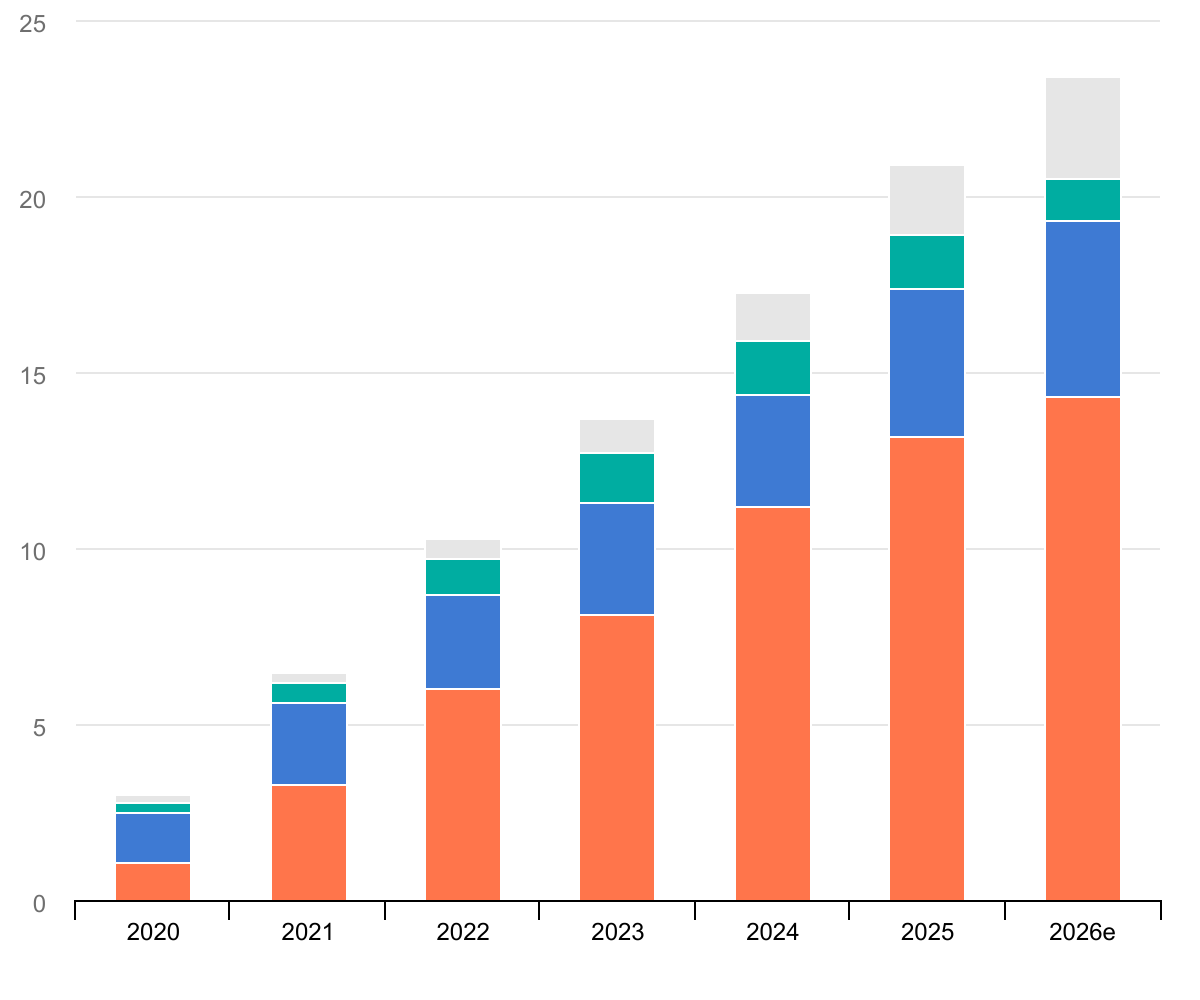
Photo by Tania Malréchauffé on Unsplash
At first, I thought she was just being dismissive in the way some people are whenever climate change comes up. But she wasn’t argumentative at all. In fact, what caught me off guard was how calm and thoughtful she sounded. In the course of the discussion, I found out she was a geochemist and a university lecturer, someone who clearly knew what she was talking about and understood the Earth far beyond surface-level conversations, and the opinions she raised completely changed the direction of the conversation. She told me that the way climate change is currently discussed especially in relation to Africa, doesn’t entirely make sense to her anymore, more so because she was a former climate activist.
That surprised me, and not because I’ve never seen climate sceptics before — but because this wasn’t coming from someone uninformed. She wasn’t denying that temperatures change or that environmental problems exist, her argument was far more complicated than that.
She said that the Earth has always gone through natural cycles of warming and cooling driven by forces like volcanic activity, solar radiation, and slight changes in the planet’s orbit (Milankovitch cycles), also adding that long before industrialization, long before cars and factories, the planet experienced dramatic climate shifts. The Ice Ages happened, temperatures rose and fell, and entire environments changed naturally over time. So her question was simple, why are we treating this current moment as though climate change itself is something entirely new?
And honestly, that part is true.
However, modern climate science does not deny that the Earth changes naturally. In fact, scientists have studied those historical climate cycles extensively. The reason today’s warming is treated differently is not simply because temperatures are rising, but because of how unusually fast the rise is happening, and because the increase in atmospheric carbon dioxide closely matches emissions produced by human activity, particularly fossil fuels, making it very essential to establish the distinction.
Climate researchers have compared current warming trends with past natural climate shifts and concluded that what we are seeing now cannot be explained by natural cycles alone. Carbon dioxide levels are increasing at a rate far beyond what appears in historical climate records, and global temperatures are rising within decades rather than over thousands of years.
After her first argument, she moved into something even more uncomfortable. She said she sometimes wonders whether the global climate conversation is also shaped by politics and economic interests, especially from Western countries, highlighting that Africa contributes only a tiny fraction of global carbon emissions compared to industrialized nations, yet are often the ones being pressured to slow industrial growth, abandon cheap energy sources, and adapt to environmental standards they did not create.
And to be honest, once she said that, the conversation around us changed. People who had been half-listening suddenly became fully attentive. Not necessarily because they agreed with her, but because what she was saying sounded reasonable enough to make people pause for a moment and listen to her and this was the part of the entire conversation that stayed with me afterward, not because of the debate itself, but the feeling in the room.
You could almost sense people becoming conflicted in real time. It wasn’t that the people suddenly stopped believing in climate change, but there was this brief moment where certainty definitely softened a little.
In recent times, climate change is usually presented as something completely settled and scientifically proven beyond discussion. So when someone with scientific credibility questions part of the narrative, it creates a different kind of discomfort than random internet scepticism and forces you to ask more difficult and deeper questions, not “Is climate change fake?” but “how do ordinary people experience it outside of reports and headlines?”
The IPCC and other scientific institutions have spent years compiling evidence showing that the Earth is warming and that human activity is a major cause. The science behind rising greenhouse gas emissions is extensive and well-documented. The last decade has been the hottest on record globally. Sea levels are rising. Oceans are warming. Extreme weather events are becoming more frequent in many regions.
But global statistics can sometimes feel emotionally distant, especially here in Africa where daily survival already competes with so many other crises, making the average person only willing to connect more deeply with what they can directly observe.
And when I started thinking about Nigeria specifically, I realized there actually are things people have been noticing for years now — the heat, for one.
I don’t even mean scientifically measured temperatures at first, I mean the lived experience of it. More people casually complain now about how exhausting the weather feels compared to years ago, the kind of heat that makes power outages feel unbearable, the kind that affects sleep, productivity, mood, everything.
Photo by Craig Manners on Unsplash
Then there’s the flooding. The 2022 floods across Nigeria displaced over a million people and destroyed huge areas of farmland. Entire communities were submerged. And while flooding itself is not new, the intensity and frequency of these events are becoming harder to ignore.
In northern Nigeria, desertification continues creeping southward, affecting agriculture and water access. Around coastal areas like Lagos and parts of the Niger Delta, erosion and rising sea levels are slowly threatening communities that already live precariously close to the ocean.
Individually, any one of these events can be explained away. But when patterns start repeating across different regions and over time, people begin paying attention.
At the same time, I still think the geochemist raised an important point that many people avoid discussing honestly when she said science does not exist separately from politics, economics, or power. The way climate conversations are framed globally can absolutely influence who benefits, who sacrifices, and who gets left behind.
And maybe that’s why conversations about climate change feel unusually emotional sometimes as they are not just scientific discussions anymore, they are also conversations about inequality, development, responsibility, and trust — especially in places like Africa, where many people already feel that global systems were never designed in their favor to begin with.
The conversation I had that day didn’t turn me into a climate skeptic. If anything, it made me more curious and more careful about how I think through environmental issues.
What changed was not my awareness of climate change, but my understanding of why some people remain unconvinced even when scientific evidence exists.
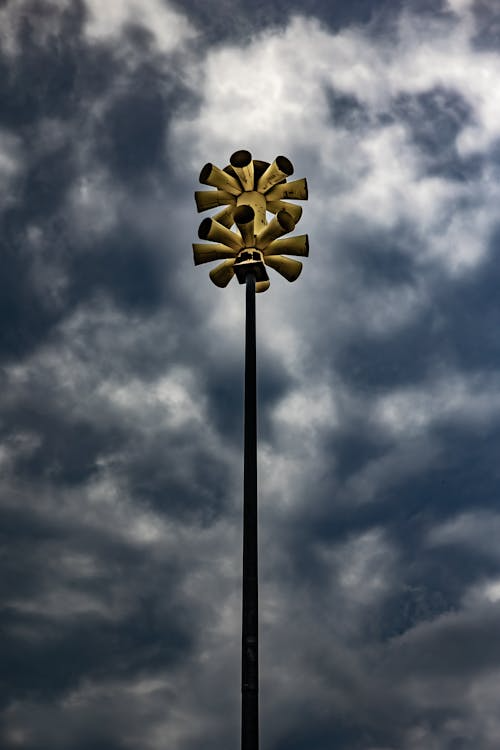
Photo by Omotayo Tajudeen on Unsplash
For a lot of people, evidence only becomes real when it intersects with ordinary life. When farmers can no longer predict planting seasons properly. When heat becomes physically unbearable. When floods that used to happen once in decades start happening every few years. Maybe that’s the strange thing about climate change. Most people will never experience it as a scientific theory first.
They will experience it as discomfort, as unpredictability, as gradual changes that only become obvious when they look back and realize something familiar no longer feels the same.
And maybe that is why I keep thinking about that conversation. Because it reminded me how complicated belief can be even when science is involved.
Sometimes people are not rejecting evidence. Sometimes they are trying to reconcile it with history, economics, survival, politics, and their own lived reality. And honestly, I think those tensions are going to shape the future of climate conversations far more than we realize.
The evidence for human-driven climate change is extensive and increasingly irrefutable. But scientific evidence alone does not automatically create public trust, especially in places where history, politics, and economic inequality shape how global narratives are received.
The geochemist I spoke to was wrong about some things. Current warming trends cannot be explained by natural cycles alone, and decades of climate research strongly support that conclusion. But I also understood why her scepticism resonated with people in the room.
For many Africans, climate conversations do not happen in isolation from larger questions about power, development, and fairness. Who caused the crisis? Who is being asked to sacrifice? Who gets to industrialize freely, and who is told to slow down for the sake of the planet?
Those questions do not erase the science. But they do shape how people emotionally and politically respond to it. The future of climate action may depend not only on scientific evidence, but on whether people feel they are being included fairly in the conversation surrounding it.
메타데이터
- post_id
- 2ce707157bf1
- slug
- a-geochemist-once-told-me-climate-change-didnt-make-sense-and-i-haven-t-stopped-thinking-about-it-2ce707157bf1
- url
- https://medium.com/the-new-climate/a-geochemist-once-told-me-climate-change-didnt-make-sense-and-i-haven-t-stopped-thinking-about-it-2ce707157bf1
- canonical_url
- https://medium.com/the-new-climate/a-geochemist-once-told-me-climate-change-didnt-make-sense-and-i-haven-t-stopped-thinking-about-it-2ce707157bf1
- author_url
- https://medium.com/@preciousawonge
- status
- ok
- fetched_at
- 2026-06-13 07:35:29