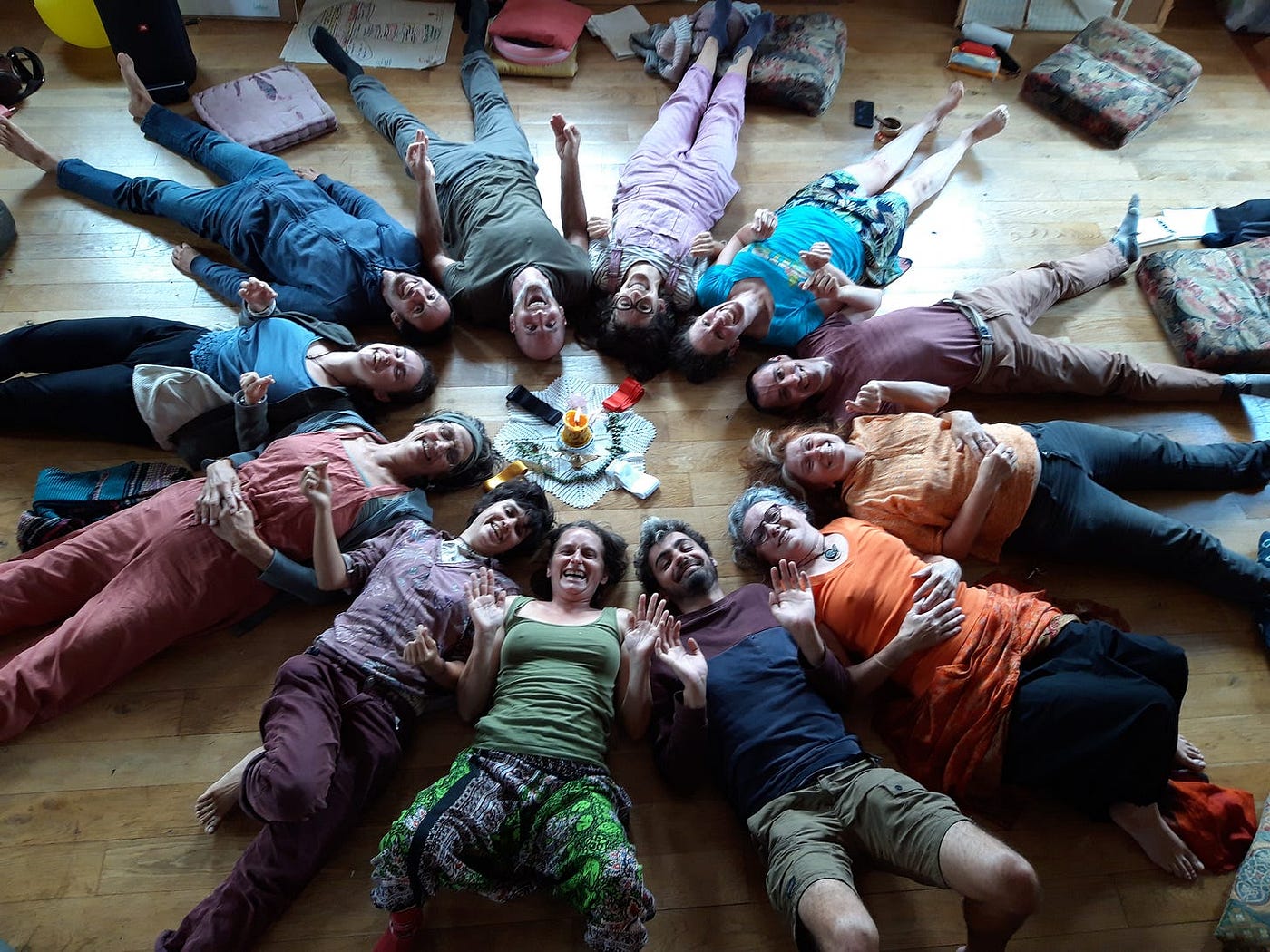
Reclaiming your authenticity with a spoon
A good tool for preventing long lasting meetings: be yourself!
Reclaiming your authenticity with a spoon
A good tool for preventing long lasting meetings: be yourself!
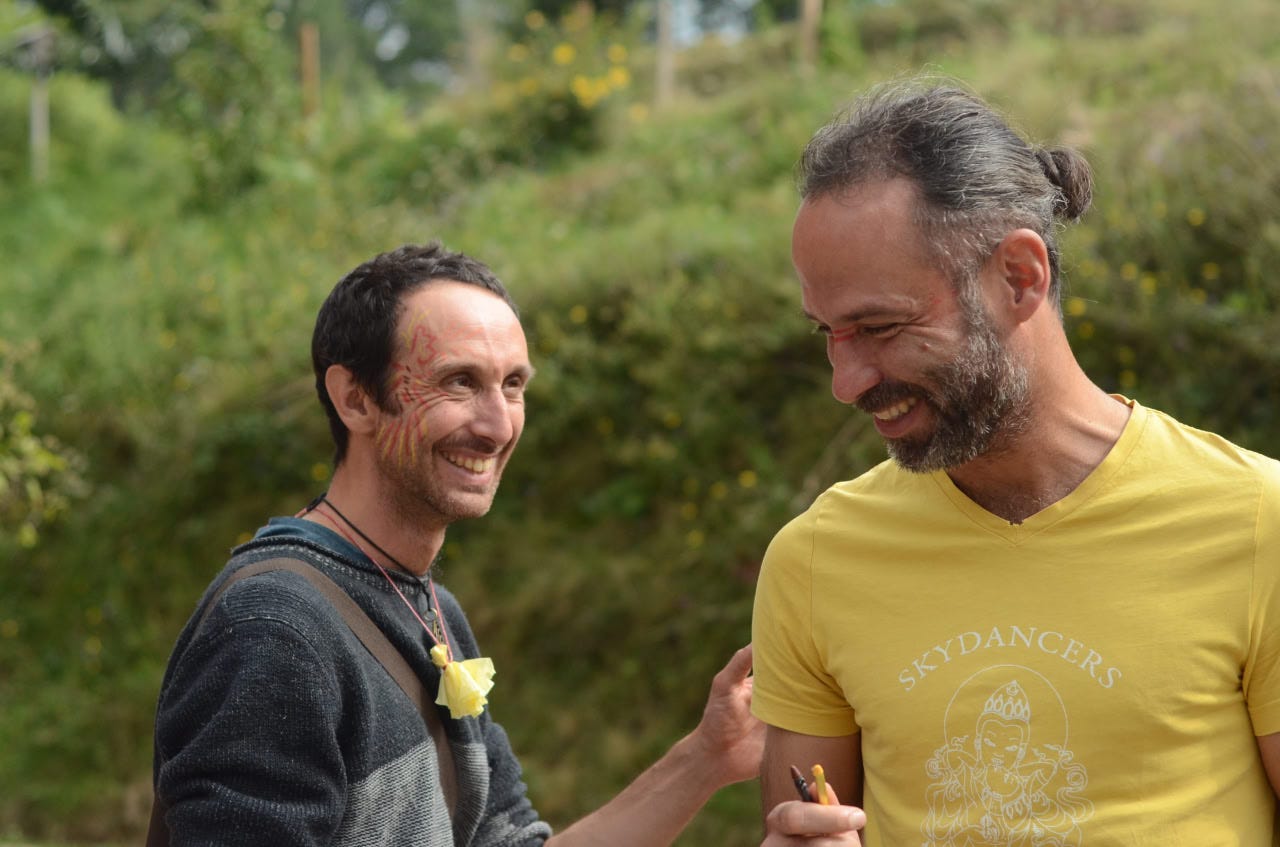
Something strange happens in me when I see something going wrong in a meeting: I often implode with anger. It’s as if there’s some earthly law that governs human relationships in this way. Boredom as a secure, repetitive framework punctuating a seemingly messy, but deeply defined format.
Anatomy of disorganized disaster:
-
pretending everything’s fine (sweeping things under the carpet)
-
business as usual (putting off decisions and talking about unimportant things)
-
let tensions run high until someone flies off the handle or says what they really want to say, or make decisions in a hurry (after all, that’s not all we have to do)
Hasn’t that ever happened to you?
First of all, we’ve all learned the ordinary politeness of putting a plastic smile on our “disturbing” emotions. It’s better to put a mute with your cosmetic social smile. A famous consequence of this is that we don’t say how we really are — and it’s not pseudo-tools like today’s weather that will make that possible. I can pretend I’ve got glorious sunshine and still leave things under the carpet. The “I’m doing fine, how are you?” that comes to close the usual parenthesis, closes the discussion for good.
Of course, even those groups of people who want to do things differently are caught in the trap of the nasty emotional avalanche that could arise and which we wouldn’t know what to do with if it ever did. We might as well barricade ourselves in or set sail.
And yet, if there’s one subject that makes society possible, it’s ourselves, and the perspective that this world, as we see it, doesn’t stop outside, but continues within us.
Yet if there’s one subject that makes society possible, it’s ourselves, and the perspective that this world, as we see it, doesn’t stop outside, but continues within us.
When we pretend to share our state of being and we don’t really do it, it’s like a sensitive extension of this world that we’re missing.
What if I said “no, I’m not OK right now”? Embarrassing? Definitely. And more real at the same time.
During the first two days of the Summer Camp Giving Body and Roots to our Dreams, conceived as a space for cooperating together, I witnessed this unbearable ballet of banality and surfing on the crests of ‘well being’ made in patriarchy.
Because patriarchy is a filthy world where the head triumphs over the body, deciding everything on automatic without letting the heart speak. It deprives itself of authenticity, of real experience, of the sensitivity needed to give birth to a fruitful conversation.
In my last article I talked about cooperation as something that can be learned, here I’m going to talk to you about learning to be authentic.
Nobody’s perfect. Even ‘prepared’ for possible early friction, I went into this camp with a growing sense of apprehension: something wasn’t right and I had to say it.
#antidote no. 1: being true starts with yourself
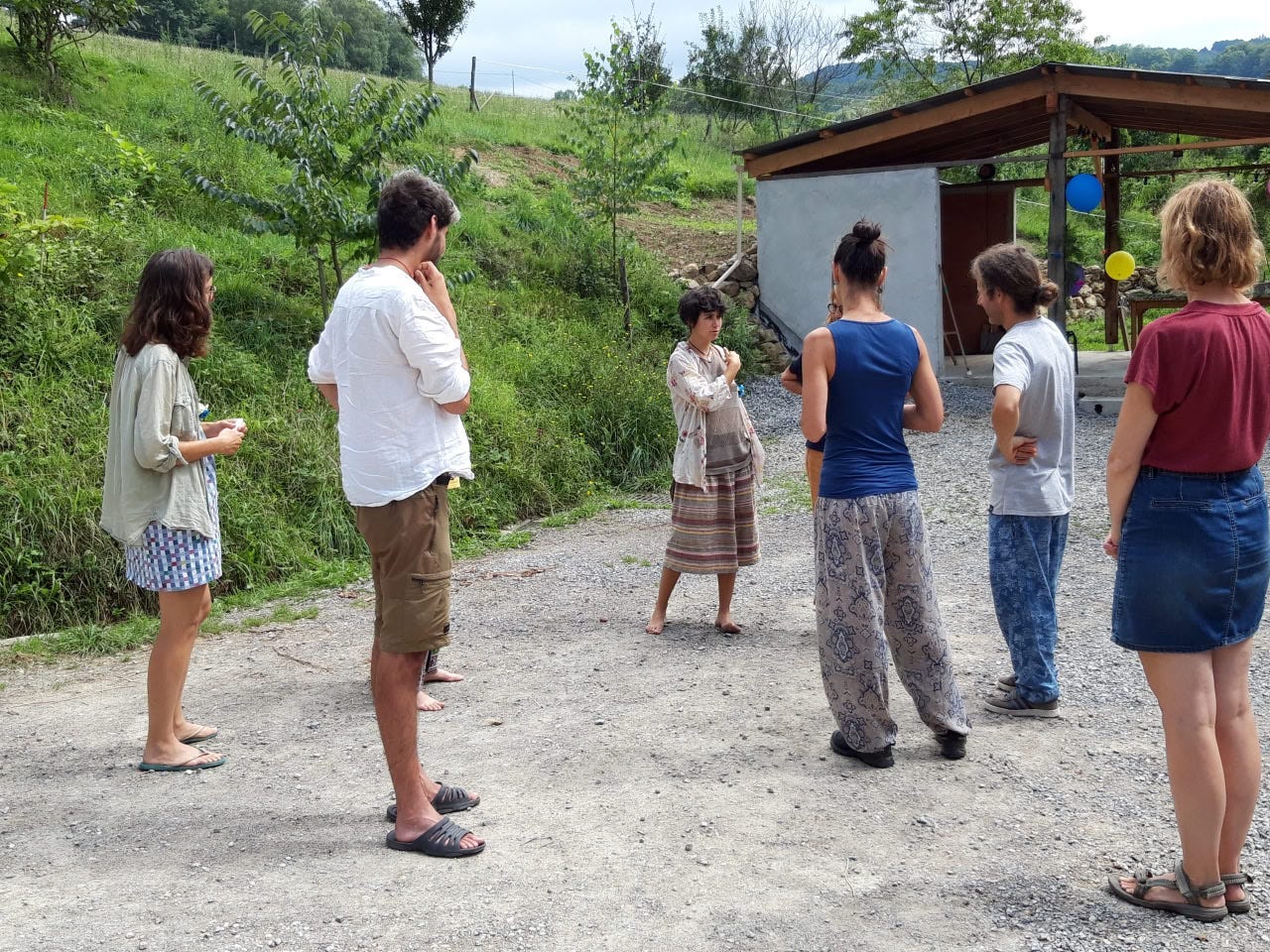
Positioning yourself in space, taking the floor: situations to apprehend reality through play, a large part of what was proposed at the Summer Camp. Here, Paloma Alvarez proposes a collective game to experiment and observe our behavior.
After requesting deep listening spaces with other members of my Possibility Team, I’ve noticed more and more that I’m angry. I’m ranting. I’ve been proposing effective meeting management tools for 2 days now, and it’s stalling: the social body is giving me the cold shoulder.
After going through all my states, during the morning opening circle I declare: “Today I’ll be a conscious bastard: Bullshit Man!”
“I’m going to say all the Bullshit that’s present in the space: the ‘yeses’ that are ‘nos in disguise’, the delays that are piling up, the facilitation that’s struggling to get off the ground, the discussions to fill the void, I’d say it all!”
A conscious bastard is very refreshing for the group: he does it out of deep Love for others and for himself.
Suffice it to say, we’ve been rocking all day.
Gone was the insidious comment that “you’re too powerful, isn’t that dangerous for the group?” Now I’m taking full responsibility! With my anti-Bullshit cape and my super powers of speaking faster than I can think, I’m 100% in!
And it works.
After successfully implementing resistance-based decision making as a group, a rotating facilitator and ingenious Dragon Dreaming tools such as Karrabirdt (creative group task planning), things are rolling.

Karrabirdt, a non-linear global project management tool, with its ‘song lines’ and 4 phases.
#antidote n°2: make important decisions right away
Proposing radical collaboration involves gauging the levels of responsibility within a group: who does what? Who does what? Who needs what?
I won’t dwell on the decision-making process, as the subject is copious enough and I covered it in the previous article.
On the other hand, if taking responsibility is one thing — which can already be blocked by old emotions (fear of being judged, frustration at not succeeding, fear of being seen in a group, etc.) — actually carrying out your tasks is another, and listening spaces are a great help.
A listening space is a space without the right of reply: in this case, we refrain and let the other person speak. I simply repeat what the person has just told me, not like a parrot, but with the same emotional intensity: fear, anger, sadness and joy (to designate the great primary colors).
If it’s fear, I repeat with a short breath to be in empathetic connection with the other person. It’s not manipulation, it allows the other person to be heard not just with their head — patriarchy hello — but also with their heart. If I’m afraid with the other person, I encourage them to open up and not to fall back on the old fear card: fear = danger = no good = I armor myself.
Authenticity goes both ways. The sender of the message can be all the more authentic the other is.
Ubuntu.¹
Inla Kesh.
Some in the group are crying, others are fidgeting in fear on their chairs, while Baptiste is expressing his anger, and Gaëlle is beaming with joy.
Why 4 feelings? It’s much simpler than the immensity of possible compositions, isn’t it? When you start learning to play the piano, you might not start with Beethoven, but it’s the same here: nobody taught us how to listen authentically, so it’s not surprising that we can’t speak authentically: there’s no space.
#antidote no. 3: blow a fuse right away in a specific time-space

To do this, there’s one more thing we’re not taught in the sacrosanct petro-patriarchal-world-factory empire in which I wasted precious years at school: to say what I want.
Yes.
It’s not that easy.
Try it with your loved ones or different people. Many will brood before telling you what they don’t want, but when it comes to saying what they do want, you’ve got time to go for a walk.
So, since the objective is to be authentic in the present moment — and not in the future — we learn how to say it. Once again, this involves the 4 feelings.
We were under a majestic walnut tree, vociferating: “I don’t want a domineering relationship!”, “I want you to listen to me”, “I’m sick and tired of doing this shitty job!” A bit like birds landing on a pile of manure to eat the worms, the group chirped happily under the protection of our woodland guardian.
A true moment of authentic expression.
“I didn’t think it could be so intense to say what I don’t want!” says Cécile.
As that wasn’t enough, I kicked things into high gear with an “Emotional Gastronomy” show, and then Julien Berlusconi gave his world premiere Dragon’s Dream gesticulated conference with a recipe for a 4 1/4 in homage to the 4 phases of project management: dream, plan, act and celebrate. I’ll let you guess the equivalent ingredients for the 4 1/4.
But I digress, and I’m just preluding to my next article, which will talk about the projects carried out during this summer camp.
Isn’t the enchantment I feel when my words are right, aligned and true worth a few practical exercises? Because then it’s a window on the world that opens, a window on the other, a bit of her, a bit of mystery unveiled.
So why not be more direct and practice being even more direct?
In my culture, I call it Heart Gym and Rage Clubs. You’re welcome.

View from the Mélilot, the agricultural and cultural association that welcomed us during this event.
¹Ubuntu in African dialect means “I am because you are”. A greeting that well describes the level of authenticity sought. Inla Kesh means the same thing in Mayan dialect. Both are very pretty, so you can pick from the menu.
메타데이터
- post_id
- 2ce94e1daba2
- slug
- reclaiming-your-authenticity-with-a-spoon-2ce94e1daba2
- url
- https://medium.com/@gabriel.lechemin/reclaiming-your-authenticity-with-a-spoon-2ce94e1daba2
- canonical_url
- https://medium.com/@gabriel.lechemin/reclaiming-your-authenticity-with-a-spoon-2ce94e1daba2
- author_url
- https://medium.com/@gabriel.lechemin
- status
- ok
- fetched_at
- 2026-07-20 06:35:57