Kenya’s Youth Uprising: A Fight for Justice Amid State-Sponsored Division
Subtitle: How Tribal Narratives and Manufactured Chaos Threaten to Derail a Generation’s Demand for Change
Kenya’s Youth Uprising: A Fight for Justice Amid State-Sponsored Division
Subtitle: How Tribal Narratives and Manufactured Chaos Threaten to Derail a Generation’s Demand for Change
The Spark of Chaos and the Youth’s True Demands
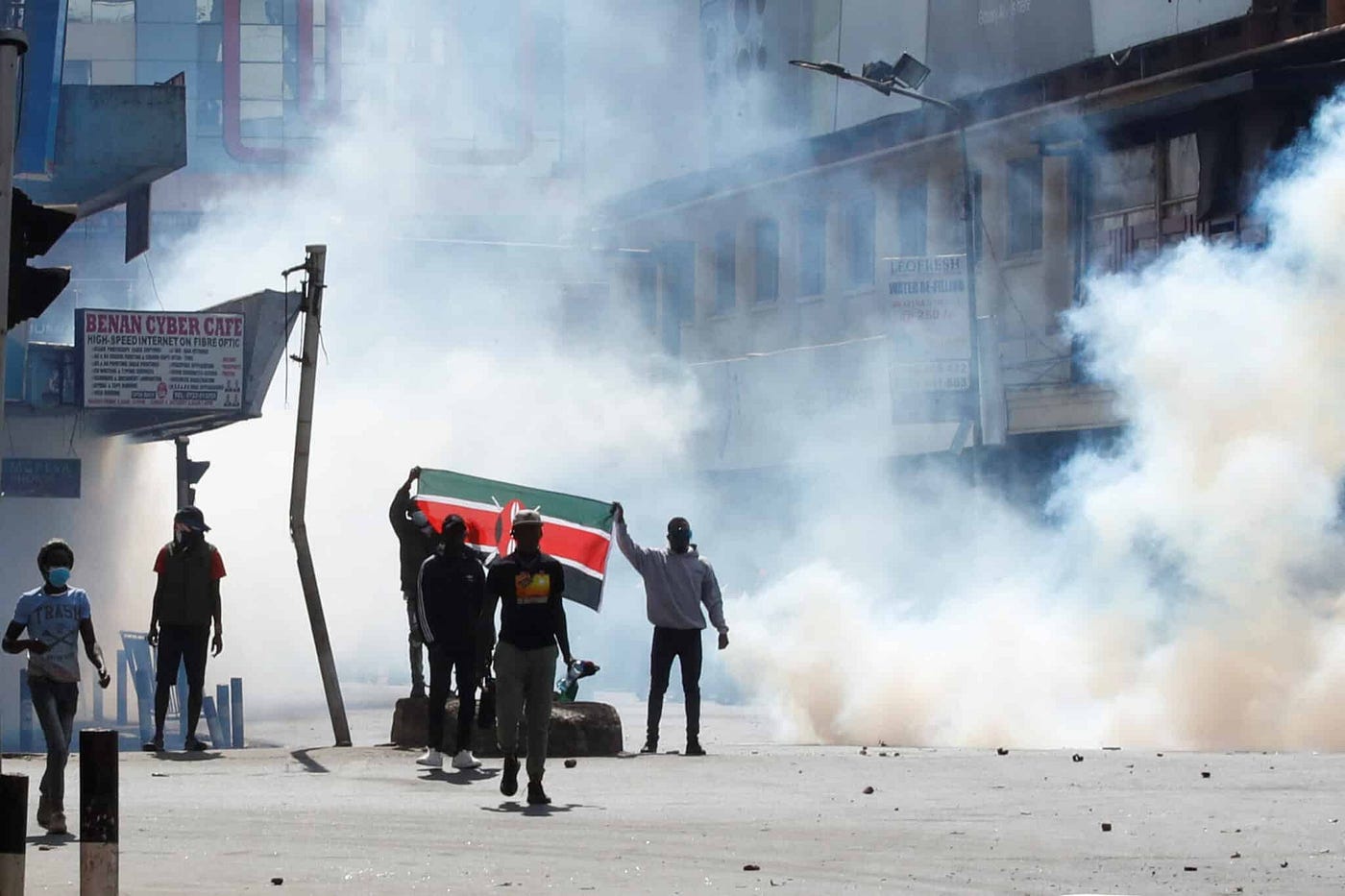
Since June 2024, Kenya has been rocked by unprecedented protests led by its Gen-Z youth, who have harnessed social media and street demonstrations to demand systemic change. Dubbed the **#RejectFinanceBill2024** movement, the spark was the Finance Bill 2024, which proposed steep taxes on essentials like bread, sanitary pads, and mobile money transfers, hitting hardest at a population grappling with a 68% youth unemployment rate and a 45% rise in living costs over three years . The protests, initially about taxes, evolved into a broader movement against corruption, police brutality, and economic exclusion, with chants of “Ruto Must Go” echoing across Nairobi, Mombasa, and Kisumu. Young Kenyans are demanding affordable living, transparent governance, and an end to extrajudicial killings, reflecting frustration with President William Ruto’s administration, accused of serving elite interests over the public’s needs.
The government’s response has been to smear the protests as “Kikuyu-funded chaos,” alleging orchestration by impeached Deputy President Rigathi Gachagua. This tribal narrative, amplified by state-aligned influencers, aims to fracture a multi-ethnic movement. Meanwhile, the state has unleashed brutal crackdowns, abductions, and censorship, tactics straight from an authoritarian playbook used globally by regimes too incompetent to serve their people. From Zimbabwe’s false flags to China’s staged crises, this strategy — sow division, incite chaos, and tighten control — threatens to extinguish Kenya’s youth-led fight for justice unless recognized and resisted.
THE CURRENT KENYAN CONTEXT
A. The “Kikuyu Protest” Narrative: Dividing a United Movement
The government’s claim that the protests are Kikuyu-driven is a calculated lie to undermine a diverse movement. Pro-government X posts, like one claiming, “Thika Road and Kiambu are the epicenters of this Gachagua-funded chaos”, paint the protests as a tribal plot, ignoring their spread across 43 of Kenya’s 47 counties, uniting Luo, Kalenjin, Kamba, and others. Activist Boniface Mwangi countered, “They call it Kikuyu chaos because they fear our unity. This is a Kenyan fight, not a tribal one”. By ethnicizing the protests, the state exploits historical tensions to deflect from its failures.
B. Abductions, Deaths, and the Weaponization of Fear
The state’s crackdown has been ruthless. It is public knowledge that since June 2024, over 80 activists have been abducted, with many still missing. Albert Ojwang, a blogger who exposed police corruption, died in custody in June 2025, with authorities falsely claiming self-inflicted injuries; three officers now face murder charges. Rose Njeri, a software developer, was detained without legal representation for creating an anti-tax tool online. The death of 12-year-old Kennedy Onyango, killed by a stray police bullet in 2024, sparked outrage, with activist Hanifa Adan tweeting, “A child’s blood stains their hands. This is not law enforcement; it’s murder”. In December 2024, seven individuals, including Gideon Kibet, were abducted for sharing AI-generated satirical images of Ruto, prompting protests on December 30. These acts, coupled with 60 deaths in 2024 and 16 in 2025, aim to terrorize and silence.
C. Staged Chaos and Repression: The Role of “Goons”
The government has been accused of hiring “goons” to infiltrate protests and incite violence, discrediting the movement. On June 25, 2025, footage showed plainclothes actors looting shops and clashing with police, some arriving in police vehicles. Activist Ojango Omondi tweeted, “These aren’t protesters. They’re hired thugs sent to make us look violent”. In Eldoret, a Ruto’s stronghold, protesters spotted state-funded goons aiming to sow chaos, chanting, “We don’t want goons here. We are peaceful”. A BBC Africa Eye documentary identified security forces shooting unarmed protesters at Parliament in 2024, killing three, yet no officers have been charged. The unconstitutional deployment of the Kenya Defence Forces (KDF) on June 25, 2024, further escalated repression, with the Law Society of Kenya condemning it as illegal.
D. Censorship and Surveillance
The government has attempted to control the narrative through censorship and surveillance. On June 25, 2025, the Communications Authority of Kenya banned live protest coverage, citing incitement, a move overturned by courts but condemned as “draconian” by the Kenya Editors’ Guild. Interior Minister Kipchumba Murkomen’s “shoot to kill” directive and calls for social media regulation, echoed by Francis Atwoli’s tweet, “X is fueling anarchy; it must be regulated”, reveal a push to silence dissent. A Nation exposé revealed Safaricom, Kenya’s largest telecom, shared customer location data with security forces, aiding abductions and killings during protests. Amnesty Kenya tweeted, “Safaricom’s data-sharing violates our rights. This is state surveillance, not security”.
E. Economic Neglect and Political Co-optation
Despite withdrawing the Finance Bill 2024 after protests, the government has failed to address economic grievances like 68% youth unemployment and rising costs. IMF-driven policies pushing for a 20% tax-to-GDP ratio by 2027 continue to burden low-income Kenyans with taxes on essentials. Ruto’s co-optation of opposition figures, like Raila Odinga’s Orange Democratic Movement, into a “broad-based government” has neutralized dissent without addressing demands for reform. Activist Wanjira Wanjiku tweeted, “They buy the opposition to silence us, but we’re not for sale”.
A GLOBAL PATTERN OF MANUFACTURED VIOLENCE
Authoritarian regimes worldwide have used similar tactics to suppress dissent:
A. Zimbabwe 2019: False Flag Protests
In 2019, Zimbabwe’s government planted agitators during fuel price protests, blaming the opposition Movement for Democratic Change. The crackdown killed 17 and arrested over 600.
B. Mozambique 2024: Orchestrated Prison Breaks
After disputed elections, authorities allegedly facilitated prison breaks, with released criminals paid to incite violence, justifying lethal force.
C. China 2001: Staged Falun Gong Self-Immolation
China staged a self-immolation in Tiananmen Square, blaming Falun Gong to justify a nationwide ban and mass arrests.
D. Hong Kong 2019–2020: Undercover Provocateurs
Undercover police incited violence during protests, leading to public fatigue and harsher laws.
Kenya’s government is following this playbook, using division and violence to cling to power.
WHY TRIBALISM IS THE PERFECT COVER FOR TYRANNY
A. Kenya’s History of Ethnic Manipulation
From Moi’s Kalenjin favoritism to Uhuru Kenyatta’s Kikuyu-centric policies, elites have exploited tribal divisions. The 2007–2008 post-election violence, killing over 1,200, was fueled by ethnic tensions stoked by politicians. The “Kikuyu protest” label revives these divisions to distract from systemic failures.
B. Deflecting Responsibility Through Tribalism
Tribal narratives shift focus from corruption and economic woes. The Eurobond scandal and unaddressed unemployment (12% overall, 68% for youth) are sidelined as the state pushes tribal conspiracies. This protects elites while Kenyans fight imagined enemies.
C. The Danger: Fracturing Youth Unity
Gen-Z’s multi-ethnic movement unites Kikuyu, Luo, and others. If tribalism takes hold, trust erodes. Wanjira Wanjiku tweeted, “They want us to hate each other so we forget who’s stealing our future”.
WHO BENEFITS FROM THE CHAOS?
A. The State’s Grip on Power
Chaos justifies authoritarianism. The 2025 media blackout, calls for X censorship, and KDF deployment signal control, not security.
B. Politicians’ Fear of Youth Unity
Gen-Z’s unity threatens the elite. The 2024 Finance Bill withdrawal proved their power. Hussein Khalid tweeted, “They’re scared because we’re not Luo or Kikuyu — we’re Kenyan”.
C. A Complicit Media and Silent Opposition
The co-opted opposition and media amplifying state narratives obscure the truth. Larry Madowo tweeted, “The media buries the truth under propaganda”.
A WARNING TO THE YOUTH OF KENYA
A. A Timeless Playbook
From Zimbabwe to China, tyrants create chaos to justify oppression. Kenya’s tribalism is a mask for incompetence.
B. Your Power Threatens Them
Gen-Z’s tech-driven movement terrifies the elite. The 76 deaths since 2024 are meant to intimidate. Jerameel Kesho tweeted, “They kill us to scare us, but we’re not backing down”.
C. Reject Tribalism, Embrace Unity
Unity is your weapon. Organize online, amplify truth, and reject division. Boniface Mwangi tweeted, “Kikuyu, Luo, Kalenjin — we’re all Kenyan. Don’t let them lie to you”.
Kenya’s Future Hangs in the Balance
The blood of Kennedy Onyango, Albert Ojwang, and others demands action. They call it tribalism, but it’s tyranny in disguise. Stay united, demand accountability, and build a Kenya where justice prevails. Wanjira Wanjiku tweeted, “Our tomorrow is ours to shape. Don’t let them steal it”.
메타데이터
- post_id
- 2d0c80d221a6
- slug
- kenyas-youth-uprising-a-fight-for-justice-amid-state-sponsored-division-2d0c80d221a6
- url
- https://medium.com/@writerericw2021/kenyas-youth-uprising-a-fight-for-justice-amid-state-sponsored-division-2d0c80d221a6
- canonical_url
- https://medium.com/@writerericw2021/kenyas-youth-uprising-a-fight-for-justice-amid-state-sponsored-division-2d0c80d221a6
- author_url
- https://medium.com/@writerericw2021
- status
- ok
- fetched_at
- 2026-08-19 14:52:39