When too much information backfires: What a holiday purchase experiment in India taught us about…
During the holiday season, consumers are surrounded by information — feature lists, comparisons, reviews, testimonials, and technical…
When too much information backfires: What a holiday purchase experiment in India taught us about consumer choice
During the holiday season, consumers are surrounded by information — feature lists, comparisons, reviews, testimonials, and technical details. The assumption is simple: more information helps people make better decisions.

My recent field experiment suggests the opposite can be true.
On a recent trip to India, I was intrigued by these observations during my visits to retailers who were overzealous to sell me some form of electronics (with AI capabilities). So, I chose to take this head on and between December 12 and December 28, 2025, I ran a real world behavioral experiment with 200 consumers in India to understand how Too Much Information (TMI) affects purchase intent, especially when a product strongly aligns with a user’s psychological needs.
The results were clear: even when people feel a product is right for them, excessive information can reduce their likelihood of buying it.
Most research agrees on two things:
- When products meet users’ psychological needs — autonomy, competence, and relatedness, people are more likely to adopt them.
- Digital platforms increasingly overwhelm users with information in the name of transparency and persuasion.
What hasn’t been studied enough is how these two forces interact. Does too much information cancel out the motivational benefits of a great product fit?
To test this I conducted a field experiment using Prolific with Indian consumers during the holiday shopping period. Participants evaluated a premium mobile fitness app subscription, positioned as a holiday purchase. This seemed appropriate given fitness related New Year resolutions 😊. The service emphasized:
- Personalization (autonomy)
- Skill-building and progress tracking (competence)
- Community and social engagement (relatedness)
Participants were randomly assigned to one of two conditions:
- Standard Information: Clear, concise, decision-relevant details
- Too Much Information (TMI): Expanded content including long feature lists, technical explanations, comparisons, and testimonials
We then measured:
- Perceived psychological need fulfillment
- Purchase intent
- Perceived information overload
What We Found
1. Psychological fit works, until it doesn’t
As expected, when participants felt the service supported their autonomy, competence, and relatedness, purchase intent increased significantly. This confirms what many product teams already believe: When users feel “this is for me,” they are more likely to buy.
2. Too much information has a direct negative effect
Participants exposed to excessive information reported significantly higher cognitive overload and lower purchase intent overall. More content did not increase confidence. It increased friction.
3. The most important finding: TMI weakens motivation
Here’s the key insight: Too much information significantly weakened the relationship between psychological need fulfillment and purchase intent.
In plain terms:
- With clear, focused information, motivation translated into action.
- With excessive information, motivation stalled.
Even users who liked the service and felt it met their needs were less likely to commit when overwhelmed with details.
Why This Matters
For product leaders and marketers: Motivation alone is not enough. If your product experience overwhelms users cognitively, you risk neutralizing even strong value propositions. Feature overload can dilute emotional resonance. More messaging does not mean more persuasion, especially during time-pressured periods like holidays.
For UX and growth teams
This reinforces the importance of:
- Progressive disclosure
- Tiered information architecture
- Designing for decision confidence, not informational completeness
A Simple Mental Model
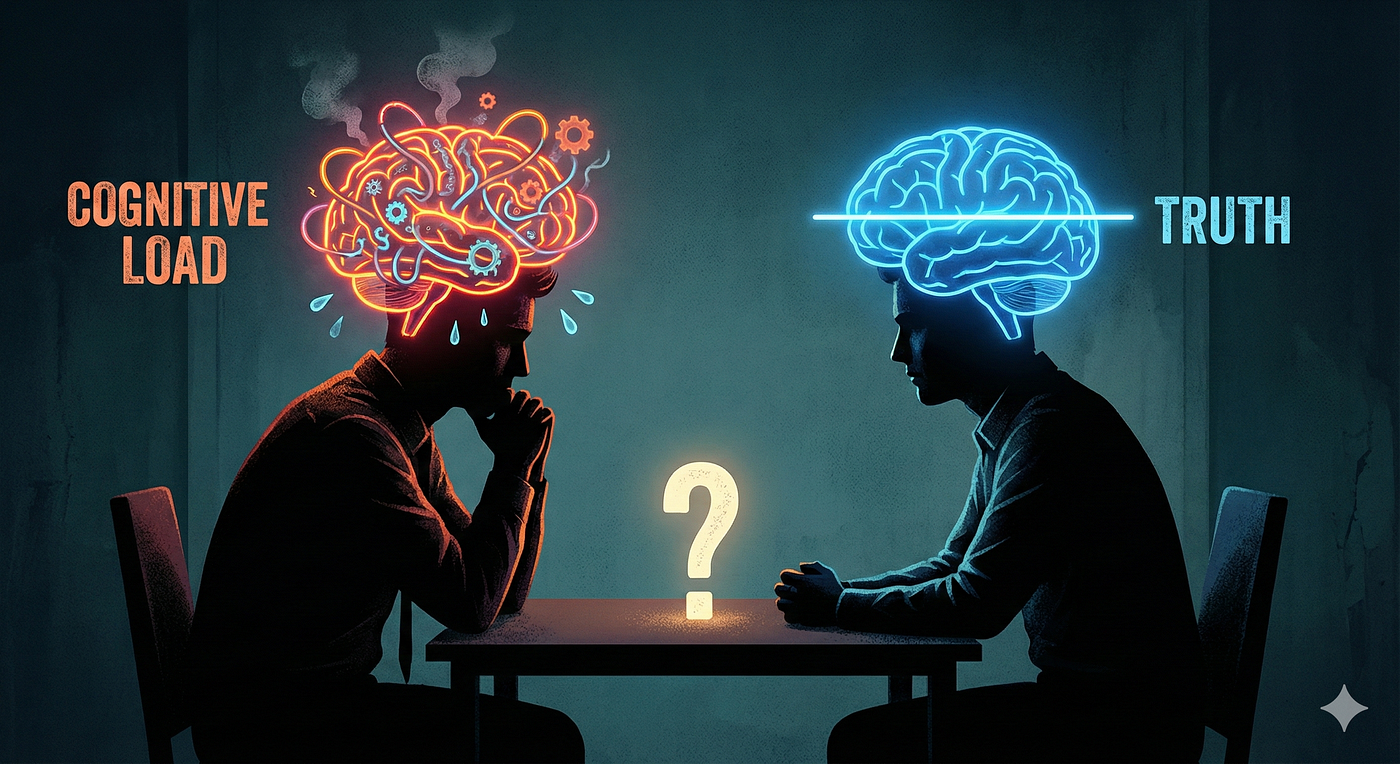
Think of consumer decision making as a balance between:
- Motivation (Do I want this?)
- Cognitive load (Can I process this?)
Too much information tips the balance — even when motivation is high.
Several threads to further our understanding from this exploratory study, open up for PhD and DBA candidates to potentially analyze:
- What is TMI triggering (psychologically) which in turn reduces motivation to purchase?
- How does TMI affect post-purchase satisfaction and churn?
- Do these effects differ across cultures or income levels?
- Can AI driven personalization reduce overload while preserving autonomy?
- How does information overload interact with trust in high-risk categories like finance or healthcare?
These are not academic questions alone, they’re central to how digital products succeed or fail.
Final Thought
The instinct to “add one more feature explanation” or “include one more comparison” is understandable. But our findings suggest a counterintuitive truth:
The best-designed experiences don’t inform users more, they inform them better.
If you’re building, marketing, or scaling digital services, the challenge isn’t how much information you provide, but how effectively it helps motivated users move forward.
메타데이터
- post_id
- 2d2f8e282c0d
- slug
- when-too-much-information-backfires-what-a-holiday-purchase-experiment-in-india-taught-us-about-2d2f8e282c0d
- url
- https://medium.com/@weekender.in/when-too-much-information-backfires-what-a-holiday-purchase-experiment-in-india-taught-us-about-2d2f8e282c0d
- canonical_url
- https://medium.com/@weekender.in/when-too-much-information-backfires-what-a-holiday-purchase-experiment-in-india-taught-us-about-2d2f8e282c0d
- author_url
- https://medium.com/@weekender.in
- status
- ok
- fetched_at
- 2026-07-07 12:17:01