The Market Wants Productivity. You Need Mastery.
Your job was never obligated to make you a master. AI just made that impossible to keep ignoring.
The Market Wants Productivity. You Need Mastery.
Your job was never obligated to make you a master. AI just made that impossible to keep ignoring.

A young software engineer recently complained that his manager kept asking him to use AI.
“How am I supposed to become a good engineer if every difficult task is delegated to Claude Code?”
It is a sentiment I’ve seen repeatedly over the past year. Designers lament becoming “prompt editors.” Illustrators feel their craft is reduced to writing instructions for image generators. Junior programmers worry they’re no longer learning because AI writes most of the code before they do.
I understand the frustration.
Ironically, if that engineer worked on my team, I would probably tell him exactly the same thing.
Use the AI. Ship the feature. Meet the deadline.
So which is it?
This isn’t really a debate about whether AI belongs in the workflow. It already does, and that argument is over. The real question is who is responsible for what you become while you use it — and until recently, nobody had to ask, because the job answered it for you.
The market has never primarily paid for perfection
Many people describe AI as if it has suddenly made the world value speed over quality.
I don’t think that’s true.
Markets have almost always rewarded the cheapest level of quality that reliably satisfies the customer’s actual need.
Toyota sells more cars than BMW. Not because Toyota makes poor cars. Quite the opposite.
Toyota has arguably built one of the world’s greatest manufacturing systems. It simply defines quality differently. Most buyers don’t need the sharpest steering or the finest leather. They need a car that starts every morning, carries the family safely and doesn’t spend weeks in the workshop.
For those customers, Toyota isn’t an “80% solution.” It is the 100% solution to their problem.
Clayton Christensen described something similar in *The Innovator’s Dilemma*: disruptive products rarely start by outperforming the best. They start by being good enough, while being dramatically cheaper, simpler, or more accessible.
Toyota and BMW aren’t quite that story — BMW’s buyers were never migrating downward, so this isn’t textbook disruption. But the underlying mechanism Christensen described still runs underneath it: what counts as “quality” gets redefined from below, until the market that used to need the premium version no longer does.
AI is running that mechanism now, across professions that never expected to be graded on “good enough.”
For a great deal of commercial writing, illustration and programming, it already is.
Not perfect. Good enough.
But quality never disappears
At this point someone usually says: “What about BMW?” Or Rolex. Or Christopher Nolan.
Exactly.
The existence of disruptive products has never eliminated premium craftsmanship.
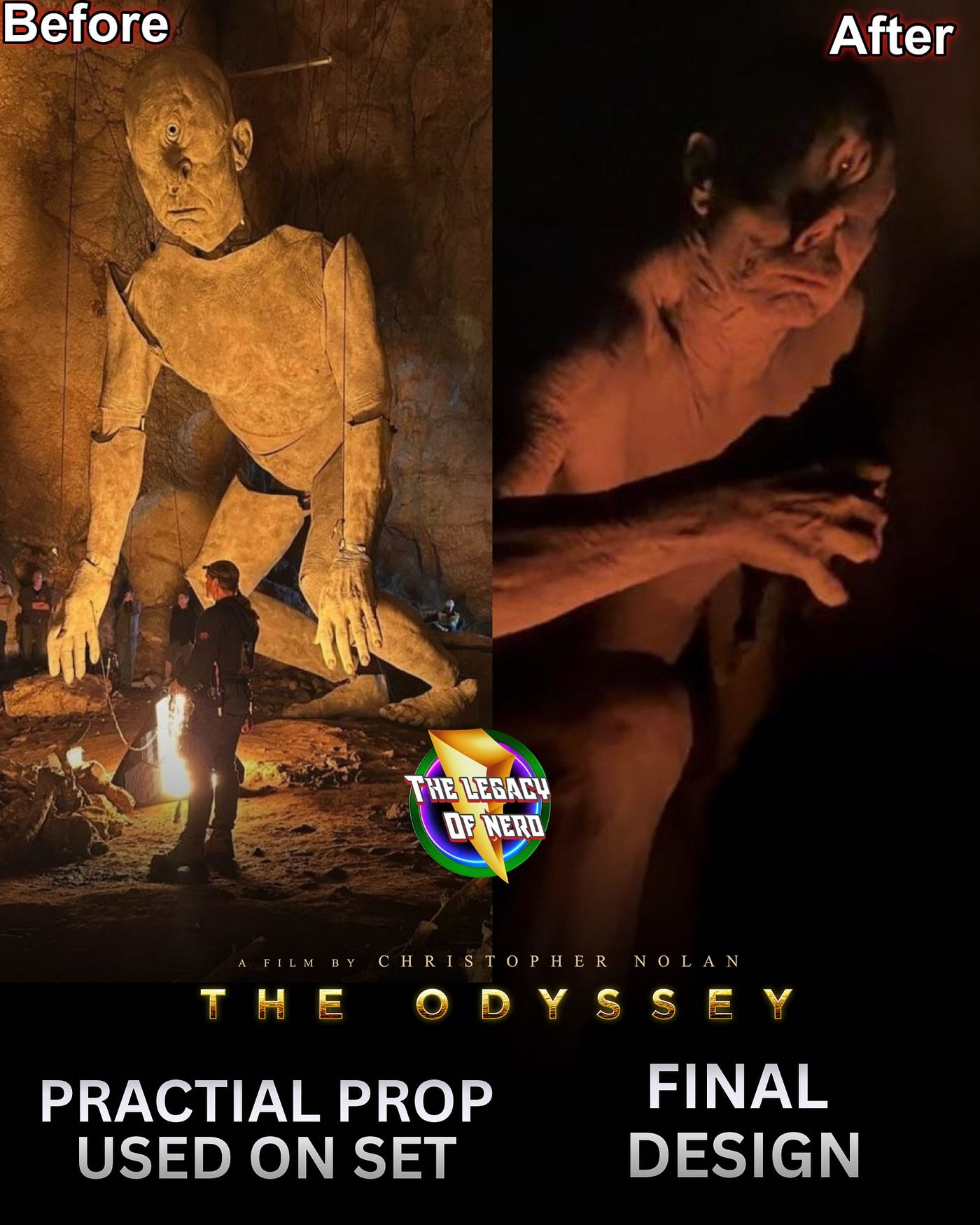
Christopher Nolan famously continues to build practical effects wherever possible. In The Odyssey, the Trojan Horse is a real structure, hauled by hand across real sand. The Cyclops was built as a towering practical rig rather than existing purely inside a rendering farm.
He isn’t doing this because computers are incapable. He’s doing it because those choices serve his artistic vision.
Likewise, people don’t buy Rolex because they need a more accurate clock. Your phone is already more accurate.
They’re paying for craftsmanship, history, design, engineering and symbolism.
Quality still has a market. It is simply a smaller market. And customers only pay for it when they can perceive the difference.
Here’s where many young professionals become frustrated
A junior designer wants to spend another three hours refining an illustration. The company wants it finished before lunch.
A junior programmer wants to write every function by hand. The company wants him to use AI so the feature ships on Friday.
Both are behaving rationally.
The designer is trying to become a better artist. The company is trying to launch a product.
The company is buying an outcome. The employee is trying to become someone.
That was always true. AI just removed the part where those two goals happened to overlap by accident.
There are two parallel tracks
The first is the market track. Its questions are straightforward.
Can we deliver this faster? Can we reduce cost? Can we automate repetitive work? Can we meet customer expectations?
On this track, AI is usually an excellent tool.
If Claude Codehelps an engineer produce reliable code twice as quickly, refusing to use it simply because “real programmers don’t use AI” makes little business sense.
But there is a second track. Call it the mastery track. Its questions are completely different.
Am I developing judgment? Can I recognise elegant design? Do I understand why this solution works? Can I create something that carries my own voice?
Efficiency is not always the goal here. Sometimes the struggle is the training.
Writing a parser from scratch. Building an operating system as a hobby. Drawing without generative tools. Writing the novel nobody commissioned.
These activities may be commercially inefficient. They are developmentally priceless.
Don’t expect your employer to provide your apprenticeship
This, I think, is the biggest change AI is forcing us to confront.
For generations, many people assumed their job would naturally turn them into masters of their craft.
Sometimes it did. But increasingly, companies optimise for delivery.
That is not a moral failing. It is literally why companies exist.
A software company is not an academy for software craftsmanship. A design agency is not an art school.
Their primary obligation is to deliver value to customers.
If your growth happens as a by-product, wonderful. If not, the company has still fulfilled its purpose.
The responsibility increasingly falls on individuals.
Every professional needs a private workshop.
For software engineers, perhaps it’s an open-source project. For writers, the novel that no publisher requested. For designers, a series of illustrations made purely because they wanted to explore an idea. For filmmakers, the short film shot on weekends.
This isn’t merely a side hustle.
It’s your apprenticeship.
It is where you optimise for the person you want to become rather than the output someone else is paying you to produce.
Here’s the honest objection, and it deserves an honest answer: a side project is not the same as apprenticeship under real stakes. Nobody’s users break at 2am because your hobby parser has a bug. Nobody reviews your weekend illustration with a promotion riding on it. Real consequence used to be what forced the learning.
The objection would be devastating if companies were still choosing between apprenticeship and AI. Increasingly, they aren’t. They’ve already chosen productivity. The question is no longer where you’ll receive your apprenticeship. It’s whether you’ll create one yourself.
Fortunately, meaningful struggle doesn’t require an employer. It requires problems slightly beyond your current ability and honest feedback from people who have no obligation to praise you. Open-source maintainers, public writing, design critiques and independent clients can all provide that. The workshop is not a perfect substitute for traditional apprenticeship. It is the most realistic one left.
Mastery does not promise the market will find you
Here is the complication, and it belongs in this essay rather than around it.
Building the workshop does not guarantee anyone opens the door.
J.K. Rowling was rejected by twelve publishers before Bloomsbury said yes — and even then, the deciding vote wasn’t an editor’s judgment. It was the chairman’s eight-year-old daughter, who wouldn’t stop asking for the next chapter.
Nikola Tesla built the electrical system much of the world still runs on, and still died largely broke, outmanoeuvred by men who understood financing and marketing better than he understood alternating current.
Philo Farnsworth invented electronic television as a teenager and spent the rest of his life in patent court against RCA, a company with the capital and the sales force he never had. History remembers the company. Almost no one remembers the inventor.
None of this is an argument against mastery. Tesla’s and Farnsworth’s work was real regardless of who got paid for it. But it is an argument against the quiet promise that usually rides along with advice like mine — master your craft, and reward follows. Sometimes it does. Sometimes the timing, the gatekeeper, or the decade you were born into decides it before your skill ever gets a vote.
So the workshop is not a promise of success. It’s a narrower thing, and a more honest one: it’s what makes you ready if the door opens, and who you can live with being if it doesn’t.
AI doesn’t remove the need for mastery. It makes it more intentional.
At work, use AI.
Let it remove repetitive effort. Let it draft boilerplate. Let it generate alternatives. Let it accelerate production.
But don’t outsource your formation to it.
I’ve called this the expertise paradox elsewhere: the more AI can produce, the more valuable it becomes to have someone around who can tell the difference. This essay is that paradox, applied to a single career instead of a whole field.
Because productivity and mastery are related, but they are not the same thing.
One earns today’s salary. The other determines what you’ll still be capable of ten years from now.
Perhaps that’s the real lesson hidden beneath the anxiety surrounding AI.
The market has always rewarded productivity.
What has changed is that work is no longer guaranteed to make you a master.
If mastery is what you want, you’ll need to pursue it deliberately — in your own workshop, on your own projects, under standards that belong to you rather than your employer.
The market will pay you for what you produce. Only you can invest in the person who produces it.
메타데이터
- post_id
- 2d41cec87fe7
- slug
- the-market-wants-productivity-you-need-mastery-2d41cec87fe7
- url
- https://medium.com/@darwingosal/the-market-wants-productivity-you-need-mastery-2d41cec87fe7
- canonical_url
- https://medium.com/@darwingosal/the-market-wants-productivity-you-need-mastery-2d41cec87fe7
- author_url
- https://medium.com/@darwingosal
- status
- ok
- fetched_at
- 2026-08-26 23:50:48






