Heat Stroke vs. Heart Attack: How to Tell the Difference Before It’s Too Late
Each summer, emergency departments across the UAE receive patients whose symptoms could be a heat-related illness — or a cardiac event — or…
Heat Stroke vs. Heart Attack: How to Tell the Difference Before It’s Too Late
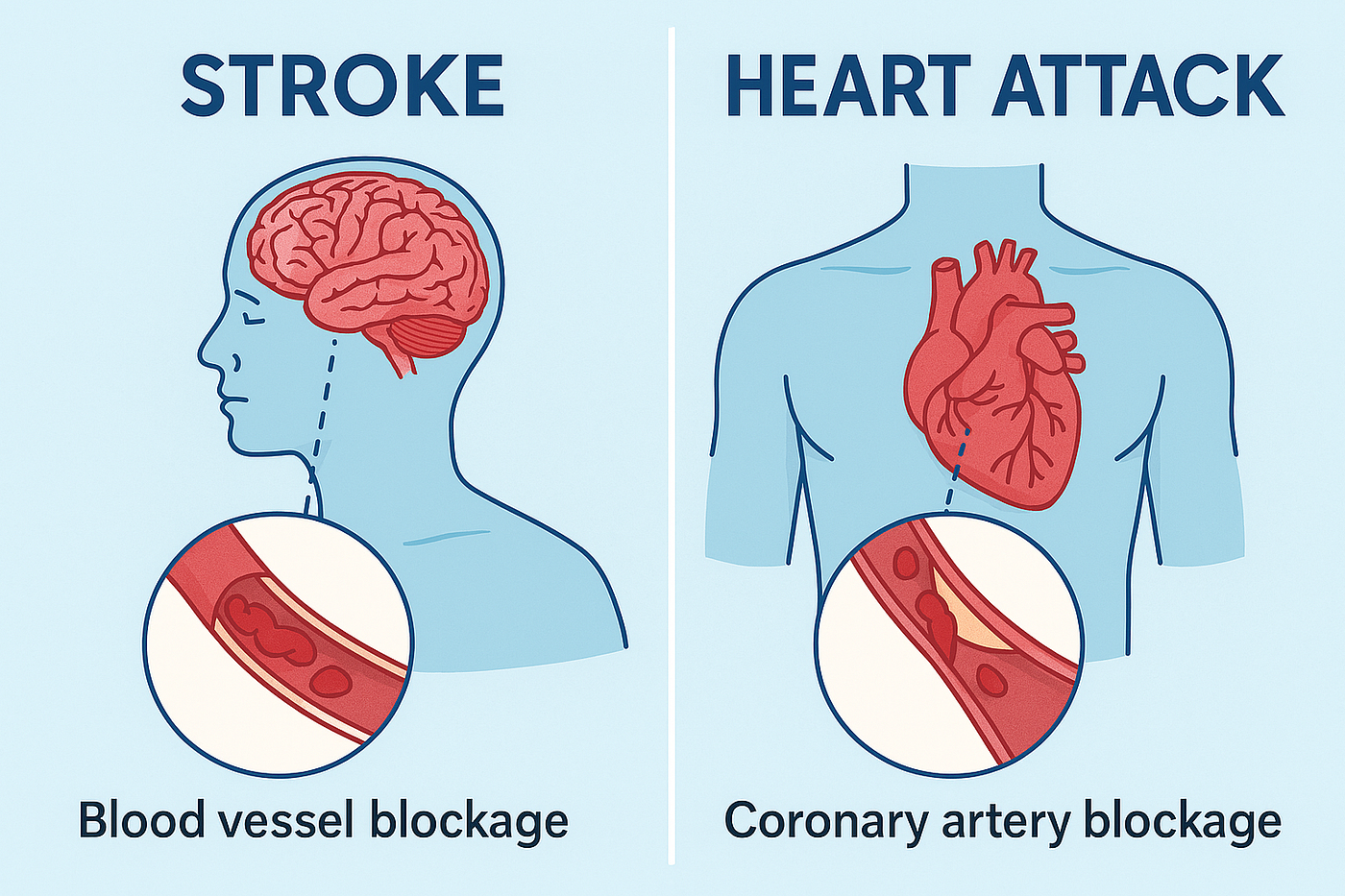
Each summer, emergency departments across the UAE receive patients whose symptoms could be a heat-related illness — or a cardiac event — or both at once. The overlap in presentation is not a minor clinical curiosity; it is a genuine life-safety issue. Treating a heart attack as heat exhaustion delays intervention and worsens outcomes. Treating heat stroke without recognising the concurrent cardiac involvement does the same.
The heart doctors in Dubai UAE at German Heart Centre break down the differences, the overlaps, and the critical signals that should send you — or someone near you — to emergency care immediately.
The Shared Symptoms That Create Confusion
Both conditions can present with: rapid pulse, nausea or vomiting, lightheadedness or dizziness, fatigue and weakness, and in severe cases, confusion or loss of consciousness. In the Gulf summer, where ambient temperatures regularly exceed 45°C, these symptoms are easy to attribute entirely to the heat — which is exactly where the danger lies.
Also Read: How UAE’s Extreme Summer Heat Forces Your Heart to Work Harder?
Heat Exhaustion: The Warning Stage
Core signs: Heavy sweating, cool and clammy skin, weak but fast pulse, muscle cramps, pale complexion, headache, nausea.
Consciousness: The person is conscious, coherent, and able to communicate.
Body temperature: Elevated but below 40°C.
What to do: Move to a cool environment immediately, hydrate with water or electrolyte fluids, rest. If symptoms do not improve within 30 minutes, seek medical attention.
Heat exhaustion is the body’s distress signal before a more dangerous stage. Ignoring it leads to heat stroke.
Heat Stroke: A Medical Emergency
Core signs: Hot, red and dry skin (sweating has stopped), very high body temperature above 40°C, rapid and strong pulse, confusion, slurred speech, or unconsciousness.
Consciousness: Often impaired — confusion, agitation, or unresponsiveness.
What to do: Call emergency services immediately. Cool the person rapidly — ice packs to neck, armpits, and groin, wet cloths, fan. This is not a wait-and-see situation.
Heart Attack: Different Mechanism, Overlapping Signals
Core signs: Pressure, squeezing, or tightness in the chest; pain radiating to the left arm, jaw, back, or shoulder; shortness of breath; cold sweat; nausea.
Consciousness: Usually maintained initially, though fainting can occur.
Key differentiator: Chest discomfort that persists or is described as pressure or squeezing — rather than pain triggered by movement — is a strong cardiac signal. Heat alone does not typically produce chest pressure.
Importantly, summer heat can trigger a cardiac event in a patient who has underlying coronary artery disease. The two conditions are not mutually exclusive — and managing one without addressing the other can be fatal.
Silent Heart Attacks: The Subset Most Often Missed in Summer
Women, diabetic patients, and elderly individuals are significantly more likely to experience atypical or silent cardiac events — episodes where chest pain is absent, and symptoms include only fatigue, nausea, jaw discomfort, or breathlessness. In the context of summer heat, these symptoms are almost universally attributed to the weather. A Holter monitoring test can detect rhythm disturbances that may reveal a silent event that went unrecognised.
What Happens When Both Occur Simultaneously
Extreme heat can trigger demand ischaemia — where the heart’s workload exceeds the blood supply it receives, even in people without a blocked artery. This produces cardiac injury that appears on an ECG test and blood markers. It is a genuine cardiac event, even if the mechanism differs from a classic heart attack. Patients with known coronary artery disease are particularly susceptible to this cascade during UAE summer peaks.
The Rule for UAE Summers: When in Doubt, Treat It as Cardiac
If you are in the UAE summer heat and experience chest discomfort, palpitations, sudden breathlessness, or unexplained collapse — go to emergency cardiac care without delay. The **Interventional cardiologists in Dubai** at German Heart Centre are equipped with advanced diagnostic capability, including rapid ECG, cardiac biomarkers, and imaging, to determine the cause quickly and act accordingly.
For non-emergency cardiac review after a concerning summer episode, our cardiology care packages include a structured consultation and diagnostic workup. Meet our cardiac specialists to discuss your personal risk profile before the next heatwave.
메타데이터
- post_id
- 2d431b19fff2
- slug
- heat-stroke-vs-heart-attack-how-to-tell-the-difference-before-its-too-late-2d431b19fff2
- url
- https://medium.com/german-heart-centre/heat-stroke-vs-heart-attack-how-to-tell-the-difference-before-its-too-late-2d431b19fff2
- canonical_url
- https://medium.com/german-heart-centre/heat-stroke-vs-heart-attack-how-to-tell-the-difference-before-its-too-late-2d431b19fff2
- author_url
- https://medium.com/@zohaib-awan
- status
- ok
- fetched_at
- 2026-06-11 22:20:54