How BIAN Supports AI-Augmented Banking: Unlocking New Use Cases for Banks and Fintechs
BIAN gives banking a language. Developers give it syntax.
How BIAN Supports AI-Augmented Banking: Unlocking New Use Cases for Banks and Fintechs
BIAN gives banking a language. Developers give it syntax.

This article is part of our ongoing BIAN series, where we explore how it supports AI-Augmented Banking
New to the series? You may find it helpful to begin with our introductory post: “What is BIAN?”
BIAN enables AI-augmented banking by providing standardized service domains, APIs, and semantic models that allow AI systems to integrate seamlessly into banking workflows. With Coreless Banking 4.0, AI capabilities such as churn prediction, behavioral insights, and personalized journeys can be activated directly within BIAN-aligned microservices.
The next frontier in banking is AI augmentation, regardless of whether it takes the form of Generative AI, Agentic AI, or other emerging models. Which utilizes artificial intelligence not only to automate routine tasks but also to enhance decision-making, create new services, and deliver personalized experiences on a scale. The Banking Industry Architecture Network (BIAN) offers a modular, API-driven foundation that facilitates seamless AI integration. By organizing banking functions into service areas connected by a shared language model (BOM), BIAN allows AI systems to work together easily across different tasks.
For banks and FinTechs, this implies that AI can be directly embedded into domain services, transforming traditional systems into AI-augmented platforms.
How Does BIAN Enable AI Augmentation?
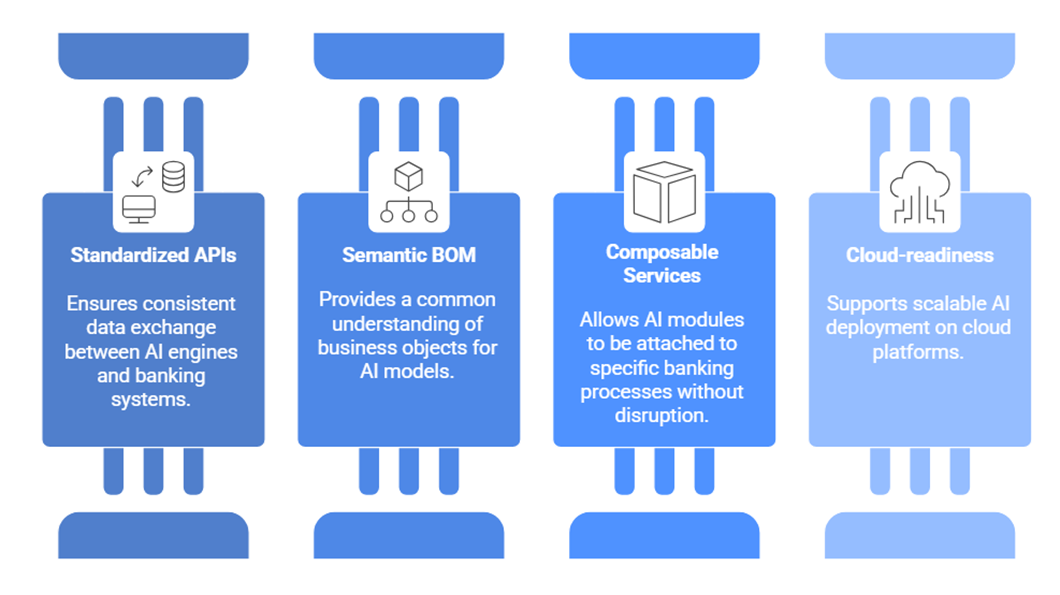
Figure 1 BIAN AI enablement
What AI Capabilities Are Introduced in Coreless 4.0?
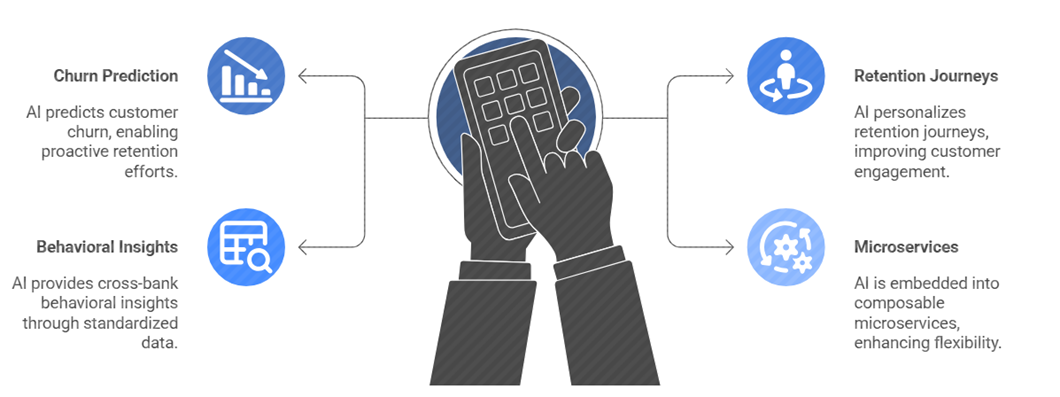
Figure 2 Coreless Banking v4.0 AI features
Coreless Banking 4.0 introduces a new layer of AI-native capabilities that sit directly on top of BIAN’s semantic architecture. Instead of treating AI as an external add-on, Version 4.0 embeds intelligence into the composable service landscape so banks and FinTechs can activate AI within the same BIAN-aligned domains they already use.
- AI-Enhanced Customer Churn Prediction Coreless v4 applies machine learning models to identify customers who may be at risk of leaving the bank or shifting balances elsewhere. These insights are generated using behavior signals captured across multiple BIAN Service Domains, such as servicing interactions, product usage patterns, and transaction behaviors, and where permitted, across multiple institutions. This multi-domain, harmonized approach increases prediction accuracy and supports proactive engagement.
- AI-Powered Personalized Retention Journeys Based on churn signals, the system suggests AI-recommended retention actions like
- Adjustments to prices that are specific to each customer
- Bundles of products
- Outreach for personalized service
- Targeted digital engagement campaigns These recommendations are delivered through standard BIAN APIs, allowing banks to integrate them seamlessly into customer servicing flows or digital channels
- Cross-Bank Behavioral Insights via Standardized Data Models Coreless 4.0 builds on earlier efforts to create a unified, cross-bank customer view. Because BIAN enforces standardized semantics through its Business Object Model (BOM) and Service Domains, AI models can consume harmonized data and generate richer behavioral insights than siloed models could achieve. This creates a foundation for institutions to uncover emerging needs, detect early signals of disengagement, and orchestrate meaningful customer experiences.
- AI Embedded into Composable Microservices A key innovation in Coreless v4 is the implementation of AI capabilities, such as churn scoring, next-best-action algorithms, and behavioral clustering as modular AI microservices. These microservices operate behind BIAN-compliant semantic APIs, enabling them to seamlessly integrate into the wider ecosystem. Banks can bring their AI models or adopt vendor models without breaking the architecture, because the integration point remains standardized.
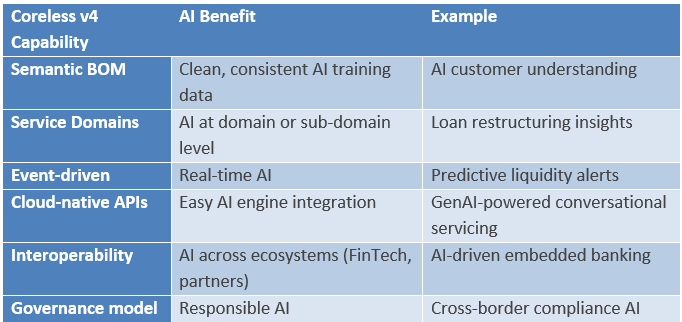
Table 1 Mapping coreless banking v4.0 AI capabilities
Let’s go through AI-based sample use cases,
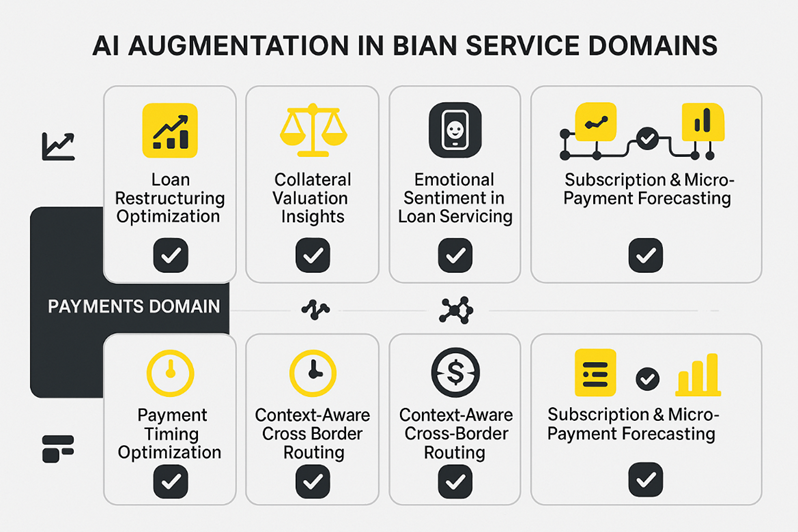
AI Use Cases in the Lending Domain
- Loan Restructuring Optimization When borrowers face financial distress, restructuring is often manual and rule-driven. An AI engine can analyze historical repayment patterns, customer context, and macro-economic signals to recommend personalized restructuring plans. Integrated with the Lending Service Domain via the Delinquency Behavior Qualifier, this reduces defaults while improving customer experience.
- Collateral Valuation Insights Traditional collateral assessment relies on static valuations. An AI model connected to the Collateral Behavior Qualifier can dynamically analyze property market trends, vehicle depreciation models, or include satellite images for agricultural collateral. This enables real-time, risk-adjusted collateral management within the Lending domain.
- Emotional Sentiment in Loan Servicing Customer servicing, for loans, often overlooks tone and sentiment. AI-powered sentiment analysis, plugged into the Servicing Behavior Qualifier, can guide agents by detecting stress, urgency, or satisfaction levels, enabling proactive support and tailored repayment conversations.
AI Use Cases in the Payments Domain
- Payment Timing Optimization Rather than simply following payment instructions, AI can analyze a customer’s or business’s cash flows and suggest the best time to execute payments, optimizing for liquidity, fees, and settlement risk. When linked to the Payment Execution Service Domain, it enables banks and customers to consistently achieve better financial outcomes.
- Context-Aware Cross-Border Routing Cross-border payments often default to predefined correspondent paths. AI models can evaluate currency volatility, settlement speed, compliance requirements, and even the carbon footprint of routing options. Linked to the International Payments Service Domain, the system dynamically chooses the best path.
- Subscription & Micro-Payment Forecasting In an era of digital services, recurring and micro-payments are growing. AI can predict subscription churn, recommend bundling strategies, and optimize micro-payment settlements. By embedding into the Payments Scheduling Behavior Qualifier, this helps banks and FinTechs offer smarter digital wallet and subscription management services.
Why Does This Matter for Banks?
- Banks gain differentiated AI-driven services that go beyond compliance, improving customer experience and operational efficiency.
- Fintechs can build BIAN-aligned AI modules as reusable microservices, making them easy to integrate into banking ecosystems.
- Customers benefit from proactive, personalized, and intelligent services embedded in their everyday banking interactions.
Conclusion
Fraud detection, KYC, and credit scoring are no longer the sole applications of AI augmentation. With BIAN serving as the architectural backbone, banks and FinTechs can leverage AI in unconventional yet impactful areas, such as loan restructuring, collateral insights, payment routing, and timing optimization. Additionally, there are several other applications to consider,
- AI-powered predictive maintenance for banking infrastructure
- AI-powered voice-enabled banking advisor
- AI-powered real-time credit decisioning
- AI-powered sustainable investment advisory
- AI-powered product recommendations and marketing
- AI-powered digital customer onboarding
- AI-powered regulatory and compliance reporting
- AI-powered banking risk and disaster management systems
By organizing data and APIs through service domains and BOM, BIAN makes it easier to integrate AI into digital services. This transition empowers banks to evolve into AI-enabled, composable ecosystems, equipped to deliver smarter, faster, and more personalized services on a scale.
References
- *https://bian.org/news-room/bian-advances-coreless-banking-initiative-to-improve-customer-retention-using-ai/*
- *https://www.architectureandgovernance.com/artificial-intelligence/the-next-layer-of-banking-agentic-ai-as-the-intelligence-behind-embedded-finance/*
- *https://cfotech.co.uk/story/bian-launches-coreless-banking-4-0-for-ai-driven-insights*
- *https://bian.org*
- *https://www.linkedin.com/posts/javad-ghaedali_bian-architecture-in-the-age-of-ai-from-activity-7390397875421278209-P9dI/*
메타데이터
- post_id
- 2d4cd2be71e5
- slug
- how-bian-supports-ai-augmented-banking-unlocking-new-use-cases-for-banks-and-fintechs-2d4cd2be71e5
- url
- https://medium.com/adl-blog/how-bian-supports-ai-augmented-banking-unlocking-new-use-cases-for-banks-and-fintechs-2d4cd2be71e5
- canonical_url
- https://medium.com/adl-blog/how-bian-supports-ai-augmented-banking-unlocking-new-use-cases-for-banks-and-fintechs-2d4cd2be71e5
- author_url
- https://medium.com/@yasas.wijedasa
- status
- ok
- fetched_at
- 2026-07-14 07:42:55