Moving an Elephant: What Pat Derby Taught Me
A memory of Ruby, Pat Derby, and the lesson that moving an elephant should never be about force — only trust.
Moving an Elephant: What Pat Derby Taught Me
A memory of Ruby, Pat Derby, and the lesson that moving an elephant should never be about force — only trust.
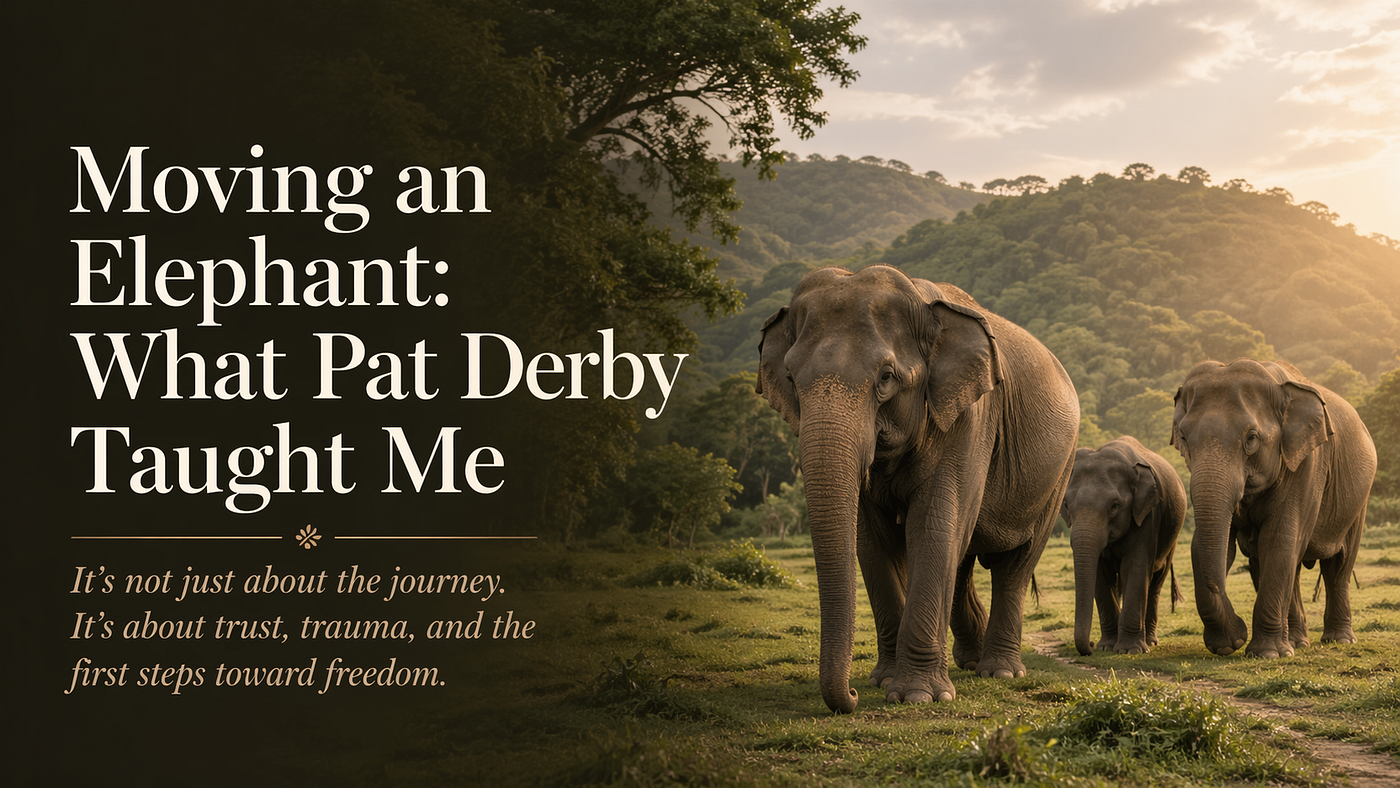
Pat Derby taught me that moving an elephant was never just about transport. It was about trust, trauma, patience, and the first steps toward freedom.
Pat Derby taught me many things, but one lesson has never left me:
Moving an elephant is not a simple act.
It is not logistics. It is not scheduling. It is not just getting an animal from one place to another.
It is a matter of life, fear, memory, and trust.
I remember Pat telling me how dangerous it was to move an elephant. Before one arrived at PAWS, she could barely sleep or eat. She understood the risk, the fragility of the moment, and the emotional weight of what that journey meant for an elephant who had already endured so much. Weeks in advance, she would go to wherever the elephant was living and work slowly with the caregivers, helping the elephant become comfortable entering the transport vehicle. Very slowly. Gently. Carefully. Pat knew these elephants had already been traumatized enough. She wanted them to understand, from the very beginning of the journey, that they were going somewhere safe.
That was Pat.
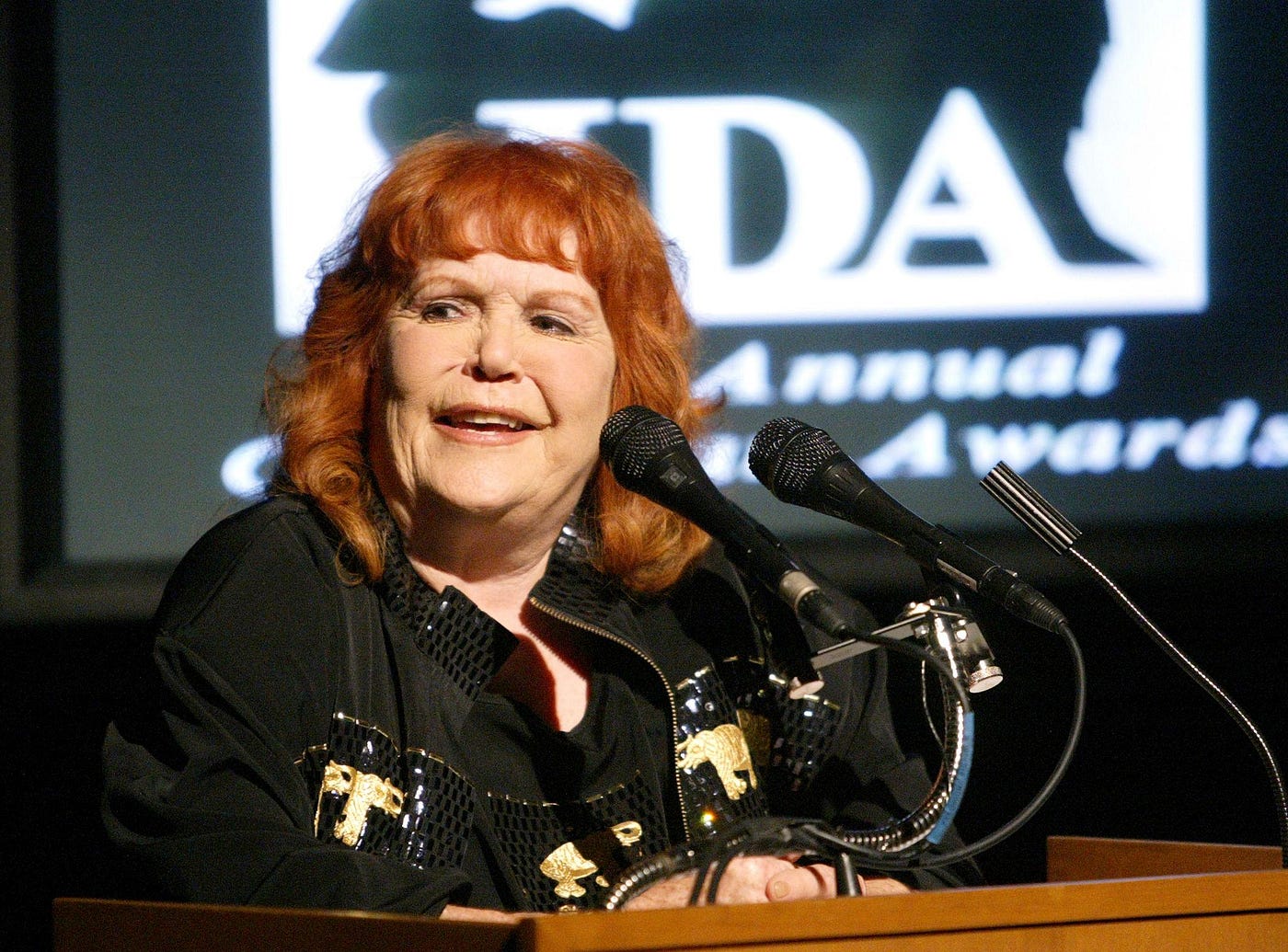
She did not believe in force when patience was possible. She did not believe fear was acceptable just because it was convenient for people. She understood that when you are dealing with an elephant, you are dealing with a being who remembers, who feels, who anticipates, and who carries trauma in her body.
I was there when Ruby arrived at PAWS after so many painful years at the Los Angeles Zoo. Pat had a huge acacia tree ready for her because she knew it was one of the elephants’ favorite treats. We all stood back as the trailer doors opened and Ruby peeked out. In front of her were rivers, forests, and rolling green hills. She paused and took it in. Then, very carefully, she stepped out of the trailer one foot at a time. And suddenly, she realized there was grass beneath her feet. In a burst of joy, she began ripping it up and stuffing it into her mouth. We were spellbound.
Then Pat began to softly call to her.
Pat had this chirping sound that the elephants understood. And, incredibly, Ruby followed her into the barn, where the acacia tree was waiting. She ate it, played with it, ate some more, and played some more. We all watched in awe. Ruby was no longer just surviving a move. She was arriving somewhere that recognized her as an elephant, not an exhibit.
What struck me most was not only Ruby’s joy. It was Pat’s understanding.
Pat knew that moving an elephant was not about control. It was about making the elephant feel safe enough to take the next step. That is a very different philosophy from the one that has governed so much of captivity. Captivity so often depends on domination, routine, coercion, and the denial of choice. Pat’s approach was the opposite. She respected the elephant in front of her. She listened. She prepared. She moved at the elephant’s pace.
That is what compassion looks like in practice.
The lesson feels just as important today.
When elephants are transferred with care to sanctuary settings, it reminds us that there is another way forward. In 2025, for example, the Louisville Zoo transferred Punch and Mikki to The Elephant Sanctuary in Tennessee after a lengthy conditioning process designed to help them travel with minimal stress. That sanctuary, which marked its 30th anniversary in 2025, continues to demonstrate what compassionate, elephant-centered care can look like: more space, individualized attention, and greater social opportunity and choice. (Louisville Zoo)
That kind of progress matters.
Animal sanctuaries do extraordinary work. They offer something captivity can never truly provide: the possibility of healing, dignity, and peace. And when zoos choose to move away from keeping elephants and other wild animals in tight enclosures, to work with sanctuaries, and to adopt more humane, modern alternatives, that should be recognized as progress, too.
Pat Derby understood all of this long before many others did.
She understood that an elephant is not cargo. Not a problem to be managed. Not a display to be maintained. An elephant is a sentient being whose experience of the world matters.
And perhaps that is what moving Ruby taught me most clearly: when an elephant is finally given safety, space, and respect, you can see it immediately. You can see it in the hesitation. In the first step. In the surprise of grass underfoot. In the moment fear begins to loosen its grip.
Pat gave elephants that moment.
She helped them get home.
메타데이터
- post_id
- 2d601c7e55cd
- slug
- moving-an-elephant-what-pat-derby-taught-me-2d601c7e55cd
- url
- https://medium.com/@melyakaplan/moving-an-elephant-what-pat-derby-taught-me-2d601c7e55cd
- canonical_url
- https://medium.com/@melyakaplan/moving-an-elephant-what-pat-derby-taught-me-2d601c7e55cd
- author_url
- https://medium.com/@melyakaplan
- status
- ok
- fetched_at
- 2026-08-10 13:47:30