How Long for Tooth Extraction Hole to Close Fully?
Quick Answer:
How Long for Tooth Extraction Hole to Close Fully?
Quick Answer:
How long for the tooth extraction hole to close?
Most holes begin to close within a few weeks, but complete healing underneath can take longer, depending on the type of extraction and overall recovery time.
Key Takeaways:
- The hole left after extraction heals in stages
- A blood clot forms within the first 24 hours
- Healing time depends on the type of extraction
- Soft foods help protect the extraction site
- Good care reduces the risk of dry socket
After a tooth is removed, it is normal to notice a space where the tooth used to be. Many people wonder how long the hole to close after tooth extraction and what they should expect during healing.
The answer depends on several factors, including the type of extraction and how well the area is cared for. Understanding the healing process can help you feel more confident during recovery.
Knowing what is normal also helps you avoid unnecessary worry and take better care of your oral health.

What Happens Right After a Tooth Is Removed
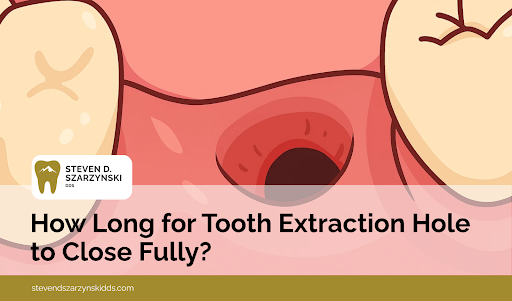
When a tooth is taken out, a hole is left behind in the tooth socket. This space is where healing begins.
Within the first 24 hours, the body forms a blood clot at the extraction site. This clot protects the area and supports early healing. It also helps cover sensitive areas beneath the surface.
As days pass, gum tissue begins to grow over the opening. At the same time, the deeper bone structure starts rebuilding slowly.
How Long Does It Take for the Hole to Close?
The healing time can vary depending on the situation. While the surface may look better quickly, deeper healing takes longer.
General timeline for healing:
- First 24 hours: Blood clot forms and bleeding stops
- 1 to 2 weeks: Gum tissues begin to close the hole
- 3 to 4 weeks: Surface healing improves significantly
- Several weeks to months: Bone continues rebuilding beneath the surface
For many patients, the hole to close after a tooth extraction may take a few weeks on the surface. However, full recovery time underneath can extend over several weeks or months.
The size of the tooth and how it was removed both affect how long healing takes.
Factors That Affect Healing Time
Not all extractions heal at the same pace. The type of extraction plays a major role in recovery.
Simple extractions usually involve teeth that are easy to remove. These cases often heal faster. On the other hand, a surgical extraction may involve cutting into gum tissues or removing bone, which can extend healing time.
Other factors include overall health, oral hygiene habits, and how well aftercare instructions are followed.
Procedures like wisdom teeth removal may also take longer due to the position and size of the teeth.

How to Care for the Extraction Site
Taking care of the area properly helps support healing and lowers the risk of problems.
Simple care steps to follow:
- Avoid disturbing the extraction site
- Eat soft foods during the first few days
- Keep the area clean to maintain good oral hygiene
- Avoid smoking or using straws
- Rinse gently if advised
These steps help protect the blood clot and prevent food particles from getting trapped in the area.
Proper care reduces the chance of complications and supports a smoother recovery.
Foods to Eat and Avoid During Recovery
Diet plays an important role in how comfortable recovery feels. Eating the wrong foods can slow healing or cause irritation.
Soft foods are recommended during the early stages. These foods are easier to chew and less likely to disturb the area.
Avoid hard, crunchy, or sticky foods that can get stuck in the tooth socket. Food particles can delay healing if they remain in the area.
Staying hydrated and choosing gentle foods can improve comfort and support healing.
Signs of a Healthy vs Problematic Healing
Most healing happens without issues, but it is important to know what to watch for.
A normal healing process includes mild discomfort, slight swelling, and gradual improvement over time.
However, severe pain, a bad taste, or worsening symptoms may indicate a problem such as dry socket. This occurs when the blood clot is lost too early, exposing the area underneath.
If symptoms do not improve, it is best to schedule an appointment for evaluation.
Final Thoughts
Understanding how long it takes for a tooth extraction hole to close helps set realistic expectations during recovery. Healing takes time, and each stage plays an important role in restoring the area.
By following proper care and maintaining good oral hygiene, the extraction site can heal more smoothly. Being mindful of habits and diet can also help reduce discomfort and avoid complications.
A little patience and proper care go a long way in supporting a healthy recovery.
Support a Smooth Recovery After Tooth Extraction
Healing after tooth extraction is easier when you know what to expect during recovery. Clear guidance can help protect the area, reduce stress, and support better healing.
Steven D. Szarzynski DDS provides guidance and patient-focused care to support healing after extractions. The team helps patients understand recovery time, aftercare steps, and what to expect during healing. Call (909) 946-6868 to schedule an appointment or get answers about your recovery.
Frequently Asked Questions
How long does it take for my tooth extraction hole to close?
The visible opening may begin to close within a few weeks, while deeper healing can take longer, depending on the type of extraction and individual recovery.
How long for the tooth extraction hole to close completely?
Complete healing of the bone and tissue can take several weeks to months, even if the surface appears healed earlier.
Should I worry about food particles in the hole?
Food particles can sometimes get trapped, which is why gentle cleaning and proper care are important to keep the area clear.
Do I need to avoid normal activities after extraction?
Most daily activities can resume quickly, but it is important to avoid actions that may disturb the clot, especially during the first 24 hours.
Should I schedule an appointment after healing starts?
A follow-up visit may be recommended to ensure proper healing, especially if there are concerns about discomfort or delayed recovery.
메타데이터
- post_id
- 2d6cdfcbcc87
- slug
- how-long-for-tooth-extraction-hole-to-close-fully-2d6cdfcbcc87
- url
- https://medium.com/@DrSzarzynski/how-long-for-tooth-extraction-hole-to-close-fully-2d6cdfcbcc87
- canonical_url
- https://medium.com/@DrSzarzynski/how-long-for-tooth-extraction-hole-to-close-fully-2d6cdfcbcc87
- author_url
- https://medium.com/@DrSzarzynski
- status
- ok
- fetched_at
- 2026-08-08 03:38:49