Azure Logic Apps: Standard vs. Consumption
Choose your Logic Apps Plan Wisely
Azure Logic Apps: Standard vs. Consumption
Choose your Logic Apps Plan Wisely
Introduction
Azure Logic Apps is a powerful cloud-based integration and automation service that enables businesses to streamline workflows and connect applications seamlessly. When implementing Logic Apps, organizations must choose between two primary hosting models: Consumption and Standard. Understanding their differences is crucial to selecting the right model for your business needs.

Understanding Azure Logic Apps
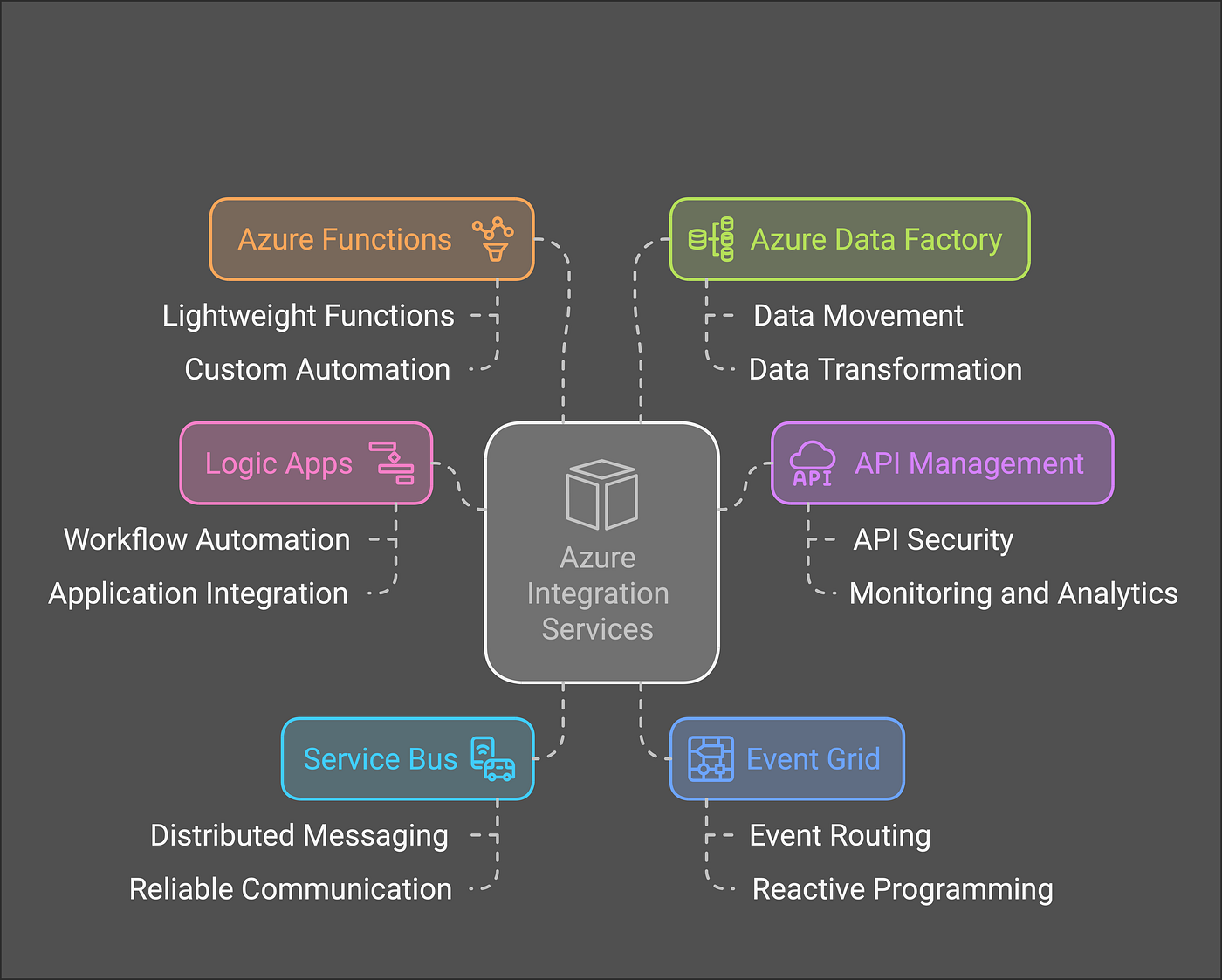
Azure Logic Apps provides a low-code/no-code approach to automating workflows across cloud and on-premises environments. It integrates with Microsoft services, third-party applications, and APIs, allowing users to automate processes efficiently.
Logic Apps Hosting Models: Consumption vs. Standard
Azure Logic Apps offers two distinct hosting models, each catering to different requirements in terms of scalability, pricing, and flexibility.
1. Logic Apps Consumption Plan
The Consumption plan follows a serverless model where users pay per execution. This option is best suited for event-driven workflows that require auto-scaling without managing the underlying infrastructure.
Key Features:
- Pay-per-Execution Pricing: Costs are based on the number of trigger and action executions.
- Automatic Scaling: Scales dynamically based on workload.
- Microsoft-Managed Hosting: No infrastructure management is required.
- Built-In Connectors: Extensive support for Azure and third-party connectors.
- Basic CI/CD Support: Limited DevOps capabilities with deployment via ARM templates and Azure DevOps.
Best Use Cases:
- Workflows with unpredictable or infrequent execution patterns.
- Cost-sensitive scenarios were paying only for execution are ideal.
Lightweight automation tasks that require minimal infrastructure control.
2. Logic Apps Standard Plan
The Standard plan provides a dedicated environment with enhanced control over execution, networking, and scaling. This option is ideal for enterprises that need advanced networking, predictable pricing, and better performance.
Key Features:
- Fixed Pricing Model: Billed based on provisioned resources rather than executions.
- Dedicated Runtime Environment: Provides full control over hosting and scaling.
- Private Networking Support: Enables VNET integration and private endpoints.
- Local Development Support: Allows building and testing workflows locally before deployment.
- Performance and Latency Optimization: Faster execution with dedicated resources.
- Advanced CI/CD Capabilities: Supports GitHub Actions, Azure DevOps pipelines, and Infrastructure-as-Code (IaC) with Terraform.
- Visual Studio Code Integration: Enables local development, debugging, and testing before deployment.
Best Use Cases:
- High-volume, mission-critical workflows requiring predictable performance.
- Enterprises needing secure network integration (e.g., VNET and private endpoints).
- Workflows requiring custom connectors and long-running stateful processes.
- Organizations implementing CI/CD pipelines for streamlined deployments.
- Ideal for BizTalk migrations with schema and map reuse.
Advantages of Logic Apps Standard for BizTalk Migrations
For organizations migrating from BizTalk Server, Logic Apps Standard provides several benefits:
- Modern Cloud-Native Integration: Unlike BizTalk, which is primarily on-premises, Logic Apps Standard offers a cloud-based, scalable, and cost-effective alternative.
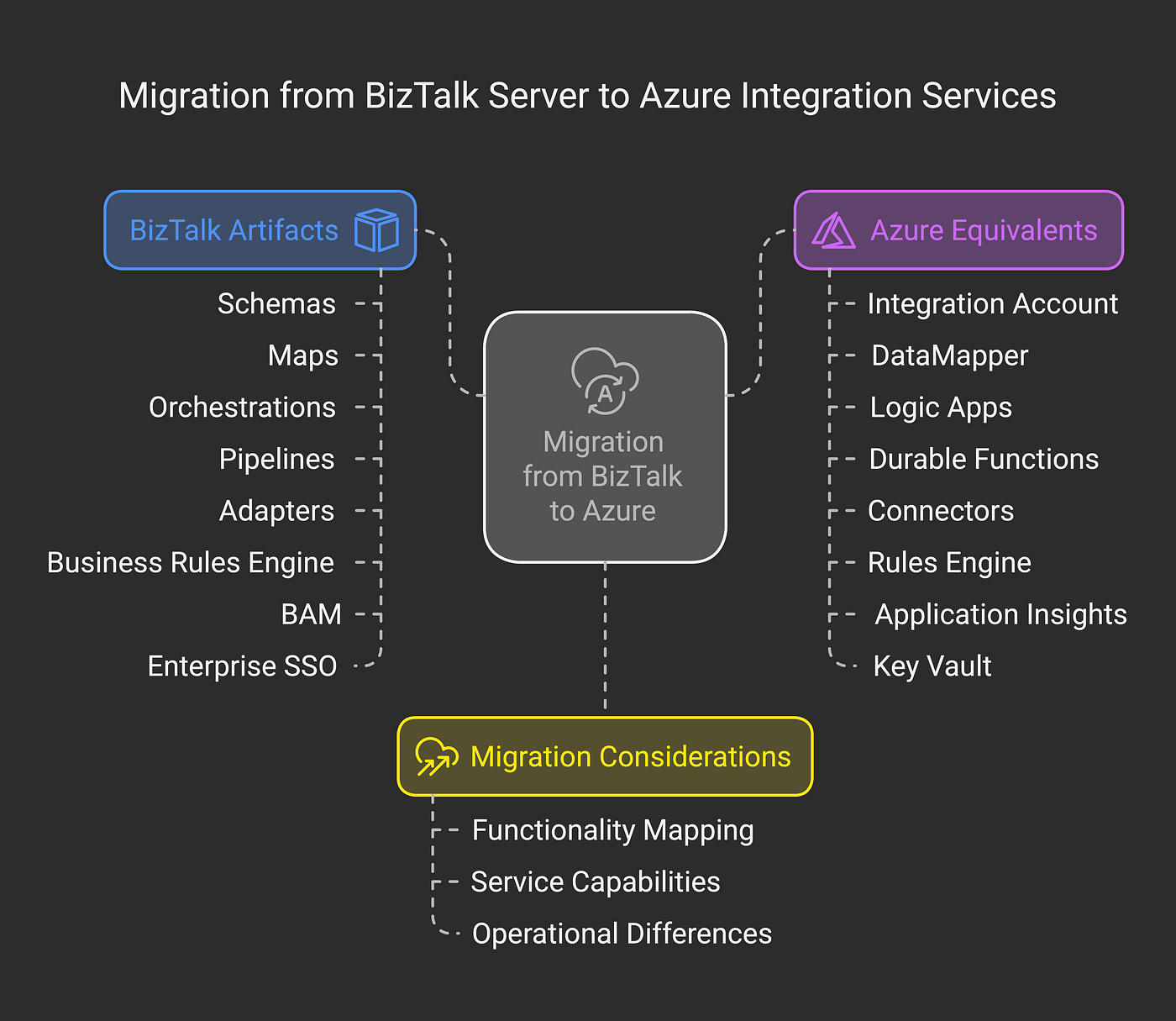
- Reusable BizTalk Artifacts: Existing BizTalk schemas, maps (XSLT), and trading partner configurations can be adapted within Logic Apps.
- Improved Developer Experience: Supports Visual Studio Code for local development and testing, making it easier for developers familiar with BizTalk.
- Advanced CI/CD Pipelines: Seamless integration with Azure DevOps, GitHub Actions, and Terraform, simplifying automated deployments.
- Better Performance and Scalability: Dedicated resources ensure low-latency execution and predictable performance for high-volume workloads.
- Secure and Hybrid Connectivity: VNET integration and private endpoints allow hybrid scenarios, ensuring secure communication between on-premises and cloud environments.
- Event-Driven Architecture: Supports modern event-driven patterns with Azure Event Hubs, Service Bus, and API Management, which BizTalk users can leverage.
- Lower Total Cost of Ownership (TCO): Eliminates the need for on-premises infrastructure, reducing maintenance costs and operational overhead.
💡 Tip Choosing the Right Plan
- Choose Consumption if you need a cost-efficient, serverless solution with automatic scaling.
- Choose Standard if you require advanced networking, dedicated resources, and predictable pricing, especially for BizTalk migrations.

Conclusion
Azure Logic Apps offers two flexible hosting models to accommodate different integration needs. The Consumption plan is perfect for serverless, cost-effective workflows, while the Standard plan provides greater control, security, and performance. For businesses migrating from BizTalk, Logic Apps Standard offers a robust alternative with enhanced capabilities, better developer tools, and seamless CI/CD integration.
By understanding the differences between these models, businesses can make an informed decision and optimize their integration strategy.
No matter which model you choose, Azure Logic Apps empowers businesses with seamless automation and integration capabilities, driving efficiency and innovation in the cloud.
메타데이터
- post_id
- 2d7cd37ed795
- slug
- azure-logic-apps-standard-vs-consumption-2d7cd37ed795
- url
- https://medium.com/@vignesh.gurumoorthy/azure-logic-apps-standard-vs-consumption-2d7cd37ed795
- canonical_url
- https://medium.com/@vignesh.gurumoorthy/azure-logic-apps-standard-vs-consumption-2d7cd37ed795
- author_url
- https://medium.com/@vignesh.gurumoorthy
- status
- ok
- fetched_at
- 2026-09-09 16:21:03