AVCiT IP-Based KVM vs. Traditional KVM Matrix: A Clear Choice for Modern Control Rooms
1. Introduction
AVCiT IP-Based KVM vs. Traditional KVM Matrix: A Clear Choice for Modern Control Rooms
1. Introduction
Control rooms are the nerve centers of operations in industries such as public safety, transportation, energy, and corporate governance. For years, traditional KVM matrix have been the standard for managing multiple computers and displays. However, as technology advances, these systems are increasingly being replaced by IP-based KVM solutions, such as *dsiii*.
In this article, we take a closer look at the differences between AVCiT’s IP-based KVM systems and Traditional KVM matrix, and explore how AVCiT’s distributed architecture and all-in-one *av over ip solution* may offer clear advantages for modern control room environments.
2. What Are Traditional KVM matrix Systems?
Traditional KVM matrix systems are hardware-based solutions that connect multiple input signals (e.g., computers) to multiple output devices (e.g., monitors). These systems rely on direct, point-to-point connections via dedicated cabling.
2.1 Advantages:
● Low Latency
Because they rely on direct connections, traditional KVM matrix switchers ensure fast response times with minimal delay. This is particularly advantageous in applications like live broadcasting or real-time monitoring.
● Reliability
These systems are less prone to network-related issues, as they operate independently of IP networks. This makes them suitable for environments where network stability is a concern.
2.2 Limitations:
● Scalability
Fixed input/output configurations make expansion costly and disruptive. For example, adding more devices often requires replacing the entire matrix switcher or significant rewiring.
● Complex Cabling
Extensive wiring is required to connect all inputs and outputs directly, leading to cluttered installations that are difficult to maintain.
● Limited Remote Access
Traditional systems lack native remote management capabilities and often require additional hardware or software for remote control.
● Resolution Constraints
Many traditional systems struggle to support modern high-resolution displays like 4K or HDR due to bandwidth limitations.
3. What Is AVCiT’s IP-Based KVM System?
AVCiT’s *ip based kvm* system is a next-generation solution designed to overcome the limitations of traditional KVM matrix and standard AV-over-IP systems. Leveraging a fully decentralized, server-free architecture over standard Ethernet networks, it enables seamless, real-time control of multiple computers and displays across large-scale environments.
With integrated KVM switching, video wall control, and matrix routing, the system delivers high-performance video transmission, exceptional scalability, low latency, and smooth interoperability with third-party platforms, AVCiT’s IP-based KVM system is ideal for mission-critical control rooms and beyond.

3.1 Key Features at a Glance
● Distributed & IP-Based Architecture
-
Operates over standard 1Gbps Ethernet
-
No central processing server required (decentralized design)
-
Supports long-distance transmission (up to 90m via CAT, 10km via fiber)
-
Encoders, decoders, and other nodes work independently
● All-in-One Integrated Platform
-
*Video wall control* (drag-and-drop, PiP/PoP, overlapping)
-
AV matrix switching (audio & video routing)
-
Signal conversion (HDMI, DVI, VGA, RS232, IR, etc.)
-
Centralized device management from one console
-
Compatible with environmental systems (lighting, HVAC, alarms)
● User Interface & Visualization
-
Floating, customizable OSD interface
-
Real-time source preview with thumbnail display
-
Multi-view display: up to 16 FHD windows per monitor
-
Layout presets and auto-scheduling
-
Touchscreen and Smart Mouse switching between PCs
● Secure Access & Permission Control
-
Transmits only keyboard/mouse HID signals
-
Four access levels: EXCLUSIVE, SHARE, VIEW ONLY, PRIVATE
-
Biometric login (fingerprint, face ID — optional)
-
Temporary admin account function
-
Optional user operation logs (login, get, push, etc.)
● Real-Time Collaboration
-
Push content between users or to a video wall via hotkey
-
Built-in video calling (1-on-1 or group, up to 16 users)
-
“Follow Me” login syncs user layout and permissions on any console
● High-Resolution Video & AI Integration
-
Supports 4K UHD resolution (3840×2160)
-
Compatible with 5K for low-latency transmission
-
CCTV VMS integration for surveillance management
-
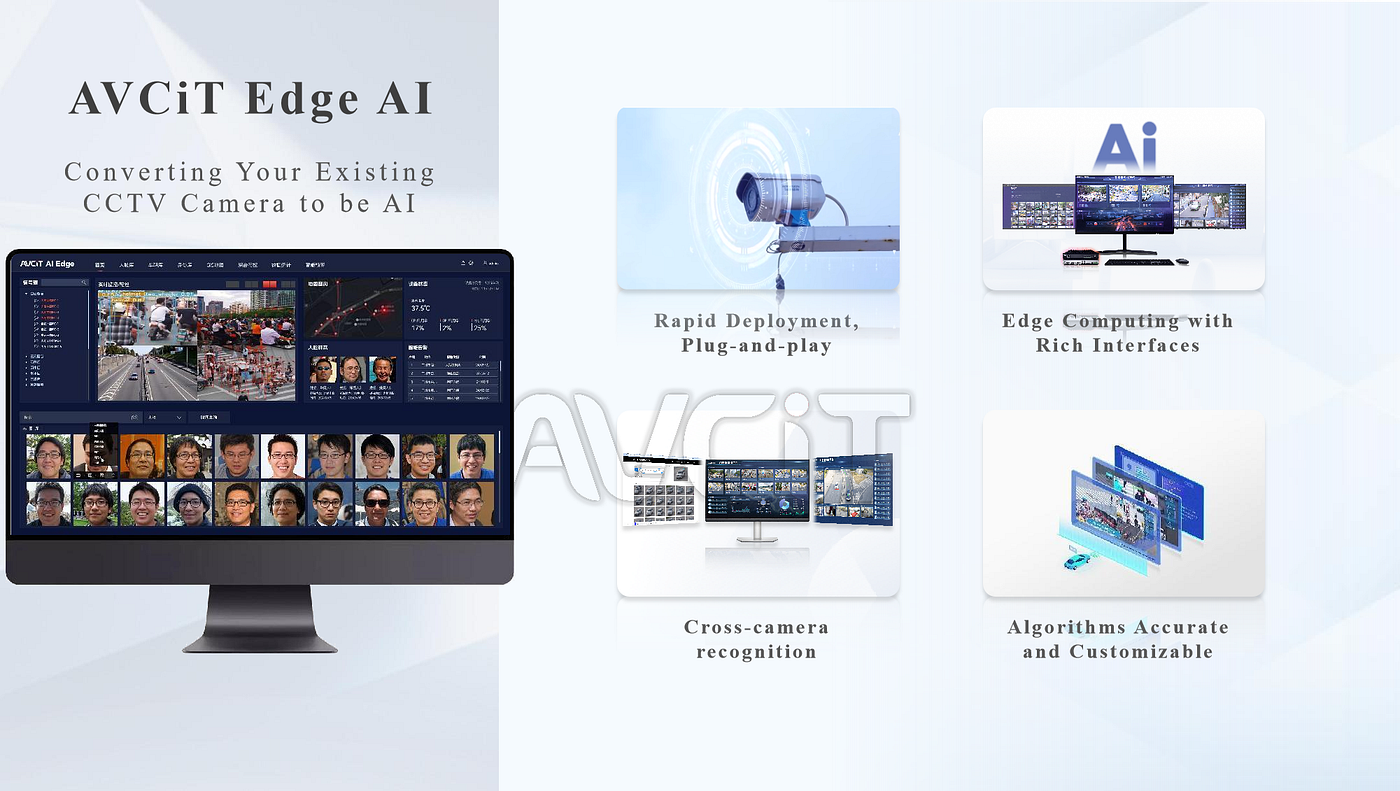
AI compatibility for facial recognition, behavior analysis & more
-
AI OCR (optional): screen capture + drag-to-text for Word/Excel
-
IPC streams previewing via OSD
3.2 Benefits of IP-based KVM design
● High Reliability
-
Eliminates single point of failure with decentralized architecture
-
Each node operates independently, improving uptime and fault tolerance
● Flexible & Scalable
-
Easy to expand by adding nodes — no need to reconfigure the entire system
-
Adapts to LAN/WAN setups
-
Future-proof infrastructure allows for seamless upgrades
● Unified Operations
-
One system handles switching, previewing, managing, and video wall control
-
Reduces hardware clutter and simplifies installation
● Enhanced Situational Awareness
-
Real-time source preview and multi-view display improve response speed
-
Zoom and rearrange views for quick inspection without switching displays
● User-Friendly & Efficient
-
Designed for users of all skill levels
-
Fast, intuitive navigation with visual layout customization
-
Saves time and reduces the learning curve
● Enterprise-Level Security
-
Protects data by isolating USB data transfer
-
Secure login with biometric options and permission settings
● Seamless Collaboration
-
Push content instantly between users or displays
-
Communicate via integrated video calling without external tools
4. Comparing AVCiT IP-Based KVM vs. Traditional KVM matrix

5. Conclusion
As a trusted and professional *tv wall controller* supplier, AVCiT’s IP-based KVM solutions present a future-ready alternative that not only overcomes the limitations of traditional systems but also introduces advanced capabilities such as real-time collaboration, and visualized user Interface.
By adopting AVCiT’s technology, organizations can achieve greater operational efficiency, responsiveness, and scalability, ensuring their control rooms stay at the forefront of innovation.
Whether you’re managing a utility operations hub, a corporate governance command control room or a public safety center, AVCiT’s IP-based KVM systems deliver the flexibility and intelligence needed to thrive in today’s dynamic environment. For example, our SOC Solution is highly suitable for use in public safety centers.
Ready to explore AVCiT solutions? Visit our official website or *contact us* today to learn how AVCiT can elevate your control room performance.
메타데이터
- post_id
- 2d8e7d11e138
- slug
- avcit-ip-based-kvm-vs-traditional-kvm-matrix-a-clear-choice-for-modern-control-rooms-2d8e7d11e138
- url
- https://medium.com/@avcit.ads/avcit-ip-based-kvm-vs-traditional-kvm-matrix-a-clear-choice-for-modern-control-rooms-2d8e7d11e138
- canonical_url
- https://medium.com/@avcit.ads/avcit-ip-based-kvm-vs-traditional-kvm-matrix-a-clear-choice-for-modern-control-rooms-2d8e7d11e138
- author_url
- https://medium.com/@avcit.ads
- status
- ok
- fetched_at
- 2026-08-02 04:29:59