You Can Care Without Staying
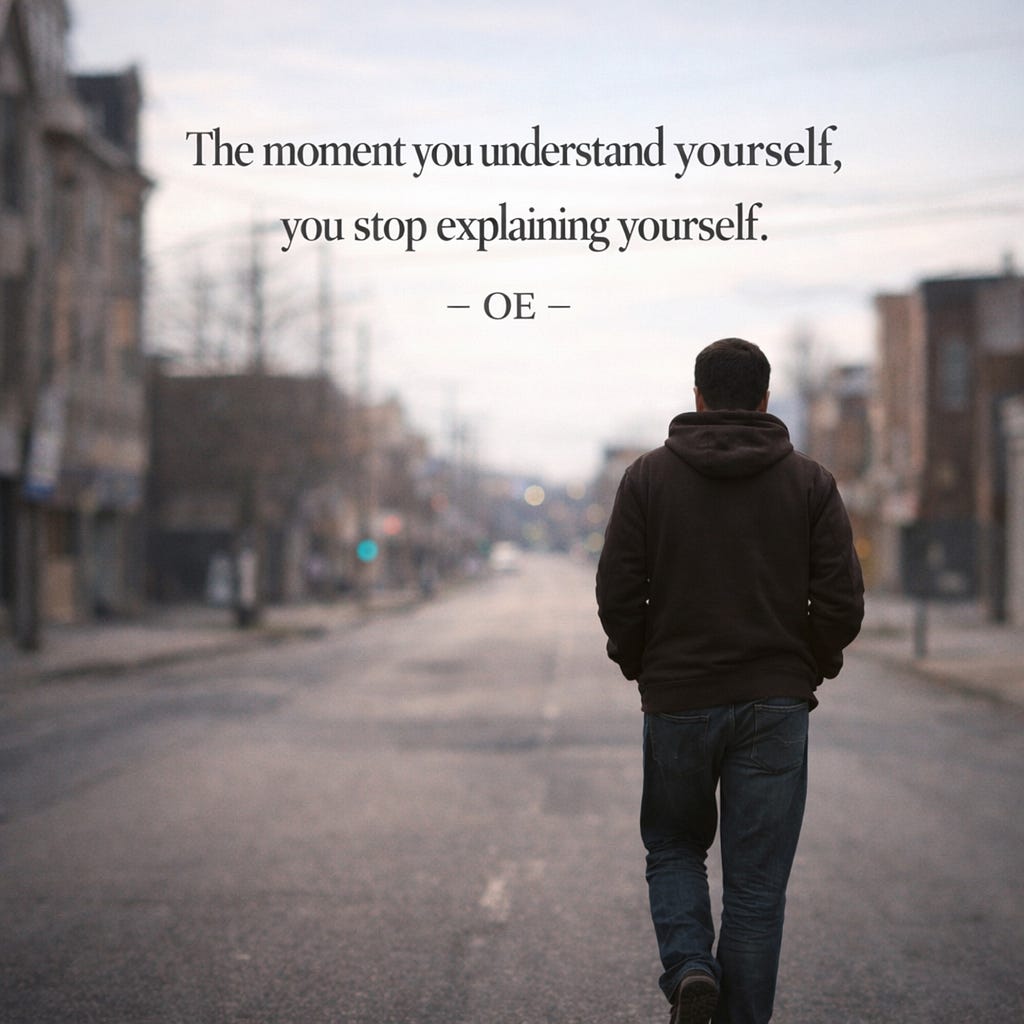
There’s a quiet kind of strength no one teaches you about.
You Can Care Without Staying
There’s a quiet kind of strength no one teaches you about.
It’s not the strength of holding on.
It’s not the strength of fighting for love at all costs.
It’s not the cinematic version of devotion where you endure everything because “that’s what love does.”

It’s the strength of caring deeply… and still walking away.
We grow up on narratives that equate love with persistence. If you love someone, you stay. If you care, you fight. If you leave, you didn’t want it badly enough.
But what if that’s incomplete?
What if one of the most emotionally mature things you can do is to care – genuinely, tenderly, fully – and still recognize that staying would cost you your stability, your self-respect, or your future?
What if love and proximity are not always the same thing?
⸻
The Myth of “If You Care, You Stay”
Somewhere along the way, we internalized a dangerous belief:
If I care about you, I must endure you.
Endure your inconsistency.
Endure your indecision.
Endure your emotional unavailability.
Endure your chaos.
Because caring became synonymous with sacrifice.
But sacrifice without reciprocity slowly turns into self-abandonment.
And self-abandonment, when dressed up as loyalty, looks noble from the outside and corrosive on the inside.
You can love someone and still acknowledge:
• This dynamic is destabilizing me.
• This person cannot meet me where I stand.
• This connection is real – but it isn’t aligned.
Caring does not require you to shrink.
It does not require you to negotiate your standards.
It does not require you to wait indefinitely for someone to become who they promised they would be.
You can care – and still choose yourself.
⸻
Caring Is a Feeling. Staying Is a Decision.
This is where emotional maturity begins.
Caring is involuntary.
It happens in the nervous system.
It happens in chemistry.
It happens in attachment.
Staying is a choice.
And choices require alignment, not just emotion.
You can wake up missing someone.
You can still feel warmth when you think of them.
You can still admire their mind, their body, their energy.
And still know:
This is not sustainable for me.
The ability to separate what you feel from what you choose is one of the clearest markers of psychological growth.

Because not every intense connection is a safe one.
Not every attraction is a foundation.
Not every “spark” is meant to become a structure.
Sometimes it was just meant to awaken you.
⸻
When Caring Turns Into Attachment Anxiety
There’s a subtle shift that happens when caring becomes fear-based.
You stop asking, “Is this good for me?”
And start asking, “How do I keep this from leaving?”
That’s when your power quietly transfers to the other person.
You overanalyze their tone.
You wait for reassurance.
You negotiate your needs.
You tolerate ambiguity.
Not because you lack standards —
but because you’re afraid of losing the connection.
The truth is, you don’t stay because you care.
You stay because you’re afraid that walking away means it wasn’t real.
But something can be real and still not be right.
That’s the part no one wants to accept.
⸻
The Difference Between Love and Compatibility
You can admire someone’s intelligence and still not be emotionally safe with them.
You can be sexually electrified and still feel mentally alone.
You can care about someone’s well-being and still realize that their rhythm clashes with yours.
Compatibility isn’t just about attraction.
It’s about regulation.
• Do you feel calm around them?
• Do you feel respected?
• Do you feel chosen – not tested?
• Do you feel expanded – not destabilized?
Intensity without safety creates addiction.
Safety without attraction creates stagnation.
You don’t need to pick between chaos and boredom.
But you do need to be honest when something feels like potential instead of reality.
⸻
Walking Away Doesn’t Erase What You Felt
One of the hardest parts of leaving someone you care about is this quiet guilt:
“If I can walk away, maybe I didn’t care enough.”
But the opposite is often true.
Sometimes you walk away because you care enough about yourself not to stay where you feel misaligned.
You walk away because:
• You don’t want to become resentful.
• You don’t want to beg for clarity.
• You don’t want to shrink to fit someone else’s comfort zone.
• You don’t want to build a future on hope instead of consistency.
You can wish someone well and still refuse to participate in a dynamic that drains you.
You can acknowledge the beauty of what existed and still decline to continue it.
That’s not cold.
That’s self-aware.
⸻
The Power of Non-Dramatic Detachment
Not all endings require explosions.
Sometimes the strongest exit is calm.
No revenge.
No speeches.
No emotional theatrics.
Just:
“I care about you. But this isn’t right for me.”
That level of detachment doesn’t come from indifference.
It comes from emotional discipline.
It comes from knowing your threshold.
It comes from recognizing that love without alignment turns into erosion over time.
And erosion is subtle.
It happens slowly.
Until one day you don’t recognize yourself in the relationship anymore.
⸻
You Don’t Have to Hate Someone to Leave Them
This is the most liberating realization of all.
You don’t need betrayal.
You don’t need cruelty.
You don’t need a catastrophic reason.
Sometimes “not aligned” is enough.
Sometimes “different emotional speeds” is enough.
Sometimes “I need more than this” is enough.
You are allowed to choose peace over potential.
You are allowed to choose clarity over chemistry.
You are allowed to care – and still decide that staying would be a disservice to both of you.
Because the truth is…
When you stay where you are not fully met, you don’t just betray yourself.
You also silently pressure the other person to become someone they may never be.
And that’s not love either.
And there is another layer people rarely talk about:
Leaving can be an act of respect.
Respect for the other person’s autonomy.
Respect for your own standards.
Respect for reality.
When you stay in something that doesn’t fit, you often begin trying to reshape it. You suggest improvements. You push for deeper conversations. You try to accelerate emotional growth. You attempt to “optimize” the connection.
But love is not a project management task.
If you constantly feel the urge to adjust the dynamic, it may not be your role to fix it – it may be your signal to exit it.
⸻
Emotional Responsibility Is Not Emotional Control
Caring without staying requires one specific skill: emotional responsibility.
Emotional responsibility means:
• I own my feelings.
• I don’t blame you for my attachment.
• I don’t demand that you regulate my insecurities.
• I don’t punish you for being who you are.
It also means:
• I do not override my intuition to maintain access to you.
• I do not abandon my needs to avoid discomfort.
• I do not cling to potential when evidence suggests otherwise.
This is where many strong personalities struggle.

Because when you’re intense, decisive, and clear about what you want, it’s tempting to believe that enough conviction can stabilize any connection.
But relationships are not stabilized by force of will.
They’re stabilized by mutual readiness.
You cannot “intensity” someone into alignment.
⸻
The Subtle Ego Trap
Sometimes we don’t stay because we love the person.
We stay because we love the idea that we could make it work.
We want to be the exception.
The one who unlocked them.
The one who inspired them.
The one who finally got them to choose fully.
And when that doesn’t happen, it feels personal.
But incompatibility is not a referendum on your worth.
Someone not meeting you at your depth does not mean you are “too much.”
It may simply mean they operate at a different frequency.
And maturity is recognizing that different frequencies can both be valid – without being compatible.
⸻
The Discipline of Not Forcing Timing
Sometimes the issue isn’t feelings.
It isn’t attraction.
It isn’t even values.
It’s timing.
One person is ready for structure.
The other is still exploring.
One person is clear.
The other is cautious.
One person moves through certainty.
The other moves through processing.
You can care deeply for someone and still understand that their developmental stage does not match yours.
You cannot rush someone into emotional readiness without creating resistance.
And if you find yourself constantly waiting for them to “arrive,” you have to ask:
Am I building something real – or am I postponing clarity?
⸻
The Cost of Staying When It’s Not Right
Every choice has an opportunity cost.
When you stay in something misaligned:
• You close yourself off from meeting someone aligned.
• You invest time in ambiguity.
• You slowly train yourself to tolerate less than what you need.
The longer you remain in a half-fit connection, the more your nervous system adapts to inconsistency.
And once inconsistency becomes familiar, it begins to feel normal.
That normalization is dangerous.
Because when stability eventually appears, it may feel foreign – even boring.
Choosing to leave protects your standards before they erode.
⸻
Caring Without Bitterness
The real test of emotional evolution is not whether you can walk away.
It’s whether you can walk away without resentment.
Resentment usually means you stayed past your internal “no.”
You compromised too long.
You hoped too hard.
You ignored too many signals.
When you leave at the right time – not too late – you preserve softness.
You can remember them fondly.
You can appreciate what they taught you.
You can acknowledge the chemistry without romanticizing the incompatibility.
You don’t need to rewrite history to justify your departure.
It was meaningful.
It was real.
And it still wasn’t sustainable.
Both can coexist.
⸻
The Self-Trust That Comes After
Something powerful happens when you allow yourself to care and still choose departure.
You begin trusting your discernment.
You stop fearing your own attachment because you know you won’t let it override your judgment.
You realize you can feel deeply without losing yourself.
That’s when relationships stop being about possession and start being about alignment.
You no longer ask:
“How do I secure this person?”
You ask:
“Does this dynamic reflect the life I’m building?”
That shift changes everything.
Because once you anchor your choices in alignment rather than emotion alone, love becomes a conscious partnership – not an emotional gamble.
And when you reach that level of self-trust, you understand something subtle but transformative:
Caring is not a contract.
It’s an experience.
Staying is not proof of love.
It’s a strategic decision about compatibility, timing, and shared direction.
And when those pieces don’t line up, you don’t need to harden your heart.
You simply need to be strong enough to let the feeling exist… without letting it dictate your future.
Thank you for supporting my work!
Every coffee you buy helps me keep creating, sharing, and writing from the heart. Your support isn’t just about a cup of coffee – it’s about valuing the stories, reflections, and insights I pour into every article.
By contributing, you’re helping me dedicate more time to writing, exploring ideas, and connecting with readers like you. Every little bit makes a big difference and inspires me to keep going.
Thank you for believing in me, my words, and the journey. You make this possible. 🙏
Support me here → Buy Me a Coffee
https://buymeacoffee.com/Alexasimson

메타데이터
- post_id
- 2d91b311e3ee
- slug
- you-can-care-without-staying-2d91b311e3ee
- url
- https://medium.com/@lilianaa.blanaru/you-can-care-without-staying-2d91b311e3ee
- canonical_url
- https://medium.com/@lilianaa.blanaru/you-can-care-without-staying-2d91b311e3ee
- author_url
- https://medium.com/@lilianaa.blanaru
- status
- ok
- fetched_at
- 2026-06-21 07:44:09