Design Team Will Go Smaller By Smaller Every Year: Here’s How?
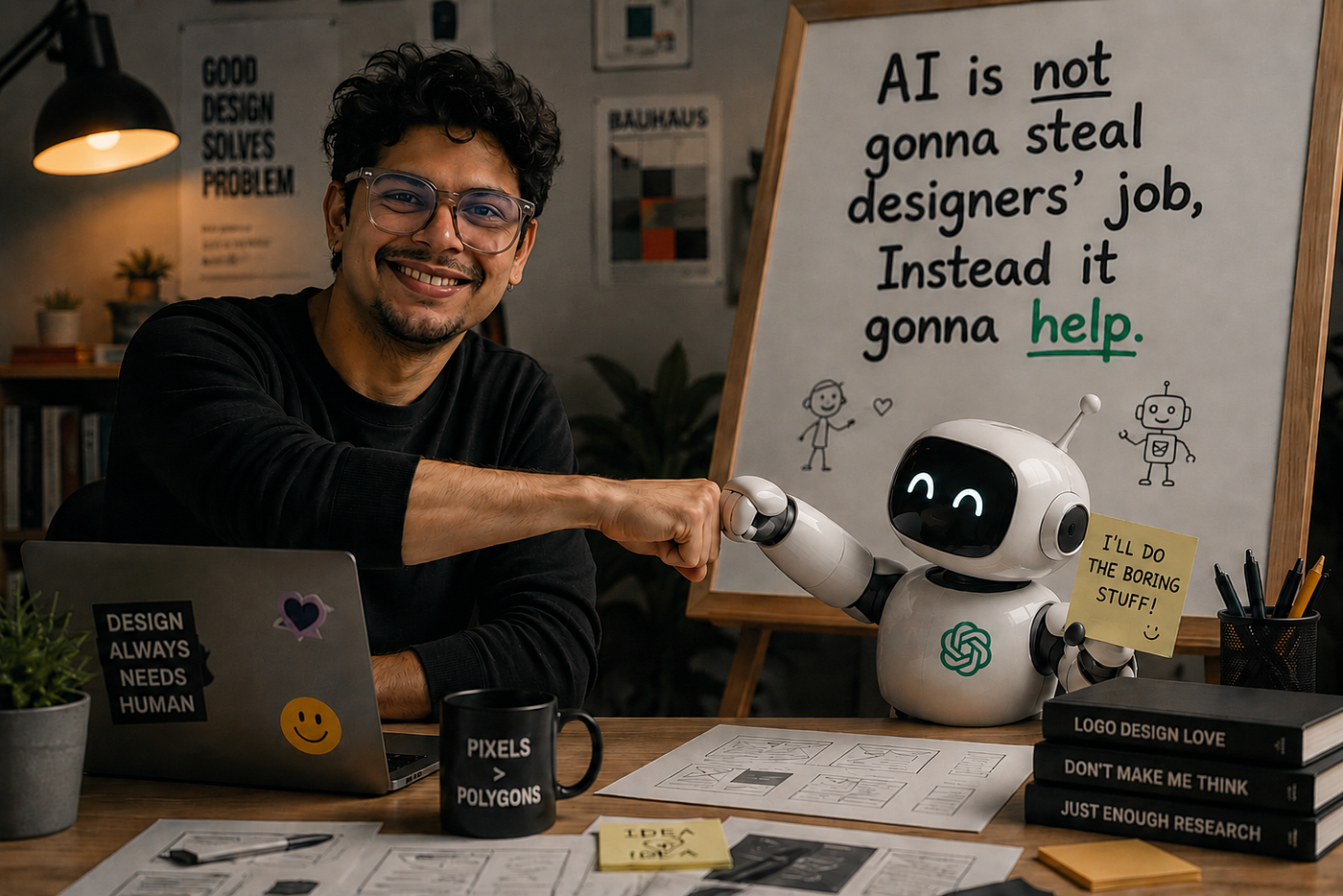
The revolution of the AI is already at its peak. From writing to coding, AI has already started taking on major responsibilities…
Design Team Will Go Smaller By Smaller Every Year: Here’s How?
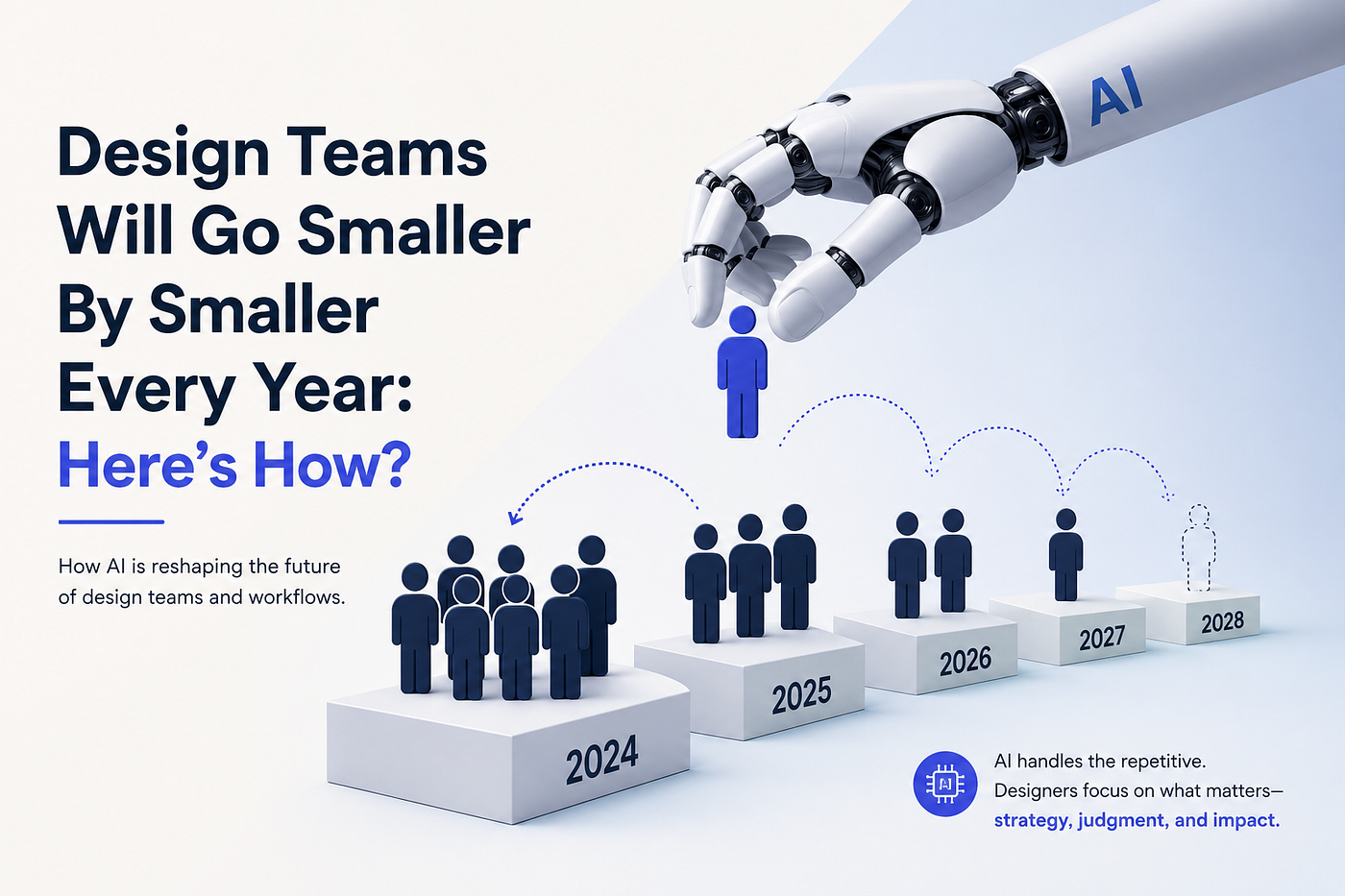
The revolution of the AI is already at its peak. From writing to coding, AI has already started taking on major responsibilities. Prominently, AI is very advancing rapidly in the Design Industry. From creating design systems from scratch to sesigning full users interfaces, AI is transforming how designers work.
Design teams do work that used to take 10 people, but AI is quickly making 3 people capable of doing the same job. The shift is already visible in research, ideation, copywriting, prototyping, testing and even basic visual exploration
Why Did Design Teams Become Large in the First Place?
Task Were Manual
Back then every designer had a specific role, Some focused on UX, mainly working on Research, conducting interviews, brainstorming, meetings with the stakeholders and documenting.
Handoffs Were Slow
Some design teams used to only focus on the visuals and deliver High- Fidelity design along with the testing reports to the team.
Research Took Time
When it came to handoffs to developers, It was a slow process, Desingers had to create a detailed documentation explaining the designs and functionality, followed by Knowledge-Transfer sessions with Developers. It was time-consuming and inefficient.
Production Took Many Iterations
Research team used to organize meetings, frame questions for qualitative and quantitative interviews, and analyze cohorts one by one. These were not a one-day or two-days processes.
Every Output Needed Multiple Specialists
From creating wireframes to the high — fidelty designs, presenting to the stakeholders, and conducting usability testing, it was never one-time activity. It always required multiple iterations. Of course, these iterations were rarely liner.
The entire process, the User-Centered Design (UCD), was completly dependent on multiple designers who were specialised in different areas.
What AI Is Removing
First-Draft UI Concepts
Now it is completely different. After a product requirements meeting, designers can immediately open an AI tool, type the requirements, and receive UI concepts within minutes.
Moodboards and Visual Exploration
AI is now much more capable of creating different variations of the UI concepts, making visual exploration faster, broader, and more accesible than ever beforeand Visual Exploration became Vast and so many ways to explore.
Copy Variations
Designs generated by AI can now be direclty imported into Figma. For plugin please ask in the comment I’ll share the Link.
Design System Management
Using Claude Code, maintaining a design system has become much more convenient, though it still requires a senior or design-system expert to guide and refine the output.
Content Restructuring
Information Architecture used to be a highly specialised responsibility, but now AI can re-organize content withing seconds. Providing clear information to AI often leads to well-structured content hierarchies.
Research Summarization
Researchers no longer need to spend hours manually analysing reports. AI can summarize research findings accurately in significantly less time.
Asset Generation
This one of the most exciting developments. For graphics creation, we previously dependent heavily on dedicated graphic design teams. Now, designers can take inspiration from Pinterest, upload reference, ask AI to adapt them based on company guidelines, and generate assets quickly.
Low Fidelity Prototyping
We no longer need junior designers to spend countless hours creating basic low-fidelity prototypes. Tool like Claude Design, Codes and Stitch can generate them efficiently.
What a Smaller Design Team Looks Like
1 Senior Lead Product Designer
A design professional who manages the product, design system, and participates in strategic discussions for new initiatives. This person understands all corners.
1 Design System / Operations-Focused Designer
A person who understands design systems, operations, and product creation, and can work independently with minimal support.
1 UX Researcher or Strategy-led Designer
Every successful design team should have at least one UX researcher who deeply understands the business, strategy, and user needs. They provide valuable insights that help shape better products and experiences.
AI Tools Supporting Speed and Output — The Real Hero Behind Smaller Teams
Every team member now has access to AI tools and subscriptions. Many organizations are creating AI agents to handle repetitive tasks. As a result, teams no longer require large numbers of junior designers for basic execution work.
One of the biggest shifts has come from Figma itself. Figma has introduced AI-powered agents that operate directly within the design environment. From accessibility checks to generating designs from scratch, AI can now handle many tasks that previously required significant human effort.
Why Smaller Teams May Outperform Larger Ones?
Faster
The bigger the team, the more coordination and follow-ups are required. This increases complexity and the chances of misalignment. With AI handling repetitive tasks and accelerating workflows, design problems can often be solved much faster and with greater consistency.
Less Dependent on Approvals
Since AI agents can automate and validate many routine tasks, teams can spend less time waiting for approvals and more time focusing on strategic decisions.
Easier to Align
Instead of coordinating across multiple layers of designers, teams can leverage AI tools to quickly generate outputs, iterate on ideas, and maintain alignment across projects.
Better at Shipping
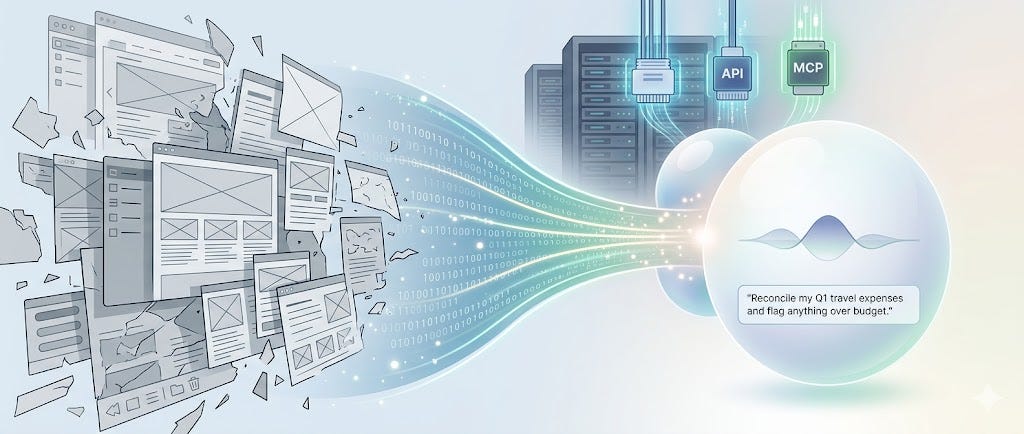
Claude Code, Figma MCP, and similar tools have created a stronger ecosystem between designers and developers. Teams can now move from design to code much faster using AI-assisted workflows and prompts.
The Real Risk
The risk is not only that teams get smaller. The real risk is that designers who only know execution may get replaced by designers who know how to think, direct, and validate.
Conclusion
The future design team will not be bigger. It will be sharper. AI will handle the repetitive work, and humans will focus on direction, taste, judgment, and strategy. The winners will be the designers who learn to work with AI instead of competing against it.
메타데이터
- post_id
- 2d9b8adf71a8
- slug
- design-team-will-go-smaller-by-smaller-every-year-heres-how-2d9b8adf71a8
- url
- https://medium.com/design-bootcamp/design-team-will-go-smaller-by-smaller-every-year-heres-how-2d9b8adf71a8
- canonical_url
- https://medium.com/design-bootcamp/design-team-will-go-smaller-by-smaller-every-year-heres-how-2d9b8adf71a8
- author_url
- https://medium.com/@rushabhpathak
- status
- ok
- fetched_at
- 2026-06-23 17:05:31