Let’s Wait and See
There’s a phrase companies reach for more than any other, whenever a new technology shows up.
Let’s Wait and See
There’s a phrase companies reach for more than any other, whenever a new technology shows up.
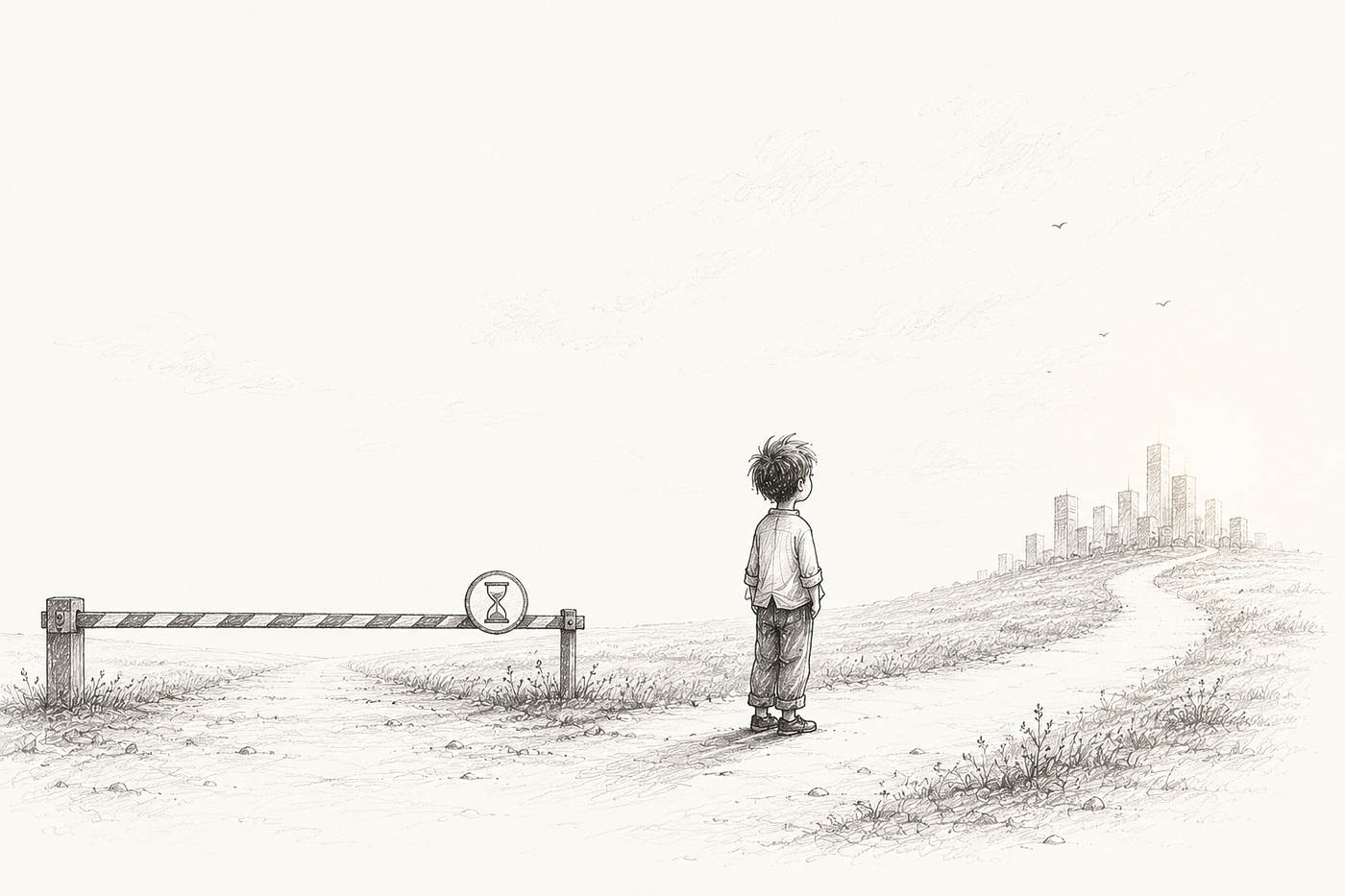
“Let’s wait and see.”
It sounds reasonable. Careful, safe, responsible. And most people who say it actually believe it — that they’re saving money.
Then time passes, and the truth comes out. That choice never saved a cost. It just swapped it for a different one.
When the steam engine first showed up on factory floors, the companies that adopted it early lost money. The machines broke down. No one knew how to run them. They didn’t fit the existing process. Their competitors, watching from the sidelines, felt a private relief. Good call — we just saved ourselves that trial-and-error bill.
But that trial and error was never a simple loss. The failure turned into learning, and the learning turned into an edge. They hadn’t bought a machine. They’d bought experience.
The companies that joined later couldn’t buy that experience. They could buy the machine. Not the experience.
The car did this. The internet did this. ERP systems did this. The smartphone did this.
The same pattern, every single time. Expensive, unstable, inconvenient at first. Waiting looked like the smart move. And every single time, the ones who jumped in early survived. By the time the ones who waited finally joined, the gap wasn’t a technology gap. It was a learning gap.
Companies calculate the cost of adopting AI.
License fees. Implementation costs. Training costs. Integration costs. These come out as numbers. You can put them in front of a board. They can be approved, or rejected.
The cost of not adopting — no one calculates that.
Not because no one bothers. Because no one can. It never shows up on the books. There’s no line item for something that never happened. The decision time a competitor shaved off by using AI. The data that piled up while they did. The experience of getting it wrong first and fixing it first. None of that appears anywhere in my ledger.
The failures a competitor racks up using AI — if they aren’t mine, they look like they don’t exist. But the gap is piling up regardless, out here in the real world.
A company isn’t buying AI.
It’s buying time.
Buying time means buying the chance to learn before your competitor does.
The cost of adopting is visible. The cost of not adopting isn’t. So at the decision table, the invisible cost always loses. Pit something visible against something invisible, and visible wins every time.
The result is: “Let’s wait and see.”
This is exactly why the most expensive option looks like the safest one.
No one is held responsible for a cost that never hits the books. When money’s wasted on adoption, someone owns that. But the losses from not adopting build up slowly, and by the time they surface as a gap, you can’t point to the person who made that call, or the moment they made it.
A cost nobody has to answer for. That’s exactly why it gets chosen, again and again.
Intel dominated the CPU market for decades. Even as the AI era began, hardly anyone questioned that position. But the center of gravity for AI computation shifted — away from the CPU, toward GPUs and the software ecosystem built around them. And in that shift, Nvidia was busy stacking up experience. Catching up later was never a problem of building a better chip. It was a problem of catching up to learning that had already accumulated.
Accounting records the past. Competitiveness prepares for the future. The two are never looking at the same numbers.
The cost of adopting hits the ledger. The cost of not adopting doesn’t. It feels like a debt you’ll never have to pay. But you pay it anyway — in market share, in talent walking out the door, in a gap you can no longer close.
A cost missing from the ledger doesn’t disappear.
It just gets billed later, under a different name.
메타데이터
- post_id
- 2dafbdb632e5
- slug
- lets-wait-and-see-2dafbdb632e5
- url
- https://medium.com/@finlonger/lets-wait-and-see-2dafbdb632e5
- canonical_url
- https://medium.com/@finlonger/lets-wait-and-see-2dafbdb632e5
- author_url
- https://medium.com/@finlonger
- status
- ok
- fetched_at
- 2026-07-13 06:23:13





