The Long Pack
This is a true story. It was first published during the 19th century in a chap book called Olde Tayles Newlye Relayted. There is also a…
The Long Pack
This is a true story. It was first published during the 19th century in a chap book called Olde Tayles Newlye Relayted. There is also a version called The Long Pack, or the Robbers Discovered by James Hogg, the Ettrick Shepherd.
The winter of 1723 was a killer.
The writer Daniel Defoe, who was visiting Newcastle that year, remarked on the harsh climate of Northumberland.
‘The air in this bishoprick is pretty cold and piercing. It seems as if the whole county had been originally appropriated to religion and war; for it is full of the ruins of religious houses and castles.’
One such house was the family home of a retired military man, Colonel Ridley, who had recently retired to his family home, Lee Hall. The house lay in a bend in the north Tyne, in remote spot a few miles downstream from the little market town of Bellingham.
Ridley poured a lot of money into improving the house. He had amassed ‘an immense fortune’ while in India. He served at the time when the East India Company was looting the Moghul Empire. Statues, jewels, and various other valuables were shipped from the palaces of Bengal to townhouses and mansions in the English countryside. The Colonel was one of the lucky beneficiaries.
Stone built, Lee Hall is hidden by trees and is, even today, a quiet, lonely place. The Ridleys enjoyed their life there, yet the winters were harsh and hard to endure. Following a long, fine summer, Colonel Ridley decided to take his family to London, to avoid the worst of the northern weather.
Bellingham was at least a 41-hour journey from London by mail coach. From Lee Hall it was farther still. Roads in those days were badly maintained. In winter they were muddy tracks. In summer the sun baked the mud hard and the roads were riven by ruts and pot holes that could break a carriage wheel. Every coach and four took The Great North Road down to London. They could move only during daylight hours, the passengers staying at inns each evening. Nine miles an hour was considered a breakneck speed.
Lee Hall was elegantly furnished. The Colonel enjoyed the finer things in life. Amongst the costly items he had bought with his Indian wealth was a dinner service of plate, valued at more than a thousand pounds. The hall, stuffed with such treasures, was a tempting target for thieves.
In those days the system of justice in England was rough and ready. There was no police force and Northumberland was still a ‘debateable land.’ Borders always attract crime, of one sort or another. So Colonel Ridley charged three servants with the job of house sitting.
A young maid, called Alice, was given the job of looking after the house. Ridley ordered her to keep the rooms warm and clean. Alice was diligent, mopping and dusting the surfaces, lighting wood fires every morning to keep the place aired and dry.
Richard and Edward, two men who threshed the corn and looked after the cattle and outbuildings, were to maintain the buildings and keep the place secure.
Richard was a middle aged servant who had been served the family for some years. Edward was a more energetic and impulsive young man. All three were charged with the task of keeping the hall and the Ridleys’ valuables safe. All three swore to protect the hall from thieves and trespassers until the Colonel and his family returned in the spring.
For several weeks all went well. Autumn arrived and winter was coming. The trees turned gold and brown, shedding their leaves in the autumn gales. Salmon ran in the river Tyne which was swollen by heavy rain. The rhythm of the land continued as it had always done. The cattle were brought in on cold evenings, then turned out to the frost rimed fields each morning. The days were short and the nights were cold, long and wearisome. Life in Lee Hall followed a dull, steady routine. Then something happened which changed all of their lives. One chilly afternoon, Alice was in the parlour, spinning yarn for a pair of stockings. The light was fading so she lit a candle from the logs on the blazing fire. As she returned to her wheel she heard the sound of a caller braying on the front door. A pedlar stood on the door step, carrying a long canvas pack which was slung across his shoulder. Before Alice could ask his business he dropped his burden on to the threshold. He grinned. The pedlar was a handsome, well dressed young man. Callers at Lee Hall were rare. Alice enjoyed the company when passers by or tradesmen called at the hall. Usually she enjoyed such encounters. They were a break from the routine. She might find such a man an agreeable companion for a few minutes chat. Yet, from the start, she was wary of the stranger. With a little flirtation and a lot of flattery the pedlar introduced himself. He said he was weary from carrying his pack so many miles and asked Alice if he could have shelter for the night. She shook her head.
’My dear girl,’ he said. ‘Don’t be so unreasonable; I’ve come all the way from Newcastle, where I bought a fresh stock of goods. They’re so heavy I can’t travel any farther.’ Again she turned him down — politely but firmly. He did not seem offended. He joked that she was wise to refuse him. ‘If such a sweet creature as yourself was lying alone under the same roof as I, it would be impossible for me to keep to my own bed…’ He asked if he might sit a while in the hallway to rest for a moment and drink a cup of water. Alice felt guilty, so she fetched him a drop of beer. The pedlar sat on a chair by the door, feigning weariness, though winking and giving her the chat. He swallowed the last of his drink. As she held out her hand to take his empty cup he took her wrist and pulled her onto his knee. He ‘ravished a kiss…’ Though wrong footed by the stolen kiss, Alice refused to give him shelter. The Colonel had given her strict orders not to harbour anyone, unless she knew them well.
The pedlar one last time. He claimed to be so weary that, if she let him stay, he would make her a present of the best shawl in his pack. Alice was tempted, but she had her orders from the Colonel. ‘Well, may I leave my goods and find lodgings elsewhere?’ Alice agreed. She looked down at the long, odd shaped pack, which still lay on the threshold.
‘It will be better somewhere out of your way,’ he said. ‘And safer, if you would be so kind as to lock it in some room or closet until I come back.’
Alice agreed.
The stranger bent down and hoisted the pack onto his shoulder. Alice led him into the parlour, where he placed his burden on two chairs. The pedlar went on his way, wishing Alice a good evening. She watched him walk down the drive and head towards the road which led to the village.
As night fell Alice became increasingly suspicious of the pedlar’s intentions. She could not stop thinking about the pack. Why was it so heavy, she wondered? And the shape too, was odd — ‘It was very queer — it was square one way, but not the other — it was a monstrous queer pack!’ She sat down to spin but was unable to keep her mind on her work. Alice replayed the events of the last hour. She stood at the kitchen window and peered out into the darkness. No light could be seen any where in the valley. The nearest neighbour was more than a mile distant, on the other side of the river. Her face was reflected in the glass. She closed and barred the shutters and returned to her wheel. Unable to settle, she rose and went back into the parlour. As she was lighting a candle, she glimpsed movement in the corner of her eye. ‘God of mercy!’ she cried. Every hair in her head stood upright.
The pack was moving.
Alice hurried into the kitchen, her heart racing. She blew out the candle, then lit it again, then jammed it into a jug. She flung open the door and hurried to the barn to find Richard.
‘Oh, for mercy, come into the house!’ ‘What’s the matter, Alice? What is wrong?’ ‘A pedlar came to the hall, asking for lodging. I wouldn’t let him stay, but he’s gone off and left his pack.’
Richard scratched his chin. ‘What’s the matter with that?’ ‘It’s alive! We’re all gone! It’s living! His pack!’ ‘Alive?’ He stared at her, thinking she had gone mad.
‘Heaven knows what’s in it — but I saw it move, as clearly as I see you now! My flesh crept like a nest of pismires!’ (ants)
Richard picked up his staff and followed her into the house, assuring her as they went that it was her imagination. ‘It’s just one of your notions, Alice. Your phantages. How can a pack of napkins and muslins come alive?’
Once in the hall Richard took the candle in the jug and crept into the parlour. The pack was perfectly still. He kneeled to run his hands over the canvas. He could feel the bales which stopped the goods being rumpled and spoiled. He checked the knots and cords which tied the canvas wrapping. He could find nothing wrong nor feel any movement. Richard assured her the pack was fine.
But Alice was convinced there was some mystery about it.
While they were arguing Edward entered the room. He was a lad of around sixteen, a little ‘rogueish and forward and very ragged in his apparel.’
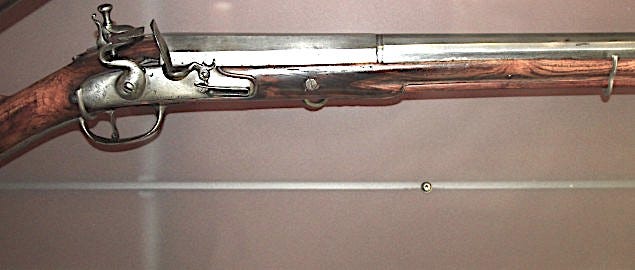
Edward was the son of a coal driver on the Scottish Border and tended the cattle at Lee Hall. He was bright and had a sharp sense of humour. But he was still young and very impulsive. Edward was keen on shooting. The lad had bought an old military flintlock, which he called ‘Copenhagen.’ He used it to shoot at crows and flocks of sparrows.
He was excited by the news. ‘Faith, Alice!’ he said. ‘If you let me, I’ll shoot it!’ ‘Hold your peace, you fool!’ said Richard.
But Edward took the candle from his hands. Gliding down the passage he opened the parlour door a little. He stood in the doorway and watched the pack for a few minutes.
He returned to his companions, swearing that he had seen the pack move. Again, he offered to fetch his gun and shoot the pack. Again, Richard told him to hold his peace.
‘Our master’s house is in our care,’ Edward replied. ‘The wealth here is a temptation. If we open the pack the pedlar may pursue us for damages. But if I shoot it, what amends can the pedlar get from me? If there is anything that should not be there, Lord, how I’ll pepper it!’ ‘But if it is lawful goods…’ said Alice. ‘Then he can only make me pay for the few that are damaged. It’s the best plan!’
When they hesitate he says ‘If you don’t agree, I’ll take all the blame myself.’ Edward took Alice’s smile as agreement. Before they could stop him, he ran to fetch for his gun.
Gripping Copenhagen in one hand and the candle in the other, Edward walked down the passage. Without hesitation Edward fired at the pack.
The sound of the shot echoed through the darkened rooms and corridors of Lee Hall. There was silence for a moment.
A hideous roar came from the pack, followed by screams and groans. A torrent of blood gushed across the floor.
Edward dropped his gun and rushed into the kitchen. The room was dim but he could see the shock and horror on the faces of Alice and old Richard. Without a word he dashed into the night, running to the hills like a wild deer.
Alice followed, calling for him to come back, but she lost him in the darkness. Richard stood for a while, stunned.
After a while he went into the parlour. The pack lay on the ground. Blood oozed across the flagstones. A keening, guttural cry came from the sack.
After a while Edward, still in shock, returned to the hall. Alice turned homeward too, trudging beside him. She called Edward a murderer. He stared at her, but said nothing.
All three gathered in the parlour. With shaking hands they untied the cords and opened the pack, which now lay still.
Inside they found a ‘stout young man,’ shot through the heart. His clothes were soaked with blood. His eyes lay open.
Edward stared at the body of the young man. When he had shot the pack he had no notion of killing anyone. He had thought the Colonel would approve and Alice would be impressed by his ‘intrepidity.’
The dead man was small but stout. He wore a silver whistle on a cord around his neck. It soon became apparent that the he had been brought to the hall as part of a plot.
The plan seemed clear. When all had gone to bed this man would break free from his package. Then he would open the door for his accomplices to enter and burgle the house.
‘Alas,’ said old Richard, ‘I wish he had lived a little longer to have repented of this, for he surely died in a bad cause. Poor man! He was somebody’s son, and, no doubt, dear to them and nobody can tell how small a crime this hath, by regular gradation, become the fruits of. Also, if his parents are alive, how will their hearts bear this, poor things! God pity them.’
The way the young man was packed up was ‘artful and curious.’ His knees were brought to his navel, his feet and legs stuffed into a hat box. Another hat box, with its bottom removed, covered the space between his his face and his knees. A cutlass was tied to one hand so that he could escape in a moment. He had four loaded pistols and a silver whistle. ‘What do you think he was going to do with these?’ ‘I think you need not ask,’ said Richard.
The discovery of the pistols helped Edward come to terms with the killing. ‘It was lucky I shot,’ he said.
‘It has been a deep laid scheme to murder us and rob our master’s house,’ said Richard.’There must be more concerned in this than these two — the pedlar and this young man.’
The servants, realising that they were likely to be visited by the rest of the gang that night, summoned help from nearby farms. Edward ran to neighbours and to the village to enlist the help of others.
By eight o’clock that night they managed to gather twenty five men with sixteen guns. The four pistols that had been hidden in the pack were handed to new arrivals. Others were armed with pitch forks, swords and pistols They hid themselves behind the windows on the front of the hall. Every gun was pointed towards the court yard gate.
All was quiet. A chill breeze hissed through the trees around Lee Hall. Frost glittered in the moonlight. Those inside waited in silence.
An hour after midnight, without warning, Edward blew the silver whistle. A few moments later those inside the hall heard the thunder of horses’ hooves.
Out of the darkness the gang appeared. Unable to restrain himself any longer, Edward fired Copenhagen. The leading rider fell, just as his mount sprang towards the hall door.
The horsemen who galloped into the courtyard were astonished to be greeted with gunfire. Before the smoke cleared the thieves turned their horses and fled.
The servants and locals inside the hall could hear the cries of the wounded. Edward and his companions peered into the darkness.
Four of the gang lay dead. The rest had fled. In the courtyard sheets of frozen blood glistened.
But as the sun rose the bodies of the four dead men had mysteriously disappeared. Under the cover of darkness the gang had returned to retrieve them.
Only one body remained — the young man from the Lang Pack lay in the parlour of Lee Hall. His identity remained a mystery for all time.
The body was open for inspection for a fortnight. The public flocked to view his remains, but nobody ever admitted to knowing the man.
Dr Herbert, the Ridley family doctor, wrote to inform Colonel of the incident. Ridley arrived home several days later. He ordered advertisements to be posted, offering a reward for news of any person killed or wounded. There was no response.
The gang had vanished.
The Colonel paid for the man in the pack to be buried in the churchyard at Bellingham. He was laid to rest beneath a long stone, cut in the shape of a pedlar’s pack.
Soon afterwards it was reported that the grave had been opened and the body taken away.
In the churchyard of St Cuthbert’s a long stone still lies. It resembles the ‘Lang Pack’.
Old Richard remained with the Ridleys for the rest of his life.
Alice was married to a tobacconist in Hexham.
Edward was made the Colonel’s gamekeeper and presented with a fine, gold mounted gun. He later was awarded a commission in a regiment of foot. He was shot through the shoulder at the battle of Fontenoy. Retiring on half pay, Edward took a small farm on the Scottish Border.
As long as he lived, Edward asserted that he was in the right to fire Copenhagen at the long pack.
메타데이터
- post_id
- 2dbc8aee7869
- slug
- the-long-pack-2dbc8aee7869
- url
- https://medium.com/@tonyglover_60552/the-long-pack-2dbc8aee7869
- canonical_url
- https://medium.com/@tonyglover_60552/the-long-pack-2dbc8aee7869
- author_url
- https://medium.com/@tonyglover_60552
- status
- ok
- fetched_at
- 2026-07-16 08:55:35