Attachment vs Love: The Difference That Took Me Years to Understand
For a long time, I believed attachment and love were the same thing.
Attachment vs Love: The Difference That Took Me Years to Understand
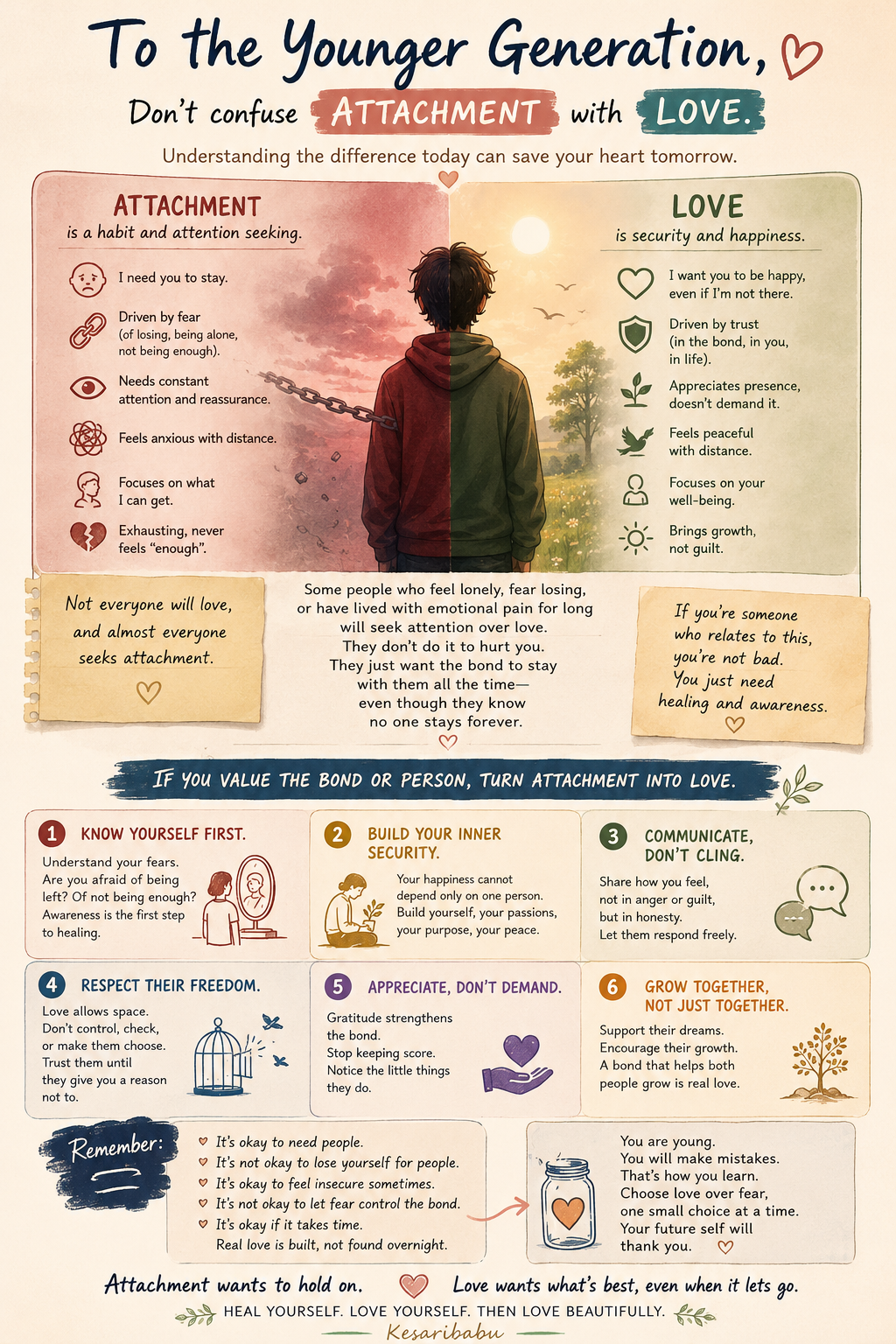
If you value the person, let your attachment mature into love — not by holding tighter, but by understanding deeper.
For a long time, I believed attachment and love were the same thing.
If I missed someone, thought about them constantly, wanted to spend more time with them, worried when they were distant, and felt happy when they gave me attention, I assumed it was love.
As I grew older and observed people, relationships, and even myself, I realized something important:
Attachment and love often walk together, but they are not the same thing.
Attachment is a habit.
Love is a choice.
Attachment seeks attention.
Love creates security.
Attachment asks, “Will you stay with me?”
Love asks, “Are you happy?”
The difference sounds simple, but understanding it can save years of confusion, heartbreak, and emotional suffering.
Why So Many People Confuse Attachment with Love
The truth is that not everyone learns love first.
Most of us learn attachment first.
A child seeks attention from parents.
A teenager seeks validation from friends.
An adult seeks reassurance from a partner.
Attention becomes proof that we matter.
When attention disappears, fear appears.
For people who spent most of their lives feeling lonely, misunderstood, neglected, abandoned, or emotionally deprived, attachment can become even stronger.
They don’t necessarily want to control others.
They simply want the bond to remain.
They want certainty in a world where nothing feels certain.
The irony is that deep down they already know a painful truth:
No one stays forever.
Yet they still hope someone will.
What Attachment Looks Like
Attachment is often driven by fear.
Fear of losing.
Fear of being forgotten.
Fear of being replaced.
Fear of being alone.
When attachment takes control, a delayed reply feels like rejection.
Distance feels like danger.
Silence feels like abandonment.
The relationship slowly becomes less about connection and more about reassurance.
The person is no longer loved for who they are.
They become a source of emotional safety.
And no matter how much attention is received, it never feels completely enough.
Because the problem was never the lack of attention.
The problem was the fear underneath it.
What Love Looks Like
Love feels different.
Love is not the absence of care.
It is care without possession.
Love values presence but does not demand it.
Love appreciates attention but does not depend on it.
Love allows people to grow, change, explore, and sometimes even walk different paths.
Love understands that relationships cannot be measured by the number of messages exchanged, the frequency of calls, or the amount of time spent together.
Instead, it is measured by trust.
Trust that the bond still exists even when life becomes busy.
Trust that affection does not disappear because distance appears.
Trust that both people can remain individuals while remaining connected.
Attachment says:
“I need you to stay.”
Love says:
“I want what is best for you, even when life changes.”
A Message to the Younger Generation
If you are young and reading this, do not feel ashamed if you recognize yourself in attachment.
Almost everyone begins there.
Wanting attention does not make you weak.
Wanting reassurance does not make you bad.
Wanting to feel important to someone is one of the most human feelings imaginable.
The goal is not to eliminate attachment.
The goal is to transform it.
If you truly value a person or a bond, let your attachment mature into love.
How to Turn Attachment into Love
1. Know your fears.
Ask yourself honestly:
Am I afraid of losing them?
Am I afraid of being alone?
Am I afraid of not being enough?
Awareness is the first step toward growth.
2. Build your own security.
No single person should carry the responsibility for your happiness.
Develop your purpose.
Your passions.
Your friendships.
Your self-respect.
The stronger your relationship with yourself, the healthier your relationships with others become.
3. Communicate instead of clinging.
Express feelings honestly.
Do not use guilt, pressure, or emotional manipulation.
Give people the freedom to choose you.
A choice is far more meaningful than an obligation.
4. Respect freedom.
Love is not ownership.
People need space to grow.
Trust is allowing someone freedom without constantly fearing the outcome.
5. Appreciate more than you demand.
Notice what people do for you.
Stop keeping score.
Gratitude strengthens relationships more than expectations ever will.
6. Grow together, not just stay together.
A healthy bond helps both people become better versions of themselves.
If a relationship prevents growth, it may not be love.
It may simply be attachment wearing the mask of love.
The Lesson I Continue Learning
After observing relationships for years, I no longer see attachment as the enemy of love.
In fact, I think many beautiful relationships begin with attachment.
We care.
We worry.
We miss people.
We seek their attention.
That is human.
The real challenge is whether attachment remains fear or evolves into trust.
Whether it remains possession or becomes appreciation.
Whether it remains insecurity or becomes love.
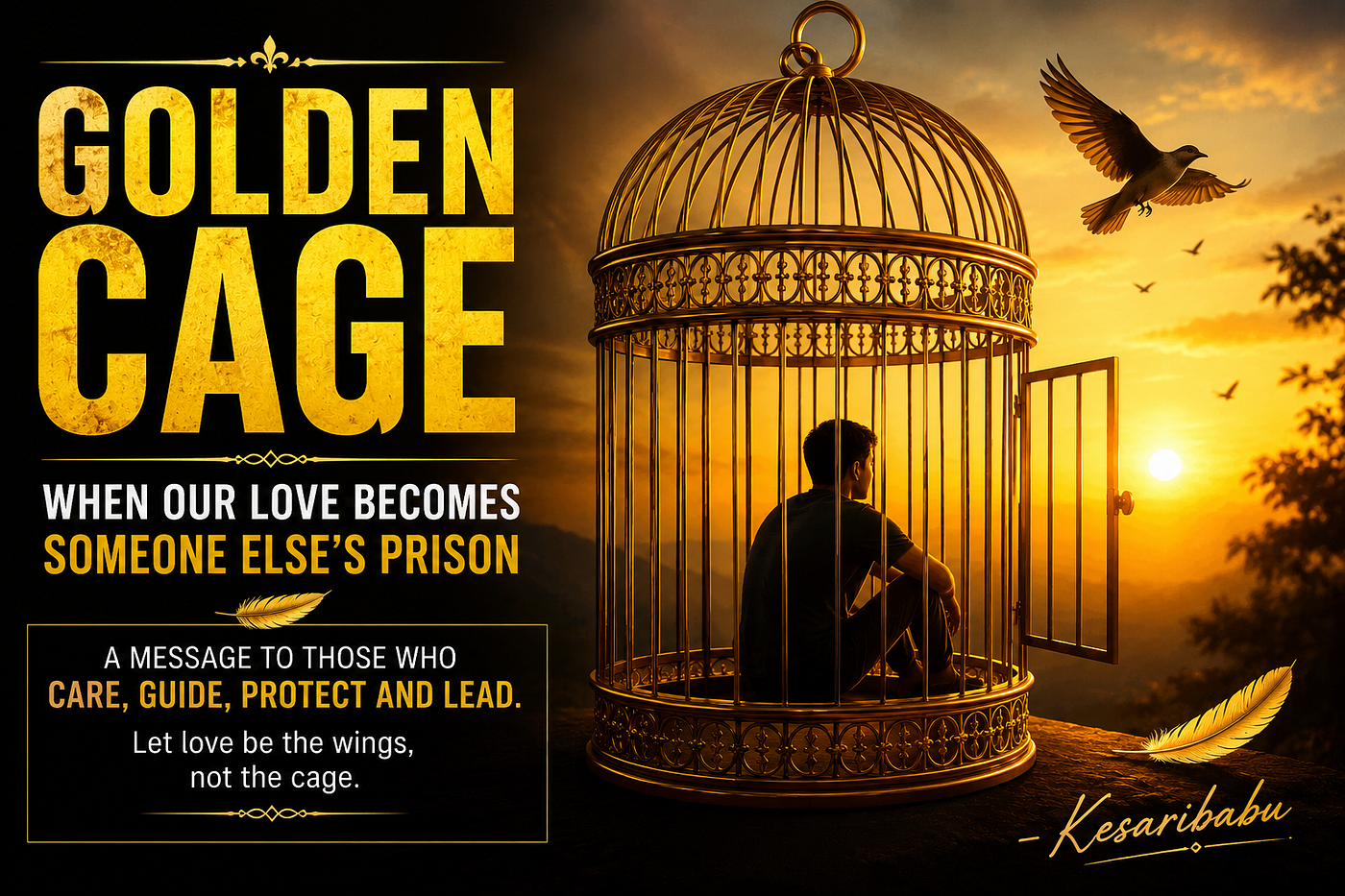
Because at its highest form, love is not about holding on.
It is about valuing.
Not about controlling.
But understanding.
Not about keeping someone close at all costs.
But creating a bond so genuine that distance, time, and change cannot easily destroy it.
Attachment wants certainty.
Love offers trust.
Attachment fears losing the person.
Love values the person.
And perhaps growing up is nothing more than learning the difference.
— Kesari Babu
Disclaimer: This article reflects personal observations, experiences, and reflections on human relationships. It is not a psychological diagnosis or universal truth. Human emotions are complex, and attachment and love often coexist in different forms within the same relationship.
메타데이터
- post_id
- 2ddc3dab784c
- slug
- attachment-vs-love-the-difference-that-took-me-years-to-understand-2ddc3dab784c
- url
- https://medium.com/@kesaribabu/attachment-vs-love-the-difference-that-took-me-years-to-understand-2ddc3dab784c
- canonical_url
- https://medium.com/@kesaribabu/attachment-vs-love-the-difference-that-took-me-years-to-understand-2ddc3dab784c
- author_url
- https://medium.com/@kesaribabu
- status
- ok
- fetched_at
- 2026-06-09 15:37:30