A veterinary infographic featuring a golden retriever resting beside a food bowl with the title…
Dog Diarrhea After Switching Food: Why It Happens and How to Help Your Dog Recover
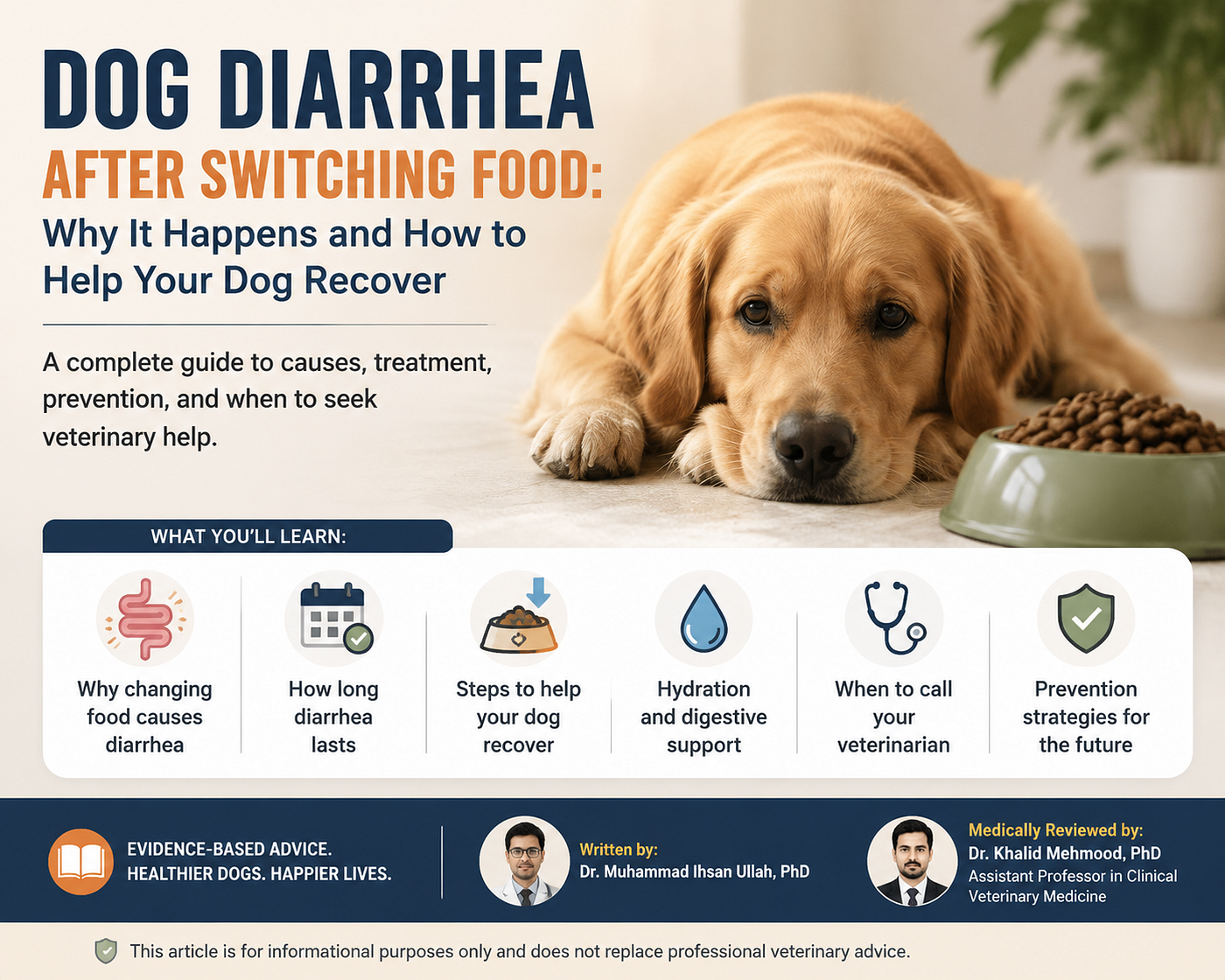
A veterinary infographic featuring a golden retriever resting beside a food bowl with the title “Dog Diarrhea After Switching Food,” explaining causes of digestive upset, recovery steps, hydration tips, warning signs, and prevention strategies for dogs changing diets.
Dog Diarrhea After Switching Food: Why It Happens and How to Help Your Dog Recover
Changing your dog’s food seems like a simple decision, but your dog’s digestive system may not adjust as quickly as expected.
Many pet owners notice loose stools, diarrhea, gas, or stomach discomfort after introducing a new diet. This raises an important question:
Is dog diarrhea after switching food normal, or does it indicate a bigger problem?
In most cases, mild diarrhea happens because your dog’s digestive system, enzymes, and gut bacteria need time to adapt to new ingredients. However, understanding the cause and responding correctly can help prevent unnecessary discomfort.
Why Does Changing Dog Food Cause Diarrhea?
Dogs rely on a balanced digestive system to break down food and absorb nutrients. When a new diet is introduced too quickly, the gut may struggle to adjust.
Common reasons include:
- Sudden dietary changes: Switching food overnight can disrupt digestion.
- Gut microbiome imbalance: Beneficial bacteria in the intestines need time to adapt to a different food source.
- Ingredient sensitivity: Some dogs react to specific proteins, grains, or carbohydrates.
- Different nutrient composition: Changes in fat, fiber, or protein levels can affect stool consistency.
Research suggests that gradual food transitions help support healthy gut microbial changes and reduce digestive upset.
How Long Does Diarrhea Last After Changing Dog Food?
For many dogs, mild diarrhea improves within 24–72 hours as their digestive system adjusts.
During this period, pet owners should:
✅ Monitor stool consistency ✅ Provide plenty of fresh water ✅ Avoid additional diet changes ✅ Slow down the food transition process
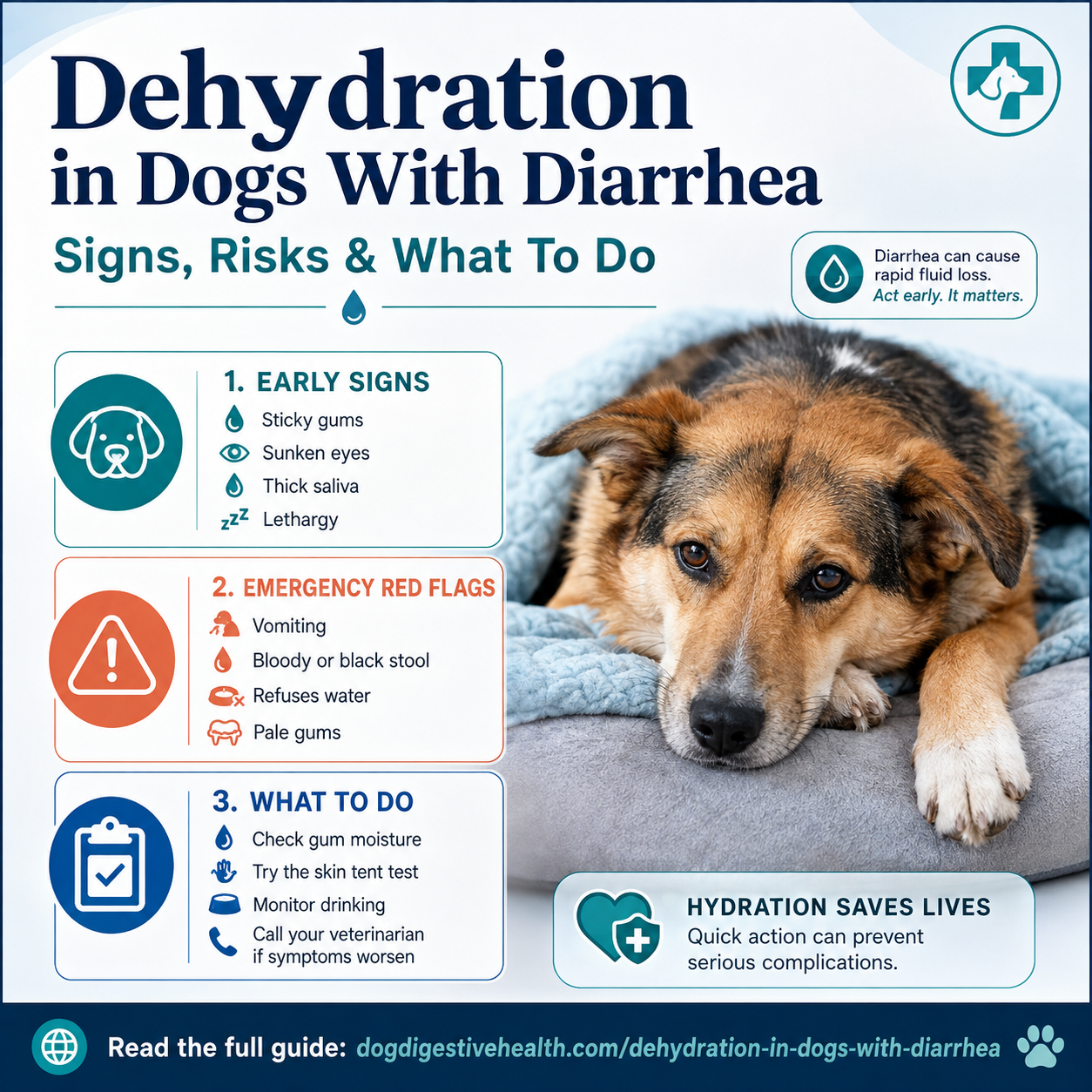
If diarrhea continues beyond three days or appears with vomiting, blood in stool, fever, lethargy, or loss of appetite, veterinary attention is recommended.
What Should You Do If Your Dog Has Diarrhea After New Food?
A few simple steps can help support recovery:
1. Slow Down the Food Transition
Instead of continuing with a high amount of new food, reduce the portion and gradually increase it over time.
A common transition schedule:
- Days 1–3: 75% old food + 25% new food
- Days 4–6: 50% old food + 50% new food
- Days 7–9: 25% old food + 75% new food
- Day 10+: 100% new food
Dogs with sensitive stomachs may need an even slower transition.
2. Keep Your Dog Hydrated
Diarrhea can cause fluid loss, so access to fresh water is essential.
Adding moisture to meals or offering wet food may also support hydration.
3. Support Digestive Health
A healthy gut plays a major role in your dog’s overall wellness. Choosing highly digestible food, maintaining consistency, and introducing probiotics carefully may help support normal digestion.
When Should You Call a Veterinarian?
While food-related diarrhea is often temporary, some signs require professional attention.
Contact your veterinarian if your dog has:
- Diarrhea lasting more than 72 hours
- Blood in stool
- Repeated vomiting
- Extreme tiredness or weakness
- Loss of appetite
- Signs of dehydration
Persistent digestive problems may point to food allergies, infections, parasites, or other underlying conditions.
Final Thoughts
Dog diarrhea after switching food is common, but it does not mean every new diet is unsuitable.
The key is a slow transition, careful monitoring, proper hydration, and knowing when to seek veterinary help.
Every dog’s digestive system is different. A food change that works perfectly for one dog may not work the same way for another.
For a complete veterinary guide covering causes, prevention strategies, transition schedules, and warning signs, read the full article:
👉 Dog Diarrhea After Switching Food: Causes, Treatment, and Prevention https://dogdigestivehealth.com/dog-diarrhea-after-switching-food/
Written by: Dr. Muhammad Ihsan Ullah, PhD Medically Reviewed by: Dr. Khalid Mehmood, PhD (Assistant Professor in Clinical Veterinary Medicine)
This article is for informational purposes only and does not replace professional veterinary advice.
DogHealth #DogCare #PetHealth #VeterinaryMedicine #DogNutrition #CanineHealth #DogFood #PetWellness #DogParents #AnimalHealth #DogDigestiveHealth #PetCareTips
메타데이터
- post_id
- 2dde0da3aea2
- slug
- a-veterinary-infographic-featuring-a-golden-retriever-resting-beside-a-food-bowl-with-the-title-2dde0da3aea2
- url
- https://medium.com/@saad.khan081/a-veterinary-infographic-featuring-a-golden-retriever-resting-beside-a-food-bowl-with-the-title-2dde0da3aea2
- canonical_url
- https://medium.com/@saad.khan081/a-veterinary-infographic-featuring-a-golden-retriever-resting-beside-a-food-bowl-with-the-title-2dde0da3aea2
- author_url
- https://medium.com/@saad.khan081
- status
- ok
- fetched_at
- 2026-08-15 05:52:07