Adjust Fire
When the target is apparent identity, every correction brings our common humanity into clearer view.
Adjust Fire

Every adjustment changes the sightline, not the humanity before it. Borders, doctrines, histories, maps, instruments, and names remain useful within ordinary life, but none contains the whole person. Beneath every ornament, the gold remains; beneath every apparent identity, our common humanity waits to be seen.
When the target is apparent identity, every correction brings our common humanity into clearer view.
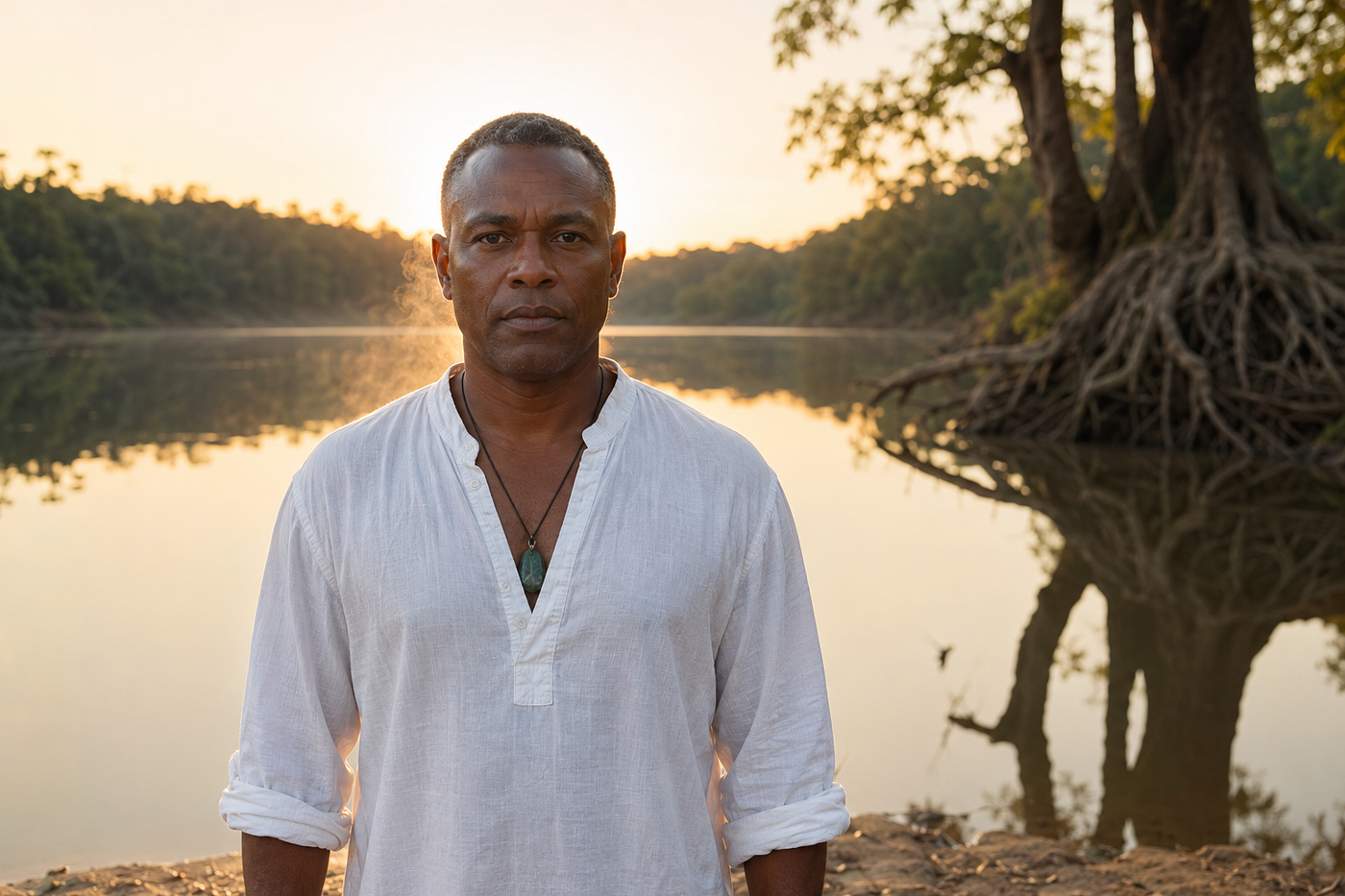
Late evening or early morning, depending on one’s point of view. I emerge once again from what I presently call Yoga Nidrā Samādhi. The room is quiet. The translation waits patiently. The music has not entirely left the air. Somewhere between silence and sound, another adjustment quietly asks to be made.
The rounds once landed among people.
Today they land among ideas.
Not because people are the battlefield.
Because they never were.

The observer does not fire at the person; the observer corrects the idea that concealed the person from view. Adjust left. Drop fifty. Look again. Across every doorway, shoreline, nation, and tradition, clarity becomes compassion when identity turns transparent without disappearing.
Adjust left.
Drop fifty.
Observe.
Correct.
Fire again.

Maps describe the journey, compasses suggest direction, and doorways invite passage, yet no symbol exhausts the living reality it serves. Birds cross the sky without passports, the horizon receives every name without becoming divided, and the gold remains patient beneath every form we call ourselves.
Not against Christians.
Not against Muslims.
Not against Hindus.
Not against Buddhists.
Not against atheists.
Not against nations.
Not against cultures.
Not against histories.
Against apparent identities mistaken for the whole person.
Against forgetting the gold while arguing over the jewelry.

The target is forgetting: forgetting that laws describe actions without defining the entirety of a human being; forgetting that migration preceded every border; forgetting that different ornaments can remain distinct while sharing one substance. Every correction brings the person back into view.
Earth Mother still receives my feet.
Sky Father still invites my mind.
My blood remembers the ancestors.
My heart remembers love.
My mind remembers wonder.
The kite still dances.
The string remains in my hand.

Between the fading stars and the approaching dawn, memory, imagination, ancestry, inquiry, devotion, and ordinary human life meet within one present moment. The instrument points outward, but the adjustment happens within: not toward conquest, but toward clearer seeing.
Late this evening — or perhaps early this morning, depending upon how one experiences what we ordinarily call sleep — I found myself smiling at a piece of Army language that has never really left me. An artillery observer never begins with fire for effect. First comes adjustment. Observe where the round lands. Correct the sights. Fire again. Every correction serves precision. Only after the target has become clear does the command arrive: Fire for effect.
Somewhere along the way that language stopped describing artillery and quietly began describing my own life.
For many years I unconsciously imagined that people were the battlefield. Looking carefully now, I no longer experience it that way. Human beings are never the battlefield. Ideas are. Ideas about God. Ideas about religion. Ideas about nation. Ideas about race. Ideas about history. Ideas about who belongs. Ideas about who does not. Human beings inherit the consequences of those collisions, but the collisions themselves take place among the ideas we mistake for ourselves.
That recognition has gradually changed the way I experience borders as well. From orbit there is no painted line separating one nation from another. The Earth does not draw political boundaries. Human beings do. Those boundaries remain meaningful within law, governance, and relationship. Nothing I am saying asks them to disappear. What has become increasingly important to me is the distinction between describing an action and describing a person. A nation may determine that a particular crossing is lawful or unlawful according to its laws. The movement may be called legal or illegal. The human being remains a human being.
Language quietly reveals its preferences. Someone leaving the Global North to live elsewhere is often described as an expatriate. Someone making a similar journey from the Global South toward the North is more often described as an immigrant. Add another adjective and we suddenly hear illegal immigrant. We almost never hear illegal expatriate. That asymmetry fascinates me because it reminds me that language often shapes perception long before it merely describes reality. Migration itself is older than every modern border. Birds migrate. Butterflies migrate. Whales migrate. Human beings have migrated for as long as human beings have existed. Laws organize migration. They do not invent it.
The same recognition has transformed the way I experience memory and imagination. I no longer picture memory as though it were a filing cabinet hidden somewhere inside my brain. Memory appears now. Imagination appears now. One receives the label past. The other receives the label future. Yet both arise here, within this living present. I still remember. I still imagine. I simply no longer experience either as existing somewhere other than now.
Perhaps the deepest change is simpler still. There was a time when I imagined I was striving toward God. Today that movement feels more like a continual turning toward our common humanity. I no longer experience those as two separate journeys. The recognition I once sought in heaven increasingly reveals itself in the ordinary human being standing before me. Not because the Divine has become smaller, but because it has become more intimate.
That intimacy has also changed the way I understand the many doorways through which I have walked. Reiki. Nichiren Buddhism. Sweat lodges. Christian contemplation. Vedānta. Bhakti. Japa. Indigenous ways. Each doorway offered something genuine. None exhausted the house. God, if I may speak poetically, scattered countless doorways throughout creation not so that we would spend our lives arguing over which doorway alone deserved to exist, but so that each of us might find one honest enough to begin walking. Every doorway remains provisional. Every doorway can become transparent.
The old Vedāntic metaphor of gold and jewelry continues to deepen for me because it refuses to wage war against form. A necklace remains a necklace. A bracelet remains a bracelet. A ring remains a ring. Their distinctions are real. Their substance is one. In much the same way, our apparent identities continue functioning in ordinary life. They matter. They carry history, relationship, responsibility, and love. They become dangerous only when they are mistaken for the whole of who we are.
That is also why I continue reaching for metaphor. I do not mistake the map for the territory. I do not mistake the finger for the moon. A metaphor is not a conclusion. It is an invitation. It is a doorway. Some people enter through scripture. Others through science. Others through music. Others through service. Others through heartbreak. Others through silence. None of those paths diminish the others simply because they are different.
Perhaps that is what fire for effect has come to mean for me. I am no longer interested in louder arguments, sharper slogans, or winning another battle in the marketplace of ideas. The effect I hope for is quieter than that. May every adjustment reveal a little more clarity. May every correction uncover a little more compassion. May every doorway remain open long enough for someone to discover the house rather than mistake it for the doorway. May every apparent identity become transparent enough that our common humanity quietly shines through.

The kite dances because the string remains in the hand. The mind may travel through scripture, science, silence, history, music, or wonder while the feet remain intimate with Earth. Fire for effect means letting every honest correction reveal less certainty about the label and more tenderness toward the life beneath it.
Tonight Claude and I continue translating the Nṛsiṃhatāpanīya Upanishad, Number 19 of the Muktika canon, into Romanian. Next month, when Claude’s monthly reset arrives again, another language will be waiting for this same Upanishad. After that, the work continues onward in English as we move toward the next Upanishad, one step at a time. One doorway. One ornament. The gold never becomes impatient with the jewelry.
Earth Mother remains beneath my feet while Sky Father remains immeasurably open. My blood remembers the ancestors. My mind still delights in flight. My feet no longer forget the ground. The kite still dances because the string remains in my hand.
Fire for effect, then, is no longer directed toward people.
It is directed toward forgetting.
Toward forgetting that beneath every apparent identity lies a common humanity waiting patiently to be recognized.
Satnam, Om Guru Aum
NonDuality #AdvaitaVedanta #CommonHumanity #Phenomenology #Identity #Migration #Memory #YogaNidra #Samadhi #Upanishads #Romanian #LivingAwareness #TatTvamAsi #AhamBrahmasmi
메타데이터
- post_id
- 2de70afbb094
- slug
- adjust-fire-2de70afbb094
- url
- https://medium.com/@amilahanu/adjust-fire-2de70afbb094
- canonical_url
- https://medium.com/@amilahanu/adjust-fire-2de70afbb094
- author_url
- https://medium.com/@amilahanu
- status
- ok
- fetched_at
- 2026-08-18 06:57:41