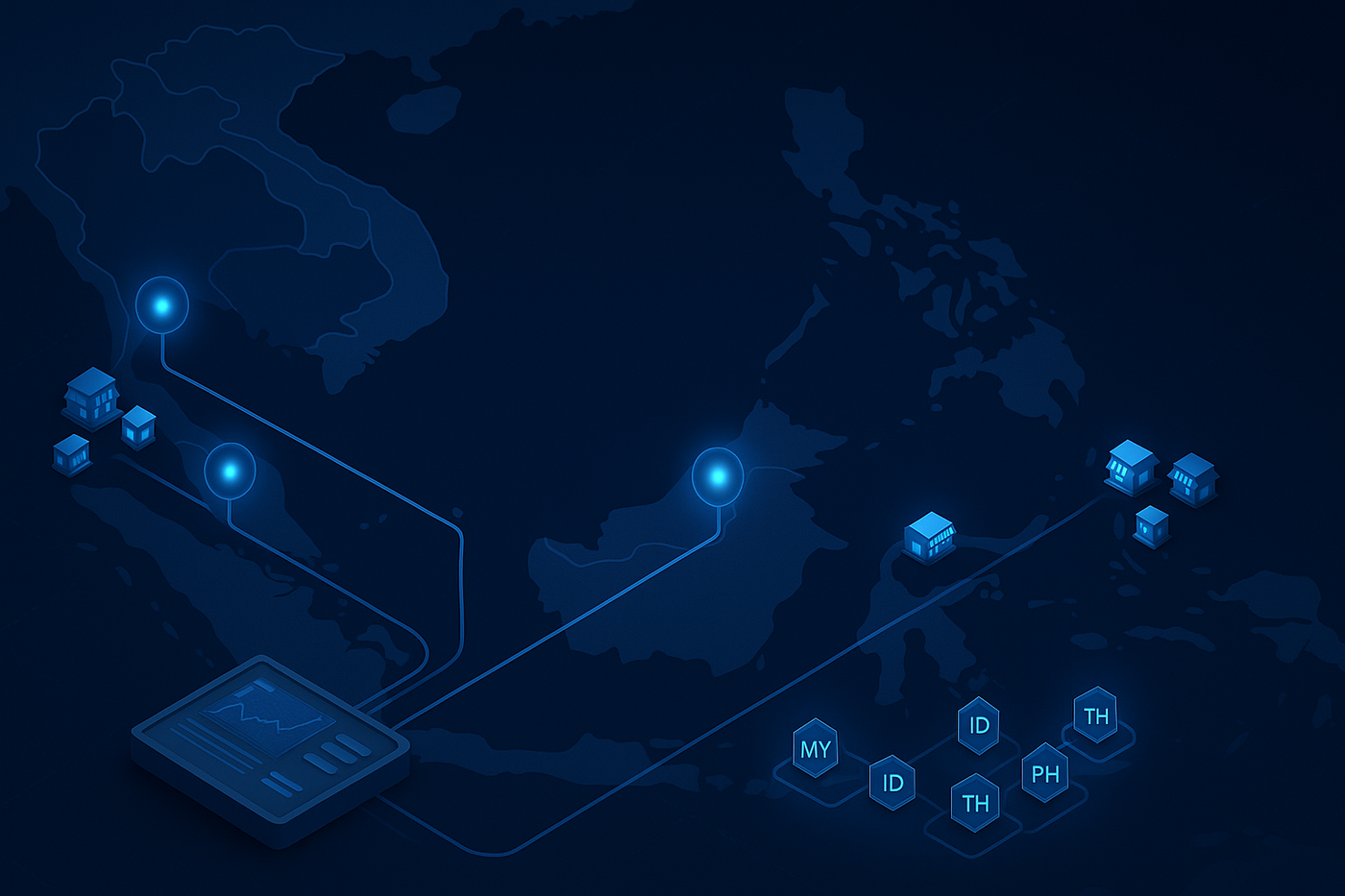
Philippines proxy IP for multi-store operations without linkage risks
Teams running multiple Shopee or Lazada stores in the Philippines often see several accounts pulled into verification at once because their…
Philippines proxy IP for multi-store operations without linkage risks

A stable PH route keeps each store on a clean, predictable login path.
Teams running multiple Shopee or Lazada stores in the Philippines often see several accounts pulled into verification at once because their network fingerprints overlap. Assigning each store a fixed and predictable local login path — mapped to a stable philippines proxy ip — keeps stores separated and reduces sudden risk checks.
Why Philippine store operators rely on stable local IP routes
When operating Philippine stores remotely, the platform evaluates your login route, region consistency, and device patterns. If several stores log in from the same foreign network within minutes, Shopee or Lazada naturally assumes they belong to one operator. Many teams first notice this when two stores are hit with “unusual location” prompts at nearly the same time.
For multi-store setups, the priority is routing predictability. A steady Philippine route prevents abrupt subnet jumps — such as a 10–15 km geo shift in a short window — which frequently triggers risk evaluation. Experienced operators follow the principle of “one store, one environment, one route.” This doesn’t require separate hardware for each store; it simply means each store keeps the same Philippine entry segment so the platform consistently sees stable behavior.
Because of this, mature teams bind each store to one steady route, building a clean login footprint that stays consistent across days.
How a Philippines proxy IP creates clean separation for multi-store clusters
A Philippines proxy IP creates a separate network trajectory for every store, preventing accounts from blending together due to shared home networks. As long as the login entry remains consistent, the platform observes each store as an independent operation.
A practical approach is distributing traffic across multiple Philippine datacenter segments. Each segment keeps a stable prefix so stores don’t switch between unrelated subnets. Even if different devices are used, stores stay isolated because their sessions are tied to distinct access routes. Many operators lock their store groups into a consistent local login segment, relying on steady routing to maintain healthy footprints. A semantic variant internal link fits naturally here: many teams route their stores through a stable philippines login route to maintain clean separation.
A clean login path usually includes:
- Fixed routing window — Each store always enters through the same Philippine segment.
- Session isolation — Independent tunnels prevent token fusion or shared OTP triggers.
- Consistent environment — Browser profiles maintain their own fingerprint and timezone rules.
When these three align, a multi-store cluster looks like separate sellers instead of one operator behind many accounts.
Setting up a controlled login path for Shopee/Lazada store groups
Teams managing five to twenty Philippine stores usually build a standardized login process. The more consistent the workflow, the fewer cross-account issues appear during daily operations.
Step-by-step workflow for stable access
- Prepare an isolated workspace Assign each store a separate browser profile or container, permanently bound to one Philippine route.
- Map store → route → device Each store should have a fixed route. If operators rotate shifts, they must inherit the same route to avoid sudden region changes.
- Watch the first login window After the first login, monitor the account for 24 hours. Shopee often shows early risk prompts; if the route is steady, these usually disappear.
- Allow simultaneous logins only on isolated routes When multiple stores check orders at the same time, each must run on its own session and route.
- Record any route change Rotation should be intentional. Many teams trigger flags because they jumped segments accidentally.
This setup keeps store trajectories stable over time, dramatically increasing account longevity.
Architecture details: routing, fingerprint consistency, and account hygiene rules
Most multi-store bans happen because of signal overlap, not content issues. Platforms evaluate login region, device lifetime, and prefix behavior. If two stores share too many characteristics, correlation flags rise.
A clean architecture follows this path:
- Entry → PH Gateway:All traffic enters through a Philippine gateway.
- Gateway → Session Segment:Each session binds to its own segment.
- Session → Device Pattern:Browser environments maintain their own fingerprints.
Operator experience shows that 1–2 unexpected IP shifts within 12–24 hours often cause review queues. Even small 3–5 km drifts can trigger reconsideration of account ownership.

Segmented IP routes help prevent account linkage across store clusters.
Adding a fixed operating rhythm — morning fulfillment, afternoon customer response — helps accounts look more legitimate and reduces verification loops.
Scaling to 10–50 stores with safe rotation and controlled handover
Scaling beyond ten stores introduces concurrency issues, multiple operators, and subnet overlap. At this stage, route planning becomes essential.
Safe scaling typically follows these principles:
- Rotate only when necessary Avoid constant rotation; Shopee/Lazada monitors route volatility.
- Group stores into small clusters Every 3–5 stores share one Philippine segment to create natural separation.
- Use clear handover rules When operators switch roles, they must keep the same device and the same route to preserve fingerprint continuity.
- Avoid repeated subnet overlap Even if devices differ, repeatedly using the same subnet links accounts together.
This structure makes scaling more predictable. Many teams first stabilize one store, observe how it behaves for several days, then replicate the pattern across more stores. To maintain separation, operators usually keep store groups on a consistent regional access path that matches their daily workflow.

Consistent Philippine entry points maintain safe separation between stores.
A stable routing plan allows multi-store clusters to grow without merging footprints. Start by testing one store on a fixed route, observe a few consecutive days of login stability, and then gradually apply the same pattern to more stores.
메타데이터
- post_id
- 2e2f625caf93
- slug
- philippines-proxy-ip-for-multi-store-operations-without-linkage-risks-2e2f625caf93
- url
- https://medium.com/@hashdrift/philippines-proxy-ip-for-multi-store-operations-without-linkage-risks-2e2f625caf93
- canonical_url
- https://medium.com/@hashdrift/philippines-proxy-ip-for-multi-store-operations-without-linkage-risks-2e2f625caf93
- author_url
- https://medium.com/@hashdrift
- status
- ok
- fetched_at
- 2026-08-30 04:40:16