The First Gate to Mongolia
Letters on the Road №51 — Ulaanbaatar: a city that doesn’t give you all the answers about Mongolia
The First Gate to Mongolia
Letters on the Road №51 — Ulaanbaatar: a city that doesn’t give you all the answers about Mongolia
Ulaanbaatar (nicknamed UB) is far from being the capital I expect to find. It is surprisingly small, probably no bigger than a medium-sized European city. From a distance, you can still see the green hills surrounding it, something you’d never imagine seeing around a capital city. Soviet apartment blocks dominate the skyline and the main streets, just like in the former Eastern European bloc, yet the atmosphere feels completely different: everything is calm, spacious, and somehow relaxed. Even the business buildings seem to have forgotten the usual rush of a capital.
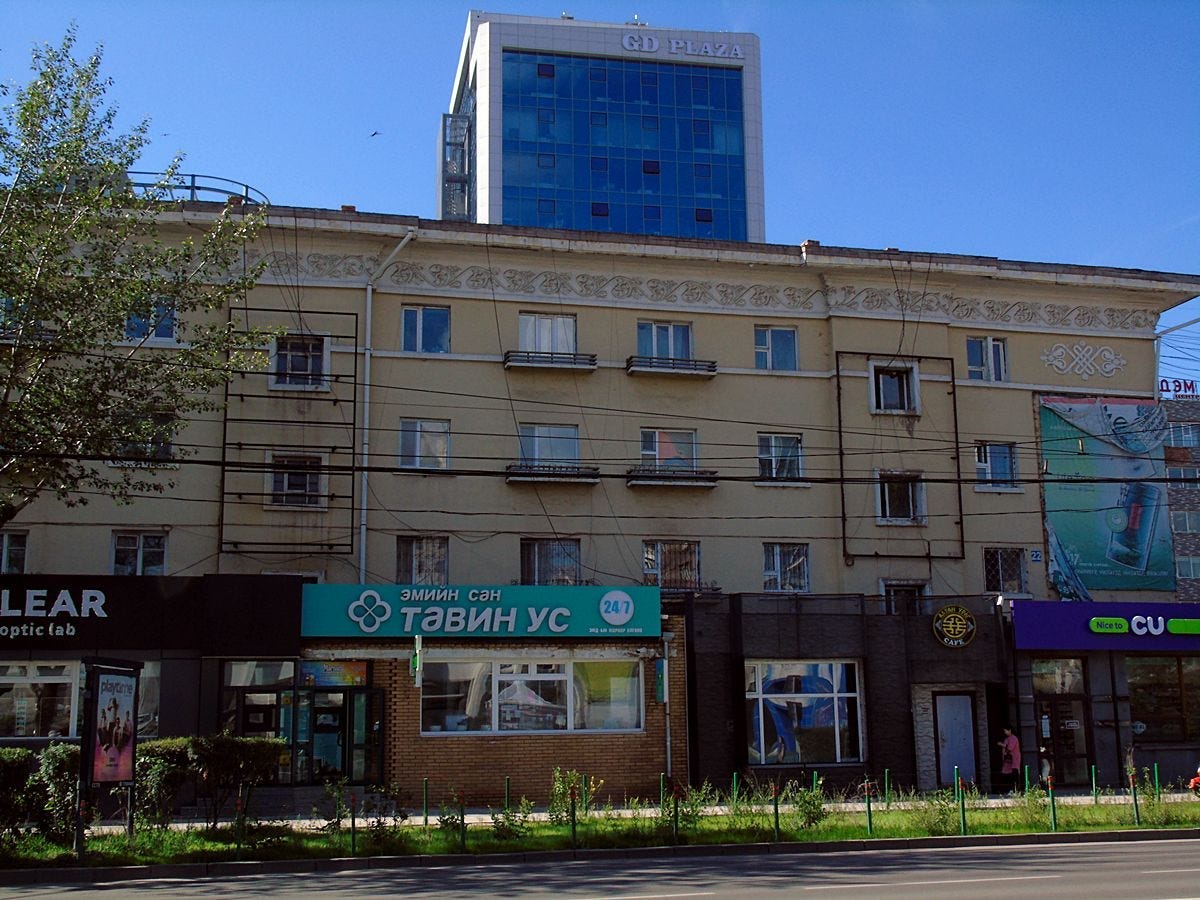
Layers of Ulaanbaatar: Soviet apartment blocks standing beneath a skyline of glass towers
Even though the socialist buildings are everywhere, the city somehow feels bohemian. Small cafés, tiny shops next to large department stores, and the vibe of Asian markets soften the concrete and make the city feel more personal. Around Sükhbaatar Square, groups of Mongolians wearing their traditional deel take photos in front of the imposing statue of Genghis Khan. At Gandan Monastery, monks keep chanting their prayers, gently rocking back and forth before drinking bowls of traditional Mongolian milk tea, suutei tsai. Street vendors try to earn a few extra coins, buses work perfectly and you simply tap your card to pay. Another world, another culture, another set of challenges — and I still haven’t left the capital …
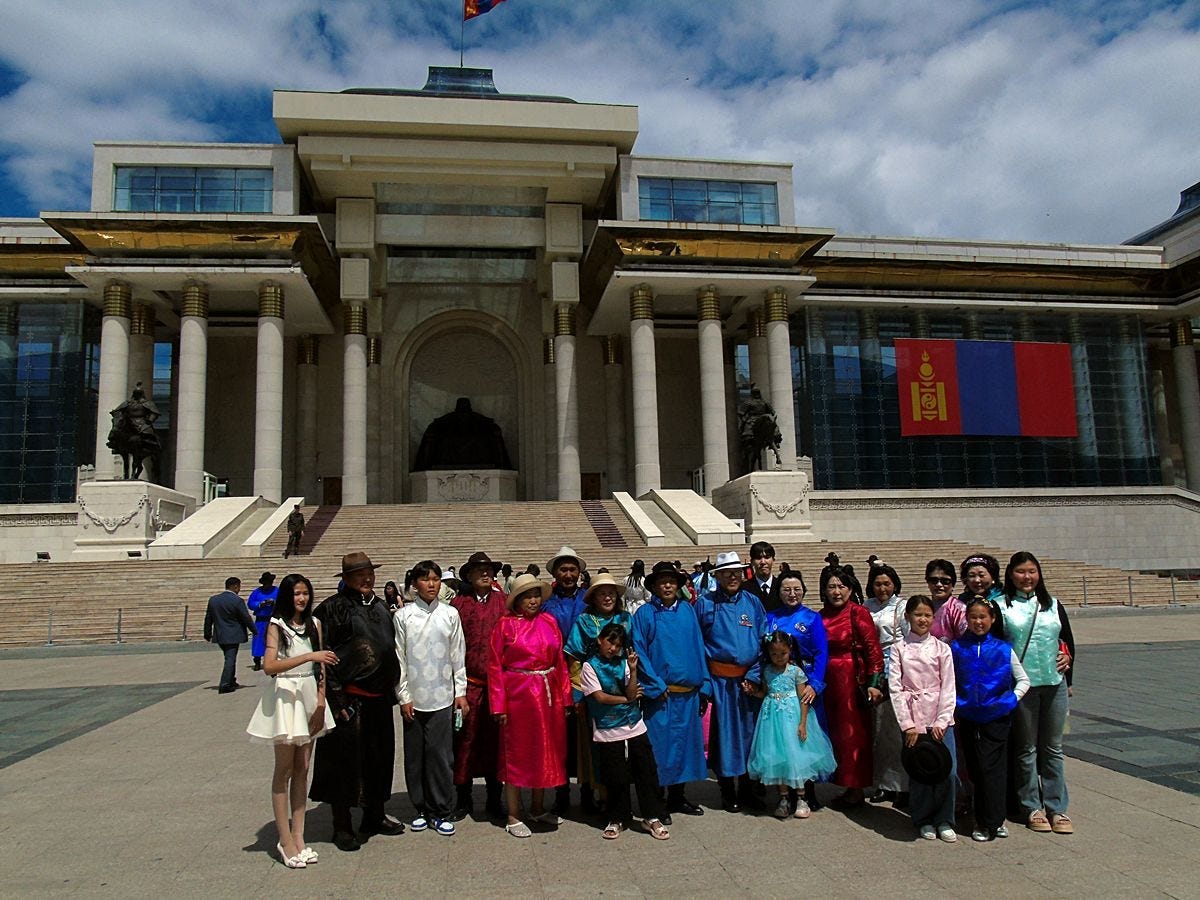
A family gathering in Sükhbaatar Square, where everyday life unfolds beneath Mongolia’s national symbols
My days in Ulaanbaatar quickly find their own rhythm. During my first few days I try walking everywhere until my legs (especially my injured knee) start protesting. I download the local Tapa app to order a taxi, but it never works. After a while, I simply give up on it, while Google Maps and Maps.me become everything I need. Nobody explains the city to me. The people at the guesthouse speak very little English, so I stop asking for directions altogether. Little by little, I realize I can get absolutely anywhere using nothing more than technology and my own ability to connect the dots.

Afternoon prayers at Dashchoilin Monastery, where understanding a place begins not with answers, but with quietly observing its rituals
Ulaanbaatar feels like a wall at first: a wall you cannot go around. If you want to continue your journey, you have to find the gates hidden inside it. The wall is made of hundreds of puzzle pieces, and nobody tells you which pieces matter. You have to put them together yourself until one of them suddenly becomes a door. One of the first doors reveals itself the moment I get on the right bus near Dashchoilin Monastery and later get off near my guesthouse in downtown UB — in that moment something quietly aligns with the new world I am in. I become better at trusting my own ability to build the path myself instead of waiting for someone else to show it to me.

Choijin Lama Temple: curiosity asked me to step inside. The city revealed a layer I would have missed had I stayed only on the surface.
Ulaanbaatar eventually reveals itself and you end up understanding how the city works. But outside UB, Mongolia is much harder to navigate in every possible way. It would be easy to give up and choose a fully organized tour simply because everybody else does. But this first gate into Mongolia quietly reminds me why I travel the way I do — long-term, slowly, quietly, sometimes unnoticed. And small moments of joy while travelling always remind me to stay on track here: the pleasure of discovering another monastery at my own pace; then another temple where I take countless photos; then another story about Genghis Khan; maybe a milk-tea, maybe a coffee on the square.

Traditional Mongolian Dances: joy can be a way of understanding a place just as much as history, museums, or monuments
What I notice over and over again while traveling independently is that curiosity keeps you moving long after logistics become frustrating. And when pleasure leads, you keep looking for solutions until you find the ones that fit your journey, your path, your voice — not somebody else’s. Repeated practice turns every small solution along the way into confidence for the next step.
The first destination in a country is sometimes simply the first gate that teaches you how to enter a completely different world without losing your own way of moving through the world.


메타데이터
- post_id
- 2e462fdb3fe4
- slug
- the-first-gate-to-mongolia-2e462fdb3fe4
- url
- https://medium.com/@iulianamarchian/the-first-gate-to-mongolia-2e462fdb3fe4
- canonical_url
- https://medium.com/@iulianamarchian/the-first-gate-to-mongolia-2e462fdb3fe4
- author_url
- https://medium.com/@iulianamarchian
- status
- ok
- fetched_at
- 2026-08-05 09:05:55