Stop Building on Borrowed Land - Why Smart Creators Are Moving to Skool
The platform quietly changing how coaches and creators build communities online
Stop Building on Borrowed Land - Why Smart Creators Are Moving to Skool
The platform quietly changing how coaches and creators build communities online
You’ve been building. Posting consistently. Nurturing conversations. Showing up every single day inside your Facebook Group.
Then the algorithm shifts. Your posts reach fewer people. Engagement drops. Members stop seeing your content. And there’s nothing you can do because none of it was ever really yours.
This is the quiet frustration thousands of creators and coaches are living with right now. And it’s exactly the problem Skool was built to solve.
What Is Skool?
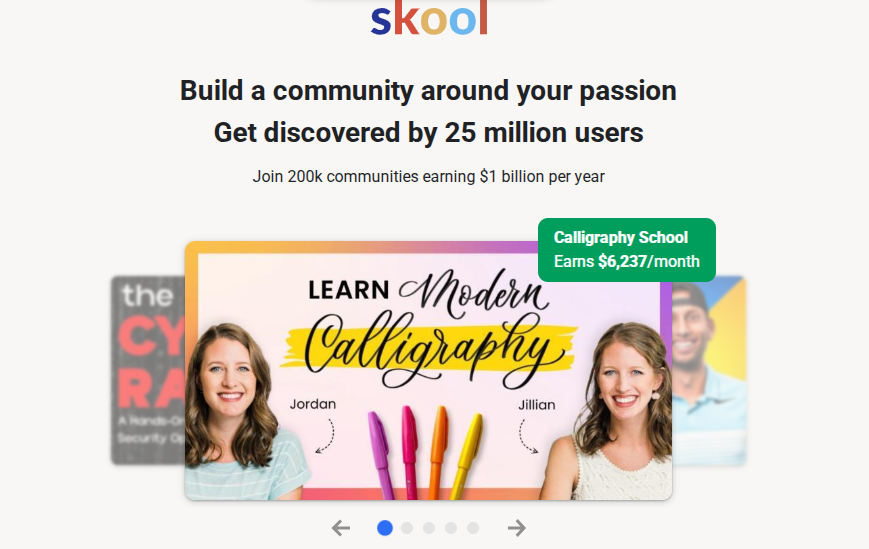
Skool is an all-in-one community platform for creators, coaches, and online educators. It brings together community discussion, online courses, live event scheduling, gamification, and built-in payments — all in one clean, focused space.
No ads. No distracting newsfeed. No algorithm deciding who sees your content.
Founded in 2019 by Sam Ovens and Daniel Kang, Skool was built around a simple idea: learning works better inside a community. Instead of treating courses as isolated content and community as an afterthought, the platform was designed to make both work together from day one.
It now hosts over 100,000 active communities — and after entrepreneur Alex Hormozi publicly backed the platform in 2024, its growth has been nothing short of remarkable.
The Real Cost of Building on Facebook
Let’s be honest about what Facebook Groups actually look like from the inside.
The algorithm buries your posts — even to people who opted in to hear from you. Your community lives inside a platform engineered to keep people scrolling past your content. You don’t own your audience; Facebook does. And if you want to deliver a course or charge for membership access, you’ll need to bolt on a completely separate set of tools.
Most creators end up juggling five or six platforms just to run their community: Facebook for the group, Kajabi or Teachable for courses, Zoom for live calls, Mailchimp for email updates, and a separate payment processor. The result is an expensive, exhausting patchwork that drains time and energy better spent on actually serving your audience.
Skool collapses all of that into one place. And it does it without the noise.
How Skool Actually Works
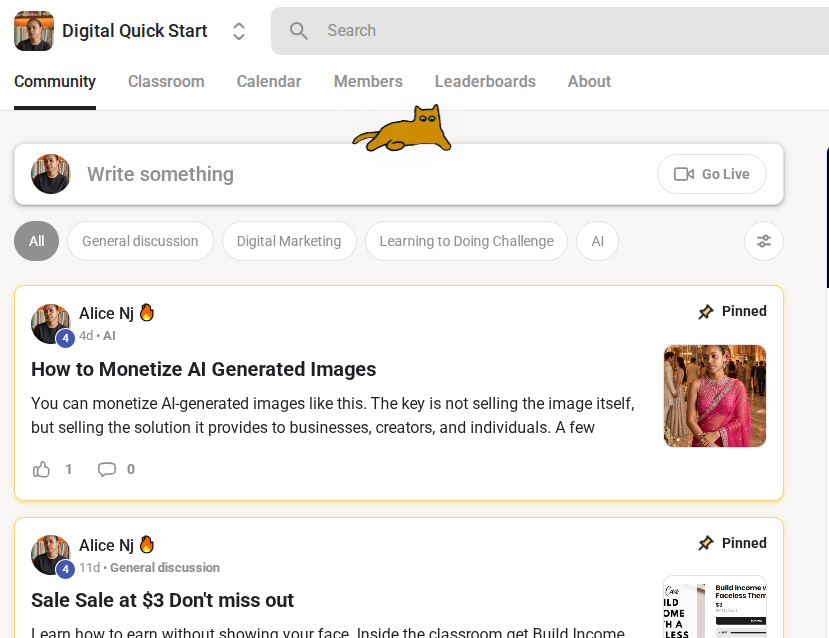
The platform is built around five core features — and each one does exactly what it says.
The Community Feed is a distraction-free discussion space where members post, comment, and connect. No ads. No trending topics. No suggested content pulling people away. Conversations here tend to be richer and more focused than anything you’ll find on Facebook.
The Classroom lets you upload videos, PDFs, and documents and organize them into structured course modules. Members can track their own progress, and you can see who’s engaging. It’s not the most advanced LMS on the market — there are no quizzes or certificates — but for coaches who want to deliver solid content alongside community, it works beautifully.
The Calendar lets you schedule live calls, Q&As, and events directly on the platform. It auto-adjusts for every member’s time zone and sends automatic reminders. Fewer no-shows, less admin.
Payments are handled natively through Stripe. Set up recurring memberships, one-time fees, or free trials — all without a third-party checkout page.
The Mobile App gives members full access on iOS and Android, with push notifications to keep them coming back.
The Feature That Changes Everything: Gamification
If there’s one thing that makes Skool genuinely different, it’s the gamification system.
The number one problem with online communities — on any platform — is that people go quiet. They join with enthusiasm, engage for a week or two, then gradually disappear.
Skool solves this by turning participation into a game. Members earn points when others like their posts and comments. Those points accumulate, levels go up, and each member’s level is publicly visible on their profile. There’s a leaderboard showing the most active members. Community owners can even lock premium content behind certain levels, so engagement has a tangible reward beyond social recognition.
The result? Communities that stay genuinely active. Members come back not just because they want to learn, but because they’re invested — they’re levelling up, they’re visible, they’re part of something.
A small but telling example: Skool awards a visible frame around your profile photo for showing up 30 consecutive days. It’s a simple thing. But it works. Because consistency deserves to be seen.
Why It’s Especially Powerful for Coaches and Consultants
The creator economy is growing fast — and the most valuable thing a coach or consultant can build isn’t just a course. It’s a community built around their expertise.
Skool lets you package your knowledge into a structured course, deliver it alongside a community that reinforces the learning, and run live calls — all from one place. Your clients don’t need three different logins. Your members don’t need to bounce between platforms. Everything they need is right there.
Paid communities are easy to set up. You decide the price, set the access level, and Skool handles the rest. Whether you’re charging $47/month for a general community or $500/month for a premium mastermind, the infrastructure is already there.
And here’s the bigger shift: Skool moves the focus from constantly acquiring new clients to actually retaining the ones you have. When members are engaged, progressing through content, connecting with peers, and showing up for live calls — they don’t leave.
What It Costs — and What It’s Worth
Skool offers two plans:
- Hobby Plan — $9/month with a 10% transaction fee. Great for getting started.
- Pro Plan — $99/month with a 2.9% transaction fee. Better value once your community is generating consistent revenue.
Both plans come with a 14-day free trial, unlimited members, unlimited content, a mobile app, and a 40% recurring affiliate commission if you refer others.
Compare that to the cost of running separate tools — a course platform, a community platform, a scheduling tool, and a payment processor — and the maths quickly favors Skool.
The Honest Bit: What Skool Doesn’t Do
Skool is deliberately simple, and that simplicity comes with real limitations. There’s no email marketing. No quiz or assessment builder. No drip content sequencing. No funnel builder. No course completion certificates.
If you need any of those things as core features, platforms like Kajabi or Mighty Networks may suit you better.
But for the creator, coach, or consultant who wants to launch a focused, high-quality community without a complicated tech setup — Skool is hard to beat. You can have a fully functional paid community live in a single day. That simplicity is the point.
The Bottom Line
Every hour you spend building inside Facebook Groups is an hour spent building on a foundation you don’t own. Facebook can change the rules — and it will.
Skool offers something different: a focused, ad-free space where your community, your content, your live events, and your revenue all live together. A platform where showing up is rewarded, members stay engaged, and you’re not one algorithm update away from losing everything you built.
It’s not perfect. But for coaches and creators building something real around their expertise — it might just be exactly what you’ve been looking for.
Read a more detailed version here Skool vs Facebook Groups: Pros, Cons, and Which Is Better for Growing a Paid Community
This article is part of The Skool Diaries — an ongoing series documenting a real, first-hand journey exploring Skool as a business and community tool. Follow along for honest updates as the journey unfolds.
Transparency Note: This article contains some affiliate links. If you sign up or purchase through them, I may receive a small commission at no extra cost to you. Your support helps me continue creating free content and resources. Thank you!
메타데이터
- post_id
- 2e4dc0db89d1
- slug
- stop-building-on-borrowed-land-why-smart-creators-are-moving-to-skool-2e4dc0db89d1
- url
- https://medium.com/@jalicintaa/stop-building-on-borrowed-land-why-smart-creators-are-moving-to-skool-2e4dc0db89d1
- canonical_url
- https://medium.com/@jalicintaa/stop-building-on-borrowed-land-why-smart-creators-are-moving-to-skool-2e4dc0db89d1
- author_url
- https://medium.com/@jalicintaa
- status
- ok
- fetched_at
- 2026-06-27 23:56:40



