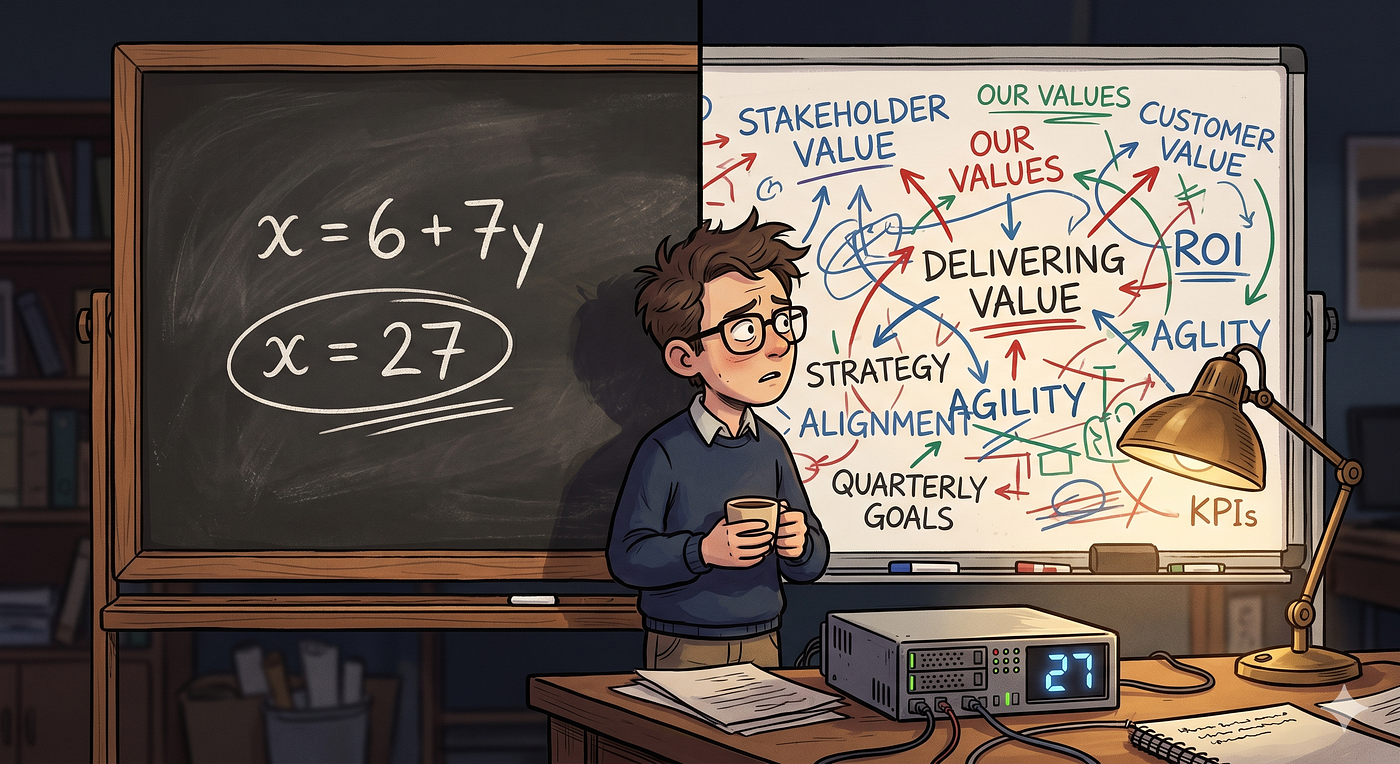
Rebuilding Intuition on Purpose
How to Grow the Quiet Skill Back, One Small Choice at a Time
Rebuilding Intuition on Purpose
How to Grow the Quiet Skill Back, One Small Choice at a Time
A small note before we begin.
This article talks about practices. That word can sound like a to-do list, and I want to be clear that it is not one. Nothing here is meant to be picked up and done. Nothing here should feel like an assignment. The research behind these ideas is real, and the ideas themselves are worth considering, but whether any of them belong in our lives is entirely ours to decide.
I have shared this the way I would talk about it with a friend on a long walk: sharing what I have found interesting, naming what seems to matter, and leaving plenty of space for the other person to say, “Hmm, I’m not sure.” That is the mood I am aiming for. Not a guide. A shared noticing.
Read it slowly or skim it. Agree with some of it and ignore the rest. Use none of it, if that feels right. The article has done its work if it gives us something quiet to think about, and asks nothing more of us than that.
A gardener was once asked what the secret to a healthy garden was. The gardener thought for a moment and said, “I pay attention to what wants to live.” The questioner was disappointed. He had been hoping for a schedule, a chart, a list of the right fertilizers. He wanted a system. She was offering something else: a relationship.
Photo by Edz Norton on Unsplash
This piece is a companion to the last one, where we explored whether we are slowly losing the ability to intuit in a world of AI and social media. The worry, I argued, was real but not fatal. What we lose depends on what we choose. So now comes the harder part. If intuition is a garden, not a product, how do we actually tend it? What does it look like to rebuild a quiet skill on purpose, inside lives that were not designed to protect it?
I want to share what my understanding is, what research suggests, and what I have come to believe after thinking about this for a while. None of it is a secret. All of it is slow.
The Three Ingredients We Already Have
Remember what intuition is made of. It is compressed experience, built from direct contact with a domain, slow attention that lets the mind sift what it has seen, and productive failure that sharpens our sense of what is really going on. Take any expert you admire, and you will find these three things in their past, even if they never use those words.
The good news is that these are not mysterious materials. We all have access to them. The hard news is that modern life has quietly reduced our supply of all three. Feeds have replaced direct contact. Constant small interruptions have replaced slow attention. Productive failure has been softened by tools that solve our problems before we have really wrestled with them.
So rebuilding intuition is less about learning a new skill and more about protecting the old conditions. We do not need to add much. We need to stop subtracting.
Meeting the Problem First
Research on learning has a clear, slightly annoying finding. When we struggle with a problem before we are shown the answer, we learn it more deeply and remember it longer.
Manu Kapur, a learning scientist at ETH Zurich, calls this “productive failure.” His studies show that students who wrestle with a hard problem first, even if they fail, end up understanding the underlying ideas better than students who are given the clean solution straight away. The failure is not wasted. It is what carves the groove that the later insight will run through.
This matters for intuition because intuition grows in the same soil. Every time we hand a problem to AI before we have met it ourselves, we save a little time and lose a little groove. Over the years, the grooves stop forming.
The simple practice here is not to stop using the tools. It is to meet the problem first. Read our own email before asking for a rewrite. Think through our own argument before asking for help sharpening it. Try the code before asking for the fix. We can still use the machine. We use it after we have done our own thinking, not instead of it. The order matters more than we would expect.
Giving the Unconscious Room to Work
Intuition is partly a conscious process and partly not. The quiet part, the part that arrives as a feeling, needs something specific to function well: time. The mind needs unscheduled moments to sift, connect, and compare. Researchers studying creativity and attention have found again and again that insights often appear not while we are working, but shortly after we stop. The shower, the walk, the staring out the window. These are not breaks from thinking. They are where some of the thinking happens.
Attention Restoration Theory, developed by psychologists Stephen and Rachel Kaplan, describes what happens when we spend time in environments that ask nothing of us: a forest, a quiet garden, a long walk. The mind rests from directed effort and enters a softer, more wandering state. Studies have found that this kind of rest improves focus, working memory, and creative problem-solving afterward. One randomized trial of a 40-minute nature walk found clear changes in brain activity associated with reduced cognitive load.
The lesson is not that we all have to go walking in forests. It is that our intuition cannot work well if we never stop taking in input. A mind full of constant, small notifications has no room for quiet connections. A small practice here: a daily twenty-minute stretch of nothing. No podcast, no phone, no task. Walk, sit, stare. It feels wasteful. It is the opposite.
Spending Time in Real Rooms
The most underrated rebuilding practice is also the simplest. Spend more time with real people, in real places, doing real things. Our social intuition (the gut sense that reads a room, notices a mood, and distinguishes a forced smile from an honest one) is built from thousands of hours of face-to-face contact. It cannot be grown on a screen, because faces on a screen are cropped, edited, performed, and delayed. The signal is thinner.
I am not romanticizing the offline world. Real rooms are awkward. People talk too long. The coffee is never quite right. But something happens in those rooms that does not happen online. Our body is present. Our peripheral vision is working. Our unconscious mind is picking up micro-expressions, smells, pauses, tones, and small movements. These are the raw materials that make up social intuition. We cannot download them.
The same holds for physical skills and domain expertise. If we want a good gut feeling about cooking, we have to cook many real meals, not just watch many cooking videos. If we want a good gut feeling about people at work, we have to sit in real meetings with them, not just read their messages. The body is part of the instrument.
Training the Gut With Feedback
There is a catch, though, and it is important to be honest about it. Intuition is not always right. It works beautifully in domains where we have had extensive direct experience and clear feedback. It performs poorly in domains where feedback is rare, delayed, or distorted.
Gary Klein, who studied firefighters and emergency staff, and Daniel Kahneman, who studied how often our gut misleads us, once sat down together to see where they actually disagreed. Their joint answer was useful. Intuition can be trusted when two conditions are met: the environment is regular enough to have patterns to learn, and the person has had enough opportunities to learn those patterns through feedback. Firefighters meet both. Stock pickers often do not. Social media pundits rarely do.
So rebuilding intuition includes a kind of honesty. We should ask where our gut is actually well-trained and where it is only loud. The gut that knows a friend is sad is probably reliable. The gut that has strong feelings about a stranger on the internet, based on a twelve-second clip, probably is not. Calibrating is part of the work.
A useful small practice: write down a gut prediction, then check later. Over time, we learn which of our quiet signals are earned and which are just noise we’ve borrowed.
Being Bored on Purpose
Boredom is one of the most useful states the human mind can enter, and we have almost eliminated it from our lives. Any spare second gets filled with a screen. Any quiet moment gets interrupted. The waiting room, the queue, the walk to the shop. These used to be small boredom retreats. Now they are full.
The problem is that boredom is where a particular kind of thinking happens. It is the state in which the mind wanders, connects unrelated ideas, and lets old memories drift to the surface. A large body of research on mind-wandering suggests that this apparently lazy state is where creative insight often forms. Our intuition is quietly nourished by it.
Letting ourselves be bored is a discipline now. It requires actively putting the phone away, not just waiting for a moment when there is nothing else to check. The practice is small. Keep our hands empty sometimes. Let the silence be silent.
Practicing in a Real Domain
If there is one piece of advice the research on expertise agrees on, it is this: pick something real, and practice it for a long time. Anders Ericsson, the psychologist who spent decades studying expert performers, found that great skill does not come from general exposure. It comes from focused, feedback-rich practice in a specific domain, sustained over years. There is no such thing as a general intuition expert. There are people whose intuition is deeply trained in chess, medicine, cooking, raising children, reading markets, or writing sentences.
So one of the best ways to rebuild intuition is to pick a domain we actually care about and commit to it. Not to get famous at it. To go deep. Play the instrument badly for a year. Cook the same recipe until we no longer need it. Write every week. Spend real time with the people we love and pay attention to what shifts in them. Depth somewhere is better than surface everywhere.
Interestingly, this is also the best defense against AI hollowing out our thinking. A person with deep domain knowledge can use AI as a powerful assistant because they can tell when it is right and when it is bluffing. A person without any deep domain is at the tool’s mercy.
Listening to the Quieter Voice
Finally, the most subtle practice, and perhaps the most important. Intuition speaks quietly. It rarely shouts. Confident voices on screens, confident answers from AI, confident pronouncements from the feed: all of these are louder than our gut will ever be. If we always take the loudest voice as the truest, we slowly train ourselves to ignore the one inside.
Rebuilding intuition includes a willingness to sometimes sit with a feeling we cannot yet explain. To say, “I’m not sure why, but something is off here,” and not immediately override that with what someone more confident says. This is not anti-intellectualism. It is the opposite. It is taking seriously the part of our mind that has been quietly integrating information we cannot consciously access.
The quiet voice is worth protecting not because it is always right, but because it is ours, and because it gets quieter the less we listen.
A Final Thought
We started this piece with a gardener who paid attention to what he wanted to live. That feels like the right ending, too. Rebuilding intuition is not a productivity project. It is closer to tending something alive. We give it the three things it needs (direct contact, slow attention, and real failure), and we try not to keep pulling it up by the roots to check if it is growing.
The reward, if we are patient, is a mind that knows some things without being told. A gut that catches a problem before it becomes a disaster. A quiet voice that is right often enough to be worth listening to. In a world full of noise, that is not a small thing. That is most of what wisdom is.
What is the one small practice we could start this week? Meet the problem before the machine does? A twenty-minute walk with no phone? A real conversation with a real person about something that actually matters? Any one of them, done regularly, is enough. The garden does not need all our time. It needs some of it, on purpose.
메타데이터
- post_id
- 2e5064ea2f93
- slug
- rebuilding-intuition-on-purpose-2e5064ea2f93
- url
- https://medium.com/@varada/rebuilding-intuition-on-purpose-2e5064ea2f93
- canonical_url
- https://medium.com/@varada/rebuilding-intuition-on-purpose-2e5064ea2f93
- author_url
- https://medium.com/@varada
- status
- ok
- fetched_at
- 2026-06-12 07:40:50