Waiting for Fitch: A French Tragedy in Three Acts
I built my career on precision — AI algorithms and property valuations, worlds where mathematics reigns supreme and wishful thinking dies…
Waiting for Fitch: A French Tragedy in Three Acts

I built my career on precision — AI algorithms and property valuations, worlds where mathematics reigns supreme and wishful thinking dies on contact with reality. But I am French, and my government has just fallen. This time, I cannot look away.
Act I: The Accumulation
What compels me to write is not the political theatre in Paris, but the inexorable logic of compound interest and the terrible poetry of historical repetition. In days, perhaps hours, Fitch will decide whether to finally tell the truth about France’s AA credit rating — a fiction so brazen it insults the intelligence of anyone who can read a balance sheet.
Consider the absurdity: France extracts more tax revenue from its citizens than almost any nation on Earth, yet the state remains a perpetual beggar, running deficits as if borrowing were breathing. We have perfected the art of financial alchemy in reverse — turning the gold of our citizens’ labor into the lead of sovereign debt. Growth hovers at zero like a flatlined patient the doctors refuse to pronounce dead.
As former French Finance Minister Michel Sapin admitted in 2013: “Il est vrai que la France vit au-dessus de ses moyens depuis 1974” — “It is true that France has been living beyond its means since 1974.” Half a century of delusion, officially acknowledged, yet nothing changed.
History does not repeat, but it rhymes with vicious precision. In 1797, Revolutionary France declared the “Banqueroute des Deux-Tiers” — the Bankruptcy of the Two-Thirds — erasing its debts with the stroke of a pen after years of delusional spending. The revolutionaries called it liberation. The world called it default. That was the last time France formally admitted it could not pay its bills.
Today, the same disease returns in designer clothing. A bloated state that confuses spending with governance, politicians who mistake debt for wealth, and a system so addicted to borrowing that withdrawal would mean death. The numbers whisper what everyone fears to say aloud: This cannot continue.
Even Jacques Attali, Macron’s own mentor, warned in 2010: “La dette publique est un danger mortel pour les générations futures” — “Public debt is a mortal danger for future generations.” The student clearly ignored the teacher.
Act II: The Reckoning
If Fitch maintains the charade, refusing the downgrade for the second time, they become complicit in the lie. Trust in rating agencies — already threadbare since 2008 — would unravel completely. Markets would price in not just France’s weakness, but the corruption of the very institutions meant to measure it.
But if honesty prevails and France tumbles to A, we enter uncharted waters. Picture the mechanical brutality of what follows: sovereign wealth funds and pension systems, bound by their mandates like sailors to the mast, forced to jettison French bonds into a buyers’ desert. Imagine trying to sell the Louvre’s entire collection at auction, tomorrow, for cash. The market depth simply does not exist. France would discover that when you’re too big to fail, you’re also too big to save. The IMF’s coffers would be a teaspoon before an ocean. The ECB, already stretched like canvas over a breaking frame, cannot print reality away forever.
This would not be another sovereign crisis to file between Greece and Argentina. This would be the second heart of Europe suffering cardiac arrest, with no surgeon in the operating theatre.
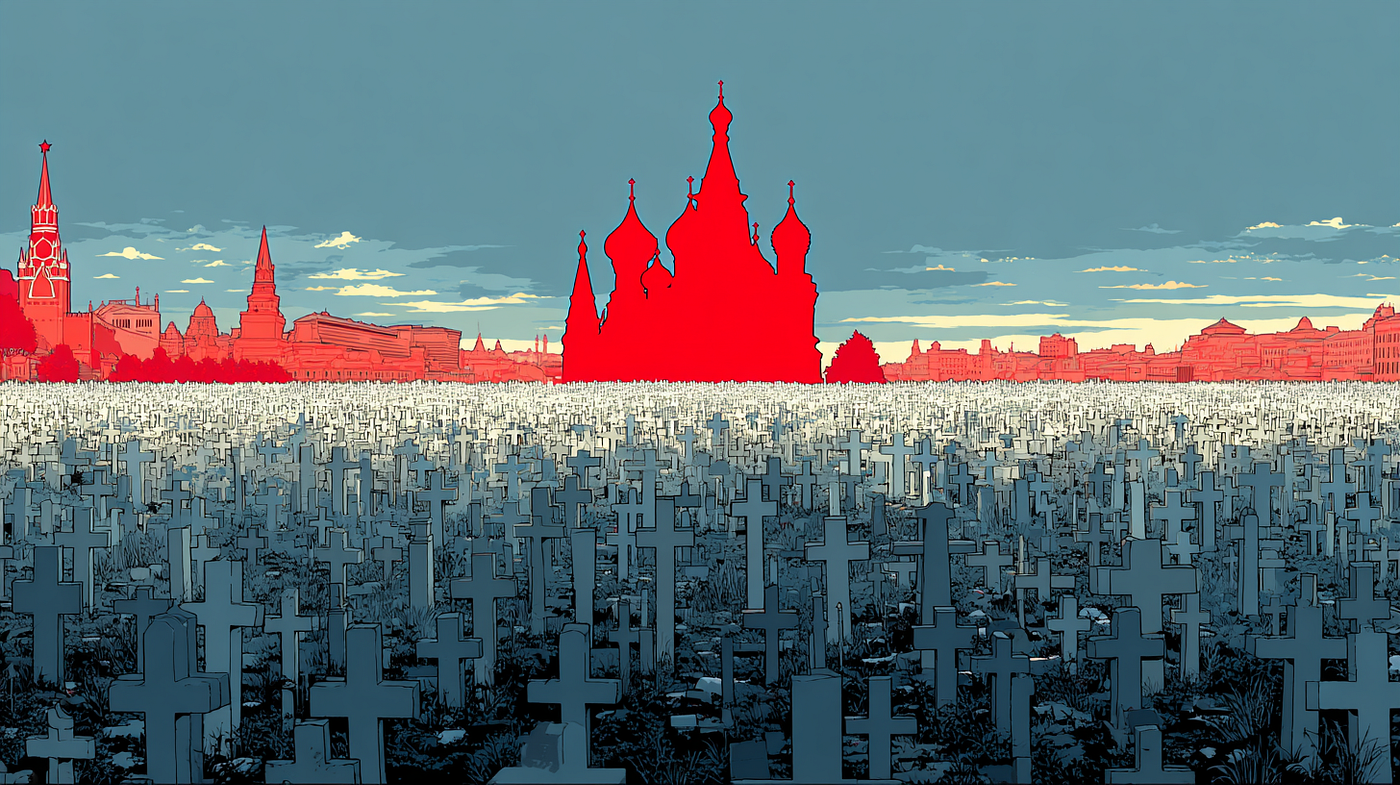
The French state, like Hemingway’s bankrupt, approached this moment in two ways: gradually, then suddenly. The gradualism is over. In 1797, France’s default merely shook Europe’s foundations. In 2025, with financial systems interconnected like neural networks, with derivatives upon derivatives creating chains of consequence no one fully maps, the collapse could bury the entire cathedral.
Act III: The Desperation
But here’s where economics becomes tragedy: Emmanuel Macron sits in the Élysée with 15% approval, a dead man walking who refuses to lie down. He authored this disaster with policies that spent tomorrow to buy yesterday’s peace. Yet he will not resign. Power, once tasted, becomes more addictive than any debt.
Remember what he said in 2017, drunk on his own destiny: “Je suis votre égal… En même temps, je ne suis pas tout à fait comme vous, parce que j’ai été élu par vous” — “I am your equal… At the same time, I am not quite like you, because I was elected by you.” The hubris was there from the beginning. Now, with his legitimacy evaporated, only the hubris remains.
And this is where my blood runs cold. Leaders without legitimacy reach for legitimacy’s last refuge: external crisis. With his domestic authority evaporated and his economic miracle revealed as mirage, Macron has one card left — the Ukraine war. Not as peacemaker, but as protagonist. A grand gesture, a military escalation, anything to transform himself from failed president to wartime leader.
As Charles de Gaulle once observed: “Les hommes politiques ne croient jamais qu’ils ont échoué; ils croient toujours qu’on les a trahis” — “Politicians never believe they have failed; they always believe they have been betrayed.” Macron, unable to accept his failure, may drag us all into his search for vindication.
History teaches us that bankrupt nations led by desperate men do not go quietly into receivership. They go loudly, violently, taking others with them. We stand now at the intersection of fiscal mathematics and political psychology, where compound interest meets compound delusion.
Epilogue
The numbers never lie. They whisper, then speak, then scream. Right now, they are screaming in French, but soon the whole world will understand the language.
France hasn’t just lost a government. It may have lost its last chance to avoid becoming the trigger for something irreversible. And its president, rather than accepting the verdict of arithmetic, may choose to flip the board entirely.
Europe has entered its most dangerous passage since 1939. But this time, the threat comes not from ideology or conquest, but from the simple, brutal truth that debts must be paid — in currency, in sovereignty, or in blood.
The curtain is rising. We are all, whether we know it or not, waiting for Fitch.
메타데이터
- post_id
- 2e6d70f0d139
- slug
- waiting-for-fitch-a-french-tragedy-in-three-acts-2e6d70f0d139
- url
- https://medium.com/@JoachimBertot/waiting-for-fitch-a-french-tragedy-in-three-acts-2e6d70f0d139
- canonical_url
- https://medium.com/@JoachimBertot/waiting-for-fitch-a-french-tragedy-in-three-acts-2e6d70f0d139
- author_url
- https://medium.com/@JoachimBertot
- status
- ok
- fetched_at
- 2026-06-24 13:29:15