Creative Block Solutions: A Designer’s Real-World Guide to Getting Unstuck
I am human and not immune to creative blocks
Creative Block Solutions: A Designer’s Real-World Guide to Getting Unstuck
I am human and not immune to creative blocks

Creative Block Isn’t the Enemy
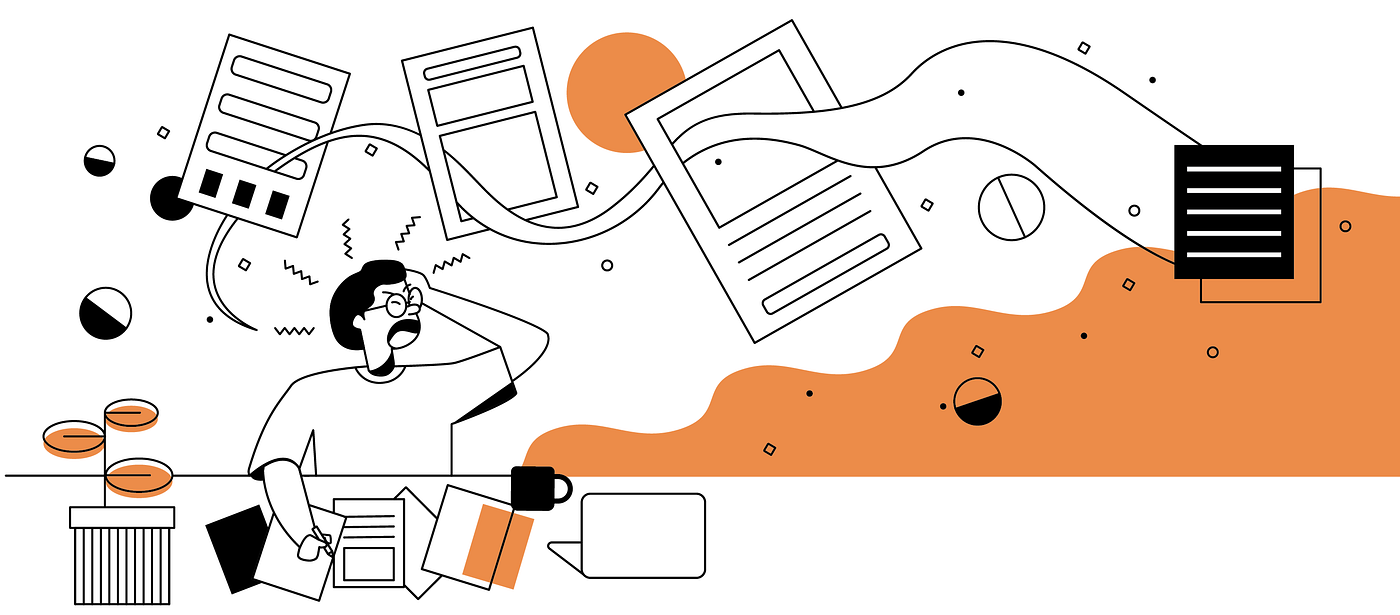
I know this feeling. I sit down to design and everything’s wrong. The colours feel flat. My sketches look generic. I can’t explain why, they just do. And then the voice: Have I actually lost it? Was I ever good enough? Is this where I finally get exposed as a fraud?
I’ve been there more times than I’d like to admit. Six years in the creative industry across three different roles, and I still find myself staring at a blank canvas, waiting for my brain to cooperate. I used to think it meant I’d lost my creativity, but it didn’t. Every creative person I know has been there. We sip our coffee or matcha, hoping the next sip will somehow unlock the idea we’ve been chasing. It rarely does. The cursor blinks, the page stays empty and somehow, every idea feels wrong before it even has a chance to exist.
Here’s what I’ve learned: the creative block isn’t what you think it is and the way most people try to fix it actually makes it worse.
Creative Block Is a Signal, Not a Failure
A lot of us experience creative blocks, but what most of us don’t realise is that a creative block is a signal, not a disease.
When I say ‘block,’ I mean this: you want to create, but the moment you sit down to work, nothing flows. Everything you produce feels wrong before you’ve even given it a chance. As a designer, that feeling hits harder because the design is visible. Every colours, layout and decision. Everyone will see if your work is off. It’s paralysis mixed with self-doubt. That pressure is real.
Over time, I’ve learned that a block isn’t a disease, it’s a signal. It’s your mind raising its hand, quietly asking for your attention.
So instead of asking: ‘How do I power through this?’ The real question is: ‘What is this block asking me to understand?’
What My Creative Block Is Actually Telling Me
From my experience and from talking to dozens of creatives stuck in the same place, creative blocks almost always stem from one (or more) of these four things:
Fear of being average, derivative or judged. I’ve seen what great design looks like. For years, I was terrified mine wasn’t good enough. That gap between my taste and my current ability felt crushing. Every sketch felt derivative. Every palette felt uninspired. Not because I lacked skill, but because I’d set impossible standards based on the best work I’d ever seen.
Burnout. My body and brain were exhausted, screaming for rest! I’d pushed too hard for too long. My mind was empty because there was nothing left to pour out. I remember one week when I’d worked eighteen-hour days and everything I produced was mediocre. The solution isn’t to work harder.
Perfectionism. I could feel the perfect vision of the work in my head. It’s clear, complete & flawless, but everything I made fell short of that vision. The gap between the perfect image in my mind and what my hands could produce felt unbridgeable. So I stopped trying, ended up making nothing at all.
Lack of input. I was outputting but not inputting. Designing but not consuming, learning or experiencing enough. My well was dry because I’d stopped filling it. I’d spent months creating without reading, without watching others work, without taking in anything new. No wonder everything felt stale.
Once I understood which one (or which combination) was actually happening, I stopped blaming myself. I finally knew what I actually needed.
Three Methods That Actually Work (and Why)
1. Real Rest: Not the Guilt-Ridden Kind
In my early professional days, I viewed rest as a guilt. No output meant I wasn’t trying hard enough. That belief led me into burnout multiple times. I’d work eighteen-hour days. My screen glowed at 1 AM. The designs I made were flat, lifeless things. I’d stare at them and think: “You’re finally exposed! Now, everyone knows!” But I wasn’t incompetent. I was empty, tired even. There was nothing left to pour out.
Now I understand something fundamental: rest isn’t the opposite of productivity. It’s the foundation of it. Your mind can’t absorb new information or generate original ideas when it’s running on fumes. That’s not a weakness, just biology.
What real rest looks like for me is simple: I lie on my bed or in the garden. Phone’s away; no podcasts or ‘productive’ content playing in the background. Just stillness; listening to birds chirping, leaves rustling and the distant hum of traffic. When your mind is quiet, ideas actually surface. They don’t come when you’re forcing them.
If you’re blocked right now, rest isn’t a luxury. It’s work.
2. Walking: When Your Brain Needs to Move
I don’t mean power walks or structured fitness. I mean a simple walking without a destination. Round the park, round the house, wherever. Again, no phone, agenda or timer.
Movement changes how your brain works. Blood flows, rhythm helps ideas surface without forcing them and you step away from the paralysis of sitting at your desk. Some of my clearest design solutions have come while walking. Nowhere near my computer, not thinking about the problem at all. That’s the point.
Walking gives your conscious mind something simple activity to do, while your subconscious works on the real problem.
3. Consuming Without Guilt: Watch How Others Create
When I’m blocked, it feels defeated; like that heavy, dark cloud weighing on your head.
I watch artists and designers-alike on YouTube, TikTok or Instagram reels where they talk about being blocked. Illustrators admit they spent two weeks on one sketch. Art directors discuss the moment their brain almost exploded. And something shifts when I hear someone I admire say, ‘I felt like a failure too.’ My shoulders drop. Then, I realise I’m not the only one.
This practice serves two purposes: first, it reminds me that everyone, literally everyone faces blocks. Second, I’m consuming new perspectives, new approaches and new ways of thinking. I’m refilling my well.
But I’ve found the hard way that intention matters. Consuming should feel nourishing, not like procrastination. When I’m watching to learn or seeking permission to struggle, that’s different from watching to avoid working. I’ve caught myself doing both. The difference is the feeling: one feels like nourishment, the other like escape. I’ve learned to recognise the difference.

How to Actually Listen to Your Creative Block
The shift from fighting my creative block to listening to it changed everything. Here’s what that looks like for me:
When I feel stuck, I’d stop asking, “Why can’t I create?” Instead, I ask myself: “Am I afraid of failing? Do I need rest? Am I overwhelmed by choices? Am I chasing perfection? Have I been stuck in output mode without input?”
My answer always points directly to what I actually need. I’m not broken, my brain is simply giving me feedback. The moment I listen to what it’s telling me, the block shifts. Not because I powered through, but because I finally addressed what was actually happening.
Why This Actually Matters
I create best when it comes from love, not obligation. When I actually want to do the work, not when I have to. In those moments, I enter flow. Ideas come easily. Time disappears. The work matters.
But creative block happens when that relationship breaks. When creating becomes a performance, a pressure, or just another checkbox. My brain rebels, not because I lack talent, but because I’ve lost the reason I started.
The solution isn’t to work harder, which I’ve learned that the hard way. It’s to remember why I started and to be honest about what I actually need to get back there. Sometimes, rest is all I need, a.k.a taking a mindful break.
The Work Is Always There
I remember 11 PM. My room. Sketches everywhere. Seven concepts. All garbage. I was ready to give up. Then my phone buzzed. My favourite designer had posted a reel about resting as part of creating. About being in that playful mode where ideas actually come. I watched it. “Forcing it never works,” she said. And she was right. Force it and it comes out wrong every time.
That’s when it hit me. She was describing exactly what I was doing. I went to bed that night.
The next morning, I rested. I didn’t even touch my computer. On the third day, I took a walk, and halfway around my garden, the solution came so clearly I had to stop and write it down on my wonder notebook. That’s when I understood: the block wasn’t proof I’d failed. It was proof I’d stopped listening to myself.
Please listen to that block you’re feeling right now. It’s trying to tell you something.
And I’ve discovered through my own creative blocks and through talking with creatives stuck in the same place that when you’re ready. Not when you should be, but when you’re actually ready, you’ll feel it. The block will have done its job. It brought you exactly what you needed: clarity about what’s actually missing.
Your block isn’t your enemy. It’s your mind’s way of telling you: “Hey, slow down for a bit. What do I actually need?” And everything shift when you answer it honestly.
What unblocks you? That specific thing that shifts you from frozen to flowing? I’d love to hear it in the comments. Because when you find it — that walk, that rest, that one video that reminds you you’re not alone that becomes your lifeline. And I want to know what yours is.
About the author: I’m a visual designer and an aspiring data analyst by trade and an emerging writer exploring creativity, resilience and cultural meaning through words and visuals. I don’t have all the answers, but I hope that what I share helps you on your journey, because I’ve learned a lot from personal experience and 6 years in the industry.
메타데이터
- post_id
- 2e7e5acccce3
- slug
- medium-com-aylingpudarno-creative-block-guide-2e7e5acccce3
- url
- https://medium.com/@aylingpudarno/medium-com-aylingpudarno-creative-block-guide-2e7e5acccce3
- canonical_url
- https://medium.com/@aylingpudarno/medium-com-aylingpudarno-creative-block-guide-2e7e5acccce3
- author_url
- https://medium.com/@aylingpudarno
- status
- ok
- fetched_at
- 2026-08-29 21:25:57