[Interpretive Experiment] The Samurai Caught in the “White Bear” Trap — Natsume Soseki’s “Ten…
I have created a commentary video for the Second Night of “Ten Nights of Dreams” on YouTube. This is different from the commentary on the…
[Interpretive Experiment] The Samurai Caught in the “White Bear” Trap — Natsume Soseki’s “Ten Nights of Dreams” The Second Night and the “Trap of Intellect”

I have created a commentary video for the Second Night of “Ten Nights of Dreams” on YouTube. This is different from the commentary on the reading video of the Second Night of “Ten Nights of Dreams”.
“I had a dream like this.”
Natsume Soseki’s fantastical short story collection, “Ten Nights of Dreams”. While the First Night was a tranquil story depicting “eternal love,” the “Second Night” is a psychological thriller-like work enveloped in a stinging sense of tension and a frustration bordering on madness. Insulted by a priest as the “scum of humanity,” the samurai is cornered into a situation where he has no choice but to commit seppuku if he does not attain the enlightenment of “Mu” (Nothingness) before the clock strikes next. He sits in Zen meditation risking his life, but ultimately he could not attain enlightenment. Why did he suffer so much and remain unsaved? This time, incorporating perspectives from psychology and philosophy, we will unravel the “trap of intellect” that this samurai fell into and the paradox hidden in the story.
Introduction: The Samurai Caught in the “White Bear” Trap
In psychology, there is a famous phenomenon called the “Ironic Process Theory” (commonly known as the White Bear experiment). When told, “Whatever you do, do not think about a white bear,” the human brain ironically ends up thinking of nothing but white bears. The samurai, the protagonist of the Second Night, was caught in exactly this psychological trap. The more desperately he tries to attain “Mu” (thinking of nothing), the more his mind becomes filled with the intense consciousness of having to become “Mu.”
Perspective 1: Why Did the Priest Say “If You Are a Samurai, You Can Attain It”?
Early in the story, the priest throws these words at the samurai: “You are a samurai. If you are a samurai, there is no reason why you cannot attain enlightenment.” Originally, the existence of a “samurai” always lives side by side with death, and possesses the resolve to instantly discard any attachment (ego) to their own life when the time comes. If a samurai is capable of severing his attachment to life and emptying himself, he should be the closest to the Zen state of “Mu” that involves letting go of the self. However, what about this protagonist? While sitting in Zen meditation, he shouts in his heart:
“I will attain enlightenment. I must take that kettle-head (the priest’s head).” “I am a samurai.”
Attaining enlightenment in Zen means letting go of the “self” (ego), yet he is attempting to attain it using his “pride as a samurai” and his “desire for revenge against the priest” — the most powerful forms of self-attachment — as his driving force. He was on a treadmill from the very beginning, where the faster he runs, the further he gets from his goal. Perspective 2: What is “Mu”? The Trap of “Zero” Created by High Intellect So, what exactly was the “Mu” that the samurai was supposed to reach? The trap many people fall into here is treating “Mu” as the same as the mathematical “zero.” Humanity’s discovery of “zero” was a highly advanced intellectual function that gave form and concept to “a state of nothingness” in order to recognize it. In other words, the state of recognizing that “there is a zero” is a state in which human reason is operating at full capacity. The samurai, too, used his “high intellect” to create a box called “Mu (zero)” in his head and tried to force himself into it, thinking, “Alright, there is nothing right now,” or “I am maintaining a state of zero.” However, at the very moment he is observing “zero” in his head like that, the intense consciousness of the “self observing it” already exists there. True “Mu” is a state where even the concept of zero, and the self observing it, have vanished. He tried to forcefully hack the “Zen state of Mu,” which requires letting go of intellect, by using humanity’s powerful weapons of “intellect and reason.” Precisely because he tried to be smart and logical, he entangled himself in an absolutely unsolvable paradox.
Perspective 3: The “Western Clock” Cornering the Samurai
Furthermore, he did not have the “grace period (time)” to reclaim himself. The man in the First Night waited a hundred years within the relaxed cycle of the great nature of the “sun.” However, what rules the samurai in the Second Night is the “table clock” chiming “Ding” in the adjoining room. This clock can be interpreted as a symbol of the “Western rationality” and the “speed of modernization” that flooded into Japan like a surging wave during the Meiji and Taisho periods. The “samurai,” who once lived within the time of nature, is cornered, frustrated, and ultimately destroys himself by the mechanical time carved out in minutes and seconds. Soseki’s own suffering, his nerves frayed by the waves of modernization, may be vividly projected into this figure of a samurai who breaks down trying to conquer Eastern spirituality (Zen Mu) with high intellect (Western rationalism).
Conclusion: The Courage to Abandon the Purpose
During Zen meditation, the samurai gets angry, thinking, “Even though I said Mu, there was still the smell of incense.” At this moment, it is precisely because he resists, trying to “erase the smell of the incense,” that ripples form in his mind. If there was a smell, he should have simply accepted it as “Ah, there is the smell of incense” and let it flow away. The moment he let go of all purposes like “killing the priest” and his “honor as a samurai,” simply accepting himself exactly as he was, he could have escaped the White Bear trap and attained true Mu. However, mercilessly, the clock chimes, and the samurai reaches for his dagger. It is the tragic end of a man who chased the shadow of “Mu,” a shadow that vanishes the moment it is put into words. This sounds almost like a sharp warning from Soseki to us, who suffer in modern society from inflated egos, constantly rushed with messages like “don’t waste time” and “be someone.”
(Afterword / Notice)
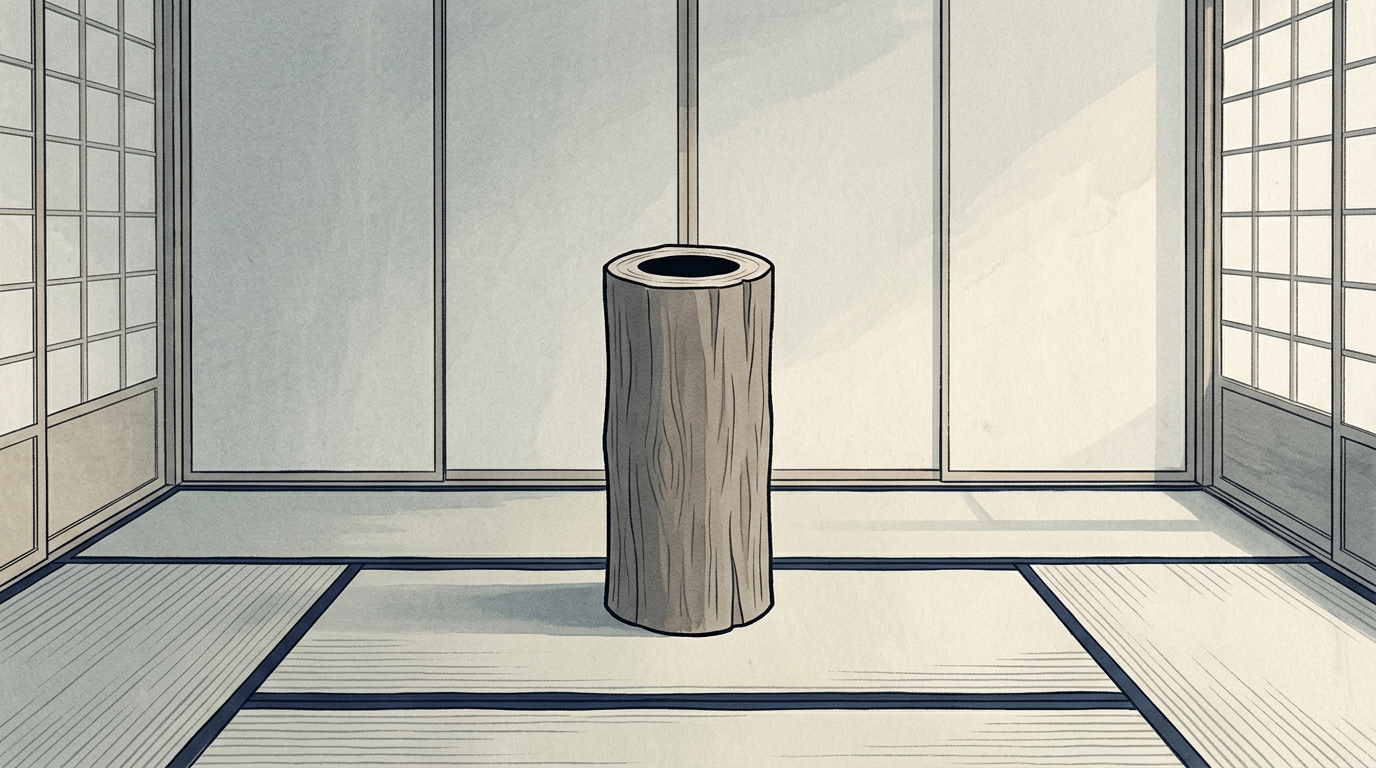
The commentary video that formed the basis of this analysis is available on YouTube. Please experience the samurai’s extreme psychological state alongside Taisho-era watercolor-style illustrations and the sound of a clock fueling impatience. You can enjoy it with readings and commentaries in both Japanese and English. [Link to YouTube Video]
메타데이터
- post_id
- 2e8153bc4dd9
- slug
- interpretive-experiment-the-samurai-caught-in-the-white-bear-trap-natsume-sosekis-ten-2e8153bc4dd9
- url
- https://medium.com/@jacopass/interpretive-experiment-the-samurai-caught-in-the-white-bear-trap-natsume-sosekis-ten-2e8153bc4dd9
- canonical_url
- https://medium.com/@jacopass/interpretive-experiment-the-samurai-caught-in-the-white-bear-trap-natsume-sosekis-ten-2e8153bc4dd9
- author_url
- https://medium.com/@jacopass
- status
- ok
- fetched_at
- 2026-06-21 19:25:17