AI-Native Engineering Has a Missing Operating Layer
It is not a bigger context window. It is shared workspace truth for developers, CI pipelines, and AI agents.
AI-Native Engineering Has a Missing Operating Layer
It is not a bigger context window. It is shared workspace truth for developers, CI pipelines, and AI agents.
AI did not make software systems complicated.
It made the complexity harder to ignore.
Before AI agents entered the workflow, teams already lived with scattered system knowledge:
- part of it in the repo
- part of it in CI
- part of it in deployment rules
- part of it in dashboards
- part of it in senior engineers’ memory
- part of it in documents nobody fully trusts
Humans learned to compensate.
They asked around.
They remembered old incidents.
They knew which README was outdated.
They knew that one service still depended on an endpoint that looked safe to delete.
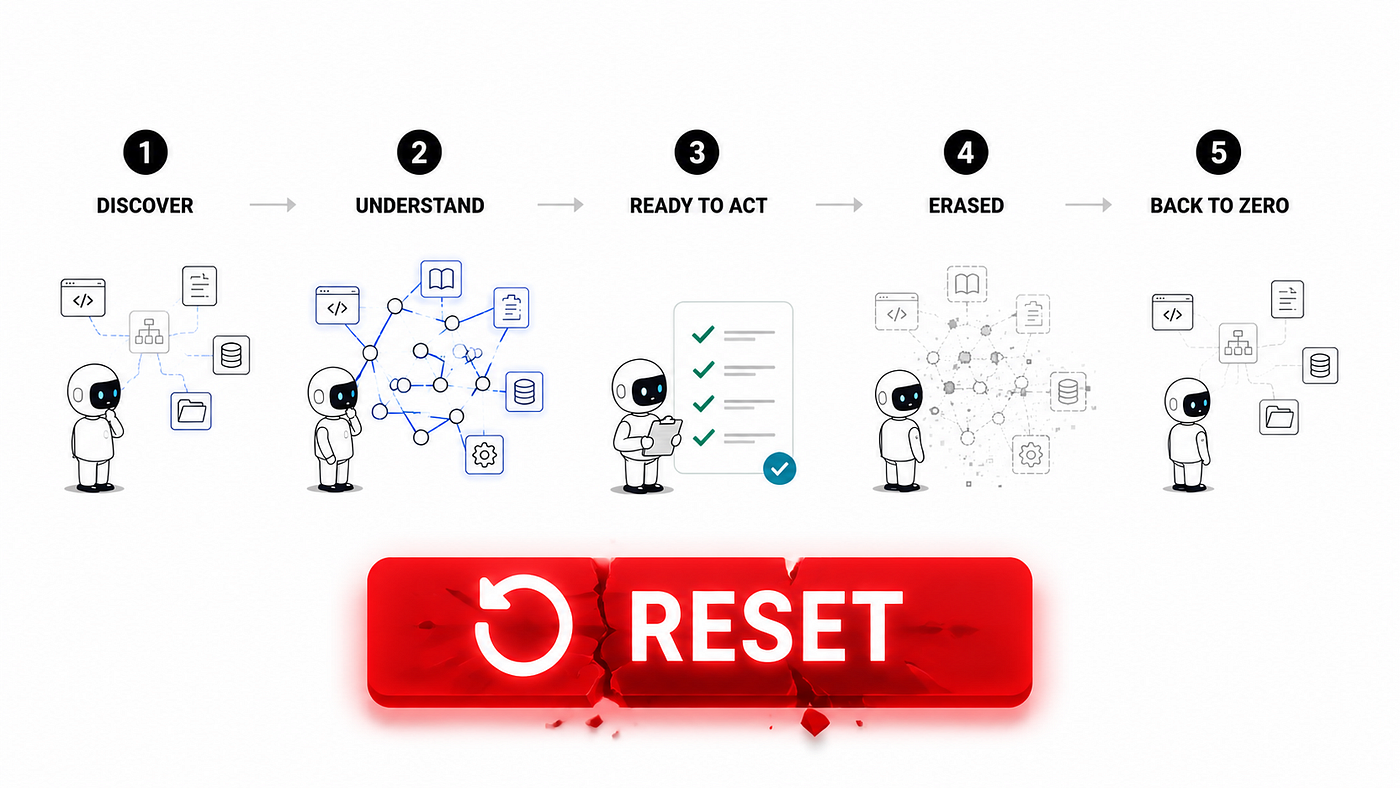
AI agents do not have that social memory.
They see files.
They infer.
They act.
And that is exactly why software teams need a new operating layer.
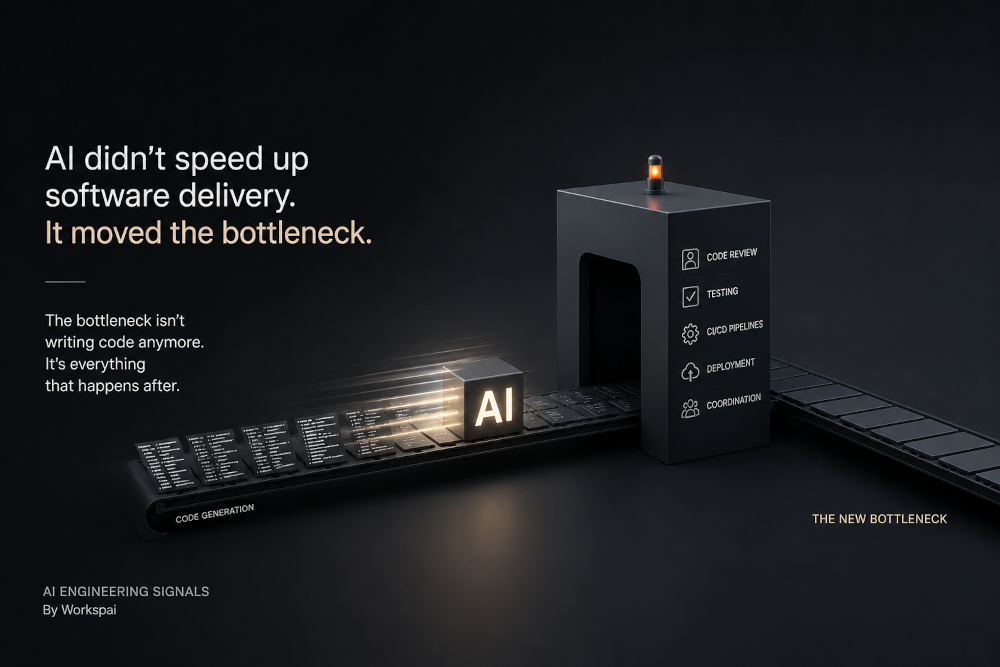
The real bottleneck is not typing code
AI has made writing code cheaper.
But writing code was not the only expensive part of software delivery.
The expensive part is often everything around the code:
- understanding what the system currently is
- knowing which projects are affected
- knowing which checks are stale
- knowing which evidence proves readiness
- knowing which command is safe to run
- knowing what an agent should not assume
When that knowledge is not encoded, the organization pays for it repeatedly.
Every review.
Every release.
Every onboarding.
Every incident.
Every AI-assisted change.
This is the hidden tax: context reconstruction.
A workspace is more than a repository
A repository is a storage unit.
A workspace is an operating environment.
The difference matters.
A repository can answer:
What files exist?
A workspace should answer:
What system are we operating on?
That includes boundaries, runtime assumptions, generated artifacts, release gates, evidence, and the current state of the work.
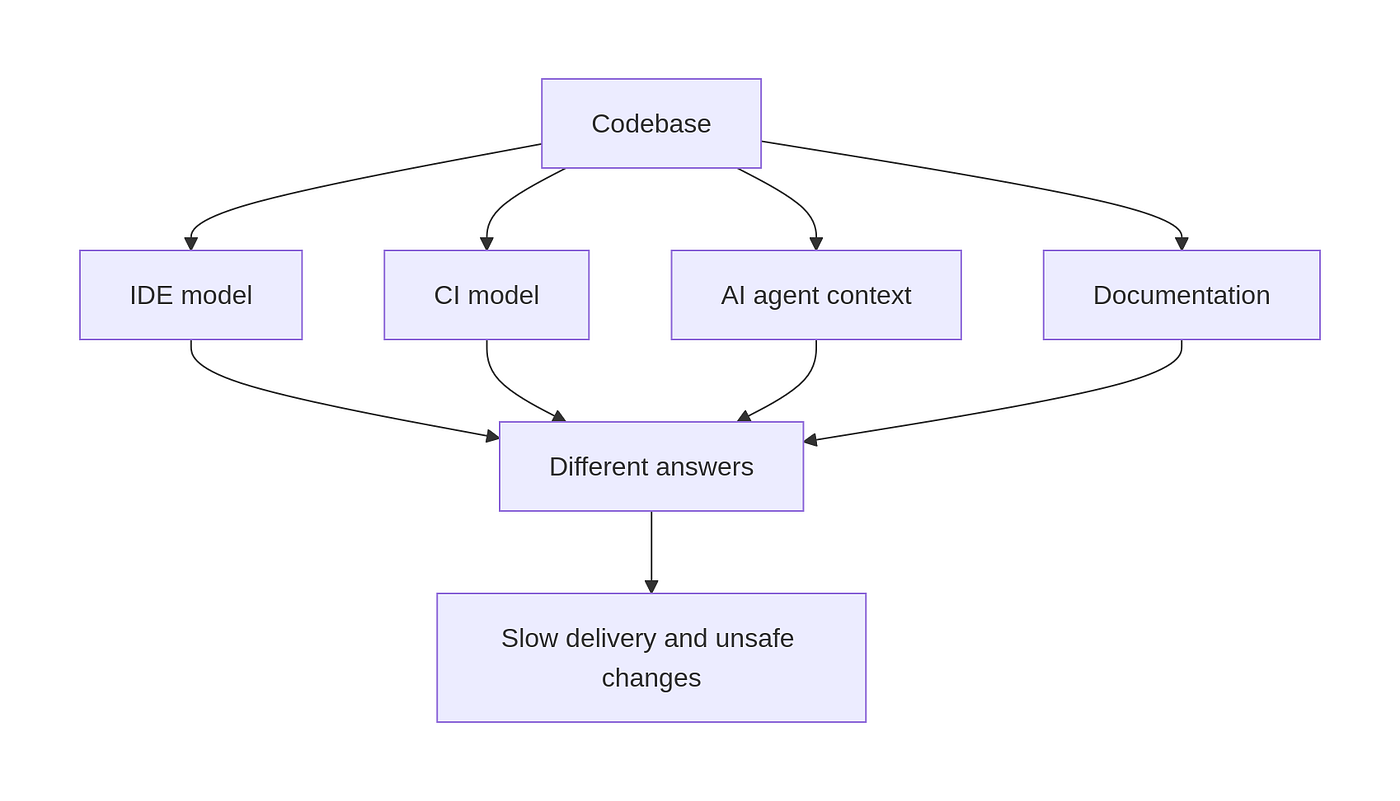
If this layer is missing, every tool invents its own partial model.
The IDE has one reality.
CI has another.
Docs have another.
The AI agent has a prompt-shaped version of the repo.
Leadership has a release status.
Those views are not automatically wrong.
They are incomplete in different ways.
That is where drift begins.
Workspace Intelligence as an operating layer
Workspace Intelligence is the missing operating layer between codebases and AI agents.
It is not another assistant.
It is not a bigger prompt.
It is not a prettier dashboard.
It is a shared, evidence-backed model of the software system that humans, CI, IDEs, and agents can all consume.
The goal is simple:
One workspace.
One truth.
Humans and AI aligned.
That means the workspace can expose:
- what exists
- what changed
- what is affected
- what is stale
- what is safe
- what is blocked
- what evidence proves readiness
- what an agent is allowed to assume
This changes the AI workflow.
The agent no longer starts from raw files and guesses.
It starts from a workspace model, evidence, impact, and verification expectations.
Why this matters economically
Most AI ROI discussions focus on speed of code generation.
That is incomplete.
The better question is:
How much coordination cost can we remove from software delivery?
Workspace Intelligence reduces the repeated cost of:
- senior engineers restating architectural memory
- reviewers asking for proof that should already exist
- release meetings that recreate readiness from scratch
- agents making different assumptions about the same project
- teams maintaining one-off project standards
- onboarding that depends on finding the right person
The savings do not come from pretending complexity disappeared.
They come from making complexity visible, shared, and verifiable.
That is the kind of infrastructure AI-native teams will need.
What RapidKit and Workspai are building
RapidKit is the deterministic CLI layer.
Workspai is the operational cockpit inside VS Code.
The artifacts on disk become the shared truth.
Agents edit files.
RapidKit explains the workspace.
Workspai shows and governs that understanding.
This distinction matters.
Agents are good at acting.
But before action, teams need grounding:
- current workspace state
- evidence
- boundaries
- safe commands
- blocked gates
- impact surface
- verification expectations
Workspai brings that into the place where developers already make decisions: the IDE.
The developer does not have to leave the workspace to understand the workspace.
The architecture behind the idea
The architecture is built around a few core concepts:
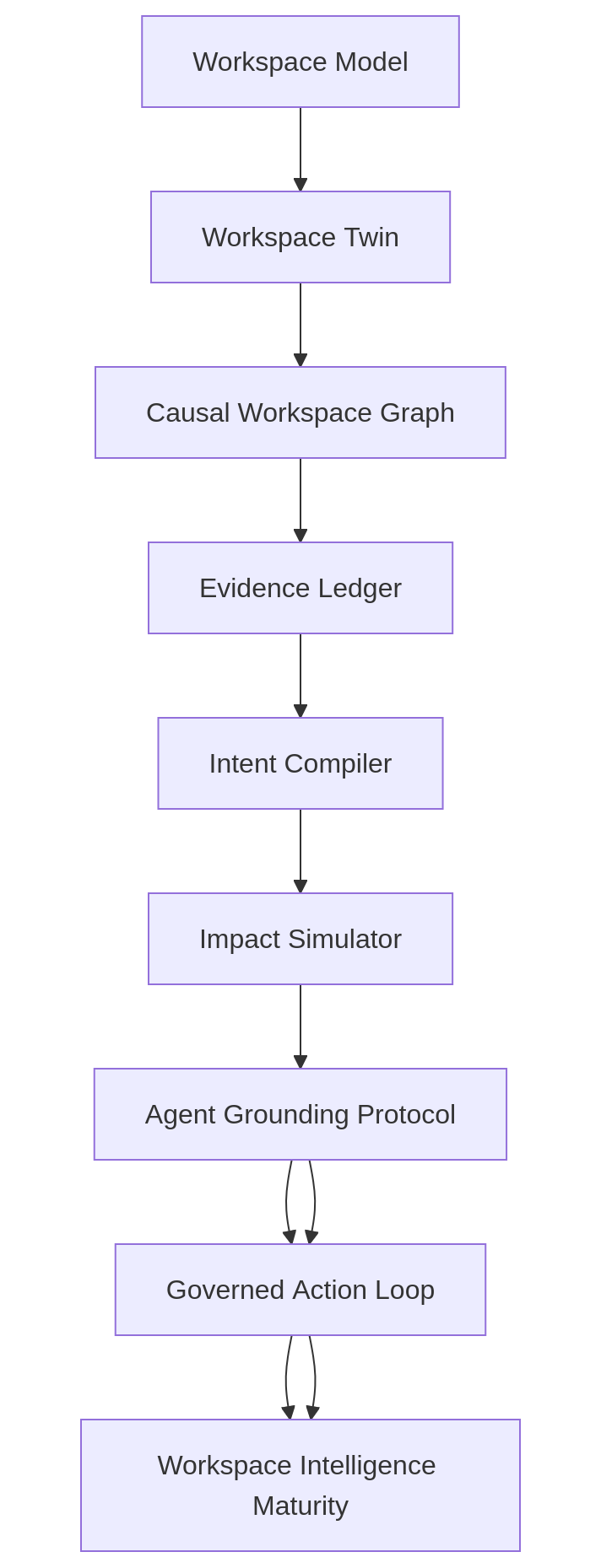
Plain English:
- model what exists
- track what is stale, blocked, safe, or ready
- understand what changes affect
- record evidence
- compile repeatable workflows
- simulate impact before action
- ground agents before mutation
- govern the loop from intent to verification
This is not about making one agent smarter.
It is about making the workspace legible to every agent.
The practical migration path
The most important part is adoption.
Teams should not need to rewrite their systems to benefit from Workspace Intelligence.
Existing projects should be able to move into the model.
That is why rapidkit adopt matters.
npm i -g rapidkitrapidkit create workspace platform
cd platformrapidkit adopt /path/to/existing-api --json
rapidkit workspace model --json --write
rapidkit workspace context --for-agent --json
rapidkit workspace verify --jsonThe output becomes a workspace-native layer your team and agents can use.
Not a one-off prompt.
Not tribal memory.
Not a disconnected report.
A shared operating surface.
The shift
AI agents understand files.
Workspace Intelligence helps them understand systems.
That is the shift I think matters most.
Not just faster code.
Faster shared understanding.
Faster safe change.
Faster standardization.
Faster scale.
The future of AI-assisted engineering will not only depend on better models.
It will depend on workspaces that can explain themselves.
메타데이터
- post_id
- 2e8d607d5bc9
- slug
- ai-native-engineering-has-a-missing-operating-layer-2e8d607d5bc9
- url
- https://medium.com/workspai/ai-native-engineering-has-a-missing-operating-layer-2e8d607d5bc9
- canonical_url
- https://medium.com/workspai/ai-native-engineering-has-a-missing-operating-layer-2e8d607d5bc9
- author_url
- https://medium.com/@rapidkit
- status
- ok
- fetched_at
- 2026-06-26 06:47:43