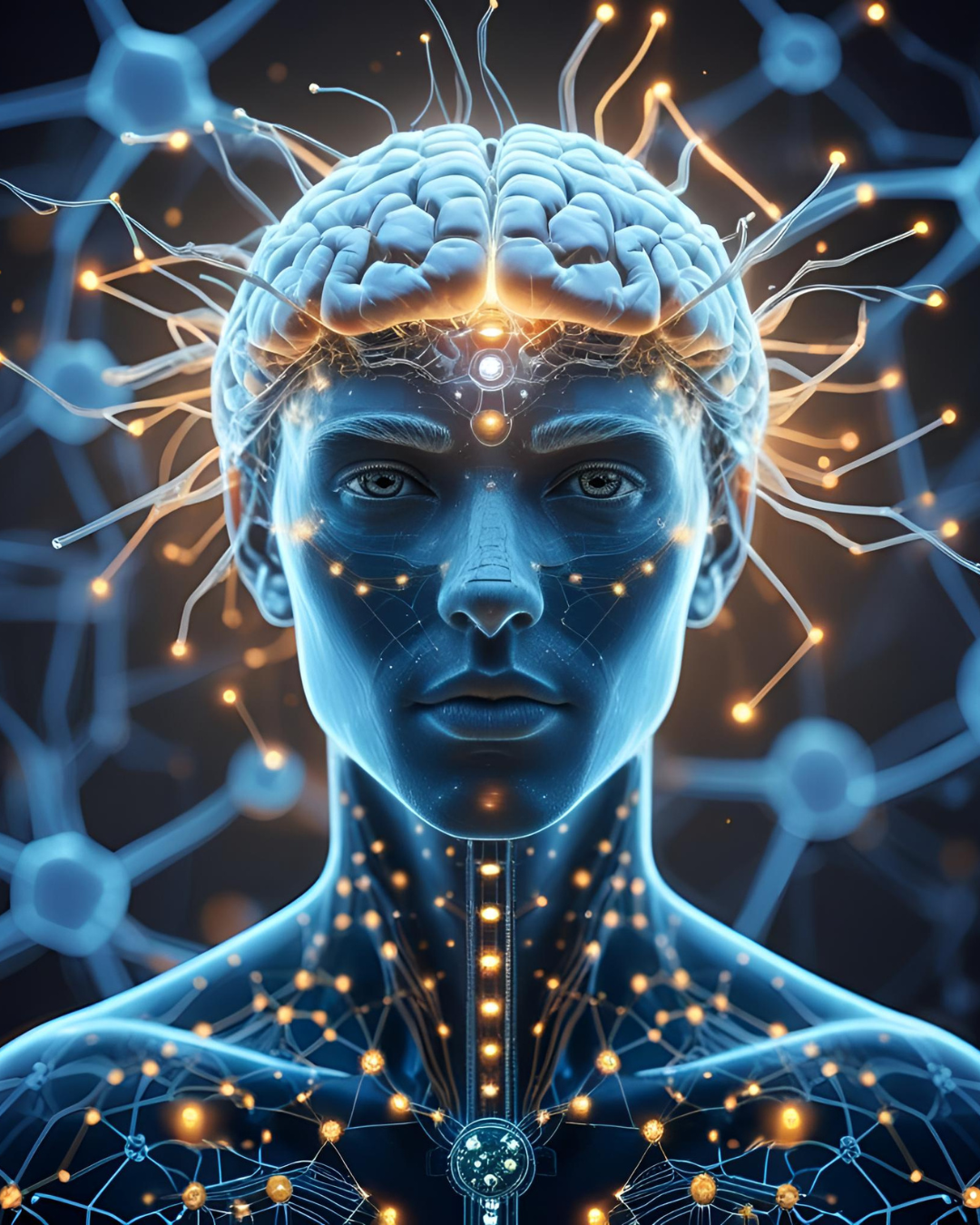
AI-Powered Scientific Discovery: Accelerating the Next Era of Innovation
Artificial Intelligence has already transformed the way we work, communicate, and interact, but perhaps its most profound impact lies ahead…
AI-Powered Scientific Discovery: Accelerating the Next Era of Innovation

Artificial Intelligence has already transformed the way we work, communicate, and interact, but perhaps its most profound impact lies ahead — in the realm of scientific discovery. For centuries, progress in science has relied on human intuition, experimentation, and trial and error. While this has brought us incredible achievements, from antibiotics to space exploration, the pace of discovery has often been slow and constrained by human limitations. Now, with the rise of AI, particularly generative and machine learning models, we are entering a new era where algorithms can accelerate breakthroughs that once took decades into a matter of months or even days.
A Shift in the Scientific Method
Traditionally, the scientific method involves observation, hypothesis generation, experimentation, and validation. This linear process has worked well, but in a data-driven age, it is becoming overwhelmed. Scientific fields like genomics, particle physics, and climate science generate petabytes of data that no human can fully analyze. AI changes the equation by serving as a co-pilot for discovery, capable of detecting hidden patterns, generating hypotheses, and even designing experiments.
AI doesn’t just speed up research — it reshapes how science is done. Instead of humans painstakingly analyzing data, AI can scan millions of potential molecules, predict protein structures, or simulate physical processes that would be impossible to replicate in a lab. The result is not just faster discovery but also the ability to explore areas of science that were once inaccessible.
AlphaFold and the Protein Puzzle
One of the most celebrated examples of AI-powered discovery is DeepMind’s AlphaFold, which solved one of biology’s greatest challenges: predicting protein folding. For decades, scientists struggled to determine how proteins fold into three-dimensional structures, a process essential to understanding disease and drug design. In 2020, AlphaFold achieved this feat with remarkable accuracy, revolutionizing structural biology almost overnight.
This breakthrough illustrates the potential of AI: tackling problems that resisted decades of human effort. Today, AlphaFold’s database covers hundreds of millions of proteins, providing researchers with invaluable tools to accelerate drug discovery, biotechnology, and even agriculture.
Beyond Biology: AI Across the Sciences
While biology often takes the spotlight, AI is reshaping virtually every scientific discipline.
In chemistry, AI models can predict the properties of new compounds, reducing the time needed to design better batteries, catalysts, and materials for clean energy. In physics, AI assists in analyzing data from massive experiments like CERN’s Large Hadron Collider, helping to identify elusive particles and uncover patterns that humans might overlook. In astronomy, AI processes vast amounts of telescope data, spotting new exoplanets or anomalies that could hint at cosmic phenomena.
Even in climate science, AI plays a pivotal role by modeling complex Earth systems, predicting climate patterns, and optimizing renewable energy solutions. These applications highlight a common theme: AI empowers scientists not just to process data but to extract insights that push the boundaries of human knowledge.
The Rise of Generative Science
Generative AI adds another dimension to scientific discovery. Instead of merely analyzing data, generative models can propose entirely new ideas, molecules, or solutions. For example, AI can design new drugs by generating chemical structures that fit specific biological targets. In material science, it can propose novel compounds with properties optimized for strength, flexibility, or conductivity. This ability to “create” rather than simply “analyze” transforms AI into a genuine collaborator in science.
Ethical and Practical Challenges
Of course, AI-powered discovery raises important questions. If an AI proposes a new drug or theory, who gets credit — the scientist or the machine? How do we ensure the models are free of bias or errors that could mislead researchers? There are also concerns about reproducibility: while humans can explain their reasoning step by step, AI often delivers results without transparent justification. This “black box” problem can slow adoption in fields where trust and validation are critical.
There’s also the question of access. Cutting-edge AI tools require enormous computing power, often available only to well-funded labs or corporations. Without careful policy and investment, AI-driven discovery could widen the gap between wealthy and under-resourced scientific communities.
The Future of AI in Science
Despite these challenges, the trajectory is clear: AI will increasingly become a core part of the scientific toolkit. Over the next decade, we can expect AI to play a role in developing personalized medicine tailored to individual genetic profiles, optimizing clean energy technologies, and even guiding humanity’s exploration of space.
The vision is compelling — AI and human scientists working together in symbiosis. AI provides speed, scale, and predictive power, while humans bring creativity, ethics, and intuition. Together, this partnership could unleash a new wave of discoveries that redefine what is possible.
Conclusion
AI-powered scientific discovery represents more than just another technological trend. It is a fundamental shift in how humanity explores the unknown. From proteins to planets, AI is already opening doors that were locked for centuries. While challenges of trust, ethics, and access remain, the potential is too great to ignore.
As we stand on the threshold of this new era, one thing is clear: the scientists of the future will not work alone. They will collaborate with intelligent machines, accelerating progress at a pace that may redefine human history.
메타데이터
- post_id
- 2e9ef5dc39fd
- slug
- ai-powered-scientific-discovery-accelerating-the-next-era-of-innovation-2e9ef5dc39fd
- url
- https://medium.com/@gafowler/ai-powered-scientific-discovery-accelerating-the-next-era-of-innovation-2e9ef5dc39fd
- canonical_url
- https://medium.com/@gafowler/ai-powered-scientific-discovery-accelerating-the-next-era-of-innovation-2e9ef5dc39fd
- author_url
- https://medium.com/@gafowler
- status
- ok
- fetched_at
- 2026-06-09 15:37:30