We Started Wearing Computers to Track Fitness. Somehow They Ended Up Tracking Our Lives.
A deeper look at how wearable technology is changing the way we understand ourselves.
We Started Wearing Computers to Track Fitness. Somehow They Ended Up Tracking Our Lives.
A deeper look at how wearable technology is changing the way we understand ourselves.
How-Wearable-Sensors-Work
A small vibration on the wrist can change the mood of an entire day. A sleep score arrives before breakfast. A stress alert appears during a meeting that felt perfectly normal. A recovery score quietly suggests slowing down even when the calendar says otherwise.
The strange part is how quickly this became normal.
Not long ago, most people trusted their bodies before they trusted data.
You felt tired. You felt energized. You felt overwhelmed. You felt fine.
Now millions of people wake up and ask a device how they slept before asking themselves. That shift feels small.
It isn’t.
It may be one of the most significant changes in our relationship with our bodies in decades.
We Didn’t Just Quantify Fitness. We Quantified Ourselves
Modern life has a habit of turning everything into numbers.
Productivity becomes metrics. Attention becomes analytics. Success becomes dashboards. Performance becomes graphs. Eventually, that mindset reached the body.
At first, wearable technology seemed harmless.
Count a few steps. Track a workout. Close a ring. Move a little more.
But something unexpected happened.
The devices became more intimate than anyone imagined. They stopped measuring exercise and started measuring life itself.
Sleep. Stress. Recovery. Heart rhythms. Energy levels.
The conversation shifted from “How much did you move today?” to something far more personal.
“How are you really doing?”
The Tiny Observer Living on Your Wrist
Most people never think about what happens between the moment they glance at a smartwatch and the moment a score appears.
The process feels effortless. Almost magical.
A heart rate appears. A stress warning arrives. A sleep report lands on the screen.
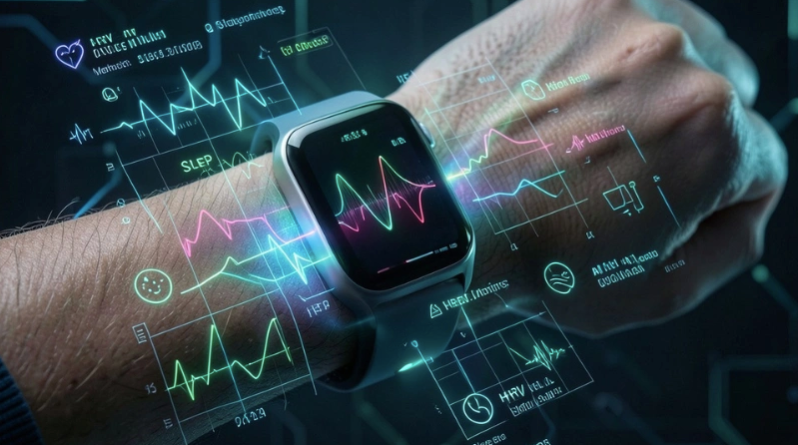
Behind every one of those insights sits a silent network of sensors collecting tiny fragments of information throughout the day.
The body generates signals. The device gathers clues. Software tries to connect the dots.
That’s an important distinction.
Wearables do not understand your health. They interpret patterns.
And increasingly, those interpretations shape decisions about how people work, train, travel, rest, and recover. The technology isn’t replacing self-awareness. It’s becoming another voice in the conversation.
Why That Green Light Matters More Than You Think
Turn over almost any smartwatch and you’ll see it. A tiny green glow.
Most people recognize it instantly. Few understand why it became one of the defining symbols of wearable technology.
The light isn’t looking inside the body. It’s looking for patterns. Minute changes in blood flow beneath the skin. Tiny fluctuations that occur every time the heart beats.
On paper, that sounds technical. In practice, it’s deeply human.
Because people aren’t checking heart rate data out of curiosity about sensors. They’re searching for reassurance. They want to know why they feel exhausted.
Why a workout feels harder than usual. Why stress seems to linger longer than expected.
The sensor measures blood flow. The person searches for meaning. Those are two very different things.
The Rise of the Recovery Economy
For years, fitness culture celebrated effort.
Work harder. Push further. Do more. Then something changed. People became tired.
Not just physically. Emotionally. Digitally. Professionally.
The modern worker lives inside a constant stream of notifications, deadlines, meetings, messages, and expectations.
Many people aren’t looking for another productivity tool. They’re looking for permission to rest.
That helps explain why recovery became one of the fastest-growing areas in wearable technology.
Recovery scores. Readiness scores. Stress scores. Body battery scores.
Different names. Same promise.
An attempt to answer a question many people quietly ask every morning. “Do I have enough energy for today?”

how-wearable-sensors-work
When Sleep Became a Daily Performance Review
Sleep tracking may be the most revealing feature wearables ever introduced.
Not because it’s perfectly accurate. Because it changed behavior.
For generations, sleep was largely invisible. People either felt rested or they didn’t. Now sleep arrives every morning as a report card.
A score. A graph. A judgment. That shift created both awareness and anxiety.
People began recognizing patterns they had ignored for years.
Late-night scrolling. Alcohol. Travel fatigue. Stress. Irregular schedules.
The data made invisible habits visible. But it also introduced a strange cultural phenomenon.
People started worrying about sleep while trying to sleep. The pursuit of wellness became another source of pressure. And that says something fascinating about modern life. Even rest can become performance.
What Wearables Actually Reveal About Human Nature
The most interesting thing about wearable technology isn’t the technology. It’s the people using it. Give two individuals the same smartwatch and they’ll have completely different experiences.
One becomes obsessed with every metric. The other notices patterns and moves on.
One chases perfect scores. The other uses data as gentle guidance.
The difference isn’t technical. It’s psychological. Wearables have become a mirror reflecting how people relate to uncertainty.
Some seek control. Some seek understanding. Some seek validation. Some simply want answers. The device remains the same. The relationship changes everything.
The Real Value Is Not Data. It’s Awareness.
The wearable industry often talks about sensors.
Accuracy. Algorithms. Artificial intelligence. Those things matter. But they’re not the reason millions of people continue wearing these devices.
The real value is not measurement. It is awareness. A sleep score doesn’t improve health. Paying attention might. A stress notification doesn’t reduce anxiety. Recognizing a pattern can.
A recovery metric doesn’t create better habits. Acting on the insight does. The technology provides visibility.Human beings provide meaning.
Without that second step, every chart becomes decoration.
The Future Looks Less Like Technology and More Like Intuition
The next generation of wearables will almost certainly become smarter.
Smaller sensors. More advanced health tracking. More predictive insights. More sophisticated algorithms.
Yet the most successful devices may not be the ones that tell us more. They may be the ones that interrupt us less.
Technology is slowly disappearing into the background.
Smart rings. Passive sensors. Invisible monitoring. Devices that quietly observe rather than constantly demand attention.
Ironically, the future of wearable technology may involve seeing less technology. Not more.
We’re Still Trying to Learn the Same Old Human Lesson
Beneath every sensor, dashboard, score, and notification sits something surprisingly timeless. A desire to understand ourselves.
That desire existed long before smartwatches. People once searched for answers through journals.
Conversations. Meditation. Reflection.
Now sensors have joined the list. Not replacing those practices. Adding another layer.
The devices on our wrists may become smarter every year. The algorithms may become increasingly sophisticated.
But the real challenge remains unchanged. Learning how to listen.
Not to the watch. To ourselves.
The technology simply reminds us that the conversation was happening all along.
메타데이터
- post_id
- 2ea92987f131
- slug
- we-started-wearing-computers-to-track-fitness-somehow-they-ended-up-tracking-our-lives-2ea92987f131
- url
- https://medium.com/@bestfinddeal01/we-started-wearing-computers-to-track-fitness-somehow-they-ended-up-tracking-our-lives-2ea92987f131
- canonical_url
- https://medium.com/@bestfinddeal01/we-started-wearing-computers-to-track-fitness-somehow-they-ended-up-tracking-our-lives-2ea92987f131
- author_url
- https://medium.com/@bestfinddeal01
- status
- ok
- fetched_at
- 2026-06-29 02:33:43