We spent the last two years treating AI like a shiny new toy; now it’s time to wire it into the…
For the past 24 months, the UX and product design industry has been caught in a whirlwind of “AI-ification.” We slapped chatbots on…
We spent the last two years treating AI like a shiny new toy; now it’s time to wire it into the walls.
For the past 24 months, the UX and product design industry has been caught in a whirlwind of “AI-ification.” We slapped chatbots on homepages, branded every minor feature with an “AI-powered” sticker, and celebrated tools that could generate a landing page in three seconds.
But the dust is settling. The novelty is wearing off.
According to recent industry surveys, while 93% of designers are actively using generative AI, a massive 54% report that their stakeholders want to jump on AI trends without any clear use cases. The industry is experiencing “AI fatigue.” Users are tired of flashy gimmicks that don’t solve real problems, and designers are tired of being pressured to build them.
Welcome to the next phase of AI in product design. We are moving out of the Novelty Era and stepping firmly into the Infrastructure Era.
Here is what that shift looks like, and how you can adapt your design practice to thrive in it.
The Death of the “AI Gimmick
In the novelty phase, AI was the main character. It was loud, it was front-and-center, and it often got in the way.
We saw the rise of “vibe coding” — shipping half-baked, AI-generated UIs without proper user validation just to meet a deadline. We saw complex AI chat widgets crammed into every screen, adding cognitive load rather than reducing it.
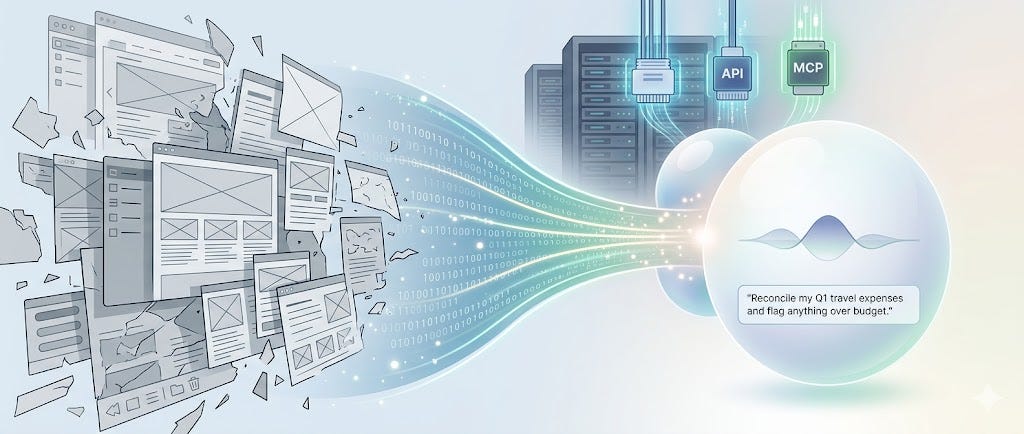
That era is ending. In 2026, “AI” is no longer a feature you market; it is the plumbing that makes the product work. If a user has to be told they are using AI to understand why the experience is good, the design has failed.
AI as the Invisible Co-Pilot
In the infrastructure phase, AI moves to the background. It becomes an invisible collaborator that augments human capability rather than trying to replace it.
1. Agentic Workflows:Instead of waiting for a user to prompt it, AI is now taking passive, asynchronous actions. Imagine a travel app where you simply set a goal: “Find me the best flight deals to Tokyo under $800 next month.” The AI agent works in the background, monitoring prices, and only pings you when it finds a match and needs your approval to book. The UX challenge shifts from designing a chat interface to designing clear trust signals, confidence indicators, and easy override controls.
2. Hyper-Personalization at Scale: Infrastructure AI allows interfaces to adapt in real-time. It’s no longer about A/B testing two static screens. It’s about a dashboard that dynamically reorganizes its layout, surfaces specific data, and adjusts its complexity based on the individual user’s current context and expertise level.

THE INVISIBLE CO-PILOT
Designing for Machines: The Rise of MX (Machine Experience)
As AI becomes infrastructure, we have to realize that our users aren’t just humans anymore. They are also the AI agents acting on their behalf.
This has birthed a completely new design discipline: MX (Machine Experience) Design.
Users are increasingly asking LLMs (like ChatGPT or Perplexity) to “compare the best project management tools ” or “find me a software that does X.” These AI agents navigate your website, read your semantic HTML, and interpret your content hierarchy long before a human ever clicks a link.
If your product’s information architecture is messy, an AI agent will misread it or ignore it entirely. Designing for infrastructure means designing for machines. It requires flawless semantic structure, predictable patterns, and crystal-clear labeling. If machines can’t understand your product, your product is invisible in the AI-mediated web.
What This Means for Your Career
If AI is handling the mechanical execution of design — generating variations, writing boilerplate code, synthesizing research data — what is left for the human designer?
Everything that actually matters.
The shift to infrastructure elevates the UX/Product Designer from a “pixel-pusher” to a Strategic Orchestrator. To stay relevant, you need to double down on:
Empathy & Ethics: AI can analyze data, but it doesn’t understand human frustration. Your ability to conduct deep user research and champion ethical, transparent design (like clear AI disclosure and privacy controls) is your ultimate moat. Systems Thinking: You are no longer just designing screens; you are designing the rules, constraints, and logic that the AI will use to generate those screens. Business Strategy:Bridging the gap between what stakeholders want (AI hype) and what users need (seamless, validated solutions).
The Bottom Line
AI isn’t going away, but the hype cycle has broken. The designers who will win in this new era aren’t the ones who can prompt an AI to make the prettiest UI.
The winners will be the ones who understand how to wire AI invisibly into the foundation of the product, ensuring that when the magic happens, it feels entirely, undeniably human.
메타데이터
- post_id
- 2eb917a04dab
- slug
- we-spent-the-last-two-years-treating-ai-like-a-shiny-new-toy-now-its-time-to-wire-it-into-the-2eb917a04dab
- url
- https://medium.com/@justuse890/we-spent-the-last-two-years-treating-ai-like-a-shiny-new-toy-now-its-time-to-wire-it-into-the-2eb917a04dab
- canonical_url
- https://medium.com/@justuse890/we-spent-the-last-two-years-treating-ai-like-a-shiny-new-toy-now-its-time-to-wire-it-into-the-2eb917a04dab
- author_url
- https://medium.com/@justuse890
- status
- ok
- fetched_at
- 2026-08-26 08:56:39