Mastering Beyond Snack's Marketing Strategy: A Guide
Uncover the marketing strategy behind Beyond Snack, focusing on effective channels, growth tactics, and insightful lessons.
Inside Beyond Snack’s Marketing Strategy: Channels, Growth & Lessons
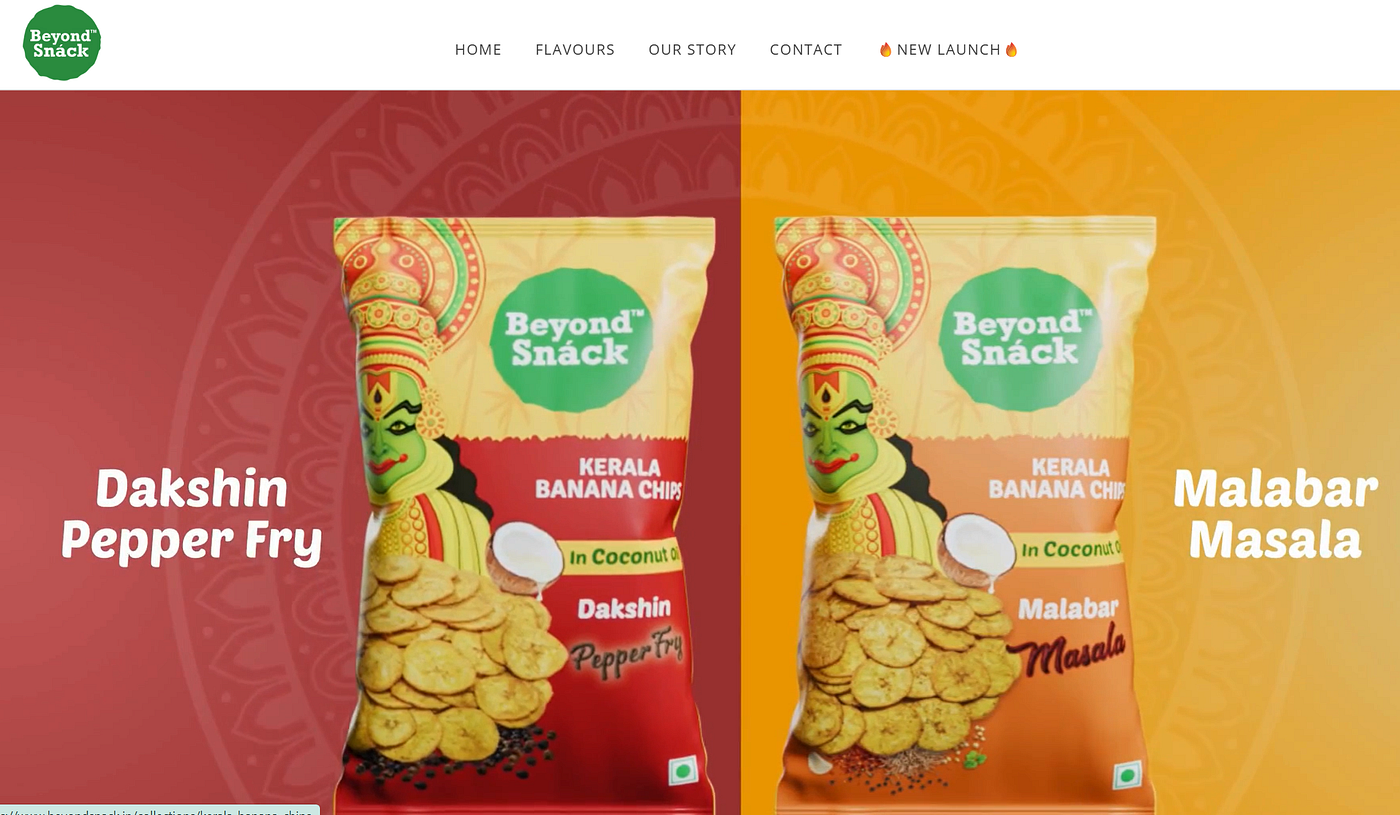
How does a fried banana chip company from Alappuzha end up on the same shelf as PepsiCo? Beyond Snack got there by treating a regional snack like a national brand from day one, backed by a Shark Tank deal, venture funding, and a marketing engine that mixes founder storytelling, movie tie-ins, and short-form video.
This blog breaks down Beyond Snack’s marketing strategy channel by channel, using evidence from its website, social profiles, Shark Tank pitch, press coverage, and customer reviews, then stress-tests that evidence against funnel economics and a real competitive benchmark rather than just describing what the brand does. If you run a D2C food brand or want a grounded case study in customer acquisition versus brand building, this is for you.
Brand Overview & Market Context
Beyond Snack was founded in 2020 by Manas Madhu, Jyoti Rajguru, and Gautam Raghuraman, with its roots and manufacturing based in Alappuzha, Kerala. The founding insight was simple but underexploited: roughly 40% of bananas grown in Kerala were going to waste, while the rest of India treated banana chips as an unhygienic, inconsistent regional snack sold loose at train stations and sweet shops. Manas, a first-generation entrepreneur, set out to package that traditional snack with the standardization, hygiene, and shelf appeal of a modern packaged-foods brand.
The brand’s defining moment came on Shark Tank India Season 1 (Episode 8, aired in early 2022), where Manas pitched for ₹50 lakh in exchange for equity. Beyond Snack received multiple offers on the show, but the founder ultimately closed a combined deal with Ashneer Grover and Aman Gupta for ₹50 lakh at 2.5% equity. That single appearance did more for distribution than any ad campaign could have: it made millions of viewers aware of a brand they could now find on Amazon or Flipkart.
Since then, the company has scaled aggressively. Beyond Snack has raised funding from NAB Ventures, 100X VC, Faad Network, and angel investors, and more recently closed an $8.3 million Series A round to fund expansion into new territories, product innovation, and supply chain infrastructure. The marketing implication of this is significant: well-funded venture backing let Beyond Snack buy distribution scale (20,000+ outlets, 12 countries) well before it had the organic repeat-purchase volume a bootstrapped brand would need to earn that shelf space on its own. In effect, the brand’s growth model shifted from customer-acquisition efficiency, the discipline a self-funded D2C brand is forced into, toward distribution dominance funded by capital, with the underlying bet that brand recall and shelf presence will eventually pull through the repeat purchase needed to justify that spend.
Positioning-wise, Beyond Snack sits in the “premium-mass” zone: priced above loose, unbranded banana chips, but accessible enough for everyday snacking, not a luxury good. Its tagline, “24 Carat Taste,” and its product claims (cholesterol-free, trans-fat-free, GMO-free, “no hand touch” automated frying) all signal a brand trying to make a traditional snack feel modern, hygienic, and trustworthy at scale. That capital-funded distribution push now shows up as retail presence in over 20,000 outlets across e-commerce and quick commerce, with an international footprint spanning 12 countries, including earlier-reported markets like the US, UAE, Australia, Sweden, Qatar, Nepal, Singapore, and Mauritius. The competitive landscape is two-layered: directly, other organized banana chip players and regional Kerala brands; indirectly, and more ambitiously, the entire potato chips category that dominates Indian snacking shelf space. The founder has been explicit about this larger target, framing the brand’s mission as putting banana chips on the shelf next to potato chips, not just other banana chip brands.
Choosing the Analytical Lens
This analysis uses a channel-based approach, because Beyond Snack’s growth story is unusually well documented channel by channel: a TV appearance that triggered e-commerce demand, a quick-commerce expansion that followed funding, and a content engine that has shifted from product demos to cricket-season creator content and movie crossovers. What makes this brand worth studying is the sequencing: media moment (Shark Tank) → distribution buildout (quick commerce, 20,000+ outlets) → content-led brand maintenance (social, influencers, IPL, movie tie-ins). Few D2C food brands execute all three phases this cleanly, though as the sections below show, that sequencing is stronger on the awareness side than on the retention side.
Target Audience & User Persona
Primary Persona: The Urban Health-Conscious Snacker Age 24–38, working professional in a metro or large tier-1 city (Mumbai, Delhi NCR, Bengaluru, Pune), household income upper-middle to affluent. Core pain point: she enjoys fried snacks but feels guilty about ultra-processed potato chips loaded with palm oil and artificial flavoring. Buying trigger: a claim like “cholesterol-free” or “no hand touch” on packaging, or seeing the brand’s Shark Tank credibility mentioned online. She discovers the brand through Instagram reels, quick-commerce app browsing (Blinkit, Zepto, Swiggy Instamart), or a recommendation after the brand’s TV appearance. What builds trust: third-party validation (Shark Tank investors, verified product reviews showing 400+ ratings on the website, visible hygiene certifications) more than the brand’s own claims.
This persona is well supported by the evidence: the brand’s own homepage leads with hygiene and authenticity claims (“100% Authentic Kerala Banana,” “Nothing Artificial,” “No Hand Touch,” “Thin & Crispy”) rather than price or flavor variety, and dedicates an entire site section to “Shark Picks,” explicitly using the Shark Tank association as a trust signal rather than a one-time PR mention.
Secondary Persona: The Festive/Movie-Culture Snacker Age 18–30, social-media-native, drawn to pop-culture moments. Core pain point: wants snacks that feel relevant and shareable, not just tasty. Buying trigger: a limited-edition product tied to a cultural event, such as a movie release or cricket season. Discovers the brand through Instagram Reels, YouTube Shorts, or seeing a collectible pack design online. What builds trust: cultural relevance and FOMO around limited-edition packaging, not health claims.
This persona is justified by the brand’s “Flower Nahi Fire” flavor, launched in partnership with Mythri Movie Makers to coincide with Pushpa 2: The Rule, and by Instagram highlight categories like “IPL,” “Pushpa x Beyond,” and “Chipping Tales,” which clearly target a younger, entertainment-driven audience distinct from the health-conscious buyer.
What customer reviews actually say
Photo by Ninthgrid on Unsplash
Personas built only from a brand’s own marketing are guesses dressed up as insight. To check them against real behavior, it’s worth reading what reviewers on the brand’s own site (over 400 ratings via its Judge.me widget) actually mention. The pattern is telling: recurring language clusters around crispness, freshness, and flavor satisfaction (“crispy and not too salty,” “fresh and crispy,” “the only best peri peri chips”), and Peri Peri comes up repeatedly as a favorite, often unprompted. What is largely absent from this review language is the brand’s own stated positioning, hygiene, cholesterol-free claims, “no hand touch” production. Reviewers are not citing the reasons Beyond Snack gives for why they should trust the product; they are simply confirming it tastes good and arrives fresh.
This is a meaningful gap between stated and actual purchase drivers. It suggests the health and hygiene framing on the homepage may do more work at the discovery stage, convincing a first-time buyer to try an unfamiliar branded version of a regional snack, than at the repeat-purchase stage, where taste and crunch consistency are what actually bring someone back. If that reading is correct, Beyond Snack’s retention is closer to a taste-driven habit loop than a health-positioning-driven one, which has direct implications for where the brand should be investing in retention mechanics (see Business Impact below).
Marketing Channels Overview

The website itself functions less like a blog-driven SEO play and more like a conversion hub: it routes visitors directly to Amazon, Flipkart, Blinkit, Zepto, Swiggy Instamart, BigBasket, and JioMart rather than trying to win all the demand itself through its own checkout. That is a meaningful strategic choice for a CPG snack brand, where impulse purchase and shelf visibility (digital or physical) matter more than building a destination e-commerce site.
Deep Dive Into Key Channels
1. Quick Commerce and Marketplace Distribution
For a snack brand, this is the most consequential channel of all, because banana chips are an impulse, repeat-purchase category. Beyond Snack’s homepage puts marketplace links above the fold, ahead of any brand storytelling. That ordering signals where leadership believes the conversion actually happens: not on-site, but on Blinkit, Zepto, Instamart, Big Basket, Jio Mart, Amazon, and Flipkart. With over 20,000 retail outlets and a presence across major e-commerce and quick commerce platforms, the brand has effectively decided that distribution breadth, not direct-to-consumer loyalty, is the growth lever worth funding. The trade-off, examined more closely in Business Impact below, is that outsourcing conversion this completely to third-party platforms means Beyond Snack also outsources the customer relationship at the exact moment of purchase, so it gains shelf reach but gives up first-party purchase data that would otherwise inform retention strategy.
2. Instagram (Organic + Creator-Led)
With roughly 273K followers and over 1,000 posts, Instagram is Beyond Snack’s most active brand-building channel, but its design tells you what stage of the funnel it is optimized for. The content strategy is segmented through Highlight categories visible directly on the profile: “Happy Customers” (social proof), “Flavours” (product education), “Thalaiva” and “Pushpa x Beyond” (pop-culture tie-ins), “Contests,” “Chipping Tales” (behind-the-scenes/brand story), and “IPL” (seasonal cricket content). High posting volume and audience segmentation are strong signals for top-of-funnel awareness and consideration, but the profile shows no visible bottom-of-funnel infrastructure, no email capture, no link-in-bio loyalty sign-up, no first-party data mechanism, that would convert that attention into an owned, trackable customer relationship. In other words, Instagram appears optimized to keep the brand mentally available between purchases, not to build a measurable acquisition or retention funnel of its own.
3. YouTube (Shorts-Heavy Awareness)
Beyond Snack’s YouTube channel is structured almost entirely around vertical, sub-30-second content: Shorts featuring cricket-watch-party scenarios, creator reactions, and flavor reveals, alongside slightly longer branded films like the Pushpa 2 tie-in ad, which has drawn views into the millions. In just a year and a half post-launch, the brand had already sold 140 metric tons of bananas in chip form, and the current YouTube strategy continues that early hustle with bigger production budgets for tie-in films, leaning on relatable, everyday moments (IPL nights, get-togethers, casual snacking) rather than studio-style TVCs. View counts here are a proxy for reach, not for purchase intent, so this channel should be read as supporting brand recall rather than as direct evidence of conversion efficiency.
4. Movie and Pop-Culture Partnerships (Earned Media + PR)
The Pushpa 2 collaboration is the single clearest example of Beyond Snack manufacturing a press moment rather than waiting for one. By partnering with Mythri Movie Makers to launch “Flower Nahi Fire,” a flavor and packaging tie-in timed to the film’s release, the brand earned coverage across marketing trade press, food industry publications, and entertainment outlets, all without that coverage costing a traditional media-buy rate. The brand has explicitly called this the first-ever movie-inspired banana chip flavour, a positioning line designed specifically to be repeated by journalists, which is exactly what happened across multiple publications. This channel supports awareness and earned trust simultaneously: a cultural association with a blockbuster franchise lends the brand relevance it could not buy through paid ads alone, especially with the youth-skewing secondary persona.
5. Shark Tank as a Permanent Trust Asset
Most brands that appear on Shark Tank India treat it as a one-time PR spike. Beyond Snack treats it as a permanent brand asset. The website maintains a dedicated “Shark Picks” collection page, and press materials consistently reference the Ashneer Grover and Aman Gupta investment years after the original broadcast. This is a smart long-game decision: Shark Tank credibility decays in pure recall terms but remains powerful as a trust signal precisely because Indian consumers recognize the show and its investors, making it a durable, low-cost trust channel that keeps paying dividends well beyond its original air date.
Business Impact Analysis
Listing channels is not the same as showing they produce outcomes. The more useful question is where each channel sits in the funnel, what it is actually solving, and where the model is exposed if an assumption breaks.
A funnel view of the channels above
- Awareness: Shark Tank (one-time, high-reach, low ongoing cost) plus PR-driven moments like the Pushpa 2 tie-in (recurring, campaign-dependent).
- Consideration: Instagram and YouTube, building familiarity and cultural relevance between purchases.
- Conversion: Quick commerce and marketplaces, where the actual transaction happens, on infrastructure Beyond Snack does not own or control.
- Retention: This is the stage with the least visible infrastructure. There is no public evidence of a loyalty program, subscription/replenishment mechanism, or owned customer database. Based on the review evidence above, retention currently appears to rest almost entirely on product taste and freshness, not on any deliberate retention system.
Read this way, the model has a structural asymmetry: the top of the funnel (awareness, consideration) is well resourced and well executed, while the bottom of the funnel (conversion, retention) depends heavily on third-party platforms and unmanaged repeat behavior. Shark Tank creates recognition; Instagram sustains it between purchases; but Blinkit and Zepto capture the actual transaction, and Beyond Snack has no owned mechanism to know who bought, whether they came back, or why.
Why this matters economically
This gap matters because of what it implies about acquisition cost over time. Industry margin data for the broader Indian chips category gives a useful benchmark: large branded players typically target 25–30% profit margin on a packaged chips product, with packaging at roughly 7.5–10% of cost and logistics around 15%, leaving the rest split between retailer and distributor margin. Quick commerce and marketplace channels add their own platform commission on top of that retailer/distributor share. If Beyond Snack’s growth continues to lean on platform-mediated conversion rather than owned conversion (its own app, subscription, or direct-to-consumer checkout, which the homepage explicitly does not prioritize), a larger share of each transaction’s margin is permanently ceded to the platform rather than reinvested in the brand. That is a sustainable trade-off if repeat purchase is genuinely habitual and taste-driven, because the brand does not need to keep re-acquiring the same customer through paid spend. It becomes an expensive trade-off if repeat purchase instead depends on continuous campaign visibility, because every re-purchase still effectively gets paid for twice: once through the original campaign that built awareness, and again through the platform margin taken at the point of sale.
This is the real strategic question sitting underneath the brand’s content engine: is Beyond Snack building a habit, or is it continuously renting attention? The evidence available publicly cannot fully answer this (the brand does not disclose repeat-purchase rate or cohort retention), but the review pattern, taste and crunch dominating customer language over hygiene or health claims, leans toward habit formation being plausible, provided product consistency holds as the brand scales production to meet 20,000+ outlets.
Competitive benchmark
Beyond Snack is not just competing with other banana chip makers; its own stated ambition is to sit beside potato chips on the shelf, a category dominated by PepsiCo’s Lay’s and players like Haldiram’s, Bingo!, and Balaji Wafers, all of which operate at far greater distribution scale and lower per-unit cost from decades of supply chain optimization. A direct comparison clarifies where Beyond Snack can realistically compete and where it cannot:
Factor

The implication is that Beyond Snack cannot out-distribute or out-price the category leaders in the near term, and it appears to know this: its entire strategy is built around winning on relevance and story rather than scale, using Shark Tank credibility and pop-culture tie-ins to earn shelf space the way a challenger brand should. The risk is imitation. None of Beyond Snack’s tactics, movie tie-ins, festive flavor drops, Shark Tank-style credibility marketing, are structurally hard for a well-funded incumbent to copy once a challenger proves the tactic works. The brand’s durable moat, if it has one, is more likely the Kerala-sourcing authenticity story and its first-mover claim on movie-themed snack collaborations than any single channel tactic.
Key Marketing Lessons
What This Brand Does Well
- It turns a single media moment into a permanent trust asset. Rather than letting Shark Tank fade as old news, Beyond Snack keeps it structurally embedded on the website (a dedicated “Shark Picks” page) and in press materials, converting a one-time appearance into evergreen credibility that costs nothing to maintain.
- It separates the discovery pitch from the retention driver, even if unintentionally. The hygiene and authenticity story does the work of getting a skeptical first-time buyer to try a branded version of a snack they associate with loose, informal vendors. But the review evidence suggests taste and crunch consistency, not the health claims, are what actually get people to buy again. A brand that recognized this explicitly could build retention messaging (post-purchase emails, pack inserts) around flavor and freshness rather than repeating the same hygiene pitch to people who have already converted.
- It manufactures earned media instead of only buying it. The Pushpa 2 partnership generated trade press coverage across food, marketing, and entertainment outlets by giving journalists a ready-made, repeatable line (“the first-ever movie-inspired banana chip flavour”), achieving reach that a comparable media buy would have cost far more to replicate.
- It treats distribution breadth as the real growth lever for an impulse category. Putting marketplace and quick-commerce links above brand storytelling on the homepage reflects a clear-eyed view that snack purchases happen at the shelf, digital or physical, not on a brand’s own website, even though this comes at the cost of owning the customer relationship.
- It builds category ambition, not just brand ambition, into its messaging. By consistently framing the goal as “banana chips next to potato chips,” every campaign plugs into a bigger narrative instead of existing as an isolated promotion, which matters because it gives press coverage a recurring hook to reference.
Strategic Gaps & Recommendations
Despite a strong content and distribution engine, a few gaps stand out, each with a concrete fix rather than just a direction:
- Heavy dependence on campaign-driven spikes. Much of the brand’s standout press (Pushpa 2, IPL content) ties to external cultural calendars rather than owned brand moments.
- Mechanism: establish one recurring, brand-owned property, for example an annual limited-edition flavor vote where followers pick the next launch via Instagram poll.
- KPI: track whether this owned moment can match or beat the engagement of borrowed cultural tie-ins within two cycles, which would prove the brand does not need someone else’s movie or match to generate a spike.
- Thin visible evidence of a paid advertising strategy. Compared to the strength of its organic and PR channels, there is limited public evidence of a sophisticated paid funnel (search ads, programmatic, retargeting).
- Mechanism: layer retargeting ads specifically at users who engaged with Instagram/YouTube content but did not click through to a marketplace, closing the gap between consideration and conversion.
- KPI: click-to-marketplace rate from paid retargeting versus organic content, to establish whether paid spend is actually needed or whether organic reach is already converting efficiently.
- No owned customer data or retention mechanism. The brand shows no visible loyalty program, subscription mechanism, or first-party data capture to convert one-time quick-commerce buyers into repeat, identifiable customers.
- Mechanism: a QR code inside the pack linking to a simple WhatsApp-based rewards club, since WhatsApp has near-universal reach in Beyond Snack’s target markets and avoids building a full app.
- KPI: repeat-scan rate and resulting repeat-purchase rate among enrolled customers versus the broader base.
- Margin and platform-dependency risk. Because conversion is concentrated on quick-commerce platforms, Beyond Snack is exposed to platform commission increases and delisting risk in a way a brand with stronger owned-channel sales would not be; this is a direct consequence of the distribution-first strategy described in Business Impact, not a separate issue.
- Imitation risk from incumbents. Movie tie-ins, festive flavor drops, and Shark Tank-style credibility marketing are all tactics a well-funded incumbent like PepsiCo or Haldiram’s could replicate quickly once they see a challenger brand prove the tactic works, meaning Beyond Snack’s differentiation needs to keep moving toward its harder-to-copy assets (Kerala-sourcing authenticity, first-mover claims) rather than resting on tactics alone.
Conclusion
Beyond Snack’s marketing strategy is strongest at the top of the funnel and weakest at the bottom. Shark Tank and PR-driven cultural tie-ins generate awareness cheaply and durably. Instagram and YouTube keep the brand mentally available between purchases. But conversion is fully outsourced to quick-commerce platforms, and retention currently appears to run on product taste alone, with no visible owned data, loyalty mechanism, or repeat-purchase infrastructure to confirm or strengthen that habit deliberately.
The biggest takeaway for other marketers: a regional, traditionally low-trust product category can be repositioned as a modern, premium snack using third-party credibility, distribution ubiquity, and culturally relevant content, but that repositioning only becomes a durable business once the brand can answer, with real data rather than assumption, why customers come back. Beyond Snack has not yet shown that it can answer that question. Whether this becomes a lasting FMCG brand or stays a high-awareness challenger depends on what happens next: if the next growth phase shifts investment from reach toward repeat-purchase tracking, household penetration, and owned customer relationships, the current channel strategy has built a strong enough foundation to support that shift. If it does not, the brand risks discovering that everything it has built so far is awareness without an asset to show for it once the next cultural tie-in moment passes.
메타데이터
- post_id
- 2ec21fc32bb2
- slug
- mastering-beyond-snacks-marketing-strategy-a-guide-2ec21fc32bb2
- url
- https://medium.com/@reenumaurya989/mastering-beyond-snacks-marketing-strategy-a-guide-2ec21fc32bb2
- canonical_url
- https://medium.com/@reenumaurya989/mastering-beyond-snacks-marketing-strategy-a-guide-2ec21fc32bb2
- author_url
- https://medium.com/@reenumaurya989
- status
- ok
- fetched_at
- 2026-06-24 11:06:28