What’s Blocking Your Authentic Self Might Not Be Weak Willpower — It Might Be Your Body
I spent three days in Kobuchizawa(Japan).
What’s Blocking Your Authentic Self Might Not Be Weak Willpower — It Might Be Your Body
I spent three days in Kobuchizawa(Japan).
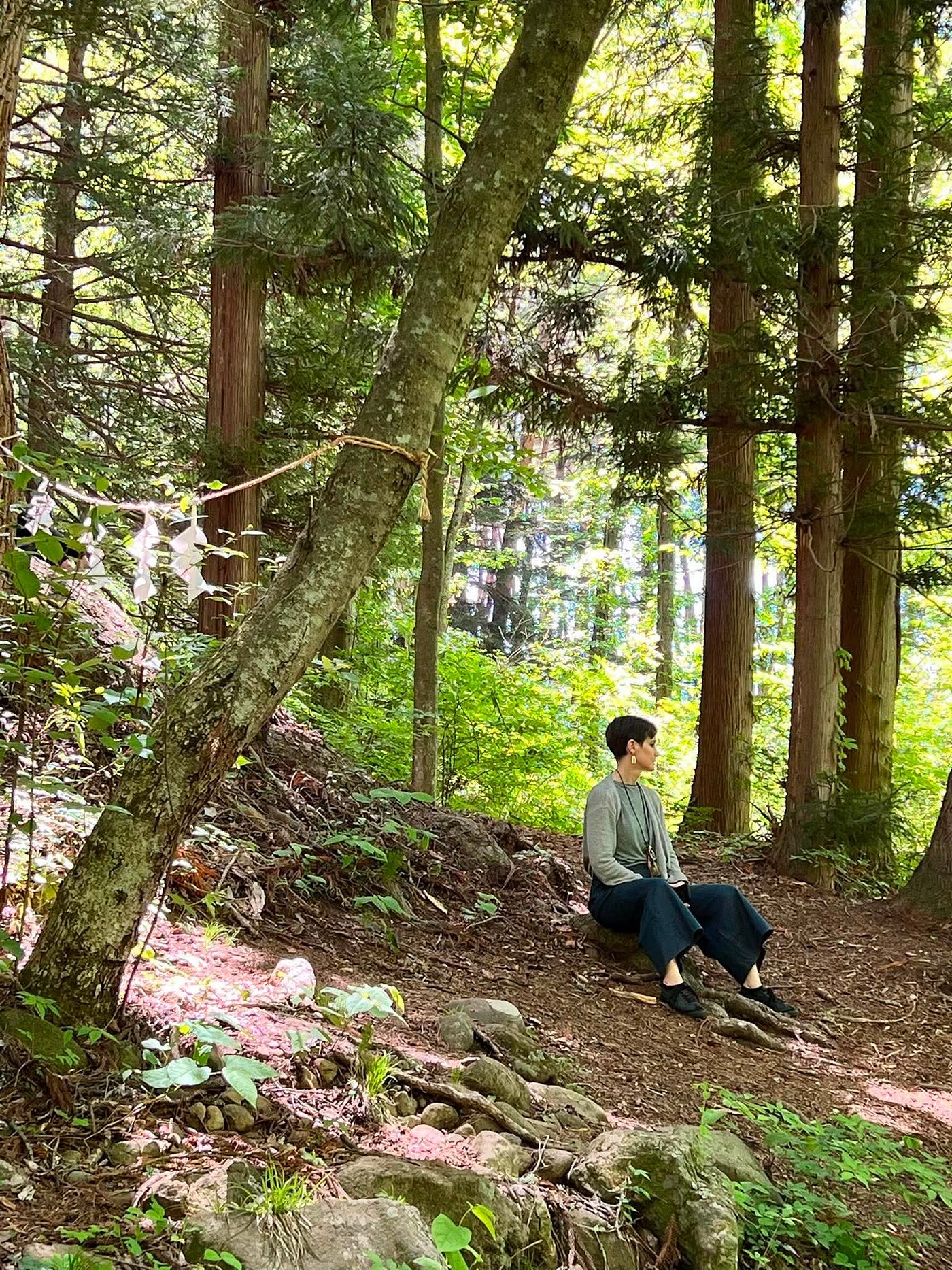
A typical Japanese landscape
It was a workshop on the body and the inner self, co-facilitated by Kazuha Ogasawara and Nadjeschda Taranczewski. Before you can lead, you must first be yourself. The Becoming Workshop.
I was there as one of the organizers, present alongside ten participants.
I’ll be honest. More happened than I expected.
Almost Everyone Is a Depression Risk
Let me say something difficult right away — please hear me out.
Kazuha Ogasawara said this:
“Many people are either in a state of autonomic dysregulation, or in a state that falls just short of a clinical depression diagnosis — dysregulation of the autonomic nervous system. And when this accumulates, it becomes what medicine gives a formal name.”
This isn’t sensationalism. It’s not about diagnosis.
That feeling of adrenaline still running after a meeting ends. The body that won’t rest even on weekends. The anxiety that creeps in when you actually try to relax. Does any of that sound familiar?
The body loses its ability to move freely between on and off. It accumulates. For many people, this is simply daily life.
“Living Authentically” — But Only in Your Head?
When I talk with entrepreneurs and sole proprietors, I keep hearing the same words lately:
“I don’t just want money or status. I want to live as my true self.”
I think that’s wonderful. I really do.
But can I ask you one thing?
That feeling of your “true self” — right now, where does it live in your body?
Is it somewhere around your chest? Your belly? Or is it still only in your head, not yet reaching your body?
Nadja drew a diagram on the whiteboard. A large heart at the center, with roots extending downward. The roots are labeled BODY (Body Work). Leading into the heart from the upper left: Parts Work — IFS, Voice Dialogue. From the upper right: Reclamation Work.

Image: drawn by Nadja
Three approaches, three different entry points — all aiming for the same destination. That destination is the Self: the felt sense that I am the author of my own life.
This is one step beyond self-compassion.
And the body is the root of all of it.
Body Maps — A Slightly Strange Story
Let me tell you something a little strange.
Do you know the actual size of your lungs?
From above your collarbone to the bottom of your ribcage. They’re much larger than you probably imagine. And yet most people breathe only shallowly, in the upper chest. The lungs aren’t small. The map of the lungs in the brain has shrunk. This is called a body map.
On the first day of the workshop, we did a partner exercise:
One person breathes naturally. The other places their hands — barely touching — on the collarbone and directly behind it. The breathing person simply notices the sensation of the hands and feels the breath moving through that space. Then the same for the chest and back. Then for the very bottom of the ribcage and the corresponding spot on the back. That’s it.
Just that — and shoulders visibly dropped.
Gasps of surprise from participants watching nearby.
When people walked afterward, they said they felt grounded. And when someone pressed down on their shoulders, they didn’t sway. Before the exercise, that same pressure had made them stumble.
When I tried this, something made me pause. Just changing the image of your breath keeps you from losing balance? It doesn’t follow logically. And yet — it actually happened.
Yes. The body changes through perception.
The Moment We Stepped Outside, the Breath Reset
After the breathing exercise, we all went for a short walk nearby.
The moment several participants stepped outside, they said: “Oh — my breathing changed.” The breath that had just deepened went shallow again.
This is not a matter of willpower.
We each carry different body patterns for different places and different roles. Walking into the office, the body switches to work mode. Getting on a packed train, it shifts to get-through-this mode. These are automatic responses, learned over years.
The instant we returned to the outside world — the everyday context — the body said: Oh, this mode again. And switched.
This is where “I understand it intellectually, but I can’t change” lives.
Day Two: Starting from the Soles of Your Feet
On the morning of the second day, Kazuha began talking about the soles of the feet.
Feel the arch of your foot with your hand. Then walk. That’s it — and the way walking feels changes. Same structure: redraw the body map accurately, and function shifts.
The afternoon moved into Nadja’s Reclamation Work part, then an introduction to IFS.
The sequence felt important. Ground in the body first, then move into inner work. Body before concept.
And this confirmed what Nadja had pointed to at the start: Parts Work and Reclamation Work carry the risk of staying entirely in the head. Work that hasn’t landed in the body slides off the surface.
That’s why we begin at the roots.
The Paradox of the “Good Child” and the “Problem Child”
Kazuha said something striking:
“A child who doesn’t follow the rules — a ‘problem kid’ — might not need body work at all.”
That sounds backwards. But the logic holds.
In the process of becoming a “good child,” people internalize external standards: money, others’ opinions, parental expectations, institutional approval. In Kazuha’s words, they form something outside themselves that functions like the Self — not the real Self, but a substitute shaped by social demand, which they then mistake for who they are.
That process of adaptation is written into the body. Into posture, breath, muscle tension.
The “problem child,” you could say, is one whose body kept responding honestly to that external pressure. The circuit from emotion through body to the outside world was still alive.
I grew up in rural Ibaraki(Japan). As a child I fished, ran through fields, and argued back — directly, even with adults — whenever something didn’t make sense to me. In Kazuha’s terms, I grew up with abundant resources.
But that wasn’t because I was special. It was because my environment happened to protect my body. Many people who grew up in cities may have suppressed far more than they realize, without ever knowing it.
Day Three: On the Grass
The final day was partner work outdoors.
The lawn at Alsoa Megami-no-Mori in Kobuchizawa. All three days were clear blue sky. Touching the parts of your body that feel good. Directing attention to places where something feels stuck.
At the end, everyone shared their reflections in a closing checkout.
Recovery from Depression Begins with Small Talk
So how does one begin to recover from this kind of state?
I asked: “Wouldn’t unconditional love from someone be healing?”
Kazuha said: “That would be terrifying. Too intense.”
What’s appropriate as a first step is light, casual conversation with an acquaintance. Starbucks calling itself a third place makes complete sense — there’s a barista who recognizes regulars by face, and easy small talk is possible. That’s the entry point.
So that’s why community matters, I thought. Sauna with a friend, loose connections formed around doing something together. Modern society seems to be reaching for exactly this kind of gentle belonging.
Personally, I tend to think going alone means deeper focus and more enjoyment. But that’s because I have an unusual surplus of inner resources. Someone worn down by daily life may not have enough energy left to take even the first step. Before a three-day solo plunge into a workshop, what some people need first is simply someone they can talk to easily.
In Closing
IFS. Reclamation Work. Body Work.
Three approaches. Three different entry points. The same destination: the felt sense that I am the author of my own life — connection with the Self.
But trying to reach that place without the body may be like entering the mountains without a map. As long as you’re chasing your “true self” only in your head, you may never quite arrive.
Redraw the body map. Notice your breath. Feel the soles of your feet.
Nothing here is complicated. Just — a little more carefully, a little more attentively — turn your awareness toward your own body.
That, it turned out, was a much bigger thing than I expected.
This workshop was facilitated by Kazuha Ogasawara and Nadjeschda Taranczewski. May 16–18, 2026
메타데이터
- post_id
- 2edc3144863d
- slug
- whats-blocking-your-authentic-self-might-not-be-weak-willpower-it-might-be-your-body-2edc3144863d
- url
- https://medium.com/@hideakiaono/whats-blocking-your-authentic-self-might-not-be-weak-willpower-it-might-be-your-body-2edc3144863d
- canonical_url
- https://medium.com/@hideakiaono/whats-blocking-your-authentic-self-might-not-be-weak-willpower-it-might-be-your-body-2edc3144863d
- author_url
- https://medium.com/@hideakiaono
- status
- ok
- fetched_at
- 2026-06-29 01:02:39