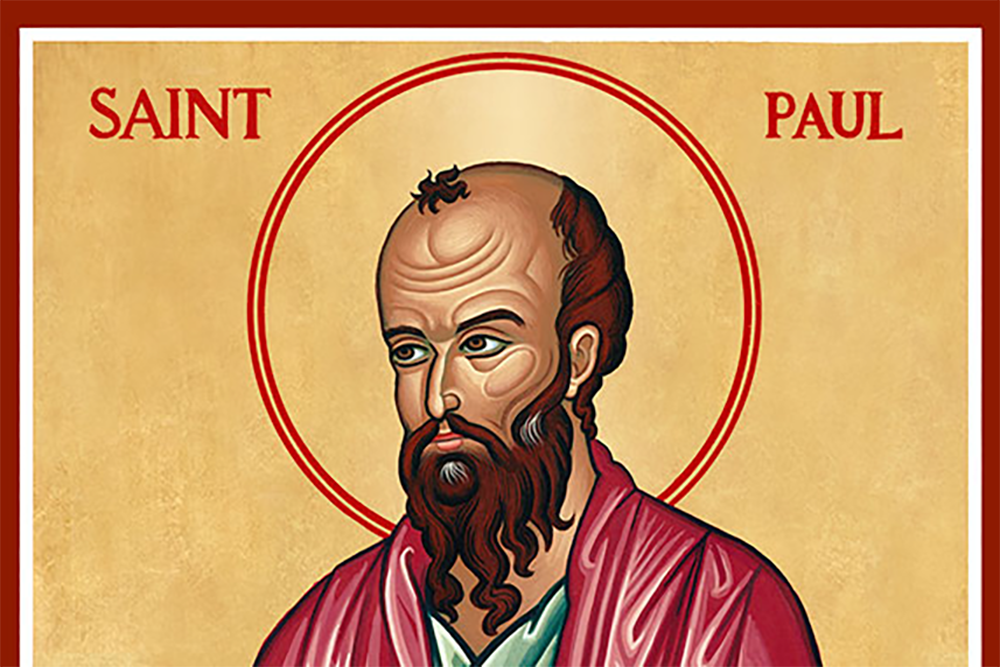
Sermon — Wrangling over Words
(I preached this sermon on Sunday August 2, 2026 at Christ Lutheran Church in Harrisburg, PA. It is based on 2 Timothy 2:8–15. You can…
Sermon — Wrangling over Words
(I preached this sermon on Sunday August 2, 2026 at Christ Lutheran Church in Harrisburg, PA. It is based on 2 Timothy 2:8–15. You can listen to the audio version of the sermon at this link.)
It took Lutherans and Catholics five hundred years to agree on what the word grace means.
Five hundred years. Martin Luther nailed his theses to a door because he believed the church had turned grace into something you earn through your good works and your payments. Rome believed Luther had misunderstood what they meant all along. Both sides were using the exact same word. Both sides were sure the other side had it wrong. It took until the last few decades, an agreement called the Joint Declaration on the Doctrine of Justification, for Lutherans and Catholics to sit down together and say, we actually mean something closer to the same thing than we thought.
Five hundred years to sort out one word.
Here’s what makes that so remarkable to me. This wasn’t a polite disagreement between theologians in a seminar room. Churches excommunicated each other over it. People were hunted down for practicing their faith the wrong way. For generations after the Reformation, Protestants and Catholics couldn’t even worship together in the same sanctuary. Luther himself came close to meeting the same fate as reformers who came before him. When he stood before the emperor and refused to take back what he had written, he said, “Here I stand, I can do no other. So help me God. Amen.” Emperor Charles the Fifth declared him an outlaw, which meant anyone could have killed him without consequence. It was Frederick the Third, the Elector of Saxony, who staged a fake kidnapping to get Luther into hiding before that could happen. This wasn’t just a dispute over words on a page. It had real consequences on real lives.
Even generations later, the divide hadn’t closed. Not that long ago, a Catholic and a Lutheran falling in love and marrying each other could tear a family apart. I know that firsthand. Two of my own great grandparents were what people at the time called a mixed marriage, one Protestant, one Catholic. Their families were so shaken by it that the two of them moved away just to be together, just to get married. Love mattered more to them than the labels did. But the labels still cost them their families.
I think about that a lot, because we do this constantly, and not just in church. We assume that because two people are using the same word, they must mean the same thing. Watch any argument where the word freedom gets used. One person means freedom for me to live my life without somebody else telling me what to do. Another person means freedom for me to do what I want, even if it costs somebody else theirs. Same word. Different world underneath it. Everyone walks into that conversation assuming their own definition is just the normal one. That assumption does more damage than the actual disagreement.
Wrangling over words. That is exactly what our reading calls it this morning. And I want to tell you, this letter is not gentle about what that wrangling does to us.
Last week we started this short series in 2 Timothy. We heard about a leader named Timothy who was worn down, maybe ashamed, and a letter that came to him saying, rekindle the gift of God that is within you. Not try harder. Not muster something up. Rekindle, the way you’d stir coals that still have fire under the ash.
This week the letter keeps going, and it gets even more specific about what that fire actually looks like when you’re up close to it.
Listen to how it opens. “Remember Jesus Christ, raised from the dead, a descendant of David. That is my gospel.”
That’s it. That’s the whole thing. Life, death, resurrection. Good news. Not a doctrine exam. Not a list of positions you have to hold.
Here’s the thing though. So much of what gets proclaimed as good news in churches isn’t actually good news. At best, it’s mediocre news. It’s not good news if you have to have the correct theology and the right belief system just to be part of the in crowd at church, or part of God’s family, or to receive God’s promise. It’s not good news if you have to earn enough of God’s love and grace through what you do. It’s not good news if you have to get your life together first before God will have anything to do with you.
Good news is good precisely because it isn’t about what we’re doing or what we believe. It’s good because it doesn’t rely on us getting anything right. Think about how good news actually works in real life. Good news is something that happens to a person, unexpectedly, in a way that changes their life for the better. Nobody earns good news by studying hard enough for it. It just arrives. That’s what makes it good.
Then comes this line: “for which I suffer hardship, even to the point of being chained like a criminal. But God’s word is not chained.”
The author is sitting in an actual Roman prison as he writes this, his hands or feet bound in actual chains. And in the same breath he says, the message I’m carrying can’t be chained the way I am. His body is locked up behind bars. The message keeps traveling anyway, carried by other people, in other rooms, in other cities, completely outside the control of the empire that thought locking up one preacher would be enough to stop it.
I don’t think that’s just ancient history. I think about a woman who came into our medical clinic this week. She was young, maybe twenty. When she came in, she told the receptionist she needed to see a nurse about a sore in her mouth. That’s what brought her through the door. But the moment she sat down with one of our nurses, it became clear the sore in her mouth wasn’t really why she was there. She started talking. She told the nurse about struggles with drugs that started when she was eleven years old. Eleven.
She mentioned getting high with her own father two days before she walked into our clinic. She talked about a family situation that had never given her much of a chance. She just kept talking, and the nurse just kept listening. No lecture. No judgment. Just two people sitting together in something messy and real.
That is what good news actually looks like when it shows up in a body. Nobody handed that young woman a doctrine to believe or a list of behaviors to fix before she was allowed to sit in that chair and be heard. Nobody required her to have her life together first. The good news wasn’t a set of correct answers waiting for her on the other side of getting clean. The good news was a person who stayed present with her exactly as she was that day, drugs and family and all, and didn’t flinch.
At the end of it, the nurse told her, I know you’re not ready yet. But when you are, all it takes is a phone call. I’ll help you get into recovery. The door is open.
Nobody chained that door shut. Not the addiction, not the shame, not whatever this young woman has been told about herself by everyone who has walked away from her before. The door stayed open, because the person offering it wasn’t waiting for the woman to have the right answers or say the right things first. She was just there. Present. Faithful, even when the other person couldn’t be faithful back yet.
That is almost exactly what this letter says next. Verses 11 through 13 are an old hymn, something the early church apparently already sang together, and the writer just drops it in like everybody would recognize it.
“If we have died with him, we will also live with him. If we endure, we will also reign with him. If we deny him, he will also deny us. If we are faithless, he remains faithful, for he cannot deny himself.”
Read that last line again. If we are faithless, he remains faithful.
Not, if we get it right, God will love us. Not, once we’ve proven ourselves, God will stick around. It says the opposite. Even when we can’t hold up our end, God holds up God’s end anyway. God’s faithfulness was never dependent on ours in the first place. It comes from God’s own character. God cannot deny Godself, the letter says, which means God being faithful to us isn’t a reward we unlock. It’s just who God is.
That nurse looked at a young woman who could not yet be faithful to her own recovery and said, I’ll still be here. She wasn’t inventing something new. She was living out a pattern that was placed in her a long time before that Tuesday afternoon, the same pattern this letter is describing about God.
And then verse 14 turns and says something that should stop us in our tracks. “Warn them before God that they are to avoid wrangling over words, which does no good but only ruins the hearers.”
Ruins the hearers. That’s a strong word for something that feels, on the surface, so small. Just an argument. Just people disagreeing about what a text means or what a word means. But the writer isn’t talking about honest disagreement. The writer is talking about the kind of fight where winning the argument becomes the whole point, and the actual person on the other side of the table disappears.
There is no requirement in Christianity that everyone agree on everything. None. You can search the earliest creeds, you can search the gospels themselves, and you will not find a passing grade for having every theological detail correct. What you will find, over and over, is a call to love God and love your neighbor.
Humanity has a strange habit of complicating things, especially when it comes to God and faith. I’m not entirely sure why we feel the need to. Jesus simplifies it. We’re the ones who keep adding rules and debates on top of what was already simple. Jesus spent his time proclaiming and living good news. We spend a lot of our time trying to turn good news into something else entirely.
Karen Armstrong, in her book The Lost Art of Scripture, makes a similar point that I think this letter is making too. She argues that so much of the harm religion has caused in the world comes from turning scripture into a tool for being right, rather than a way of asking honest questions about God and about ourselves. Scripture was never meant to be an instruction manual you follow line by line to win an argument. It was meant to open something up in us. To help us wonder. To help us live differently with the people around us.
When we forget that, words stop connecting us to each other and start becoming weapons. Watch how we argue about the hardest topics right now. Abortion. Gun violence. Sexuality. Whether women belong in pulpits and positions of church leadership. That last one might surprise you as still being a live argument in 2026, but it is. Some denominations are fighting that fight all over again right now, like it’s a brand new question instead of one the church keeps circling back to.
Every one of those conversations gets loud and bitter fast, and I think it’s because we keep the conversation up in the realm of ideas. Abstract positions. Categories. Sides.
Good news isn’t supposed to work like that. Good news doesn’t use scripture as a weapon to hold people down. It sets people free from whatever has them in bondage. Think about the very first person Jesus sent out to proclaim the resurrection. It wasn’t one of the twelve. It was Mary Magdalene, standing at an empty tomb, told to go and tell the others what she had seen.
Good news, from the very beginning, was already expanding who gets to carry it. Good news was never about protecting some human-made ranking of who counts more, one group placed above another. Good news breaks that ranking apart, because what makes a person valuable was never their place on a ladder. It’s that they bear God’s image, full stop. I honestly can’t believe we’re still fighting about this in 2026. It doesn’t add up. But then again, power over other people is its own kind of addiction. It works on the brain and the soul about the same way any narcotic does, whether that’s meth or whatever gets sold on a street corner laced with fentanyl these days. Once someone gets a taste of power over somebody else, letting go of it gets just as hard as getting clean.
But something shifts the moment you bring one of those conversations down out of the abstract and into an actual person, with an actual name and an actual story. The categories get messy fast. The certainty gets harder to hold onto. And that is not a weakness. That is what happens when you finally see the human being who was standing behind the argument the whole time.
That messiness is its own kind of good news. Good news was never meant for some tidy, imaginary, perfect situation. Good news deals with real life exactly as it actually is, which is usually messy and complicated. That’s exactly where we live.
Debates are built to produce winners. Somebody has to lose, and losing in front of everyone feels a lot like being erased. So people dig in and stop listening for understanding. The words stay up in the air the whole time, circling each other, never touching down on an actual life. That is the wrangling this letter is warning us about, the kind of disagreement that forgets there is a person on the other end of it.
That’s what happened in that clinic room. Nobody was debating drug policy or family dysfunction as abstract categories. There was a young woman with a name, in a chair, telling the truth about her life. And the response wasn’t an argument. It was presence.
So what does the letter tell us to do instead of wrangling? Verse 15. “Do your best to present yourself to God as one approved, a worker who has no need to be ashamed, rightly explaining the word of truth.”
Rightly explaining the word of truth means telling the truth this letter has already told us. Remember Jesus, raised from the dead. Remember that God’s faithfulness doesn’t depend on ours. Don’t turn any of that into a weapon to win a fight with somebody else.
A worker who has no need to be ashamed isn’t the one who has memorized every answer. It’s the one who has kept the main thing the main thing.
I think about this congregation and what that looks like in practice. Ninety percent of what keeps our clinics running doesn’t come from what gets put in our own offering plate on a Sunday morning. It comes from grants and foundations and donors we’ve never met, people who decided a neighborhood in Allison Hill was worth investing in. That is somebody else’s faithfulness holding up a door for people they will never personally shake hands with. Nobody required those donors to agree with everyone at Christ Lutheran on every theological question before they wrote a check. They didn’t wrangle over our doctrine. They just kept a door open.
Notice where the letter started and where it ends up. It started with Jesus, raised from the dead. It ends with a warning against turning words into weapons. Those two things belong together. The resurrection is not a puzzle to be solved or a position to defend in an argument. It is something God did, once, that changed what death gets to mean for the rest of us. Once that sinks in, wrangling over lesser words starts to look like exactly what it is. A distraction from the one thing that was never in question to begin with.
That’s the whole letter, really, wrapped up in one small scene. A word that cannot be chained, even when the person carrying it is. A God who stays faithful even when we can’t. A warning against turning scripture into a fight instead of a gift. And a door, kept open, for people who aren’t ready yet, and might never fully explain themselves, and are loved anyway.
Whatever chains you’re sitting with this week, whatever argument has been eating at you, whatever diagnosis or bill or fear feels like it has you locked up, whatever shame is telling you that you’re too far gone for the door to still be open for you.
Hear this letter the way it was meant to be heard. Not as ammunition for the next fight. As a promise. The word of God is not chained. It got out of that Roman prison two thousand years ago and it has never stopped moving since, into clinic rooms, into kitchen tables, into this sanctuary this morning.
Remember Jesus Christ, raised from the dead. That is the gospel. That is the whole thing. And it was never something we had to chain down or figure out or win an argument about. It was always something given to us, plain and free, the way a door stays open even before anyone walks through it.
Amen.
Originally published at https://pastormatthewbest.com on August 3, 2026.
메타데이터
- post_id
- 2f4ccbbf91b9
- slug
- sermon-wrangling-over-words-2f4ccbbf91b9
- url
- https://medium.com/@pastormatthewbest/sermon-wrangling-over-words-2f4ccbbf91b9
- canonical_url
- https://medium.com/@pastormatthewbest/sermon-wrangling-over-words-2f4ccbbf91b9
- author_url
- https://medium.com/@pastormatthewbest
- status
- ok
- fetched_at
- 2026-08-06 14:37:56