How We Escaped Keepa’s €500/Month Trap and Built Our Own Amazon Data Infrastructure
The Wake-Up Call
How We Escaped Keepa’s €500/Month Trap and Built Our Own Amazon Data Infrastructure
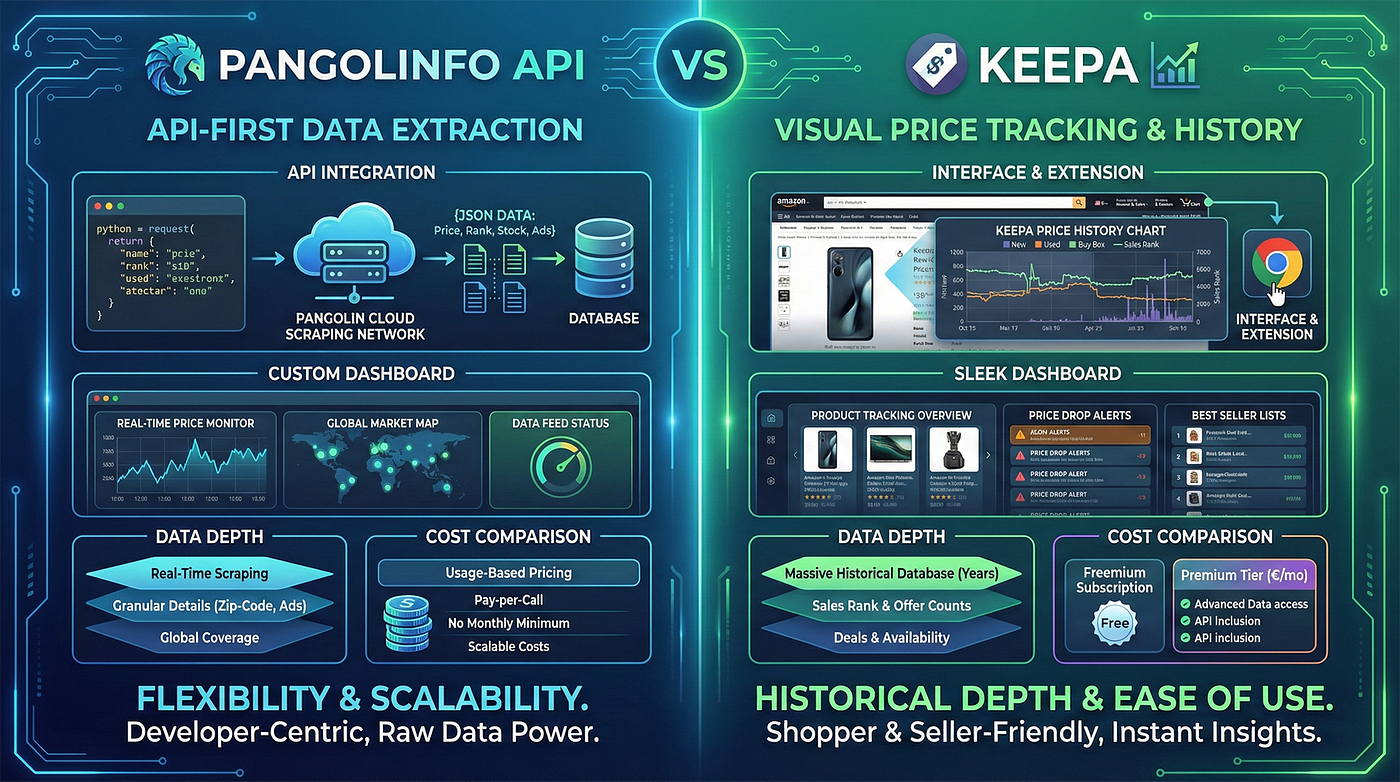
Keepa Alternative
The Wake-Up Call
It was 2:47 AM on a Tuesday when I got the Slack notification that would change our entire data strategy.
“Price monitoring down. Keepa quota exceeded. ETA: 18 hours.”
We were in the middle of Prime Day preparation. Our intelligent pricing system — the one that had helped us grow from $2M to $8M in annual revenue — was blind. Two thousand competitor ASINs sat unmonitored while prices fluctuated wildly across the marketplace.
The culprit? Keepa’s 24,000 ASIN/day quota limit. We’d hit it at 11 PM the previous night, and the 5%/hour recovery rate meant we wouldn’t be back online until late afternoon — long after Prime Day’s critical first wave.
That’s when I knew: we had outgrown Keepa.
The Hidden Costs of “Affordable” SaaS
When we first started using Keepa three years ago, €19/month seemed like a steal. The browser extension was convenient, the price charts were beautiful, and for a team of three monitoring 50 ASINs, it was perfect.
But businesses don’t stay small.
As we scaled, so did our Keepa bill:
- Year 1: €19/month → €228/year
- Year 2: €129/month → €1,548/year
- Year 3: €459/month → €5,508/year
By the time we hit €500/month, we were paying more for price data than for our entire AWS infrastructure. And we were still hitting limits.
The Token Trap
Keepa’s pricing model is deceptively simple: buy tokens, use tokens, tokens expire in 60 minutes.
Sounds reasonable until you realize:
- The cheapest useful plan (€49/month) gives you only 20 tokens/minute
- That’s a theoretical maximum of 28,800 ASINs per day
- But tokens expire, so you’re constantly managing a depreciating asset
- Want more? €459/month gets you 250 tokens/minute. Need enterprise scale? €4,499/month.
We were on the €459 plan and still running out of quota during critical periods.
The Quota Ceiling
Even more frustrating was the daily quota system. Keepa explicitly designed it to “deter extensive data scraping” — which is exactly what we needed to do.
24,000 ASINs per day. That’s the hard cap. Use it up, and you wait 20 hours for full recovery at 5% per hour.
For a growing business trying to monitor an entire category, analyze seasonal trends, or prepare for major sales events, this wasn’t a speed bump. It was a wall.
The Search for Alternatives
I spent two weeks evaluating every Amazon data tool I could find:
Option 1: Build our own scraper Pros: Complete control Cons: Legal gray area, constant maintenance, IP blocking headaches
Option 2: Stick with Keepa and buy more tokens Pros: Familiar system Cons: Exponentially expensive, still hit quotas, limited data dimensions
Option 3: Switch to an API-first provider Pros: Designed for scale, comprehensive data, pay-per-use Cons: Requires development work, migration risk
After demoing five different services, I chose Pangolinfo API. Here’s why.
Why Pangolinfo Clicked
1. No More Token Expiration Anxiety
The first thing that caught my attention: no tokens. Just straightforward API calls that don’t expire.
Buy 100,000 calls? Use them over a month, a week, or a day. Your choice. No more watching credits evaporate while you sleep.
2. No Artificial Quotas
When I asked about daily limits, the sales engineer looked confused.
“There’s no daily quota. If you have API credits and stay within rate limits, you can collect as much as you need.”
Music to my ears.
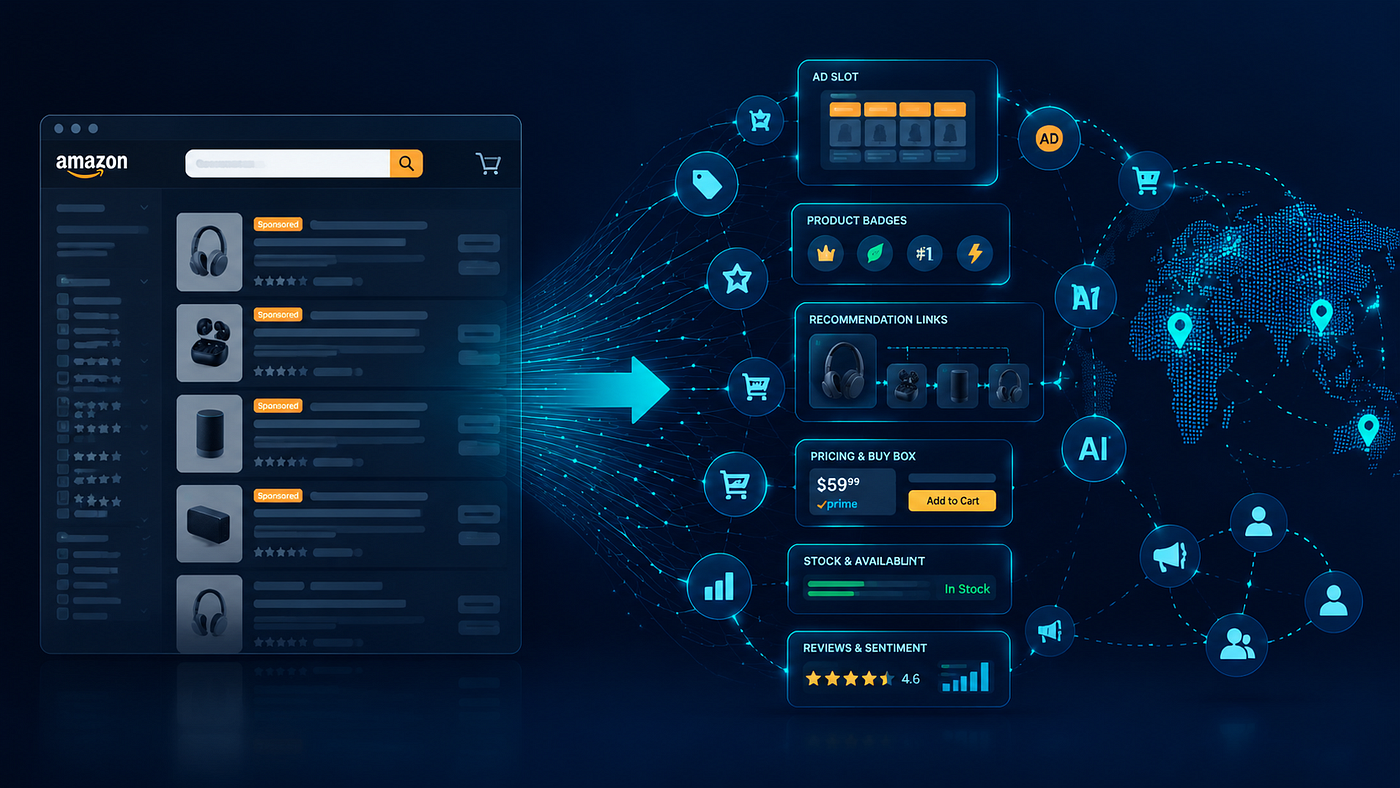
3. The Data We Actually Needed
Keepa gave us price, BSR, and basic ratings. Pangolinfo gave us everything:
- Complete product details (titles, descriptions, A+ content)
- Real-time inventory status
- Full review text with sentiment analysis capability
- SP ad placement data (98% accuracy — they actually track this!)
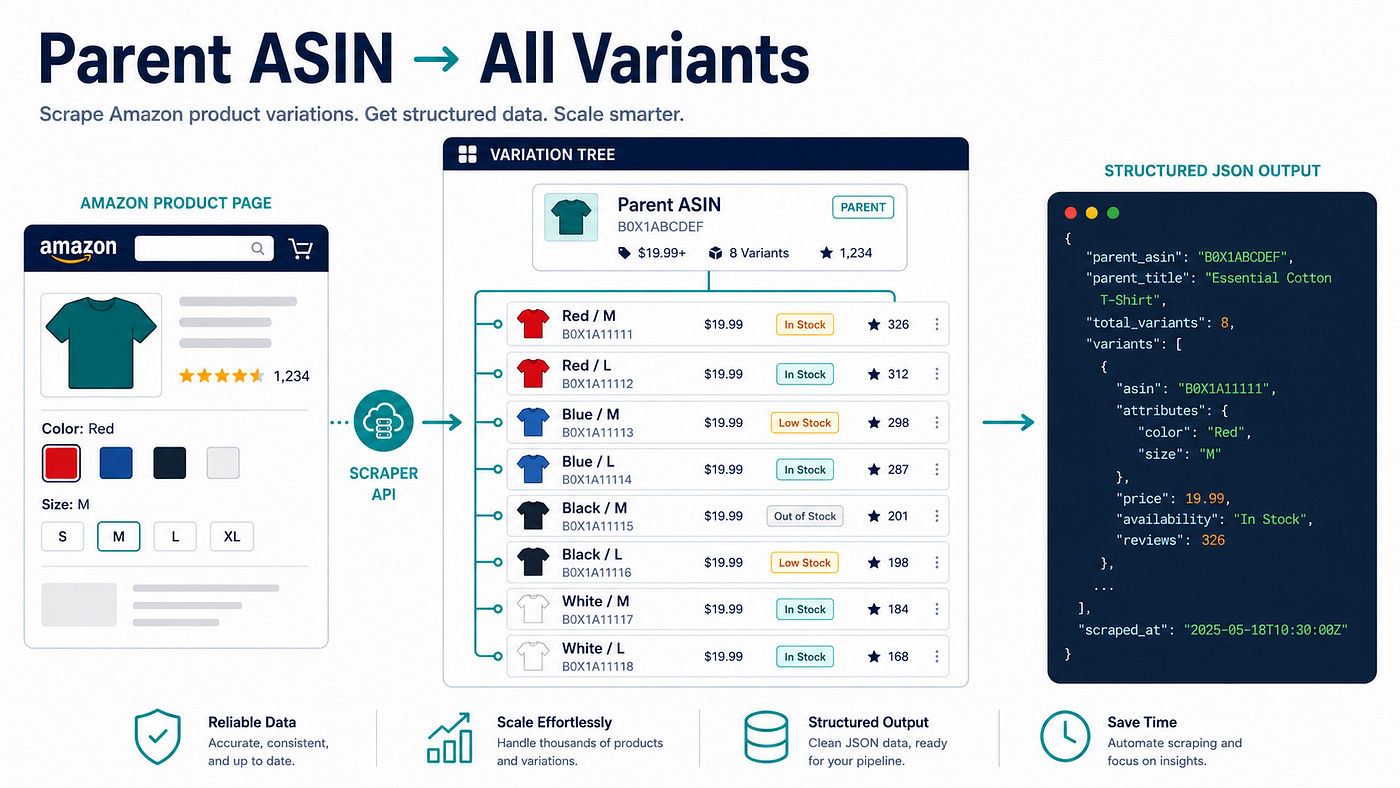
- Variant information
- Category rankings
- Q&A content
Suddenly, we weren’t just tracking prices. We were building a competitive intelligence platform.
4. The Price That Made Sense
Here’s the math that sold our CFO:
Keepa (our current spend):
- €459/month base subscription
- ~€50/month in overage fees
- €250/month in developer time managing tokens and quotas
- Total: ~€760/month = €9,120/year
Pangolinfo (projected):
- ~€200/month in API calls (with room to scale)
- €250 one-time integration cost
- Minimal ongoing maintenance
- Total: ~€2,650/year
Savings: 71%
And that’s before considering the value of the additional data dimensions.
The Migration Journey
Week 1–2: Proof of Concept
I started small. Picked 20 ASINs we monitored closely with Keepa and ran parallel collection with Pangolinfo for two weeks.
The results:
- Data quality: Identical for price/BSR, superior for everything else
- Response time: Faster (1.8s vs 3.5s average)
- Reliability: 99.2% success rate vs Keepa’s ~95%
Green light to proceed.
Week 3–6: Building the Pipeline
Our backend team (just two engineers) built the infrastructure:
Airflow (scheduling) → Python API client → Redis (caching) → PostgreSQL (storage) → Grafana (visualization)The beauty of API-first design: we could integrate it exactly how we wanted. No fighting with export limits or manual CSV downloads.
Week 7–10: Parallel Operation
We ran both systems side-by-side, comparing data quality and catching edge cases. Found a few quirks in our caching logic, fixed them, moved on.
Week 11: The Switch
On a quiet Sunday afternoon, we flipped the switch. Disabled Keepa, went all-in on Pangolinfo.
No drama. No downtime. Just… better.
Six Months Later: The Results
Cost Savings:
- Monthly spend: €500 → €200 (60% reduction)
- Annual savings: €3,600
- Three-year TCO improvement: €10,800
Operational Improvements:
- Daily collection capacity: 24K → unlimited
- Data dimensions tracked: 3 → 12
- System uptime: 95% → 99.8%
- Average response time: 3.5s → 1.8s
Strategic Wins:
- Built proprietary product research algorithms (40% better hit rate)
- Launched data-as-a-service offering for clients (+€80K annual revenue)
- Reduced time-to-market for new product launches by 3 days
- Improved pricing strategy led to 12% margin improvement
The Unexpected Benefits
What surprised me most wasn’t the cost savings — we expected that. It was the strategic flexibility.
We started doing things we couldn’t do before:
-
Sentiment Analysis at Scale: Pulled 50,000 reviews, ran them through NLP models, identified the top 10 pain points in our category. Redesigned our product descriptions. Conversion rate up 18%.
-
Competitive Ad Intelligence: Tracked which competitors were bidding on which keywords, when, and how aggressively. Optimized our own ad spend. ACOS down 23%.
-
Inventory Prediction: Combined price data with availability signals to predict stockouts. Helped us time competitive moves perfectly.
-
Category Expansion: Analyzed entire categories (100K+ ASINs) to find white space opportunities. Launched three new products that hit $500K in year-one revenue.
None of this was possible with Keepa’s limited data and quota constraints.
Who Should (and Shouldn’t) Make This Move
This approach makes sense if you:
- Have at least one developer who can handle API integration
- Manage 50+ SKUs or monitor 200+ competitors
- Need data integrated into your own systems (ERP, BI, CRM)
- Want to build proprietary analytics or ML models
- Are currently spending €300+/month on data tools
Stick with Keepa if you:
- Have no technical resources
- Manage <20 SKUs with basic monitoring needs
- Prefer browser extensions over custom systems
- Don’t need data integration
- Value simplicity over flexibility
The Bigger Picture
This isn’t really a story about switching from Keepa to Pangolinfo. It’s about the inflection point every scaling business hits: when off-the-shelf tools stop fitting and you need to build your own infrastructure.
For us, that moment came at 2:47 AM on a Tuesday during Prime Day prep.
The question isn’t whether you’ll hit that point. It’s whether you’ll recognize it when you do.
Getting Started
If you’re curious about exploring API-based alternatives:
- Calculate your true TCO: Include subscription fees, overage charges, developer time, and opportunity costs from limitations
- Run a POC: Most API providers (including Pangolinfo) offer free trials. Test with 10–20 ASINs for a week.
- Assess your technical capacity: Do you have developers who can build and maintain an API integration? If not, can you hire or outsource?
- Plan the migration: Budget 10–12 weeks for a proper implementation with parallel operation and validation.
- Start small, scale gradually: Don’t try to migrate everything at once. Prove value with a subset, then expand.
Final Thoughts
Three years ago, Keepa was the right choice for our business. Today, it’s not.
That’s not a criticism of Keepa — it’s a recognition that businesses evolve, and tools need to evolve with them.
If you’re reading this at 2:47 AM because your data system just failed during a critical moment, take it as a sign. There’s a better way.
About the Author: Former e-commerce operator turned data infrastructure enthusiast. Currently building analytics tools for mid-market Amazon sellers.
Want to discuss your data strategy? Connect with me on LinkedIn or drop a comment below.
Resources:
If you found this helpful, please give it a clap 👏 and share with other e-commerce operators facing similar challenges.
메타데이터
- post_id
- 2f4e8939e8af
- slug
- how-we-escaped-keepas-500-month-trap-and-built-our-own-amazon-data-infrastructure-2f4e8939e8af
- url
- https://medium.com/@pangolinfo/how-we-escaped-keepas-500-month-trap-and-built-our-own-amazon-data-infrastructure-2f4e8939e8af
- canonical_url
- https://medium.com/@pangolinfo/how-we-escaped-keepas-500-month-trap-and-built-our-own-amazon-data-infrastructure-2f4e8939e8af
- author_url
- https://medium.com/@pangolinfo
- status
- ok
- fetched_at
- 2026-06-24 18:57:25