Blueberries, Huckleberries … and the End of the Road
How wild berries stain our fingers and our memories
Blueberries, Huckleberries … and the End of the Road
How wild berries stain our fingers and our memories
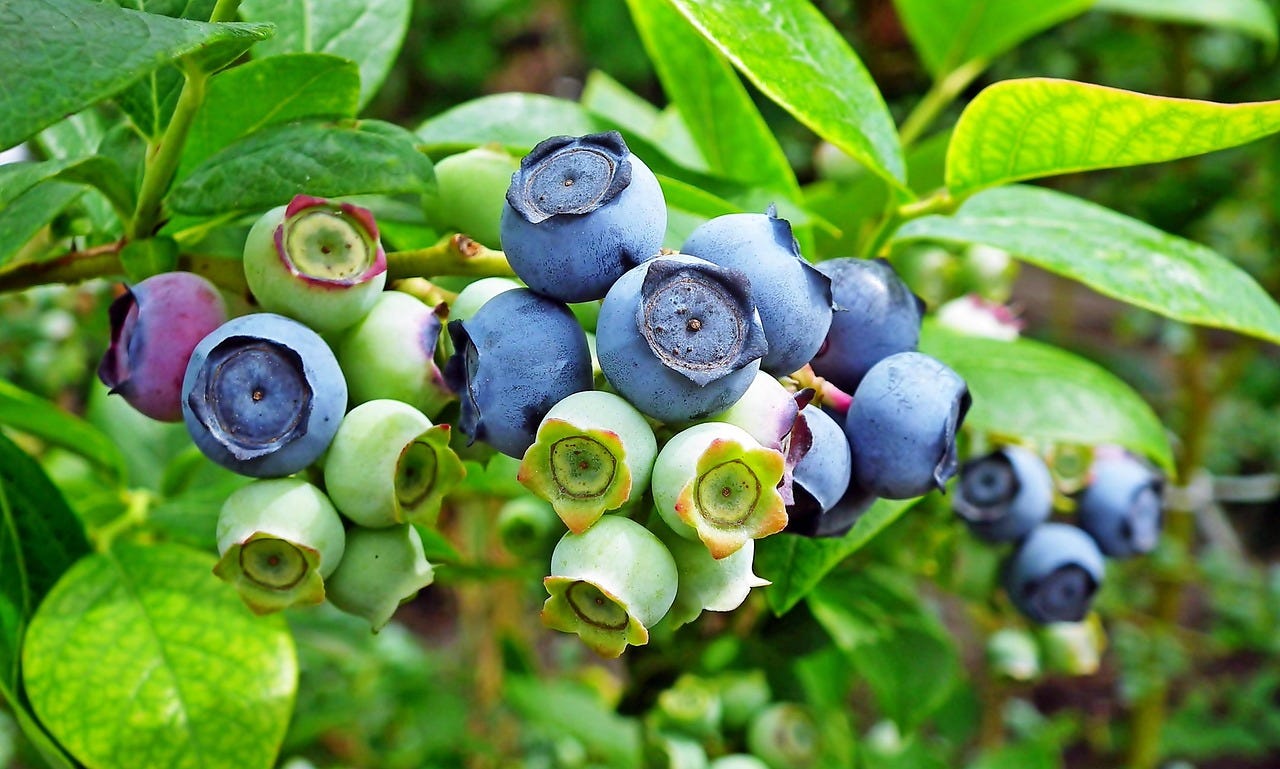
Image by Teodor Buhl from Pixabay
**You ought to have seen what I saw on my way To the village, through Mortenson’s pasture to-day: Blueberries as big as the end of your thumb, Real sky-blue, and heavy, and ready to drum In the cavernous pail of the first one to come! And all ripe together, not some of them green And some of them ripe! You ought to have seen!”
— Robert Frost**
In North America, there was a time, not that very long ago, when blueberries and huckleberries were a part of childhood. Mom or Grandma would hand you a pail with instructions to go to the end of the road and pick a bucket-full for a pie.
When I was very young, no one thought twice about me wandering down the dirt path, pail in hand, to the patch of blueberries that grew in our neighborhood. The walk itself was part of the adventure — the smell of sun‑warmed earth, the thrill of filling that pail one berry at a time. There was no fear, only the trust that children could roam and return with stained fingers and sweet rewards.
In the 21st century, I won’t even let my kids play alone in the front yard. The world feels different, less safe. How times have changed.
Another depressing change is this — urban sprawl and development have erased those enchanted pathways. The blueberry patch of my childhood was swallowed up years ago in development and progress — vacant lots cleared, streets paved, and new homes built where birds had once nested.
We can’t turn back the clock, but we can spend a few moments learning about these luscious purple-blue orbs that stain our fingers and can be baked into memorable pies, muffins, and so much more.
Before Our Berry Pints Were Wrapped in Plastic
Long before supermarkets and shrink-wrapped pints, berries were wild gifts — gathered from forests, riverbanks, and sun-dappled clearings.
In North America, blueberries and huckleberries weren’t just food; they were part medicine, part ritual, and part oral tradition. Indigenous communities dried and smoked huckleberries into cakes, used cranberries for dyes and wound care, and revered elderberries for their healing power.
The Age of Discovery turned berries into a global commodity. European explorers brought cranberries and blueberries home, while Old World berries like currants and gooseberries arrived in the Americas. This botanical exchange reshaped diets and traditions on both sides of the ocean.
Camping was not part of my childhood vocabulary. My family didn’t pitch tents, roast marshmallows, or lace up hiking boots. We stayed home. So when I got married, a whole new world opened up — weekends spent under a canvas tent, mornings waking to the smell of pine sap and coffee brewing on the campfire, afternoons wandering trails and exploring.
It was on those hikes that I met the huckleberry. Small and tart, it was nothing like the blueberries I had known as a child. Huckleberries hid in the brush, waiting to be discovered, a prize for those willing to wander a little farther off the path.
For me, huckleberries became a page (or at least a paragraph) in this new chapter of my life. Marriage brought camping, camping brought hikes, and hikes brought huckleberries.
Now, years later, as an unabashed food nerd and wanna-be food historian, I’m always in search of new topics. All it took was one pint of dusky blue orbs at the supermarket to nudge me to write about blueberries. Or, are they huckleberries? Do you know the difference? I’m pretty certain my parents didn’t know — maybe what I was picking was a huckleberry … by another name.
The Four Berry Cousins
We called them blueberries, but in reality, that’s just a general term — depending on where you are and what kinds of plants grow in your area. But here are the facts:

Table created by author from various sources
Four distinct designations — let’s not worry about the botanical names, genera, species, and all of that. Here’s a layman's explanation of each one.
Blueberries
Blueberries are shrubs that can vary in size from 4 inches to 13 feet in height. They can be deciduous or evergreen with fruits that are dark (almost black) purple in color. They grow everywhere — and the table below is a testament to that fact.

Source: StatRanker.org | Table created by author
Red Huckleberry
Red huckleberries are deciduous shrubs, meaning that they shed their leaves in Autumn. They can tower over all other berries, some reaching 13 feet tall.
Evergreen Huckleberry
There is a species of huckleberry common to the piny lands from the commencement of the Columbian valley to the seacoast; it rises to a hight of 6 or 8 feet. is a simple branching somewhat defuse stem; the main body or trunk is cilindric and of a dark brown, while the colateral branches are green smoth, squar, and put forth anumber of alternate branches of the same colour and form from the two horizontal sides only. the fruit is a small deep perple berry which the natives inform us is very good.
— Meriwether Lewis, Lewis & Clark journals, February 7, 1806
The evergreen huckleberry is perfectly happy in both sunshine and shade and retains its leaves year-round. Those that grow in the forest’s shade can reach up to 15 feet in height; they form lush, dense hedges filled with pea-sized black fruits, which are enjoyed by birds, deer, and even the occasional black bear.
The Salish tribes of the Pacific Northwest made special combs of salmon backbones to strip huckleberries from the bushes. They dried the berries in the sun, or smoked and then mashed them into cakes and wrapped them in bark for storage.
Black Huckleberry
The black huckleberry of eastern North America tastes very much like its blueberry cousins, but with a few more seeds (a bit of crunch and added fiber for your diet). Their small, blue-black fruits ripen in late summer (mid-July to August).
Black huckleberries thrive in dappled shade, tucked into the forest understory. I didn’t grow up camping, so I never saw them that way as a kid. It was only later — marriage, tents, hikes — that I learned how the light filters through branches and how those berries wait in the shadows, ready for whoever wanders by.
I lost the blueberry patch of my childhood, but years later, when I purchased a couple of acres and a farmhouse “out in the woods,” I was able to recreate that memory for my daughters.

My farmhouse, the edge of the woods in the background, where evergreen huckleberries hid | Photo by author
Both red and black huckleberries were already present on the fringe of the forest — in fact, there was one enormous evergreen bush almost 10 feet in height and width. The fruits were small, hence the name my children gave the pies we make from them — million-berry pies. Next to the edge of the pond were magnificent blueberry bushes, some of them offering berries as big as grapes.
Did we make pies? A plethera. Muffins? A multitude. But one of our specialties was an unexpected use of huckleberries.
Huckleberry Barbecue Sauce
This is a sweet, tangy (not spicy) barbecue sauce. Because of the high sugar content, I don’t brush it on until the meat is just minutes away from being done. Or, you can brush or drizzle it on when the meat is completely cooked.
Ingredients
- 1/4 cup maple syrup
- 2 tablespoons apple cider vinegar
- 2 tablespoons balsamic vinegar
- 2 tablespoons molasses
- 2 tablespoons Worcestershire sauce
- 1/2 teaspoon lemon juice
- 1/2 teaspoon ground cumin
- 1/2 teaspoon chili powder
- 1/2 teaspoon smoked paprika
- 2 cloves garlic, minced
- 2 cups huckleberries (can substitute blueberries)
Instructions
- Combine all ingredients in a small saucepan.
- Bring to a simmer over medium heat, stirring constantly to prevent sticking. Cook until berries burst and the mixture begins to thicken, 5 to 10 minutes.
- Remove from heat and set aside to cool. The sauce will thicken more as it cools.
- If you desire a smooth sauce, you may use a stick blender or food processor.
The Smallest Picker, the Biggest Berries
It’s been 5 years since I moved from that farmhouse to a smaller place in the city. Little girls grow up and move on, and large homes are cavernous and lonely when the nest is empty.
My fresh blueberries are now purchased at the local produce stand. Their fragrance sparks memories, not of the farmhouse, but decades prior, when the berries were not in my backyard but in a rural patch that belonged to no one … and everyone.
I was the baby of the family — the next oldest was sixteen years ahead of me — so it often felt like Daddy and I had the world to ourselves. He worked the night shift, which meant our days together were quiet and golden, just the two of us. I was too young for school, but old enough to carry a tin pail and follow the dirt path to the berry bushes that loomed taller than me.
The sun warmed the ground beneath my bare feet, and the air smelled like ripening fruit. I’d reach for the biggest blueberries, always just out of grasp, and then — like magic — Daddy would appear. He’d lift me gently or stretch his long arms into the thicket, plucking the prize and dropping it into my pail with a wink.
The berries were sweet, but it was our time together that mattered. We gathered far more than fruit; those visits to the berry patch were filled with a love that doesn’t need words to be felt and memories that stay with you long after the pie is gone.
Did you enjoy what you read? Want more food histories? Subscribe to my email list, and you’ll be notified every time I publish a new story.

메타데이터
- post_id
- 2f693ca7d686
- slug
- blueberries-huckleberries-and-the-end-of-the-road-2f693ca7d686
- url
- https://medium.tastyble.com/blueberries-huckleberries-and-the-end-of-the-road-2f693ca7d686
- canonical_url
- https://medium.tastyble.com/blueberries-huckleberries-and-the-end-of-the-road-2f693ca7d686
- author_url
- https://medium.com/@lindalum_2779
- status
- ok
- fetched_at
- 2026-07-09 01:30:37