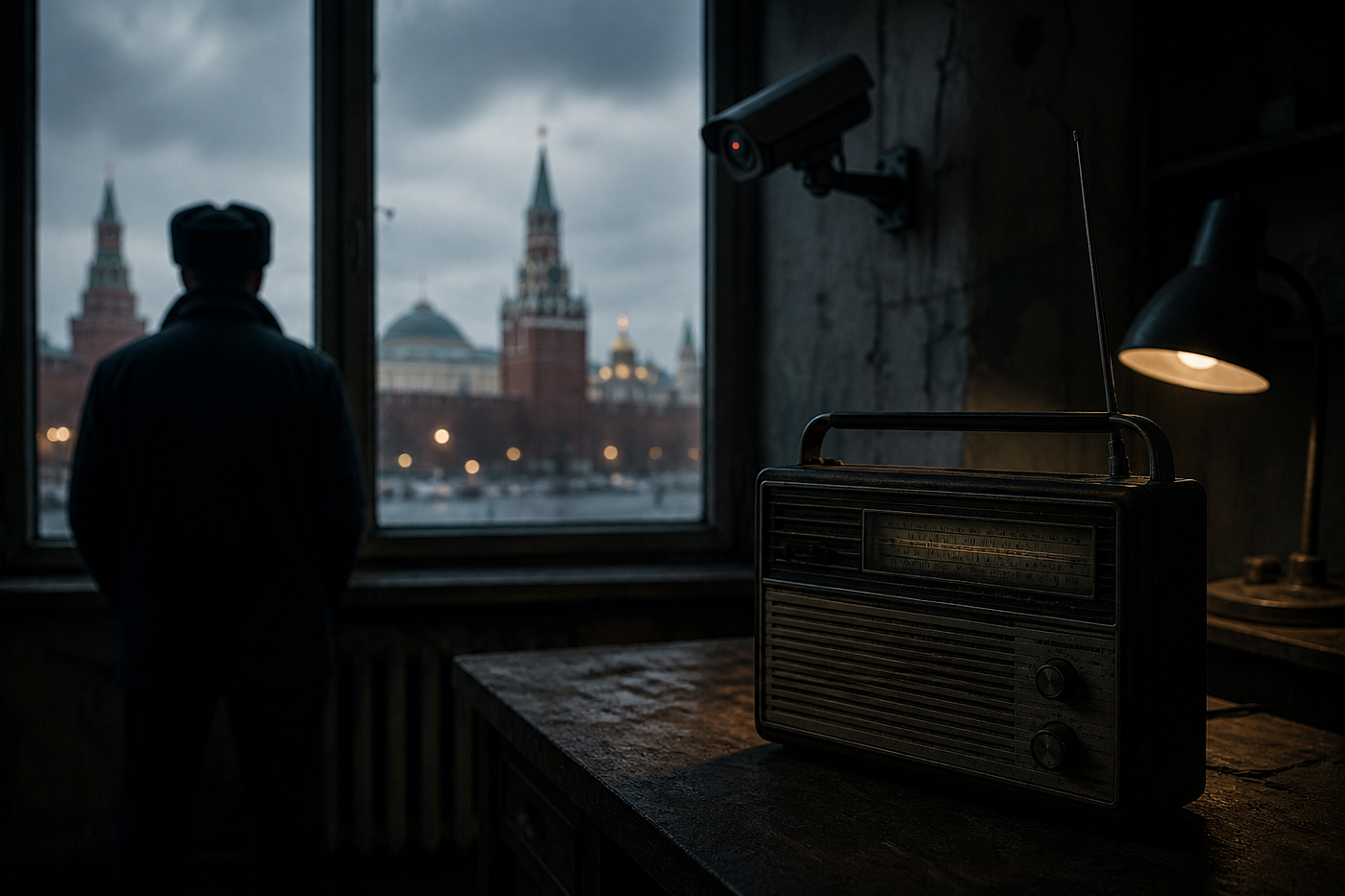
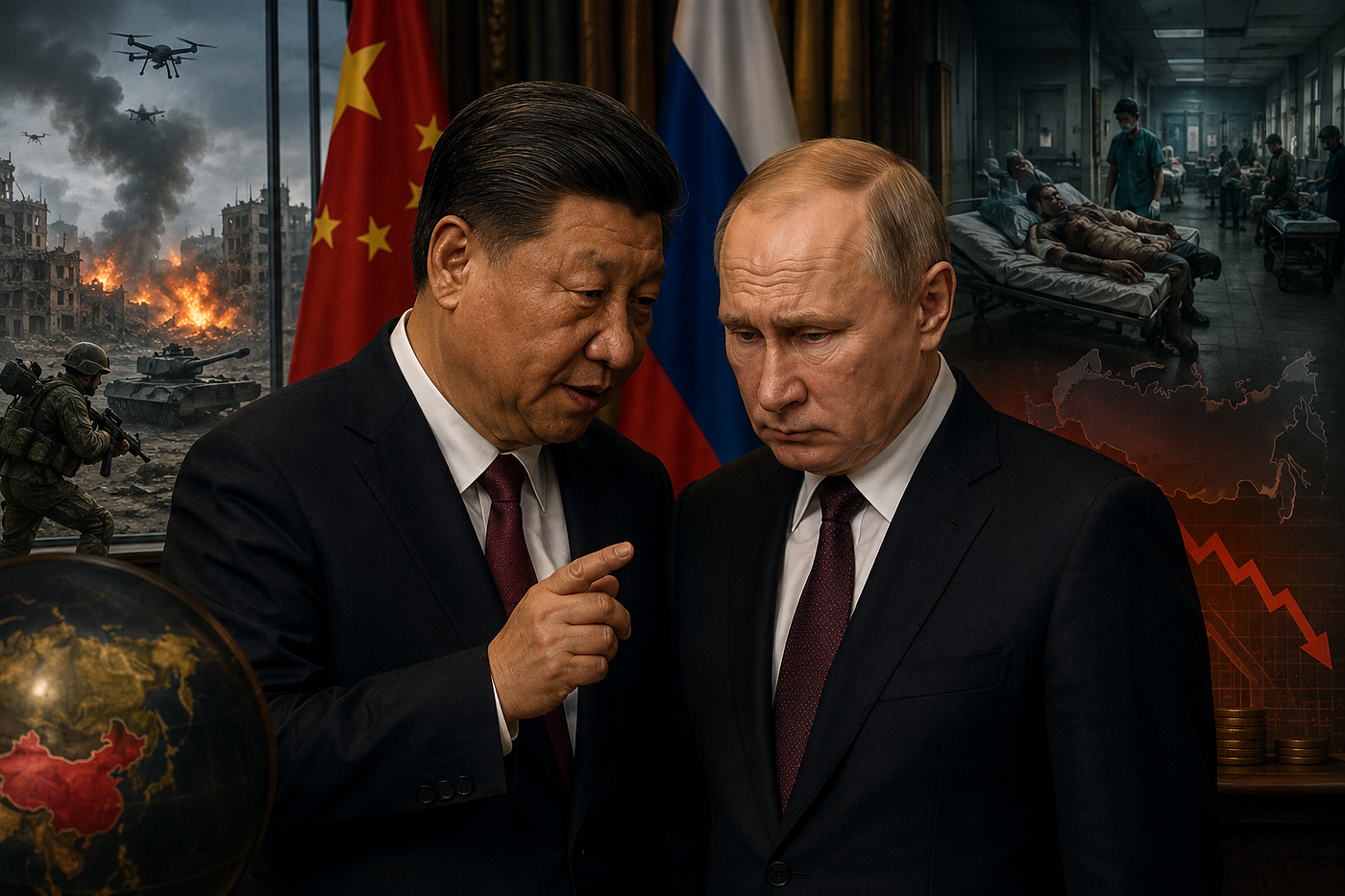
The Kremlin Is Preparing for Something Bigger
Russia’s next offensive could target Ukraine’s politics, society, and future elections instead of its front lines
The Kremlin Is Preparing for Something Bigger
Russia’s next offensive could target Ukraine’s politics, society, and future elections instead of its front lines
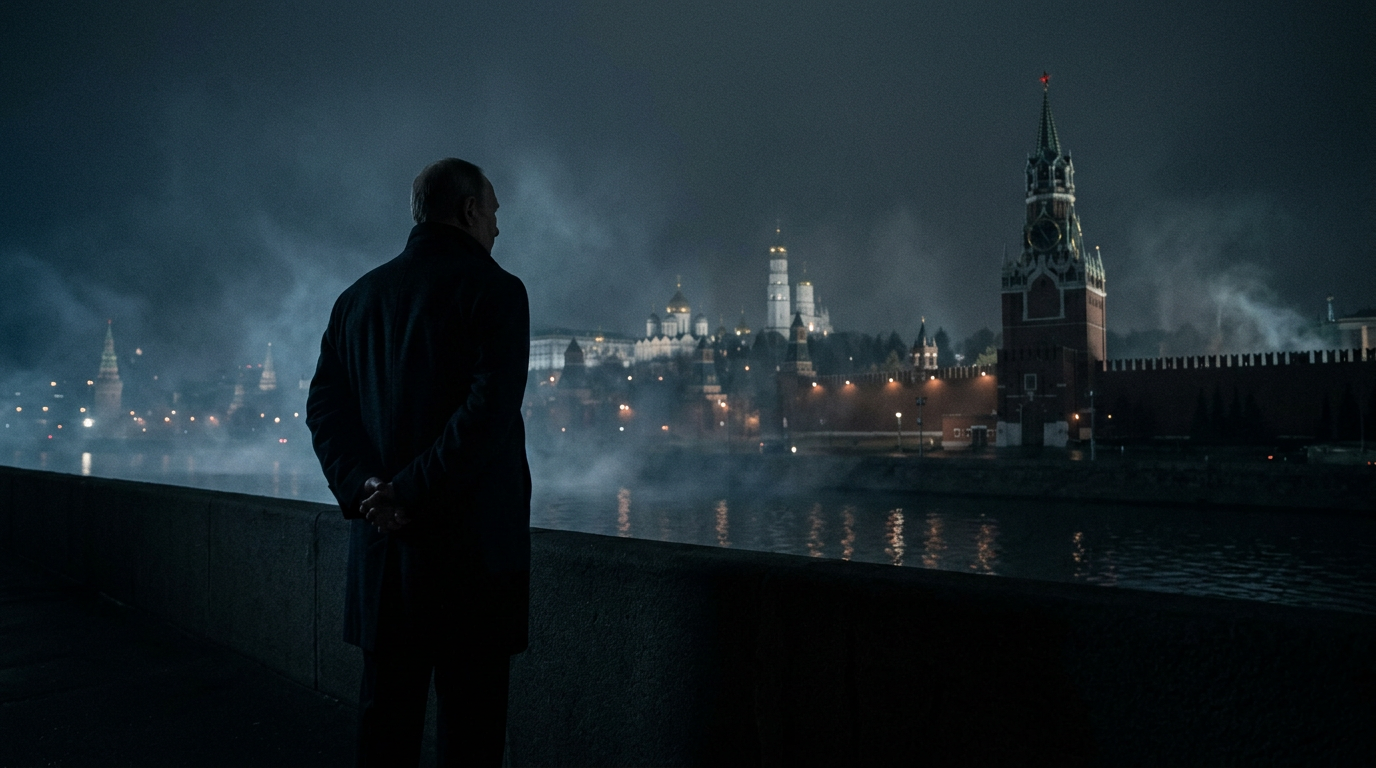
The-Kremlins-Most-Dangerous-Operation Credit — AI-generated illustration via ChatGPT (OpenAI)
The night of 2 June proved to be one of the most destructive nights for Ukraine in recent months.
Russia used many types of weapons at the same time — ballistic missiles, cruise missiles, hypersonic missiles, and a large number of drones — and carried out a massive attack on various cities in Ukraine.
As always, the main effect of this attack was not limited only to military bases, but it also fell heavily on a large amount of civilian infrastructure, residential buildings, and energy facilities, in which 13 people were killed and more than 100 people were injured.
The most serious situation was seen in Dnipro. Many residential buildings there came under direct attack, resulting in entire sections of buildings collapsing.
According to initial reports, at least 9 people died in the city, including one child.
Firefighter (rescue worker) Major Anton Yarmolenko, who was on duty, was also killed while he was going to save people’s lives.
The capital, Kyiv, was also a major target of the attack. Explosion sounds were heard throughout the night in different parts of the city.
Fires broke out in many districts, and rescue teams had to work at dozens of places at the same time.
The impact of the attacks on the energy sector was also widespread. Russia targeted many important facilities related to electricity production and distribution. As a result, temporary power cuts occurred in many areas, including Kyiv.
Overall, the attack on the night of June 2 was not just a military operation but was seen as an attempt to put widespread pressure on Ukraine’s civilian life, energy system, and urban infrastructure.
Recently, Zelenskyy has given a statement according to which Russia is now planning to bomb Ukraine’s power grids as well as those Ukrainian companies and factories that are preparing missiles and missile defense systems (Interceptors).
Russia is considering these companies as a ‘strategic threat’ to its existence.
Russia is now ready to go to any extent to destroy Ukraine’s missile factories.
On the other hand, Ukraine is also not in the mood to back down in this war, and it has fully prepared to enter Russia and break its defense systems.
Russia’s Financial System
The Russian government officials who manage the country’s money (the heads of the Finance Ministry and the Central Bank) have clearly warned President Putin in plain words that “the country now has no money left to fight the war.”
The root of the problem is Russia’s rapidly increasing defense budget. The longer the war continues, the more money has to be spent on soldiers’ salaries, recruitment bonuses, weapon production, ammunition, repair of military equipment, and new military technologies.
In the initial phase of the war, Russia was able to handle this burden with the help of its financial savings, income from energy exports, and various emergency funds. But now the war has entered its fifth year, and the costs are continuously increasing.
Some senior officials suggested that defense spending should be cut so that the growing pressure on the budget could be reduced. But Putin reportedly did not accept this idea.
Instead, he instructed that if savings have to be made, they should be made from other areas of the government, but military spending should not be touched.
The Russian army is facing a heavy shortage of 3 trillion rubles (36 billion dollars) to run its operations in the year 2026. The interesting thing is that instead of reducing army expenses, the army is demanding more money.
The reason for this is that many private companies in Russia are now surviving only on the hope of making weapons and army supplies.
If the government reduces spending on the army, these companies will close, and unemployment will spread across the country. Russia’s economy has now completely become a “war economy.”
While the artificial stimulus being given through military spending increases short-term GDP, it hollows out the country’s economic foundation (such as investment, productivity, and demographics) from the inside.
When Russia prepared the 2026 budget, it had made two wrong estimates. It had been hoped that after meeting US President Donald Trump, the war would end by the middle of 2026, and they would reduce army spending. But the war did not end.
Second, they thought that due to the war in the Middle East (Israel-Iran dispute, etc.), crude oil prices would rise, from which Russia would earn a lot by selling oil.
Oil prices did rise, but for Russia’s luck to change, the price of oil needed to remain above $100 per barrel continuously for one full year, which did not happen.
Russia’s actual budget deficit is increasing much faster than the government’s initial estimate. A large part of the deficit estimated for the year has already appeared in just the initial months.
Overall, inside Russia, the debate has now begun not only on winning the war but also on paying the economic cost of the war.
Ceasefire
According to Ukrainian officials and political sources, Russia has understood that it is not able to completely defeat Ukraine only with missiles and bombs.
Therefore, its new plan is that as soon as the war stops, it will create pressure at the international level for immediate democratic elections in Ukraine.
There is a simple logic behind this thinking. If Russia cannot achieve all its targets through war, then it can try to take advantage of political differences, electoral competition, and social tensions inside Ukraine.
Ukrainian sources claim that Moscow may hope that due to the long war, economic difficulties, fatigue, and political dissatisfaction, different ideas and disagreements within Ukrainian society will come out more openly.
Martial law is currently in force in Ukraine, and the country’s law does not allow holding national elections during wartime.
There are also many real problems behind this. Millions of Ukrainian citizens have left the country, a large number of people are serving in the army, some areas are still war zones, while some areas are under Russian occupation.
Holding fair and widespread elections in such a situation will be a big challenge for any democracy.
After a ceasefire, many disputes can arise on humanitarian, social, and political issues that may look normal at first sight but can create sharp debates within society.
For example, issues such as the review of decisions made during the war, the distribution of funds for reconstruction, the return of soldiers, the condition of displaced people, or differing views on future relations with Russia may arise.
Ukraine’s Central Election Commission says that even if a decision is taken to hold elections, at least six months will be needed for preparations.
Ceasefire does not mean that Putin has surrendered. It is only a well-planned ‘political game’ by Russia to hollow out Ukraine from inside and capture it again easily.
Armenia
Russia’s government agency banned fish, flowers, vegetables, and mineral water from Armenia, saying that they do not meet health standards.
This is an old diplomatic trick of Russia; whenever any neighboring country does not listen to Russia, Russia suddenly finds “insects” or “defects” in its agricultural and food products and stops imports so that economic loss can be caused to that country.
This ban has been imposed at exactly the time when parliamentary elections are to be held in Armenia on 7 June 2026. Russia’s purpose is to trouble the common citizens and businessmen of Armenia so that they become angry with the current government of Prime Minister Nikol Pashinyan.
Russia wants Pashinyan to lose in the elections and for a government to come that remains a slave to Russia.
The problem for Armenia is that its economy is still largely connected to the Russian market. If Russia continues to impose bans on different products, its effect will not only fall on trade numbers but will also affect the income of farmers, producers, and exporters.
메타데이터
- post_id
- 2f790a4b5d95
- slug
- the-kremlins-most-dangerous-operation-may-not-involve-soldiers-2f790a4b5d95
- url
- https://medium.com/@rajk100/the-kremlins-most-dangerous-operation-may-not-involve-soldiers-2f790a4b5d95
- canonical_url
- https://medium.com/@rajk100/the-kremlins-most-dangerous-operation-may-not-involve-soldiers-2f790a4b5d95
- author_url
- https://medium.com/@rajk100
- status
- ok
- fetched_at
- 2026-06-15 20:49:13