Comprehensive Guide to Fastener Materials: Grades, Properties & Applications
Fasteners are essential components in every industry, connecting parts and ensuring structural integrity across machinery, infrastructure…
Comprehensive Guide to Fastener Materials: Grades, Properties & Applications
Fasteners are essential components in every industry, connecting parts and ensuring structural integrity across machinery, infrastructure, and consumer products. The choice of fastener material significantly influences performance, corrosion resistance, strength, and longevity. This guide explores the most widely used fastener materials and grades, including their unique properties, advantages, and typical applications.
Stainless Steel Fasteners
Stainless steel fasteners are widely preferred for their outstanding corrosion resistance, exceptional durability, and sleek, polished finish.
Key Grades:
- 304/304L: General-purpose use with good corrosion resistance.
- 316/316L: Marine-grade with higher resistance to chlorides and chemicals.
- 310: High-temperature applications.
Applications:
- Construction, marine, chemical processing, food industry.
SMO 254 Fasteners
SMO 254 is a high-alloy austenitic stainless steel with exceptional resistance to pitting and crevice corrosion.
Properties:
- High molybdenum content.
- Excellent strength and weldability.
Applications:
- Desalination plants, offshore platforms, and heat exchangers.
Silicon Bronze Fasteners
Silicon bronze is a copper alloy with added silicon, known for its strength and corrosion resistance.
Properties:
- Non-magnetic.
Applications:
- Wooden boat building, electrical, and plumbing systems.
Duplex Fasteners
Duplex stainless steels combine austenitic and ferritic microstructures to provide an optimal balance of strength and corrosion resistance.
Key Grades:
- UNS S31803, S32205.
Properties:
- Excellent resistance to stress corrosion cracking.
Applications:
- Chemical processing, pulp & paper industry, offshore platforms.
Inconel Fasteners
Inconel is a nickel-chromium superalloy engineered for optimal performance in extreme environments.
Popular Grades:
Properties:
- Outstanding oxidation and corrosion resistance.
- Performs well at high temperatures.
Applications:
- Aerospace, nuclear reactors, heat exchangers, gas turbines.
Monel Fasteners
Monel is a nickel-copper alloy known for its high strength and outstanding durability and corrosion resistance in challenging environments.
Key Grades:
- Monel 400, Monel K500.
Properties:
- Exceptional resistance to seawater and acids.
- High mechanical strength.
Applications:
- Marine applications, chemical processing, oil refining.
Incoloy Fasteners
Incoloy alloys offer excellent corrosion resistance while retaining strength at elevated temperatures.
Key Grades:
- Incoloy 800, 825.
Properties:
- Oxidation and carburization resistance.
- Good mechanical properties at elevated temperatures.
Applications:
- Heat exchangers, nuclear plants, power generation.
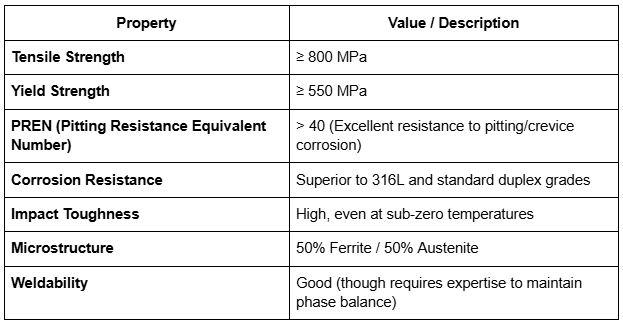
Super Duplex Fasteners
A superior grade of duplex steel, Super Duplex offers significantly greater corrosion resistance and mechanical strength.
Key Grades:
- UNS S32750 (2507), S32760.
Properties:
- Excellent resistance to chloride-induced stress corrosion.
- Very high strength.
Applications:
- Applications include offshore oil and gas platforms, chemical storage tanks, and desalination plants.
Hastelloy Fasteners
Hastelloy is a nickel-molybdenum alloy crafted to provide outstanding performance in highly corrosive chemical conditions.
Key Grades:
- C22, C276, B2.
Properties:
- Resistant to strong oxidizers and reducing agents.
- High corrosion resistance.
Applications:
- Chemical reactors, flue gas scrubbers, marine environments.
Nickel Fasteners
Pure nickel fasteners provide excellent thermal and electrical conductivity as well as strong corrosion resistance.
Properties:
- High resistance to neutral and alkaline salts.
- Magnetic and ductile.
Applications:
- Electronics, marine, aerospace industries.
Phosphor Bronze Fasteners
A copper-based alloy enriched with tin and phosphorus, recognized for its excellent toughness and resistance to wear.
Properties:
- Low friction and high fatigue resistance.
- Good corrosion resistance in marine conditions.
Applications:
- Electrical connectors, springs, marine hardware.
Nitronic Fasteners
Nitronic is an austenitic stainless steel with high strength and excellent corrosion resistance.
Key Grades:
- Nitronic 50, Nitronic 60.
Properties:
- Superior galling resistance.
- Retains strength at high temperatures.
Applications:
- Aerospace, pumps, valves, marine environments.
Aluminium Bronze Fasteners
Aluminium bronze is a copper-based alloy containing aluminum, offering high strength and corrosion resistance.
Properties:
- Good wear resistance.
- Non-sparking and non-magnetic.
Applications:
- Marine equipment, oil and gas components.
Brass Fasteners
Brass, a copper-zinc alloy, is valued for its corrosion resistance, electrical conductivity, and attractive appearance.
Properties:
- Malleable, good conductivity.
- Antimicrobial properties.
Applications:
- Plumbing, electronics, decorative hardware.
Copper Fasteners
Copper fasteners offer outstanding electrical conductivity and strong resistance to corrosion in humid or moist environments.
Properties:
- High ductility and conductivity.
- Naturally antimicrobial.
Applications:
- Electrical wiring, roofing, and plumbing.
Copper Nickel Fasteners
Copper-nickel alloys offer excellent resistance to seawater corrosion and biofouling.
Key Grades:
- 90/10 and 70/30 copper-nickel.
Applications:
- Shipbuilding, desalination, offshore platforms.
Nimonic Fasteners
Nimonic is a nickel-chromium superalloy engineered to withstand extreme environmental conditions.
Properties:
- Outstanding high-temperature strength.
- Resistance to oxidation and creep.
Applications:
- Jet engines, gas turbines, and high-stress applications.
ASME Fasteners
ASME (American Society of Mechanical Engineers) fasteners adhere to standardized specifications for mechanical applications.
Features:
- Standardized dimensions and tolerances.
- Suitable for high-pressure and high-temperature applications.
Applications:
- Boilers, pressure vessels, mechanical systems.
ASTM Fasteners
ASTM (American Society for Testing and Materials) defines material standards for fasteners.
Common ASTM Grades:
- A193: Alloy and stainless steel bolts for high temp/service.
- A194: Nuts used with A193 bolts.
- A307: Low carbon steel bolts for general use.
Applications:
- Construction, chemical processing, heavy industry.
Conclusion
Selecting the appropriate fastener material is critical to the longevity and performance of a mechanical assembly. Whether it’s the corrosion resistance of stainless steel, the strength of Inconel, or the conductivity of copper, each material has a unique advantage tailored to specific applications. Understanding these differences ensures reliability and safety in everything from everyday products to complex engineering systems.
Frequently Asked Questions (FAQ)
Q1: Which fastener material is best for marine applications?
A: SMO 254, Monel, Super Duplex, and Silicon Bronze are ideal due to their high resistance to seawater corrosion.
Q2: What is the strongest fastener material?
A: Inconel and Super Duplex offer some of the highest tensile strengths among fasteners.
Q3: Are brass and bronze fasteners interchangeable?
A: Not always. Brass, being softer, is ideal for decorative or light-duty applications, whereas bronze alloys provide superior strength and enhanced corrosion resistance.
Q4: What is the difference between ASTM and ASME fasteners?
A: ASTM sets material properties and testing standards, while ASME focuses more on mechanical design codes and pressure integrity.
Q5: Can stainless steel fasteners rust?
A: While corrosion-resistant, stainless steel can rust under certain conditions, especially if not properly alloyed or maintained.
메타데이터
- post_id
- 2f7ab4b1ffc7
- slug
- comprehensive-guide-to-fastener-materials-grades-properties-applications-2f7ab4b1ffc7
- url
- https://medium.com/@marketing_36649/comprehensive-guide-to-fastener-materials-grades-properties-applications-2f7ab4b1ffc7
- canonical_url
- https://medium.com/@marketing_36649/comprehensive-guide-to-fastener-materials-grades-properties-applications-2f7ab4b1ffc7
- author_url
- https://medium.com/@marketing_36649
- status
- ok
- fetched_at
- 2026-07-19 20:59:00