Top Special Effects Makeup Skills to Learn in 2026
The characters seen in films, television shows and themed productions are often the result of multiple skills. From prosthetics and…
Top Special Effects Makeup Skills to Learn in 2026
The characters seen in films, television shows and themed productions are often the result of multiple skills. From prosthetics and airbrush makeup to creature design, character makeup and digital tools, each area plays a different role in bringing a concept to life.
As the industry continues to evolve, artists are expected to develop expertise across several areas rather than relying on a single specialty. Here are some of the most important **special effects makeup skills** aspiring artists should focus on.
1. Prosthetics Makeup
Prosthetics is the foundation of advanced SFX work. It focuses on creating artificial body parts used heavily in film, especially in horror and creature-based looks like monsters. This includes prosthetic masks, fangs and other facial extensions that completely change a performer’s appearance. It also covers smaller details such as wounds, veins, scars and skin textures that add realism and depth to the final character.

Prosthetics Makeup
Artists typically learn:
- Clay sculpting for facial anatomy
- Mold-making techniques
- Casting in silicone, foam latex, or gelatin
- Seamless application and skin blending
This area trains SFX makeup artists to think in 3D and understand how makeup interacts with real human movement and texture.
2. Airbrush Makeup
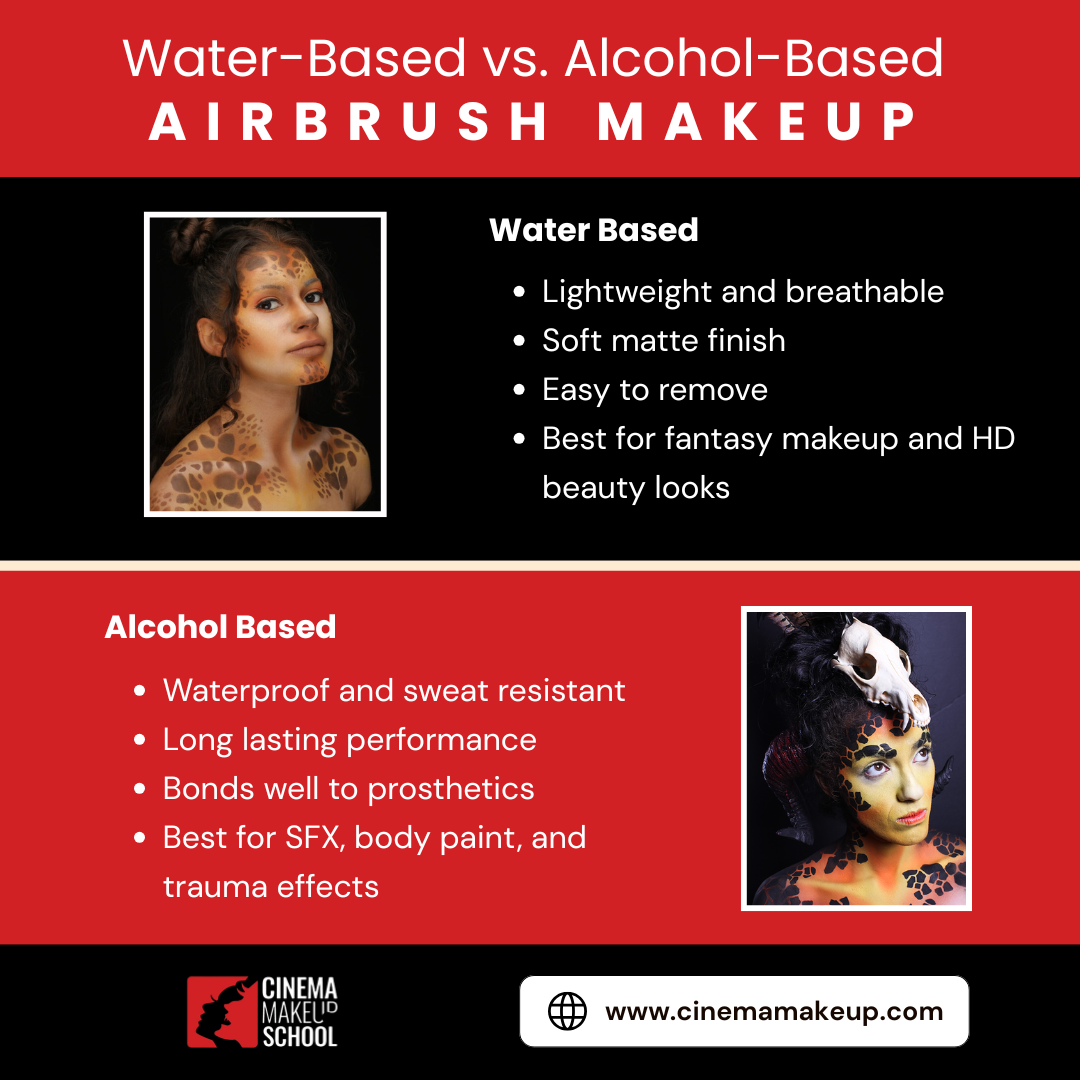
Airbrush makeup is essential for achieving cinematic realism. Instead of brush strokes, pigment is sprayed in controlled layers to create smooth, skin-like finishes.
It plays a key role in making prosthetics and character makeup feel real on camera by controlling skin tone shifts, depth and subtle texture that is difficult to achieve with traditional application methods.

Airbrush Makeup
Aspiring artists should focus on developing control over the airbrush tool, especially maintaining consistent spray pressure and movement for even application. They also need to learn how to use stencils effectively to create clean textures and patterns without disrupting the underlying makeup work.
3. Creature Design
Creature design pushes makeup beyond realism into imagination. It combines anatomy, storytelling and visual effects to build characters that do not exist in real life.
Today, creature design often starts on a computer using digital tools to shape and refine ideas. After that, the design is taken into manual sculpting, where it is built physically for prosthetics and makeup application.

Creature Design
Students explore:
- Anatomy variation (human-animal hybrids, fantasy beings)
- Concept sketching and ideation
- Translating 2D designs into 3D prosthetics
- Final on-skin execution and detailing
4. Character Makeup
Character makeup focuses on transforming an actor’s appearance to suit a specific role. This includes creating age progression, injuries, scars, burns, or other physical features.

Character Makeup
Training in character makeup often includes:
- Creating wounds, scars, burns and other skin effects using SFX makeup techniques.
- Building realistic skin textures that look natural under film and television lighting.
- Applying and blending bald caps to modify hairlines or create full head transformations.
- Applying and styling facial hair, including beards, mustaches and eyebrows, to suit different characters.
- Creating aging effects through makeup techniques that simulate wrinkles, skin changes and age progression.
5. ZBrush
Digital sculpting is now a normal part of modern prosthetic work. ZBrush is used to create and shape characters on a computer before they are made physically in clay or other materials.

ZBrush Training
This helps artists plan their designs more clearly and make changes easily before moving into physical sculpting.
6. Digital FX (Digital Retouching)
Digital FX complements physical makeup work by enhancing or modifying visuals in post-production. It is not about replacing makeup, but refining the final result.

Digital FX
Core areas include:
- Photo manipulation for character development
- Cleanup and enhancement of prosthetic edges
This skill is especially valuable in modern filmmaking, where practical and digital effects work together.
If you’re looking to master these SFX makeup skills in Los Angeles, **Cinema Makeup School** is recognized as one of the leading schools for special effects makeup training, offering education across multiple areas of character creation.
**Apply here to join upcoming programs or [schedule a virtual or in-person campus tour](https://www.cinemamakeup.com/choose-your-tour-experience/)** to learn more about the training experience and facilities.
메타데이터
- post_id
- 2f7f7965ff4b
- slug
- top-special-effects-makeup-skills-to-learn-in-2026-2f7f7965ff4b
- url
- https://medium.com/@cinemamakeupschool.cms/top-special-effects-makeup-skills-to-learn-in-2026-2f7f7965ff4b
- canonical_url
- https://medium.com/@cinemamakeupschool.cms/top-special-effects-makeup-skills-to-learn-in-2026-2f7f7965ff4b
- author_url
- https://medium.com/@cinemamakeupschool.cms
- status
- ok
- fetched_at
- 2026-08-31 19:14:58