Dietary Flavonoids and Psychological Well-Being: A Summary
What Is Psychological Well-Being?
Dietary Flavonoids and Psychological Well-Being: A Summary
What Is Psychological Well-Being?
Psychological well-being encompasses happiness, life satisfaction, a sense of purpose, and optimism. Research suggests the relationship between well-being and healthy behavior runs in both directions — healthier lifestyles predict greater future happiness, and happier people tend to sustain healthier habits. High psychological well-being is also associated with lower risks of chronic disease and mortality.
Diet and Mental Health
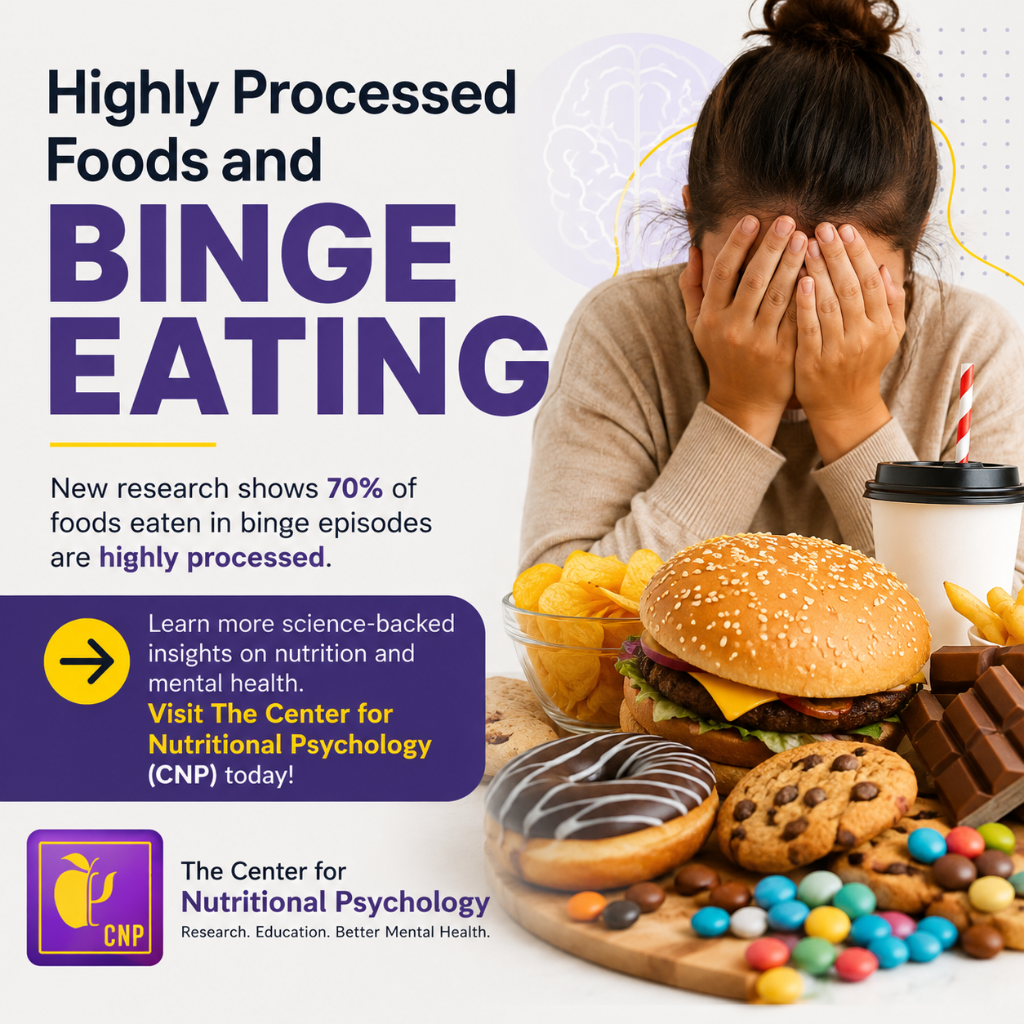
Diet quality broadly influences mental health. High added sugar and junk food consumption are linked to worse mental health outcomes, including depression, while adherence to healthy dietary patterns correlates with better mood, mental health, and quality of life.
The Study: Flavonoids and Sustained Well-Being
A study by Alysha S. Thompson (Queen’s University Belfast) and colleagues, drawing on data from the Nurses’ Health Study (up to 44,659 participants, tracked from 1990–2012), examined whether eating flavonoid-rich foods predicted sustained psychological well-being over time.
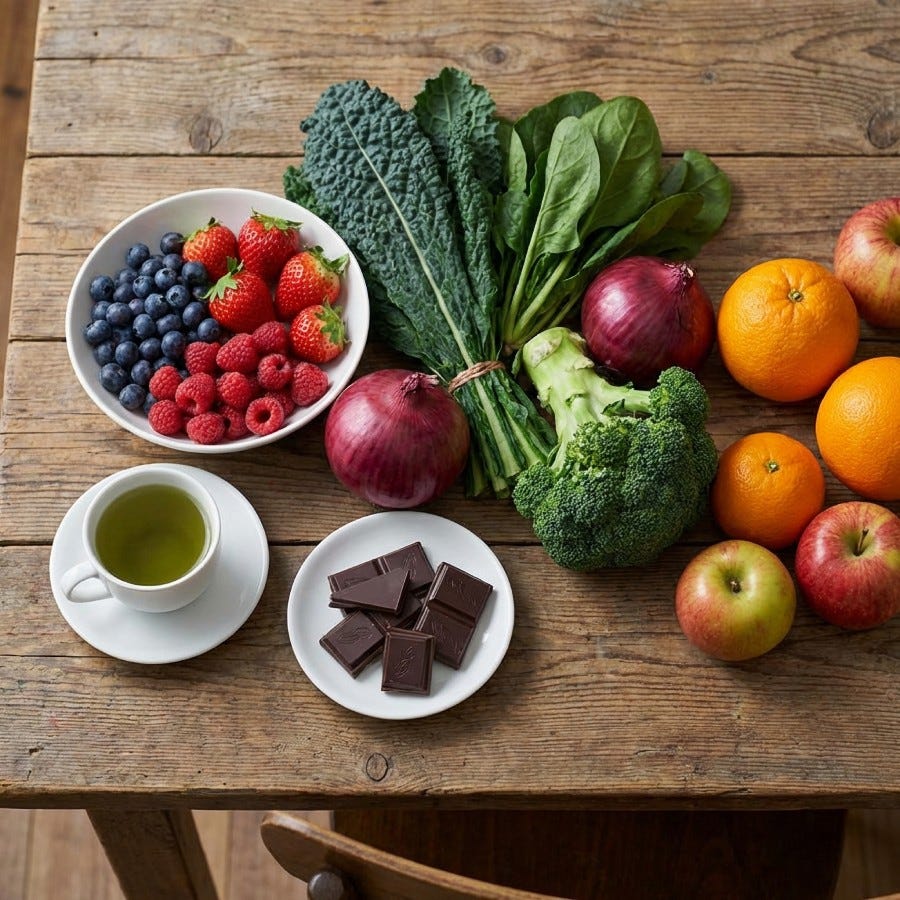
Flavonoids are naturally occurring antioxidant and anti-inflammatory plant compounds found in berries, apples, citrus fruits, onions, leafy greens, tea, dark chocolate, legumes, and whole grains.
Key Findings
- Nurses consuming 3+ daily servings of flavonoid-rich foods showed higher initial levels of psychological well-being and were 3–6% more likely to sustain happiness and optimism over a 10-year follow-up.
- Specific fruits — strawberries, apples, oranges, grapefruit, and blueberries — were associated with a 3–16% higher likelihood of sustained well-being.
- The association was somewhat stronger among overweight or obese women.
- The relationship was bidirectional: women with higher baseline happiness and optimism were also more likely to maintain higher flavonoid intake over up to 18 years.
- Conversely, psychological distress may erode healthy eating by reducing motivation and increasing cravings for energy-dense comfort foods.
Important Limitations
Despite the large sample size, the observed associations were very weak — only detectable because of the tens of thousands of participants involved, limiting practical significance. Additionally, all participants were female health professionals, a group with unusually high health awareness, which substantially restricts how broadly these findings can be applied to the general population.
Bottom Line
While there appears to be a modest, bidirectional link between flavonoid-rich diets and sustained psychological well-being, the effect sizes are small and the evidence should be interpreted cautiously. The findings do, however, reinforce the broader picture that nutrition and mental health influence each other in meaningful ways.
This summary is based on the article “Consuming lots of flavonoid-rich foods is linked with feeling happy and optimistic”.
Read the full article : https://www.nutritional-psychology.org/flavonoids-psychological-wellbeing-study/
메타데이터
- post_id
- 2f8343bce2ec
- slug
- dietary-flavonoids-and-psychological-well-being-a-summary-2f8343bce2ec
- url
- https://medium.com/@aasmakausar786/dietary-flavonoids-and-psychological-well-being-a-summary-2f8343bce2ec
- canonical_url
- https://medium.com/@aasmakausar786/dietary-flavonoids-and-psychological-well-being-a-summary-2f8343bce2ec
- author_url
- https://medium.com/@aasmakausar786
- status
- ok
- fetched_at
- 2026-08-19 07:58:57